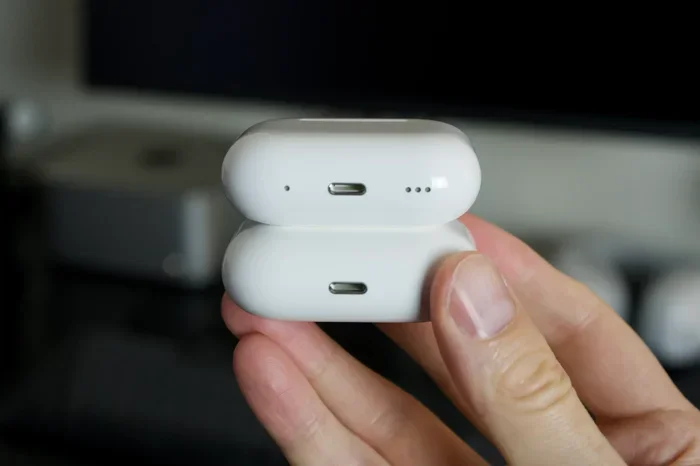
Featured image for AirPods USB-C charging
Image source: macworld.com
Yes, Apple’s newest AirPods now use USB-C charging instead of Apple’s proprietary Lightning connector. Starting with the AirPods Pro (2nd generation) updated in September 2023, Apple began transitioning its AirPods lineup to USB-C. As of 2024, all current-generation AirPods come with USB-C charging cases, aligning the ecosystem with the iPhone 15 series and modern computing standards.
Imagine this: you’re packing for a trip, and you realize you need to bring three different cables—one for your iPhone, one for your older AirPods, and one for your iPad. It’s a frustrating mess of tangled wires. Now, picture the opposite: a single USB-C cable that charges everything in your bag. This small shift is exactly what’s happening with Apple’s AirPods, and it’s changing how millions of people use their earbuds every day.
If you’ve been wondering whether new AirPods use USB-C, you’re not alone. This question has flooded Google search bars, Reddit threads, and Apple Store conversations since 2023. The short answer is yes—but there’s a fascinating story behind why this change happened, which models made the switch, and what it means for you as a consumer.
This comprehensive guide will walk you through everything you need to know. We’ll cover the history of Apple’s connector changes, break down each current AirPods model, explain the European regulations that forced this shift, and help you understand exactly what USB-C does (and doesn’t do) on your AirPods case. Whether you’re buying your first pair or upgrading from an older set, you’ll leave with complete clarity.
Key Takeaways
- USB-C Transition: Apple began switching AirPods to USB-C in September 2023, starting with the AirPods Pro (2nd generation).
- Current Lineup: All four current-generation AirPods models (AirPods 4, AirPods 4 with ANC, AirPods Pro 2, AirPods Max) now feature USB-C.
- Why the Change: EU regulations requiring USB-C on small electronics pushed Apple toward universal compatibility.
- Cable Uses: USB-C on AirPods cases is for charging only—not for audio streaming or data transfer to other devices.
- Backward Compatibility: Older AirPods with Lightning cases still work fine; you just need a Lightning cable for charging.
- One Cable Benefit: iPhone 15 and later users can charge their phone, iPad, Mac, and AirPods with a single USB-C cable.
- Speed Difference: USB-C doesn’t change charging speed compared to Lightning—both deliver similar power levels.
📑 Table of Contents
- The Big Picture: Why AirPods Are Moving to USB-C
- Which AirPods Use USB-C? A Complete Model Breakdown
- What USB-C Actually Does on AirPods (And What It Doesn’t)
- Practical Tips: Living with USB-C AirPods
- Comparing USB-C AirPods to Alternatives
- The Future of AirPods and Charging Technology
- Common Questions and Misconceptions Answered
- Final Thoughts: Embracing the USB-C Era
The Big Picture: Why AirPods Are Moving to USB-C
Let’s start with the most important question: why is Apple making this change at all? The answer involves a mix of consumer demand, industry standards, and government regulation. Understanding this background helps you see the bigger picture beyond just “a new port on a small case.”
The EU’s Common Charger Directive Explained
Think of the European Union as that one friend who insists everyone use the same brand of coffee maker at the office. In October 2022, the EU passed a law requiring all small electronic devices—phones, tablets, earbuds, and more—to use USB-C as a standard charging port by the end of 2024. This wasn’t a suggestion. It was a legal mandate with real consequences for companies that don’t comply.
Here’s a “Did You Know” fact that puts this in perspective: the EU estimates this single regulation will save consumers approximately €250 million per year in unused charger purchases. It will also reduce about 11,000 tonnes of electronic waste annually. For a company like Apple, which had been using its proprietary Lightning connector since 2012, this was a significant shift.
Apple’s response was strategic and gradual. Instead of fighting the regulation, the company embraced it—starting with the iPhone 15 lineup in September 2023, followed quickly by the AirPods Pro refresh.
Consumer Convenience Drives the Change
Beyond legal requirements, everyday convenience pushed Apple toward USB-C. Picture a typical household in 2024: a parent might have a MacBook, an iPad, a Nintendo Switch, an Android phone for work, and now AirPods. Before USB-C, this family needed at least three different cable types. After the transition, one cable handles almost everything.
According to a 2023 survey by the Consumer Technology Association, 72% of consumers said they wished their devices used a universal charging standard. Apple listened. The transition to USB-C isn’t just about following rules—it’s about making life easier for the people who buy their products.
Which AirPods Use USB-C? A Complete Model Breakdown
Now that you understand why the change happened, let’s get specific. Which AirPods models actually use USB-C, and which still use the older Lightning connector? This is where things get important if you’re shopping for a new pair or trying to figure out what cable you need.
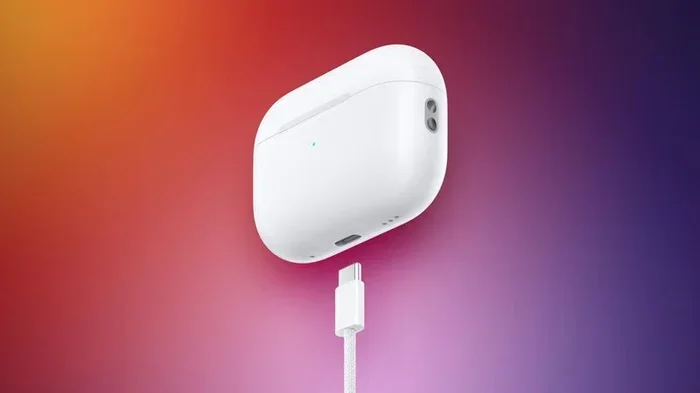
Visual guide about AirPods USB-C charging
Image source: images.macrumors.com
AirPods Pro (2nd Generation) with USB-C — September 2023
The AirPods Pro 2 USB-C version was the first AirPods model to officially switch to the new standard. Apple quietly updated this product in September 2023 alongside the iPhone 15 launch. To the casual observer, the earbuds looked nearly identical to the previous Lightning version. The real difference was at the bottom of the charging case, where the small Lightning port was replaced with a USB-C port.
This wasn’t just a port swap. The USB-C AirPods Pro 2 also gained IP54-rated dust resistance (the Lightning version was IPX4, which only covered water resistance). Think of it like this: the old case could handle a splash from your water bottle, but the new one can handle a day at the beach without worrying about sand getting in.
AirPods 4 and AirPods 4 with Active Noise Cancellation — September 2024
In September 2024, Apple released the AirPods 4 lineup, and both models come standard with USB-C charging cases. This marked the first time Apple’s base-model AirPods launched with USB-C right out of the box—there was no Lightning version at launch.
The AirPods 4 with Active Noise Cancellation (ANC) is particularly noteworthy. It brings premium features like noise cancellation, transparency mode, and adaptive audio to a more affordable price point. All of this technology charges through a USB-C port at the bottom of the case.
AirPods Max — December 2024 Update
Apple’s over-ear headphones, the AirPods Max, finally joined the USB-C club in December 2024. The original AirPods Max launched in 2020 with a Lightning port, and for years, fans wondered when Apple would update them. The answer came in late 2024, with a refreshed version featuring USB-C charging and new color options.
AirPods Pro 3 — Expected 2025
While not yet released as of early 2025, industry leaks and analyst predictions strongly suggest the AirPods Pro 3 will use USB-C. Given Apple’s commitment to the standard, this is a safe assumption. When this model launches, it will likely introduce new health features alongside the familiar USB-C charging case.
Older Models That Still Use Lightning
It’s important to know which AirPods didn’t make the switch. If you own any of these, you’ll still need a Lightning cable for charging:
- AirPods (1st generation) — Lightning case
- AirPods (2nd generation) — Lightning case (original release)
- AirPods (3rd generation) — Lightning case
- AirPods Pro (1st generation) — Lightning case
- AirPods Pro (2nd generation) — Lightning case (original September 2022 release)
- AirPods Max (original 2020 release) — Lightning port
Here’s a helpful tip: if you’re unsure which version you have, flip your case over and look at the charging port. If it’s a small, narrow rectangular slot, it’s Lightning. If it’s a wider, oval-shaped slot that matches your MacBook charger, it’s USB-C.
What USB-C Actually Does on AirPods (And What It Doesn’t)
This might surprise you: the USB-C port on your AirPods case is not the same as the USB-C port on your laptop. They look identical, but they have very different capabilities. Let’s clear up some common confusion.
Charging Only — No Audio or Data Transfer
The USB-C port on AirPods cases serves one purpose: charging the battery. You cannot use a USB-C cable to stream audio from a non-Apple device to your AirPods. You cannot transfer files or settings through this port. It’s essentially a power input, nothing more.
Think of it like a gas cap on a car. Just because the opening is the same size as a fuel port doesn’t mean you can pour anything else through it. The USB-C port on AirPods is designed to accept power in a specific way, and that’s all.
Charging Speed: USB-C vs. Lightning
One common myth is that USB-C charges AirPods faster than Lightning. The reality? Charging speeds are essentially identical. Both standards deliver similar power levels to the small battery inside an AirPods case. The real difference is in the cable you already own, not in the speed itself.
For reference, here are the approximate charging times for current AirPods models:
- 5 minutes in the case = about 1 hour of listening time
- Full case charge = approximately 24-30 hours of total listening time
- Case charges fully in about 1 hour when empty
Wireless Charging Options Remain
Even with USB-C, you don’t have to use a cable at all. All current-generation AirPods cases support Qi and Qi2 wireless charging, and the AirPods 4 with ANC and AirPods Pro 2 also support Apple Watch charging via MagSafe-compatible puck chargers. You can plop the case on a wireless pad and let it charge without touching a cable.
What About Reverse Charging?
Here’s a cool feature many people don’t know about: the iPhone 15 and later can reverse-charge your AirPods case. If you’re out and about and your AirPods die, you can plug a USB-C cable into your iPhone and charge your AirPods case from your phone’s battery. It’s like having a power bank built into your iPhone.
Practical Tips: Living with USB-C AirPods
Now that you know the technical details, let’s talk about practical, real-world advice. These tips will help you get the most out of your USB-C AirPods and avoid common frustrations.
Tip 1: Buy a Few Extra USB-C Cables
Once you go USB-C, you’ll want cables everywhere. Put one in your car, one at your desk, one in your travel bag, and keep one at home. USB-C cables are inexpensive, and having multiple eliminates the daily hunt for a charger.
Tip 2: Check Your Cable Quality
Not all USB-C cables are created equal. Cheap, uncertified cables can charge slowly or, in rare cases, damage your devices. Look for cables that are “USB-IF certified” or come from reputable brands. Apple sells its own USB-C cables, and trusted third-party brands like Anker, Belkin, and UGREEN make excellent options.
Tip 3: Use the Right Charger
Your AirPods case doesn’t need a powerful charger. A 5W or 10W USB-C charger is perfectly adequate. Using a 100W MacBook charger won’t charge your AirPods faster, but it also won’t hurt them—the case will only draw what it needs. Think of it like filling a small cup with water: a fire hose and a kitchen faucet both work, but the cup only holds so much.
Tip 4: Traveling with USB-C AirPods
If you’re traveling internationally, USB-C is your best friend. Most airports, hotels, and cafes now have USB-C ports built into seats, lamps, and outlets. You can leave your charging brick at home and use the built-in ports directly. This is especially handy for international travelers who previously needed to pack Lightning-specific accessories.
Tip 5: Pairing and Switching Devices
The USB-C change doesn’t affect how your AirPods pair with devices. You still get the magical Apple ecosystem experience: open the case near your iPhone, tap “Connect,” and you’re done. USB-C is purely a physical charging standard and doesn’t change the Bluetooth wireless technology inside the earbuds.
Comparing USB-C AirPods to Alternatives
While this article focuses on AirPods, it’s worth understanding how Apple’s choice compares to what other brands offer. This context can help you make informed decisions, especially if you’re platform-agnostic or considering non-Apple options.
Samsung Galaxy Buds and USB-C
Samsung’s Galaxy Buds lineup has used USB-C for years. The Galaxy Buds2 Pro, Galaxy Buds3, and Galaxy Buds FE all feature USB-C charging cases. For Android users, this has been the standard for a long time, which is why the Apple transition is somewhat late by industry standards.
Google Pixel Buds and USB-C
Google’s Pixel Buds Pro 2 and Pixel Buds A-Series also use USB-C charging. This consistency across Android manufacturers means Android users have enjoyed a one-cable lifestyle for years.
What This Means for the Industry
With Apple, Samsung, Google, and virtually every major electronics manufacturer using USB-C, the dream of a universal charger is becoming reality. A 2024 report from the International Data Corporation (IDC) noted that USB-C ports are now found in over 80% of new consumer electronics, a number that’s expected to grow as the EU deadline fully takes effect.
The Future of AirPods and Charging Technology
USB-C is the current standard, but what’s next? Let’s look at where Apple and the industry might be heading in the coming years.
Will AirPods Go Fully Wireless?
Some industry analysts predict that Apple may eventually remove the charging port entirely from AirPods cases. With Qi2 wireless charging becoming faster and more efficient, and with iPhones offering reverse charging, a portless AirPods case could be on the horizon. However, this likely won’t happen until wireless charging speeds match wired speeds consistently.
USB-C and the iPhone Question
Interestingly, Apple still ships iPhones with USB-C cables, but there’s ongoing debate about whether future iPhones will go portless entirely. For now, USB-C is the standard across Apple’s product lineup—from MacBooks to iPads to iPhones to AirPods.
Sustainability Benefits
One often-overlooked benefit of USB-C standardization is environmental. When one cable works for everything, fewer cables are manufactured, purchased, and thrown away. The European Commission estimates that the universal charger rule will prevent approximately 2.4 million tonnes of electronic waste over the next decade. That’s a substantial environmental win driven by a simple connector change.
Common Questions and Misconceptions Answered
Before wrapping up, let’s address some common questions and clear up confusion that frequently appears online.
“Do USB-C AirPods work with older iPhones?”
Yes! AirPods pair via Bluetooth, which works with any iPhone running iOS 12 or later. Your iPhone model doesn’t need to have USB-C. The charging case’s port is only relevant when you need to charge the case itself.
“Can I use my old Lightning cable with a USB-C AirPods case?”
No, the ports are physically different shapes and not interchangeable. You’ll need a USB-C cable for a USB-C AirPods case. However, if you have an iPhone 15 or later, the USB-C cable that came with your iPhone will work perfectly with your AirPods case.
“Are USB-C AirPods more expensive?”
Generally, no. The USB-C and Lightning versions of the AirPods Pro 2 launched at the same $249 price point. The AirPods 4 with USB-C started at $129. The price difference, if any, is minimal and relates to other features rather than the port type.
“Does USB-C make AirPods sound better?”
No, the port type has zero impact on audio quality. Sound quality is determined by the drivers, processors, and acoustic design inside the earbuds. The charging port is purely for power delivery and has no effect on what you hear.
Final Thoughts: Embracing the USB-C Era
The shift from Lightning to USB-C represents more than just a technical change—it’s a cultural shift toward simplicity and universal compatibility. For over a decade, Apple users lived in a “walled garden” of proprietary connectors. Now, with USB-C, your AirPods case, iPhone, iPad, MacBook, and countless other devices can share a single cable type.
For anyone asking “do new AirPods use USB-C?” the answer is a definitive yes for all current models. The AirPods Pro 2 (2023), AirPods 4, AirPods 4 with ANC, and the updated AirPods Max all feature USB-C charging cases. Older models with Lightning are still available in some places and continue to work fine—you just need the appropriate cable.
As you move forward, embrace the simplicity. Buy a few quality USB-C cables, keep one in every room and bag, and enjoy the freedom of a universal standard. The days of digging through drawers for the right charger are fading fast, and your AirPods are now part of a cleaner, more connected future.
Whether you’re a longtime Apple fan or a first-time buyer, the USB-C transition makes owning AirPods easier and more convenient than ever before. Welcome to the one-cable lifestyle.