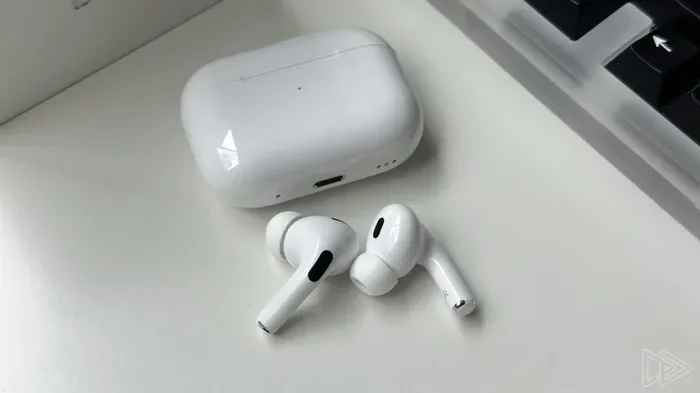
Featured image for 2nd generation AirPods earbuds
Image source: nextrift.com
2nd generation AirPods do NOT have active noise cancellation (ANC). They rely on basic sound isolation from their fit, but lack the dedicated ANC technology found in AirPods Pro and AirPods Max. If noise cancellation is a priority, you’ll need to upgrade to AirPods Pro, AirPods Pro 2, or AirPods 4 (with ANC).
Ever put on a pair of earbuds hoping to block out the world, only to hear every conversation, plane engine, and coffee grinder around you? That’s the experience many people have with 2nd generation AirPods when they expect noise cancellation. It’s one of the most common misconceptions in the AirPods world.
Here’s the straight answer: No, 2nd generation AirPods do not have noise cancellation. Not active noise cancellation, anyway. They offer basic sound isolation through their physical design, but they lack the microphones and processors needed to actively cancel noise. Think of it like wearing sunglasses versus having laser eye correction, both help you see better, but they work very differently.
This confusion is understandable. Apple makes several AirPods models, and the feature lists overlap in confusing ways. Some AirPods have noise cancellation, and some don’t. The 2nd generation model specifically does not, and understanding why, what you get instead, and what your alternatives are will save you from buyer’s remorse and help you make a smarter purchase decision.
Key Takeaways
- No Active Noise Cancellation: 2nd generation AirPods lack ANC technology entirely, relying only on passive sound isolation.
- Released in March 2019: The 2nd Gen AirPods launched without noise cancellation as Apple reserved this feature for premium models.
- Passive Isolation Only: The earbuds block some ambient noise through physical seal, but cannot cancel low-frequency sounds effectively.
- Affordable Alternative: Their lower price point (compared to Pro models) makes them attractive for casual listeners who don’t need ANC.
- Upgrade Options: AirPods Pro, AirPods Pro 2, and AirPods 4 (ANC) all offer active noise cancellation for those who need it.
- H1 Chip Benefits: Despite lacking ANC, they feature the H1 chip for fast pairing, hands-free Siri, and seamless device switching.
- Best for Quiet Environments: These AirPods work well in low-noise settings like offices or homes, but struggle in loud environments.
📑 Table of Contents
- What Exactly Are 2nd Generation AirPods?
- The Noise Cancellation Question: A Definitive Answer
- What You Actually Get Instead: 2nd Gen AirPods Features
- Real-World Performance Without ANC
- Comparing 2nd Gen AirPods to Noise-Cancelling Alternatives
- Who Should Buy 2nd Generation AirPods?
- Making the Right Choice for Your Needs
- Conclusion: The Final Verdict
What Exactly Are 2nd Generation AirPods?
Before diving into the noise cancellation question, let’s make sure we’re talking about the right product. Apple’s AirPods lineup has grown confusingly over the years, with multiple generations and variants.
The Basic Identification
2nd generation AirPods are the standard AirPods released by Apple in March 2019. They look almost identical to the original 1st generation AirPods from 2016, with the same stem design and white color. The main differences are internal, including a new chip and improved connectivity.
You can identify them by:
- Model numbers: A2031 or A2032 (these appear in Settings > General > About)
- Charging case options: They came with either a standard charging case or a wireless charging case (sold separately or bundled)
- H1 chip: Inside beats the older W1 chip from the 1st generation
What They Were Designed to Do
The 2nd Gen AirPods were designed as Apple’s mainstream, everyday wireless earbuds. They were meant to be:
- Convenient for iPhone users with seamless pairing
- Comfortable for all-day wear with a universal fit
- Affordable compared to premium options
- Good enough for music, calls, podcasts, and videos
Apple positioned them as the “default” AirPods for most people, while reserving advanced features like noise cancellation for the Pro and Max lines. This tiered approach helps Apple hit different price points and user needs.
The Noise Cancellation Question: A Definitive Answer
Let’s put this question to rest completely, because the confusion around it causes real problems.
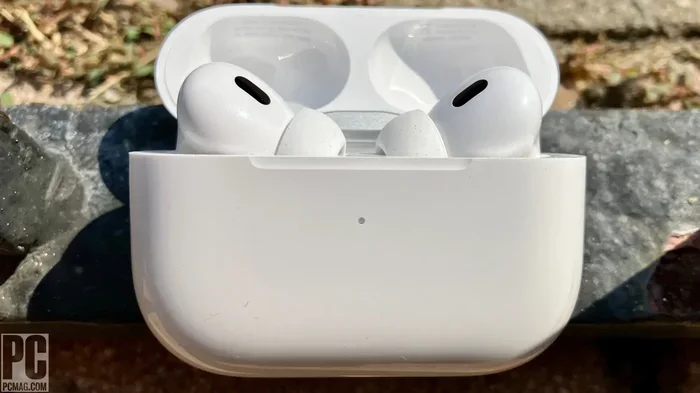
Visual guide about 2nd generation AirPods earbuds
Image source: sm.pcmag.com
Active Noise Cancellation vs. Passive Noise Isolation
Here’s the crucial distinction most people miss:
Active Noise Cancellation (ANC) is a technology that uses microphones to listen to outside sounds and creates “anti-noise” sound waves to cancel them out. It’s electronic, requires processing power, and uses battery life.
Passive Noise Isolation is simply the physical blocking of sound by the earbud’s design and fit. When you put your fingers in your ears, that’s passive isolation. When earbuds create a seal in your ear canal, they’re providing passive isolation.
2nd generation AirPods offer only passive noise isolation. Their hard plastic design blocks some ambient noise, but they don’t actively fight sound waves with technology. The difference is significant. ANC can reduce low-frequency sounds (like airplane engines or air conditioners) by 20-30 decibels, while passive isolation from non-sealing earbuds might only block 5-10 decibels of mid-to-high frequency sounds.
Why Apple Made This Choice
Did you know that adding ANC to true wireless earbuds requires significant engineering? Apple’s AirPods Pro contain:
- Two microphones per earbud (one outward-facing, one inward-facing)
- A dedicated ANC processor that runs continuously
- A silicone ear tip design that creates a proper seal
- Larger battery to power the ANC system
All of this costs money, takes up space, and drains battery. By omitting ANC from 2nd Gen AirPods, Apple could:
- Keep the price around $159 (with standard case) instead of $249+
- Maintain the iconic hard plastic design that some users prefer
- Extend battery life to 5 hours per charge
- Make the earbuds lighter (4 grams each vs. 5.3g for Pro)
It was a deliberate choice to serve users who don’t need or want noise cancellation.
What You Actually Get Instead: 2nd Gen AirPods Features
Just because they don’t have noise cancellation doesn’t mean 2nd Gen AirPods are feature-poor. They actually have quite a lot going for them, especially for the price.
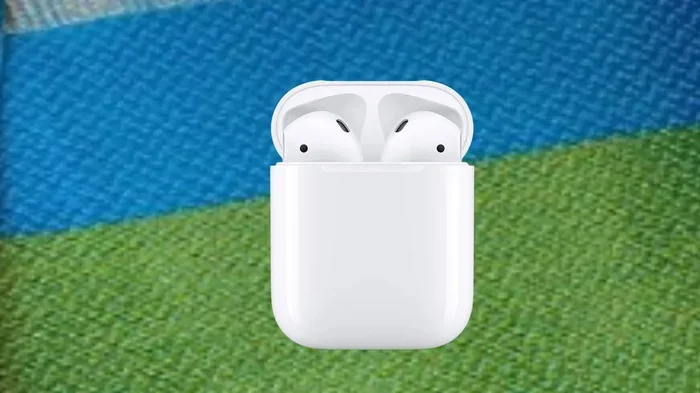
Visual guide about 2nd generation AirPods earbuds
Image source: digicool.in
The H1 Chip Advantage
The H1 chip is the brain of the 2nd Gen AirPods, and it’s the same chip found in the original AirPods Pro. It provides:
- Faster pairing: Connect to your iPhone in about 1-2 seconds (vs. 3-4 seconds with older W1 chip)
- “Hey Siri” support: Voice-activated Siri without touching your earbuds
- Lower latency: Better sync between audio and video
- 30% lower power consumption compared to 1st generation
- Seamless switching between Apple devices linked to the same iCloud account
Think of the H1 chip like a really efficient translator who speaks many languages (Apple devices) fluently. It makes all your Apple gadgets talk to each other smoothly.
Audio Quality
2nd Gen AirPods deliver solid audio quality for casual listening:
- Custom Apple driver tuned for balanced sound
- Good clarity for vocals, podcasts, and acoustic music
- Decent bass response though not bass-heavy like some competitors
- No EQ customization in Apple’s own software (you need third-party apps for that)
They won’t satisfy audiophiles, but for most people listening to streaming music, they sound perfectly good. According to Apple, the 2nd Gen AirPods use “computational audio” to adapt the sound in real-time based on the earbud’s fit in your ear, similar to how the Pros work but without the ANC component.
Call Quality
The 2nd Gen AirPods are actually excellent for phone calls and video conferencing. Each earbud has:
- Beamforming microphones that focus on your voice
- Speech-detecting accelerometers
- Noise reduction algorithms for clearer calls
This is one area where 2nd Gen AirPods shine. Your voice comes through clearly to the other person, even in moderately noisy environments. They’re popular for business calls and Zoom meetings for good reason.
Battery Life
Battery life on 2nd Gen AirPods is respectable:
- 5 hours of listening time per charge
- 3 hours of talk time per charge
- 24+ hours total with the charging case
- 15 minutes in the case gives about 3 hours of listening
The lack of ANC actually helps here. Since the ANC system is one of the biggest battery drains in the AirPods Pro, 2nd Gen AirPods can squeeze out more listening time per charge.
Real-World Performance Without ANC
How do 2nd Gen AirPods actually perform in different environments? Let’s be realistic about what you can and can’t expect.
Quiet Environments
In a quiet home, office, or library, 2nd Gen AirPods perform great. You can enjoy music, podcasts, and calls without issue. The lack of ANC isn’t noticeable here because there’s nothing to cancel. This is their sweet spot.
Moderate Noise
In environments with moderate background noise, like a coffee shop or walking on a city street, you’ll start to notice the difference. You’ll need to turn up the volume to overcome ambient sounds, which isn’t great for your hearing long-term.
Did you know? The World Health Organization recommends keeping personal audio devices at no more than 60% of maximum volume for no more than 60 minutes per day to prevent hearing damage. Turning up volume to overcome lack of noise cancellation works against this guideline.
Loud Environments
In loud environments (planes, trains, gyms, busy streets), 2nd Gen AirPods struggle significantly. You’ll hear:
- Plane engine drone bleeding through your music
- Gym music and grunts during your workout
- Traffic noise when walking
- Office chatter on conference calls
This is where ANC really matters. If you frequently find yourself in these environments, 2nd Gen AirPods will frustrate you.
Safety Considerations
There’s actually a safety benefit to NOT having noise cancellation in some situations. When you’re:
- Walking near traffic
- Cycling in urban areas
- Waiting for announcements in airports or train stations
- Running outdoors
The lack of ANC means you can hear your surroundings, which keeps you safer. Some runners and cyclists actually prefer non-ANC earbuds for this exact reason.
Comparing 2nd Gen AirPods to Noise-Cancelling Alternatives
If you’re deciding between 2nd Gen AirPods and other models, here’s a clear breakdown.
AirPods Pro (1st and 2nd Generation)
What you get:
- Active noise cancellation
- Transparency mode (lets outside sound in when needed)
- Silicone ear tips for better seal (3 sizes included)
- Spatial Audio with dynamic head tracking
- Adaptive EQ
What you give up:
- Higher price ($249 for Pro, $249 for Pro 2)
- Shorter battery life per bud (4.5-6 hours depending on ANC use)
- Slightly heavier (5.3g vs. 4g per bud)
- Different fit (some people don’t like silicone tips)
The AirPods Pro 2 specifically offer up to 2x more noise cancellation than the original Pros, according to Apple.
AirPods 4 (with ANC)
Released in September 2024, the AirPods 4 with ANC brought noise cancellation to the open-ear AirPods design for the first time. This is the closest alternative to 2nd Gen AirPods if you want ANC.
What you get:
- Active noise cancellation in an open-ear design
- Adaptive Audio and Transparency mode
- H2 chip for better performance
- Personalized Spatial Audio
- USB-C charging case
Price: $179 (vs. $129 for AirPods 4 without ANC and $159 for 2nd Gen when new)
AirPods Max
These are over-ear headphones, not earbuds, but worth mentioning:
- Premium ANC performance
- $549 price point
- 20-hour battery life
- High-fidelity audio
These are for a completely different use case (home listening, travel, focused work).
Third-Party Alternatives
If you’re not locked into the Apple brand, consider:
- Sony WF-1000XM5: Often considered best-in-class ANC in true wireless earbuds
- Bose QuietComfort Ultra Earbuds: Excellent noise cancellation with comfortable fit
- Sennheiser Momentum True Wireless 4: Great sound quality with solid ANC
These typically range from $200-$300 but offer ANC and often superior sound quality to AirPods Pro.
Who Should Buy 2nd Generation AirPods?
Now that you know they don’t have noise cancellation, let’s talk about who they’re actually perfect for.
They’re Great For:
Budget shoppers: At their original $159 price point (often $100-$129 on sale or refurbished), they’re significantly cheaper than AirPods Pro while still offering the core Apple ecosystem benefits.
Casual listeners: If you mainly listen in quiet environments and don’t need to block out the world, these are perfectly adequate.
People who dislike silicone tips: Some users find silicone ear tips uncomfortable or irritating. The hard plastic design of 2nd Gen AirPods is universally comfortable for most ear shapes.
Frequent callers: If you take a lot of phone calls or video conferences, the 2nd Gen AirPods excel at voice clarity.
Apple ecosystem users on older iPhones: The H1 chip works with iPhone 5s and later, making these accessible to users who haven’t upgraded their phones recently.
Safety-conscious outdoor exercisers: Runners and cyclists who need to hear traffic benefit from not having noise cancellation.
They’re Not Ideal For:
Frequent flyers: Without ANC, plane engines will be very noticeable. If you fly more than a few times a year, get ANC earbuds.
Public transit commuters: Buses, trains, and subways are noisy. You’ll struggle to enjoy audio at safe volumes.
Open office workers: Background chatter and keyboard noise will bleed through. You’ll be tempted to turn up the volume dangerously high.
Anyone needing focus: If you’re trying to concentrate in a noisy environment, ANC is almost essential. Studies show noise cancellation can improve focus by up to 15% in noisy environments.
Heavy gym-goers: Gym music and grunts will interrupt your workout motivation.
Making the Right Choice for Your Needs
Here’s a simple decision framework to help you choose.
Ask Yourself These Questions
1. Where will I use them most?
- Quiet home/office → 2nd Gen AirPods work fine
- Commuting/travel/gym → You need AirPods Pro or AirPods 4 with ANC
2. What’s my budget?
- Under $150 → 2nd Gen AirPods or AirPods 4 (without ANC)
- $150-$250 → AirPods 4 with ANC or AirPods Pro (on sale)
- $250+ → AirPods Pro 2 or premium third-party options
3. Do I care about fit type?
- Prefer universal/hard plastic → 2nd Gen AirPods
- Don’t mind silicone tips → AirPods Pro or AirPods 4 ANC
4. How important is battery life per charge?
- Maximum battery → 2nd Gen AirPods (5 hours)
- Okay with 4.5-6 hours → Any model with ANC
The Bottom Line Recommendation
If you’re trying to decide between saving money with 2nd Gen AirPods or spending more for AirPods Pro or AirPods 4 with ANC, here’s my honest take:
The extra $70-$90 for ANC is worth it for most people. Here’s why: you’ll use your earbuds in various environments over their 2-3 year lifespan. Even occasional exposure to loud environments (flights, commutes, busy offices) makes ANC valuable. The technology adds genuine quality of life improvement.
However, if you’re a very specific user type (casual listener in quiet environments, budget-focused, silicone-averse), 2nd Gen AirPods are a legitimate choice. They’re not a “lesser” product, just a different one designed for different needs.
Conclusion: The Final Verdict
Let’s wrap up with absolute clarity: 2nd generation AirPods do not have noise cancellation. Period. They offer passive sound isolation through their physical design, but no active noise cancellation technology.
This isn’t a flaw, it’s a feature choice. Apple designed them as affordable, comfortable, convenient earbuds for everyday use in relatively quiet environments. They excel at this role.
If you need noise cancellation, you have clear alternatives at various price points:
- AirPods 4 (with ANC) at $179 for the closest experience to 2nd Gen AirPods plus ANC
- AirPods Pro 2 at $249 for premium noise cancellation with silicone tips
- Third-party options like Sony or Bose if you want maximum ANC performance
If you’re content with passive isolation and use your earbuds mainly in quiet spaces, 2nd generation AirPods remain a solid, affordable choice in 2025. They deliver the core Apple experience (instant pairing, Siri integration, seamless switching) at a price that won’t break the bank.
The most important thing is knowing what you’re buying. Now you do. Whether that leads you to 2nd Gen AirPods or a model with noise cancellation, you’ll make an informed decision that matches your actual needs.
Frequently Asked Questions
Do 2nd generation AirPods have any noise reduction at all?
Yes, but only passive noise isolation. The hard plastic design creates a partial seal in your ear that blocks some ambient noise, particularly higher-frequency sounds. However, this is significantly less effective than active noise cancellation (ANC) found in AirPods Pro and AirPods 4 with ANC.
Can I add noise cancellation to 2nd Gen AirPods with an app?
No, noise cancellation requires specialized hardware including outward and inward-facing microphones plus a dedicated processor. No software update or third-party app can add ANC capability to earbuds that lack the necessary hardware. The AirPods Pro 2 or AirPods 4 with ANC are your only options within the Apple ecosystem.
What’s the cheapest AirPods model with noise cancellation?
As of 2025, the AirPods 4 with ANC at $179 is Apple’s most affordable noise-cancelling option. However, you can often find AirPods Pro (1st generation) on sale or refurbished for around $150-$180, making them another budget-friendly ANC choice.
Why don’t 2nd Gen AirPods have noise cancellation?
Apple deliberately omitted ANC from 2nd Gen AirPods to keep them affordable ($159 vs. $249+ for Pro models), maintain their lightweight hard plastic form factor, and extend battery life to 5 hours per charge. Apple reserved ANC for premium models where users are willing to pay for the technology.
Are 2nd Gen AirPods still worth buying in 2025?
They can be worth buying if you find them at a good price (under $100 refurbished) and mainly use them in quiet environments for calls, podcasts, and casual music listening. However, for most users, spending a bit more for AirPods 4 with ANC offers better long-term value due to their versatility in various environments.
Do 2nd Gen AirPods have transparency mode like AirPods Pro?
No, 2nd Gen AirPods do not have transparency mode. Transparency mode is a feature exclusive to AirPods Pro and AirPods 4 with ANC that uses microphones to let outside sound in clearly when needed. 2nd Gen AirPods only provide natural passive sound passthrough based on their fit and design.