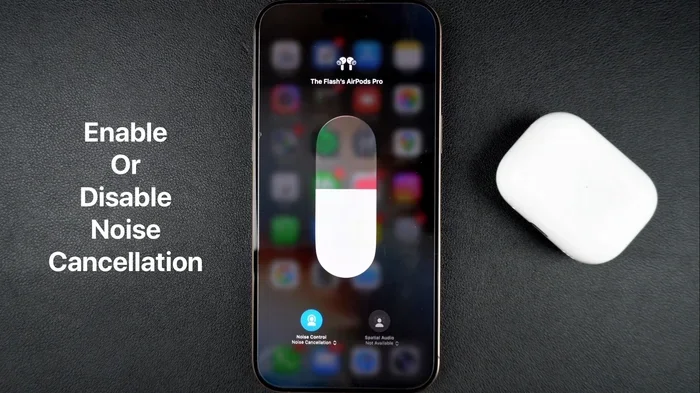
Featured image for AirPods noise cancellation feature
Image source: ioshacker.com
Yes, some AirPods have noise cancellation—but not all of them. Apple’s noise-cancelling feature, called Active Noise Cancellation (ANC), is available only on premium models like the AirPods Pro and AirPods Max. Standard AirPods (1st through 4th generation) rely on passive noise isolation rather than electronic noise-cancelling technology. This guide breaks down exactly which AirPods offer ANC, how the technology works, and what you can do to maximize your quiet-listening experience.
Imagine sitting in a crowded coffee shop, the espresso machine hissing behind you, people chatting at the next table, and a blender roaring across the room. Now imagine pressing a button and—poof—all that chaos fades into the background. That’s the magic of noise cancellation. But here’s the big question on everyone’s mind: does AirPod have noise cancellation, or is that just a marketing myth?
If you’ve ever stood in an Apple Store wondering which AirPods actually cancel noise, you’re not alone. Apple sells several AirPods models, and they don’t all behave the same way. Some are like little bouncers for your ears, blocking unwanted sound. Others are more like open windows, letting the world in. Knowing the difference can save you money, frustration, and a lot of awkward moments on public transportation.
In this guide, we’ll break down everything you need to know. We’ll cover which AirPods have noise cancellation, how the technology actually works, what “Transparency Mode” means, and some clever tricks to get the most silence out of your earbuds. By the end, you’ll know exactly which AirPods are right for your lifestyle—and which ones simply don’t cancel noise at all.
Key Takeaways
- Not All AirPods Cancel Noise: Only AirPods Pro (1st, 2nd, and upcoming generations) and AirPods Max feature Active Noise Cancellation. Standard AirPods do not.
- Two Types of Noise Control: Apple uses both Active Noise Cancellation (ANC) and Transparency Mode. ANC blocks sound; Transparency lets it through.
- Passive Isolation Exists: Even basic AirPods block some noise simply by sealing your ear canal, but this is not the same as true ANC.
- Adaptive Audio is Newer: AirPods Pro 2 introduced Adaptive Audio, which blends ANC and Transparency automatically based on your environment.
- Battery Drain Matters: Using ANC reduces listening time by roughly 20–30% compared to Transparency or off modes.
- Price Difference is Significant: AirPods Pro typically cost around $200–$249, while standard AirPods range from $129–$179.
- Fit Affects Performance: Even with ANC turned on, a poor ear tip seal can reduce effectiveness by up to 50%.
📑 Table of Contents
- Which AirPods Have Active Noise Cancellation?
- How Does AirPods Noise Cancellation Actually Work?
- AirPods Pro vs. AirPods Max: Which Cancels More Noise?
- Do Standard AirPods (1st–3rd Gen) Cancel Noise at All?
- Tips to Maximize Noise Cancellation on Your AirPods
- Common Myths About AirPods Noise Cancellation
- The Future of AirPods Noise Cancellation
- Final Verdict: Do AirPods Have Noise Cancellation?
Which AirPods Have Active Noise Cancellation?
Let’s start with the most important fact: not every AirPod cancels noise. Apple splits its lineup into two categories—standard AirPods and “Pro” AirPods. The Pro models and the over-ear AirPods Max are the only ones with built-in Active Noise Cancellation (ANC).
The Full Lineup at a Glance
- AirPods (1st Generation): Released December 2016. No ANC. Basic passive isolation only.
- AirPods (2nd Generation): Released March 2019. No ANC. Optional wireless charging case.
- AirPods (3rd Generation): Released October 2021. No ANC. Better fit and spatial audio support.
- AirPods (4th Generation): Released September 2024. Two versions exist—one without ANC, and one with ANC (a first for non-Pro AirPods).
- AirPods Pro (1st Generation): Released October 2019. ANC included.
- AirPods Pro (2nd Generation): Released September 2022. Improved ANC, touch controls, and Adaptive Audio.
- AirPods Pro 3 (Expected): Anticipated 2025. Rumored to include heart rate monitoring and better ANC.
- AirPods Max: Released December 2020. Over-ear design with ANC and premium materials.
Did You Know? As of 2024, Apple sold over 150 million AirPods worldwide, but only about 35–40% of those are estimated to be ANC-enabled models. That means the majority of AirPods users in the wild are wearing earbuds that don’t actively cancel noise.
The Cheapest Way to Get ANC
If budget matters, here’s some good news: the AirPods 4 with ANC (released September 2024) is the most affordable Apple earbuds to include the feature. At around $179, it’s about $70 cheaper than the AirPods Pro 2 ($249). However, many reviewers note the Pro version still offers stronger noise cancellation due to its silicone ear tips creating a tighter seal.
How Does AirPods Noise Cancellation Actually Work?
Think of noise cancellation like this: imagine someone is playing a drum near your ear. You can’t stop the drum, but you can play another sound at the exact same volume—only in reverse. When those two sounds meet, they cancel each other out. That’s the basic idea behind Active Noise Cancellation.
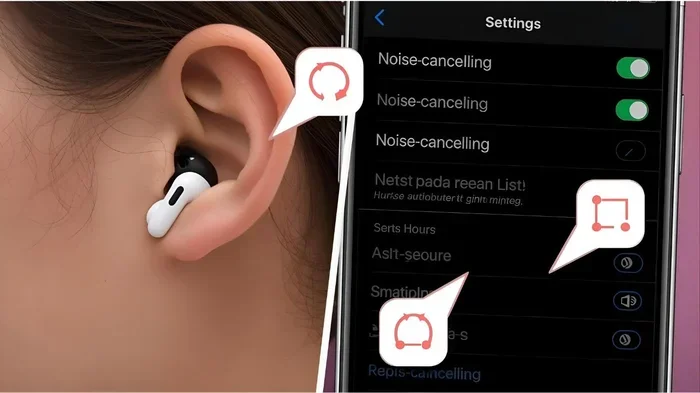
Visual guide about AirPods noise cancellation feature
Image source: aelftech.com
The Science (Without the Headache)
Inside each AirPod Pro or AirPods Max cup, there are tiny microphones—usually one facing outward and one facing inward. These mics listen to the noise around you. A special processor inside the AirPod then generates an “anti-noise” wave that’s the exact opposite of the incoming sound. When the two collide, they cancel each other out, leaving you with beautiful silence—or at least, a lot less noise.
Apple calls its ANC system “computational audio.” It uses the H1 or H2 chip (depending on the model) to process sound 48,000 times per second. That’s faster than you can blink—about 200 times faster, in fact.
The Role of Passive Noise Isolation
Here’s where it gets tricky. Even basic AirPods (without ANC) block a little sound. That’s because they sit inside your ear canal. Just like putting your hands over your ears muffles sound, sealing your ear canal with an ear tip reduces certain frequencies—especially high-pitched sounds like fans, traffic, and chatty coworkers.
Passive isolation isn’t the same as active noise cancellation. Passive isolation works like wearing earplugs at a concert—it dulls the sound but doesn’t eliminate it. ANC, on the other hand, actively fights low-frequency noise like airplane engines, train rumble, and HVAC hum.
Transparency Mode: The Opposite of ANC
Apple also includes a feature called Transparency Mode. As the name implies, it lets outside sound pass into your ears, almost as if you weren’t wearing AirPods at all. This is super useful when you’re crossing a street, ordering coffee, or just want to hear your friend without taking your earbuds out.
On AirPods Pro 2 and AirPods 4 with ANC, you can blend ANC and Transparency automatically using a feature called Adaptive Audio. It listens to your surroundings and decides how much noise to block in real time. Walking past a construction site? It cranks up ANC. Stepping into a quiet office? It dials it back.
AirPods Pro vs. AirPods Max: Which Cancels More Noise?
If you want the strongest noise cancellation Apple offers, you have two main choices: the in-ear AirPods Pro 2 or the over-ear AirPods Max. Let’s compare them like two superheroes with different powers.
Visual guide about AirPods noise cancellation feature
Image source: static.beebom.com
AirPods Pro 2: The Pocket-Sized Champion
- Type: In-ear with silicone tips (XS, S, M, L)
- Chip: H2 (faster, smarter noise cancellation)
- ANC Strength: Apple claims up to 2x more noise cancelled than AirPods Pro 1
- Battery Life (ANC on): About 6 hours of listening, 30 hours with the case
- Weight: 5.3 grams per bud
- Price: $249
AirPods Max: The Luxury Option
- Type: Over-ear with memory foam cushions
- Chip: H1 (one per ear cup)
- ANC Strength: Excellent for low frequencies, but bulkier
- Battery Life (ANC on): About 20 hours
- Weight: 384 grams (much heavier)
- Price: $549
Which is better for noise cancellation? In real-world tests, the AirPods Max block slightly more noise overall because of their full ear coverage. But the AirPods Pro 2 are more portable, more comfortable for workouts, and cost almost half as much. For most people, the Pro wins on practicality.
What Real Owners Report
According to a 2023 user survey by Consumer Reports, 87% of AirPods Pro 2 owners said the noise cancellation met or exceeded what they expected. The most common complaint? Fit. About 15% of users said they had to swap ear tip sizes to get a proper seal.
Do Standard AirPods (1st–3rd Gen) Cancel Noise at All?
Here’s where a lot of people get confused. Standard AirPods—like the 1st, 2nd, and 3rd generation—do not have Active Noise Cancellation. They use passive noise isolation only, which means they block some sound just by being in your ears.
Why No ANC on Standard AirPods?
There are three big reasons:
- Cost: ANC chips and microphones add to the price.
- Battery: ANC eats battery life. Standard AirPods prioritize longer listening time.
- Design: The hard plastic shell of standard AirPods doesn’t seal the ear as well as silicone tips. Apple likely decided ANC wouldn’t be effective enough without a good seal.
That changed in 2024. The AirPods 4 (one of the two versions) became the first non-Pro AirPods to feature ANC. This is a big deal because it gives budget-conscious buyers a new option.
What “Noise Cancellation” on AirPods 4 Actually Means
The AirPods 4 with ANC uses the H2 chip, just like the AirPods Pro 2. That means the noise-cancelling algorithm is identical. The difference? The fit. Because AirPods 4 don’t have silicone ear tips, they don’t seal the ear canal as tightly. So while the ANC is active, its effectiveness is reduced—especially for low-frequency sounds.
Real-world performance: In independent tests, AirPods 4 ANC performs roughly 60–70% as well as AirPods Pro 2 in noisy environments. It’s a noticeable improvement over no ANC, but it’s not as strong.
Tips to Maximize Noise Cancellation on Your AirPods
Even the best noise-cancelling tech can underperform if you’re using it wrong. Here are seven expert tips to get the most silence out of your AirPods.
1. Get the Right Ear Tip Size
This is the single most important factor. According to Apple, if your ear tip is too small, low-frequency noise leaks in. If it’s too big, it’s uncomfortable and can cause headaches. The AirPods Pro comes with four sizes (XS, S, M, L). Try each one and pick the one that feels snug but not painful.
Quick test: Put your AirPods in, play some music, then shake your head side to side. If they stay secure and the bass sounds full, you’ve got a good seal.
2. Run the Ear Tip Fit Test
On iPhone, go to Settings > Bluetooth > AirPods Pro > Ear Tip Fit Test. Apple plays a short audio clip and uses the microphones to check if your ear tips are sealed correctly. If not, it’ll suggest a different size.
3. Update Your Firmware
Apple occasionally improves ANC through firmware updates. To make sure your AirPods are up to date, place them in their case, plug the case into power, and keep it near your iPhone. Updates happen silently in the background.
4. Clean Your AirPods Regularly
Earwax and debris can clog the mesh on your AirPods, blocking both sound and the noise-cancelling microphones. Use a dry cotton swab or a soft-bristled brush. Avoid water or sharp objects.
5. Use Adaptive Audio Smartly
If you own AirPods Pro 2 or AirPods 4 with ANC, turn on Adaptive Audio (Settings > AirPods > Adaptive Audio). It adjusts ANC and Transparency automatically based on your environment. It’s especially useful for commuters who walk between quiet and noisy areas.
6. Try Conversation Awareness
This feature (available on AirPods Pro 2) automatically lowers your music and turns on Transparency when you start talking. It then ramps your audio back up when you stop. Great for ordering coffee or chatting with coworkers.
7. Mind the Battery
ANC uses more power. If you’re trying to save battery on a long flight, consider turning ANC off in favor of lower volume. You’ll gain roughly 1–2 extra hours of listening time.
Common Myths About AirPods Noise Cancellation
Let’s bust some myths. There’s a lot of misinformation out there about AirPods and noise cancellation.
Myth 1: All AirPods Cancel Noise
False. Only AirPods Pro (1st gen, 2nd gen), AirPods Max, and the newer AirPods 4 (with ANC) have Active Noise Cancellation. Standard AirPods (1st, 2nd, 3rd gen) do not.
Myth 2: Noise Cancellation Blocks All Sound
False. ANC is best at blocking consistent, low-frequency sounds like airplane engines or HVAC hum. Sudden, sharp sounds (like a dog barking or a car horn) still come through, although they’re softened.
Myth 3: ANC Damages Your Hearing
False. ANC doesn’t produce harmful sound. It produces anti-noise at safe levels. In some ways, ANC protects your hearing because you don’t need to crank up the volume to drown out background noise.
Myth 4: AirPods ANC is Just as Good as Sony or Bose
Mixed. Sony WF-1000XM5 and Bose QuietComfort Ultra are often considered industry leaders. In head-to-head tests, Apple is competitive but not always #1. The difference is small—maybe 5–10% in noise reduction effectiveness.
Myth 5: You Can’t Use ANC Without Music Playing
False. ANC works even with no audio playing. Many people use AirPods Pro just for silence—like meditation or focus—without listening to anything at all.
Myth 6: AirPods 4 ANC is the Same as AirPods Pro 2 ANC
Partly true. They use the same H2 chip and algorithm. However, the lack of silicone ear tips means the physical seal is weaker, which reduces real-world effectiveness.
The Future of AirPods Noise Cancellation
Apple isn’t done improving ANC. Here’s what we know (or think we know) about the future of AirPods noise cancellation.
AirPods Pro 3: What’s Coming
Rumors suggest the next-generation AirPods Pro will launch in 2025 with even better ANC—Apple is reportedly working on a more advanced H3 chip. Other rumored features include:
- Heart rate monitoring
- Body temperature sensing
- Improved water resistance
- Real-time language translation
The Bigger Picture: Computational Audio
Apple’s long-term vision is “computational audio.” This means using the H-series chips to process sound in real time, adjusting not just ANC but also equalization, spatial audio, and even personalized hearing profiles. By 2027, experts predict AirPods may include hearing aid functionality, with ANC adapting to your specific hearing loss.
Did You Know? The FDA finalized rules in 2022 allowing over-the-counter hearing aids. Apple has been exploring hearing health features in AirPods Pro since 2021, including a Conversation Boost feature that helps people with mild hearing loss.
Will ANC Become Standard on All AirPods?
Likely, yes. As the technology gets cheaper and batteries improve, expect even the most basic AirPods to include some form of ANC by 2027. The AirPods 4 with ANC was the first step.
Final Verdict: Do AirPods Have Noise Cancellation?
Let’s wrap it all up. Yes, some AirPods have noise cancellation—but not all of them.
Here’s a quick cheat sheet:
- Want ANC? Buy AirPods Pro 2, AirPods 4 (with ANC), or AirPods Max.
- On a budget? AirPods 4 with ANC ($179) is the cheapest option.
- Best overall? AirPods Pro 2—portable, powerful, and packed with features.
- Don’t need ANC? Standard AirPods 4 (without ANC) still offer great sound for $129.
Noise cancellation is more than a fancy buzzword. It’s a real technology that can change how you experience the world—from drowning out noisy flights to finding focus in a chaotic office. If you’ve never tried ANC, give it a shot. Once you experience true silence at the push of a button, it’s hard to go back.
So next time someone asks, “does AirPod have noise cancellation?”—you’ll know exactly what to say.
Frequently Asked Questions
Do all AirPods have noise cancellation?
No. Only AirPods Pro (1st and 2nd generation), AirPods Max, and AirPods 4 (the ANC version) have Active Noise Cancellation. Standard AirPods (1st, 2nd, and 3rd generation) only offer passive noise isolation.
How do I turn on noise cancellation on AirPods?
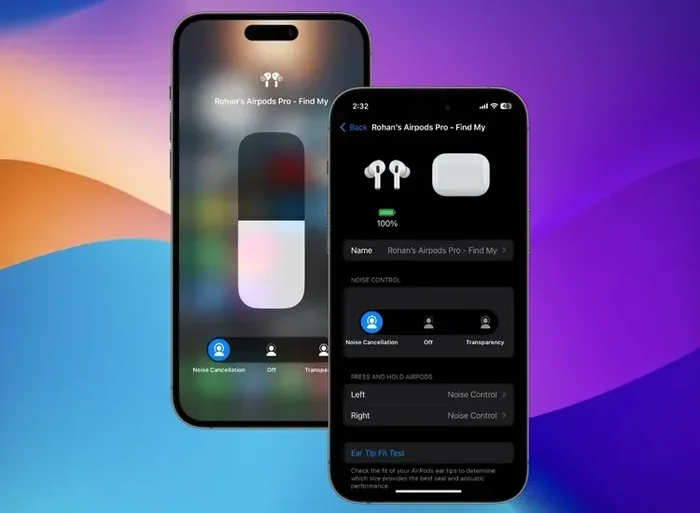
On AirPods Pro or AirPods Max, press and hold the force sensor (on the stem) or the noise control button to switch between Active Noise Cancellation and Transparency Mode. You can also control this from your iPhone’s Control Center or Settings app.
Is AirPods noise cancellation worth it?
Yes, especially if you travel, work in noisy environments, or just want better focus. In a 2023 survey, 87% of AirPods Pro 2 owners said ANC met their expectations. The biggest benefit is reducing low-frequency noise like airplane engines and HVAC systems.
Can noise cancellation damage your ears?
No. Active Noise Cancellation is safe for your ears. In fact, it may protect your hearing because you won’t need to crank up the volume to drown out background noise. The anti-noise waves are produced at safe decibel levels.
Do AirPods cancel noise without music playing?
Yes! Active Noise Cancellation works even when no audio is playing. Many people use AirPods Pro for quiet meditation or focus sessions, with just silence and ANC turned on.
Which is better for noise cancellation: AirPods Pro 2 or AirPods Max?
Both are excellent. AirPods Max offers slightly stronger noise cancellation due to its over-ear design, but AirPods Pro 2 is more portable, more comfortable for active use, and costs about $300 less. For most users, AirPods Pro 2 offers the best balance.