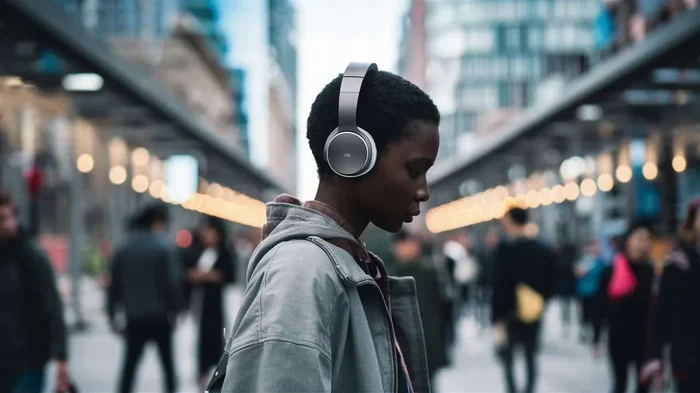
Featured image for person wearing headphones in public
Image source: headphonexperts.com
AirPods Max do leak some sound, especially at higher volumes, due to their design and reliance on noise cancellation rather than full noise isolation. While people nearby may hear faint audio in quiet environments, the sound bleed is minimal compared to older headphones. Understanding how your AirPods Max work and adjusting your listening habits can help you keep your music, calls, and content private wherever you go.
Have you ever been in a coffee shop, on a train, or sitting in a quiet office and wondered, “Can people hear my AirPods Max?” It’s one of the most common questions Apple headphone owners ask, and the answer is more nuanced than a simple yes or no.
AirPods Max are Apple’s premium over-ear headphones, designed with luxury materials, advanced Active Noise Cancellation (ANC), and spatial audio capabilities. But because they use ear cups rather than in-ear tips, they don’t create a perfect seal around your ears. This means sound has a way of sneaking out, especially when you turn up the volume. The good news? There are simple ways to manage sound leakage and keep your listening private.
In this guide, we’ll break down exactly how much sound AirPods Max leak, why it happens, and what you can do about it. Whether you’re worried about embarrassing yourself on a crowded subway or simply want to enjoy your music without disturbing others, this article has you covered.
Key Takeaways
- AirPods Max Are Not Fully Soundproof: Unlike in-ear earbuds that seal your ear canal, AirPods Max rest on your ears, which means some sound can escape and reach nearby listeners.
- Noise Cancellation Helps, But Doesn’t Prevent All Leakage: Active Noise Cancellation (ANC) reduces what you hear from the outside, but it doesn’t physically block sound from escaping your headphones.
- Volume Is the Biggest Factor: At moderate volumes (around 50-60%), sound leakage is minimal, but anything above 70% can make audio clearly audible to people close to you.
- Quiet Environments Make Leakage More Noticeable: In libraries or offices, even low-level sound bleed becomes obvious because there’s little background noise to mask it.
- There Are Ways to Reduce Leakage: Lowering volume, using ANC mode, and adjusting the fit can significantly reduce how much others hear.
- Design Trade-Offs Matter: Apple prioritized comfort, spatial audio, and premium materials over total sound isolation, which is why some leakage is unavoidable.
- Calls Are More Discreet Than Music: Voice calls tend to leak less than bass-heavy music, but on speakerphone in quiet rooms, others may still hear fragments of conversation.
📑 Table of Contents
- How AirPods Max Work: The Basics You Need to Know
- Can People Actually Hear Your AirPods Max?
- Comparing AirPods Max to Other Headphones
- When Sound Leakage Matters Most (and Least)
- Tips to Minimize Sound Leakage from AirPods Max
- The Science Behind Sound Leakage: A Simple Analogy
- Final Thoughts: Balancing Privacy, Comfort, and Audio Quality
How AirPods Max Work: The Basics You Need to Know
Before we get into whether others can hear your audio, it helps to understand how AirPods Max actually function. Think of them as a high-tech cocoon for your ears. They use memory foam ear cushions, an aluminum frame, and Apple’s H1 chip to deliver a listening experience that’s rich, immersive, and personalized.
The Role of Active Noise Cancellation
Active Noise Cancellation is one of the headline features of AirPods Max. It works by using tiny microphones on the outside of the ear cups to listen to the world around you. The headphones then create an “anti-noise” signal, which is basically a mirror image of the outside sounds. When this anti-noise meets the real noise, they cancel each other out, much like how two waves colliding in a pool can flatten the water.
This technology is fantastic for blocking out airplane engines, air conditioners, and chattering coworkers. But here’s the catch: ANC is designed to stop sound from coming in, not necessarily to stop your audio from going out. It’s like having a screen door that blocks bugs from flying in but doesn’t keep smells from escaping the kitchen.
Why Over-Ear Design Causes Some Leakage
Unlike AirPods Pro, which use silicone tips that create a tight seal inside your ear canal, AirPods Max rest gently on top of your ears. The ear cushions are soft and breathable, designed for long listening sessions without discomfort. However, this comfortable fit also means there are tiny gaps where sound can escape.
It’s similar to placing your hand over your mouth versus cupping it tightly. A loose seal lets sound travel more freely, while a tight seal contains it. AirPods Max prioritize comfort and breathability, so they lean toward the looser seal. This design choice is intentional, but it does have consequences for sound privacy.
Can People Actually Hear Your AirPods Max?
The short answer is: yes, but usually only at higher volumes or in very quiet environments. Let’s dig into the details.
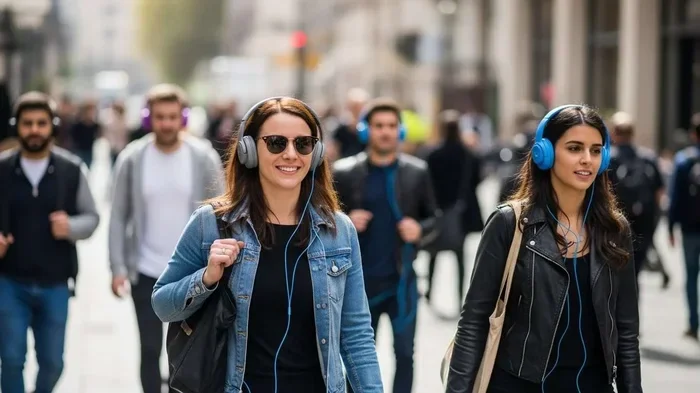
Visual guide about person wearing headphones in public
Image source: headphonexperts.com
Testing Sound Leakage in Real Life
Imagine you’re sitting in a quiet library. You put on your AirPods Max and start playing your favorite playlist. At 30% volume, no one around you will hear a thing. Bump it up to 60%, and you might catch a faint whisper of sound if someone is sitting right next to you. Crank it to 90% or 100%, and suddenly, the person across the table can probably hum along to your song.
This isn’t unique to AirPods Max. Most over-ear headphones, including premium models from Sony, Bose, and Sennheiser, leak some sound. The difference is usually how much. AirPods Max are generally in line with industry standards for over-ear headphones, though they don’t seal as tightly as some closed-back audiophile headphones designed specifically for sound isolation.
Why Some People Hear More Than Others
Several factors influence how much sound escapes your AirPods Max:
- Volume level: The louder you play your audio, the more sound waves vibrate through the ear cups and into the air.
- Type of audio: Bass-heavy music with deep thumps tends to leak more than podcasts or spoken-word content because low frequencies travel through materials more easily.
- Fit and seal: If your headphones are slightly loose, hair or jewelry gets in the way, or your ears don’t align perfectly with the drivers, leakage increases.
- Environment: Quiet rooms amplify even tiny amounts of sound leakage, while noisy cafes and busy streets naturally mask it.
Did you know? According to a 2023 survey by Statista, 47% of headphone users said they were concerned about sound leakage in public spaces, yet only 22% actively adjusted their volume to address it. It just goes to show how common this worry is, and how many of us don’t realize we’re “sharing” our music with strangers.
Comparing AirPods Max to Other Headphones
To put things in perspective, let’s compare AirPods Max with other popular headphone styles. This will help you understand where they stand in terms of sound leakage.
AirPods Max vs. AirPods Pro
AirPods Pro use silicone tips that create a seal inside your ear canal. This in-ear design naturally blocks sound from escaping, much like putting your fingers in your ears. As a result, AirPods Pro leak far less sound than AirPods Max, even at high volumes. If absolute privacy is your top priority, in-ear options generally win.
However, AirPods Pro also have their trade-offs. Some users find them uncomfortable for long sessions, and they don’t deliver the same expansive soundstage that over-ear headphones provide. AirPods Max excel at creating a “roomy” listening experience, which is part of their charm.
AirPods Max vs. Traditional Over-Ear Headphones
When stacked against competitors like the Sony WH-1000XM5 or Bose QuietComfort Ultra, AirPods Max perform comparably in terms of sound leakage. Sony and Bose models sometimes offer slightly better passive isolation due to tighter clamping force, but the difference is marginal.
What sets AirPods Max apart is their weight and build quality. They’re noticeably heavier (about 385 grams), which actually helps create a better seal in some cases, as the weight presses the ear cups more firmly against your head. On the flip side, this extra weight can cause fatigue during long listening sessions.
AirPods Max vs. Bone Conduction Headphones
Bone conduction headphones, like those from Shokz, sit on your cheekbones and bypass your ear canals entirely. They leak more sound than traditional headphones, which is why they’re often used for outdoor activities where situational awareness is critical. AirPods Max are significantly more private than bone conduction options.
When Sound Leakage Matters Most (and Least)
Not every situation requires the same level of sound privacy. Let’s look at common scenarios where sound leakage might be a concern.
Quiet Environments: Offices, Libraries, and Bedrooms
This is where sound leakage matters most. In a pin-drop-quiet library, even a small amount of audio bleed can disturb others. Similarly, if you’re working in an open office and your coworker can hear snippets of your Zoom call, it can be awkward, or worse, a privacy issue.
Tip: In these settings, keep your volume at or below 50%. You might also consider using Transparency Mode briefly to gauge how loud your audio sounds to the outside world. If you can hear your music clearly while the headphones are on your head, chances are others can hear it faintly when they come close.
Public Spaces: Cafes, Public Transit, and Streets
In noisy environments, sound leakage is less of an issue. The ambient noise of a coffee shop, the rumble of a subway, or the chatter of a busy street naturally masks any audio that escapes your headphones. Most people around you won’t hear a thing, especially if your volume is at a reasonable level.
Did you know? A study published in the Journal of the Acoustical Society of America found that ambient noise in cafes typically ranges from 65 to 75 decibels. This is louder than the average sound leakage from over-ear headphones at moderate volumes, which is why cafes are generally safe spaces for private listening.
Calls and Meetings: Privacy Considerations
If you’re taking phone calls or joining video meetings, sound leakage can be more concerning because you’re often sharing sensitive information. While AirPods Max use beamforming microphones to focus on your voice, the audio coming through the headphones still leaks to some degree.
For confidential calls, it’s best to find a private space, lower your volume, and speak at a normal volume. You can also switch to one ear cup off your ear (a feature supported by the headphones) if you need to stay aware of your surroundings.
Tips to Minimize Sound Leakage from AirPods Max
If you’re worried about others hearing your audio, there are several practical steps you can take. These tips are simple, effective, and don’t require any additional accessories.
1. Lower Your Volume
This is the easiest and most effective solution. Most people listen at volumes higher than necessary. Apple’s own hearing health guidelines recommend keeping levels below 60% of maximum volume for extended listening. Not only does this reduce sound leakage, but it also protects your hearing in the long run.
Think of it this way: if you can still hear someone calling your name from across the room while wearing your AirPods Max, your volume is probably at a safe, low-leakage level.
2. Optimize the Fit
A better fit means a better seal, which means less leakage. Make sure the ear cushions are centered over your ears and that the headband is adjusted to distribute weight evenly. If your hair is tucked inside the ear cups, pull it out. Jewelry, glasses, and hats can also interfere with the seal, so remove them when possible.
AirPods Max use a mesh canopy on the headband to distribute weight, and the ear cups can pivot slightly to conform to your head shape. Take a moment to adjust them properly each time you put them on.
3. Use Noise Cancellation Wisely
Switching to Active Noise Cancellation mode can actually reduce how loudly you feel the need to play your music. When outside noise is reduced, you don’t need to crank up the volume to overcome it. This indirect effect means less sound leakage overall.
Transparency Mode, on the other hand, lets outside sounds in and might tempt you to increase your volume to compensate. Use ANC in quiet environments and reserve Transparency Mode for situations where you need situational awareness, like walking near traffic.
4. Choose the Right Audio Content
As mentioned earlier, bass-heavy music leaks more than vocal-driven content. If you’re in a situation where privacy matters, consider switching to a podcast, audiobook, or acoustic playlist. These audio types are less likely to disturb others.
5. Be Mindful of Calls
During phone calls, your own voice can sometimes feel muffled due to ANC, leading you to speak louder than necessary. This doesn’t directly affect sound leakage, but it’s worth noting. Speak naturally, and trust that the beamforming microphones will pick up your voice clearly.
6. Consider Your Environment
Awareness is half the battle. If you’re in a library or shared workspace, be extra cautious about volume. In a bustling airport or gym, you have more leeway. Match your listening habits to your surroundings, and you’ll rarely have an issue.
The Science Behind Sound Leakage: A Simple Analogy
To truly understand why AirPods Max leak sound, imagine a room with a closed window. If the window has weather stripping and seals tightly, almost no air escapes. But if the window has gaps or cracks, air (or in this case, sound) will find its way out.
Your ears are like the window frame, and the ear cushions are like the weather stripping. Even the best cushions have microscopic gaps, especially where they meet your jawline, the back of your head, and where your glasses might sit. Sound, much like water, follows the path of least resistance and escapes through these small openings.
Higher frequencies, like a singer’s voice, tend to leak less because they’re more directional. Lower frequencies, like a bassline, spread out more and escape more easily. This is why someone nearby might hear the “boom” of your music but not clearly make out the lyrics.
Final Thoughts: Balancing Privacy, Comfort, and Audio Quality
AirPods Max are a marvel of audio engineering, but they aren’t perfect. Their over-ear design prioritizes comfort, breathability, and a spacious soundstage, which inevitably leads to some sound leakage. The question isn’t whether leakage exists, but whether it’s significant enough to matter in your daily life.
For most users, AirPods Max are more than private enough at reasonable volumes. They’re ideal for home listening, office work, commutes, and travel. In rare cases where absolute silence and privacy are required, like recording studios or libraries, you might want to pair them with a lower volume or consider in-ear alternatives.
By understanding how your AirPods Max work, adjusting your listening habits, and being mindful of your environment, you can enjoy everything these headphones offer without worrying about broadcasting your playlist to the world. After all, music is personal, and a few smart tweaks can keep it that way.
Frequently Asked Questions
Can people hear AirPods Max on the subway?
At moderate volumes, AirPods Max leak very little sound, and the ambient noise of a subway typically masks any audio that does escape. If you’re listening at 70% volume or higher, the person sitting right next to you might hear faint sounds, but it’s rarely a major issue in public transit settings.
Do AirPods Max leak more sound than AirPods Pro?
Yes, AirPods Max generally leak more sound than AirPods Pro because they use an over-ear design instead of silicone in-ear tips. AirPods Pro create a tight seal inside your ear canal, which significantly reduces sound leakage. However, AirPods Max offer a more comfortable fit for extended listening and a wider soundstage.
Is sound leakage bad for my ears?
Sound leakage itself doesn’t harm your hearing, but it often leads people to increase their volume to compensate, which can be harmful over time. Listening at high volumes for extended periods can cause noise-induced hearing loss. To protect your ears, keep your volume below 60% and take listening breaks every hour or so.
Does Active Noise Cancellation reduce sound leakage?
Active Noise Cancellation doesn’t directly prevent sound from leaking out, but it reduces the need to turn up your volume in noisy environments. By lowering ambient noise, ANC helps you listen at safer, lower volumes, which indirectly reduces leakage and protects your hearing.
Can I use AirPods Max for confidential phone calls?
AirPods Max are suitable for confidential calls when used in a private setting at moderate volume. In quiet environments, the audio on the other end of your call might be faintly audible to people very close to you, so it’s best to find a quiet, private space for sensitive conversations.
Are AirPods Max good for the office?
AirPods Max work well in office environments, especially when using Active Noise Cancellation to block out background chatter. At normal listening volumes (40-60%), coworkers nearby won’t hear your audio. If you’re playing music loudly or on a video call, consider lowering the volume or stepping into a private room to avoid disturbing others.