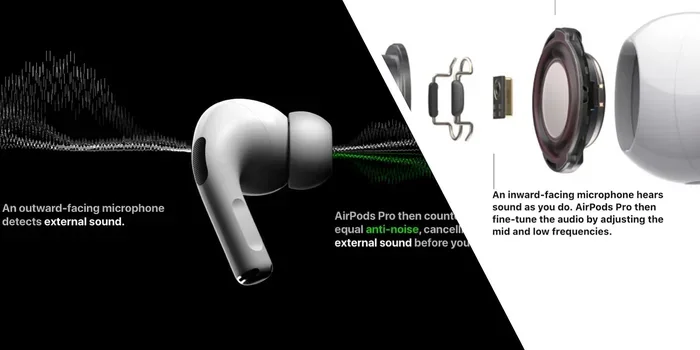
Featured image for AirPods noise cancellation technology
Image source: miro.medium.com
Yes, some AirPods models feature active noise cancellation (ANC) technology. Apple offers noise cancelling in the AirPods Pro (1st and 2nd generation), AirPods Pro 3, and AirPods Max. Standard AirPods (1st through 4th generation) do not have ANC, but they provide passive noise isolation through their in-ear or open-ear design. Understanding which AirPods have noise cancellation helps you choose the right pair for your needs and budget.
Key Takeaways
- Only Premium Models Offer ANC: AirPods Pro 1st gen, Pro 2nd gen, Pro 3, and AirPods Max have active noise cancellation built in.
- Standard AirPods Lack ANC: The regular AirPods lineup (1st-4th generation) does not include noise cancelling technology, though they offer some passive noise reduction.
- Two Types of Noise Reduction: Active noise cancellation uses microphones and speakers to block sound, while passive isolation relies on physical ear tip seals.
- Transparency Mode Complements ANC: Most noise cancelling AirPods also feature Transparency Mode, letting you hear surroundings when needed.
- Adaptive Audio Adds Smarts: Newer AirPods Pro models automatically adjust noise cancellation based on your environment.
- Price Varies Significantly: Noise cancelling AirPods range from $199 (AirPods Pro) to $549 (AirPods Max), reflecting their advanced technology.
- Battery Life Differs: ANC drains battery faster, but most models still offer 5-7 hours of listening time per charge.
📑 Table of Contents
- Understanding AirPods Noise Cancellation
- Which AirPods Models Have Noise Cancellation?
- How Does Active Noise Cancellation Work in AirPods?
- Active vs. Passive Noise Reduction: Which Do You Need?
- Tips for Maximizing Noise Cancellation on AirPods
- Alternatives to AirPods With Noise Cancellation
- The Future of AirPods Noise Cancellation
- Final Verdict: Are Noise Cancelling AirPods Worth It?
Understanding AirPods Noise Cancellation
Imagine sitting in a coffee shop, trying to focus on your favorite playlist while the espresso machine hisses and people chat loudly nearby. Wouldn’t it be amazing if your earbuds could magically silence all that chaos? That’s exactly what noise cancelling technology does, and yes, certain AirPods models can do this very well.
Apple’s AirPods lineup has grown significantly since 2016, and not all models are created equal when it comes to blocking unwanted sound. Some AirPods come packed with sophisticated active noise cancellation (ANC) technology, while others rely solely on passive noise isolation. Knowing the difference can save you money and frustration when making a purchase.
In this comprehensive guide, we’ll break down everything you need to know about AirPods and noise cancellation. You’ll learn which models have it, how the technology works, what alternatives exist, and how to get the most out of your noise cancelling experience. Whether you’re a frequent flyer, remote worker, or simply someone who loves their music, this guide will help you make an informed decision.
What Does Noise Cancelling Actually Mean?
Noise cancelling is a technology designed to reduce unwanted ambient sounds. Think of it like having a bouncer for your ears, deciding which sounds get in and which get kicked out. There are two main types to understand:
- Active Noise Cancellation (ANC): Uses microphones to detect outside noise, then creates “anti-noise” sound waves to cancel it out. It’s like adding white noise to cancel white noise, but much smarter.
- Passive Noise Isolation: Relies on physical barriers (like ear tips) to block sound. It’s like putting your hands over your ears, but more comfortable and effective.
The distinction matters because ANC is far more effective at blocking consistent, low-frequency sounds like airplane engines, air conditioners, and traffic hum. Passive isolation works better at blocking higher-frequency sounds like conversations and sharp noises.
Which AirPods Models Have Noise Cancellation?
Here’s where things get interesting. Apple currently sells several AirPods models, but only some include active noise cancellation. Let me break this down clearly so you know exactly what you’re getting.
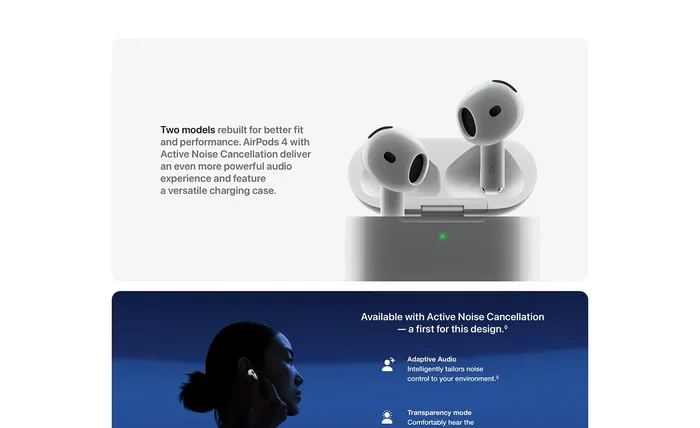
Visual guide about AirPods noise cancellation technology
Image source: m.media-amazon.com
AirPods With Active Noise Cancellation
Apple offers ANC in its premium AirPods models. These are the ones designed for users who want the best audio experience and serious noise blocking capabilities.
- AirPods Pro (1st Generation): Released in October 2019, these were Apple’s first in-ear AirPods with ANC. They feature silicone ear tips in three sizes for a better seal.
- AirPods Pro (2nd Generation): Launched in September 2022 with the H2 chip, offering up to 2x more noise cancellation than the first generation. They also introduced Adaptive Transparency Mode.
- AirPods Pro 3: Apple’s newest in-ear Pro model, featuring improved ANC performance and enhanced computational audio capabilities.
- AirPods Max: Released in December 2020, these over-ear headphones feature premium ANC with nine microphones total. They’re the most expensive option at $549.
Did You Know? The AirPods Max uses six outward-facing microphones to detect environmental noise and two inward-facing microphones to measure what you hear inside the ear cups. This setup allows for incredibly precise noise cancellation.
AirPods Without Active Noise Cancellation
Not every AirPods model includes this premium feature. Apple’s standard AirPods rely on their design alone for noise reduction.
- AirPods (1st Generation): Released December 2016, no ANC available.
- AirPods (2nd Generation): Released March 2019, no ANC available.
- AirPods (3rd Generation): Released October 2021, no ANC available despite updated design.
- AirPods (4th Generation): Released September 2024, no ANC in the base model. However, Apple introduced an ANC version of the 4th gen at a higher price point.
The standard AirPods use their one-size-fits-all hard plastic design, which creates a loose fit. This means they don’t seal your ear canal, allowing more outside noise to leak in. While this design feels comfortable for many users, it’s not ideal for noise blocking.
How Does Active Noise Cancellation Work in AirPods?
You might be wondering how a tiny pair of earbuds can silence the world around you. The science behind it is genuinely fascinating, and once you understand it, you’ll appreciate why ANC AirPods cost more.
The Science of Sound Wave Cancellation
Sound travels in waves, kind of like ripples in a pond when you toss a stone. Active noise cancellation uses a clever trick: it creates a mirror image of incoming sound waves, called “anti-phase” waves. When these anti-phase waves meet the original sound waves, they cancel each other out.
Think of it this way: if you and a friend are pushing a heavy box from opposite sides with equal force, the box doesn’t move. That’s essentially what happens with sound waves during ANC. Your AirPods detect outside noise, generate the opposite sound wave, and play it through the speakers. The result? Silence, or at least a significant reduction in unwanted sound.
The Role of Apple’s H1 and H2 Chips
Apple’s custom silicon plays a huge role in making AirPods ANC effective. The H1 chip (in AirPods Pro 1st gen and AirPods Max) processes audio 200 times per second, constantly adjusting the anti-noise signal. The newer H2 chip (in AirPods Pro 2nd gen and Pro 3) is even more powerful, processing audio faster and adapting to changing environments in real time.
Did You Know? The H2 chip in AirPods Pro 2 performs 48,000 operations per second just for noise cancellation. That’s faster than most computers were 20 years ago.
Adaptive Audio and Conversation Awareness
Newer AirPods Pro models include something called Adaptive Audio. This feature automatically blends Active Noise Cancellation and Transparency Mode based on your surroundings. Walking past a construction zone? Your AirPods ramp up ANC automatically. Stopping to chat with a barista? They switch to Transparency Mode without you touching anything.
It’s like having a smart assistant for your ears, constantly making micro-adjustments so you don’t have to think about it. This technology represents a significant leap from the original ANC systems that required manual switching.
Active vs. Passive Noise Reduction: Which Do You Need?
Understanding the difference between these two approaches helps you choose the right AirPods and set realistic expectations. Let me explain this clearly with real-world examples.
When Passive Noise Isolation Works
Passive isolation is like closing a window to block street noise. It won’t eliminate everything, but it reduces overall volume. Standard AirPods create a partial seal in your ear, which helps a little but isn’t great for loud environments.
Passive isolation works best for:
- Quiet offices or homes
- Reducing high-frequency sounds like keyboard clicking
- Brief commutes in moderately noisy areas
- Users who find in-ear tips uncomfortable
When Active Noise Cancellation Shines
ANC is like having a soundproof room wherever you go. It actively destroys noise waves, making it dramatically more effective in challenging environments.
Active noise cancellation excels at blocking:
- Airplane engine drone (the #1 reason frequent flyers love ANC AirPods)
- Train and subway sounds
- Air conditioner hum
- Traffic noise
- Gym equipment whirring
- Open office chatter
Did You Know? According to a 2023 study by the International Air Transport Association (IATA), airplane cabin noise averages 85 decibels during flight. Prolonged exposure can cause hearing fatigue. ANC AirPods can reduce this by up to 30 decibels, making long flights much more comfortable.
Making the Right Choice
Ask yourself these questions before buying:
- Where will you use them most? Loud places favor ANC AirPods.
- What’s your budget? ANC models cost $50-$350 more than standard AirPods.
- Do you prioritize comfort? Standard AirPods are lighter and don’t seal your ear canal.
- How important is battery life? ANC uses more power, slightly reducing listening time.
Tips for Maximizing Noise Cancellation on AirPods
Even the best ANC technology needs proper setup to perform well. Here are practical tips to get the most noise cancellation from your AirPods.
Get the Perfect Ear Tip Fit
This is the single most important factor. If your ear tips don’t seal properly, ANC performance drops dramatically. Apple’s AirPods Pro come with four silicone tip sizes (XS, S, M, L). Try each size and choose the one that feels snug but comfortable.
To test your fit, use Apple’s Ear Tip Fit Test. Go to Settings > Bluetooth > tap the “i” next to your AirPods Pro > select “Ear Tip Fit Test.” This feature plays a few seconds of sound and uses microphones to determine if you have a good seal.
Think of it like checking if a window is fully closed before turning on the AC. Even small gaps let noise sneak through.
Keep Your AirPods Updated
Apple regularly releases firmware updates that improve ANC performance. Make sure your AirPods are always running the latest version. To check, ensure your AirPods are connected to your iPhone, then go to Settings > General > About > AirPods. If an update is available, your iPhone will install it automatically when AirPods are charging nearby.
Clean Your AirPods Regularly
Dirt and earwax buildup on the microphone mesh or ear tips can reduce ANC effectiveness. Clean your AirPods weekly using a soft, dry, lint-free cloth. For the ear tips, remove them and rinse with water (no soap), then dry completely before reattaching.
Use the Right Noise Control Mode
Your AirPods offer three modes:
- Noise Cancellation: Maximum noise blocking for loud environments.
- Transparency Mode: Lets outside sound in for safety or conversations.
- Adaptive Audio: Automatically switches between the two based on context.
Switching is easy: press and hold the force sensor on the AirPods Pro stem, or use Control Center on your iPhone.
Manage Battery Life Expectations
ANC requires power, so battery life drops when it’s enabled. AirPods Pro 2nd gen offers up to 6 hours with ANC on (7 hours off). AirPods Max provides about 20 hours regardless of ANC status due to their larger batteries.
Pro tip: turn off ANC when you don’t need it to extend battery life. If you’re sitting in a quiet room, passive isolation might be enough.
Alternatives to AirPods With Noise Cancellation
Maybe you’re not sold on AirPods, or perhaps you want to explore options. Here’s what’s available in the noise cancelling earbuds market.
Apple’s Beats Brand
Apple owns Beats, which offers several ANC options at different prices:
- Beats Studio Buds: Around $149, compact ANC earbuds.
- Beats Fit Pro: $199, with ear wings for secure fit during workouts.
- Beats Studio Pro: $349, over-ear headphones competing with AirPods Max.
Beats products work seamlessly with Apple devices and offer similar features to AirPods.
Third-Party Options
Other popular ANC earbuds include:
- Sony WF-1000XM5: Widely regarded as having the best ANC in true wireless earbuds.
- Bose QuietComfort Ultra Earbuds: Excellent noise cancellation with comfortable fit.
- Sennheiser Momentum True Wireless 4: Premium sound quality with solid ANC.
These alternatives sometimes outperform AirPods in pure noise cancellation, though they lack Apple’s ecosystem integration.
The Future of AirPods Noise Cancellation
Apple continues investing heavily in audio technology. Based on patents and industry trends, here’s what we might see in future AirPods.
Improved Adaptive Features
Future AirPods will likely include more contextual awareness, automatically adjusting audio based on whether you’re walking, running, sitting, or sleeping. Machine learning will enable your AirPods to predict your preferences and adjust settings before you even think about it.
Better Battery Efficiency
New chip designs will deliver stronger ANC while using less power. Industry analysts predict future AirPods could offer 8-10 hours of listening time even with ANC enabled.
Health Monitoring Integration
Apple has filed patents for AirPods with built-in health sensors, including temperature monitoring and heart rate tracking. These features could work alongside ANC to create a more personalized listening experience.
Did You Know? Apple spends over $30 billion annually on research and development, much of which goes into audio and chip technology improvements.
Final Verdict: Are Noise Cancelling AirPods Worth It?
So, can AirPods be noise cancelling? Absolutely, but only certain models. If you’re serious about blocking unwanted sound, the AirPods Pro 2nd generation or AirPods Pro 3 offer the best balance of price, performance, and features. For over-ear enthusiasts with deeper pockets, AirPods Max delivers exceptional ANC in a premium package.
If you’re on a budget or prefer the open-ear design, standard AirPods provide a decent listening experience but won’t silence the world around you. Consider how and where you’ll use them most before deciding.
Remember these key points when shopping:
- ANC works best for consistent, low-frequency noise (planes, trains, AC units).
- Proper ear tip fit is crucial for maximum ANC effectiveness.
- Transparency Mode is a valuable companion feature for safety and convenience.
- Budget at least $199 for entry-level ANC AirPods.
- Firmware updates can improve ANC performance over time, so keep your AirPods updated.
Whether you’re commuting, working, traveling, or just trying to enjoy your music in peace, noise cancelling AirPods can transform your audio experience. They’re an investment, but one that pays dividends in focus, comfort, and audio quality. Choose the model that fits your lifestyle, get the right fit, and enjoy the silence.
Frequently Asked Questions
Do all AirPods have noise cancelling?
No, only certain AirPods models have active noise cancellation. The AirPods Pro (1st and 2nd generation), AirPods Pro 3, and AirPods Max all feature ANC. Standard AirPods (1st-4th generation) do not include active noise cancellation, though they provide some passive noise isolation through their design.
Can you turn noise cancelling on and off on AirPods?
Yes, you can easily toggle noise cancelling on and off. On AirPods Pro models, press and hold the force sensor on the stem to switch between Active Noise Cancellation, Transparency Mode, and Adaptive Audio. You can also control these modes through your iPhone’s Control Center or Settings app.
Are AirPods noise cancelling good for airplanes?
Yes, AirPods with active noise cancellation work exceptionally well for air travel. The ANC technology effectively reduces the constant drone of airplane engines, which is typically around 85 decibels. Many frequent flyers report that AirPods Pro make flights significantly more comfortable and less fatiguing.
How long does the battery last with noise cancelling on?
Battery life varies by model when ANC is enabled. AirPods Pro 2nd generation offers up to 6 hours with ANC on, AirPods Pro 3 provides similar performance, and AirPods Max delivers about 20 hours regardless of ANC status. The charging case extends total listening time to 24-30 hours for the Pro models.
What’s the difference between Transparency Mode and noise cancelling?
Transparency Mode lets outside sounds pass through your AirPods so you can hear your surroundings naturally, while Active Noise Cancellation blocks outside sounds. Transparency Mode is useful for conversations, crossing streets safely, or hearing announcements. Many AirPods Pro models can automatically switch between modes using Adaptive Audio.
Can I use noise cancelling AirPods with Android phones?
Yes, AirPods Pro and AirPods Max work with Android devices via Bluetooth, and active noise cancellation will function. However, you’ll lose some iOS-specific features like automatic Ear Tip Fit Test, spatial audio personalization, and seamless device switching. You also won’t be able to customize ANC settings without an Apple device for initial setup.