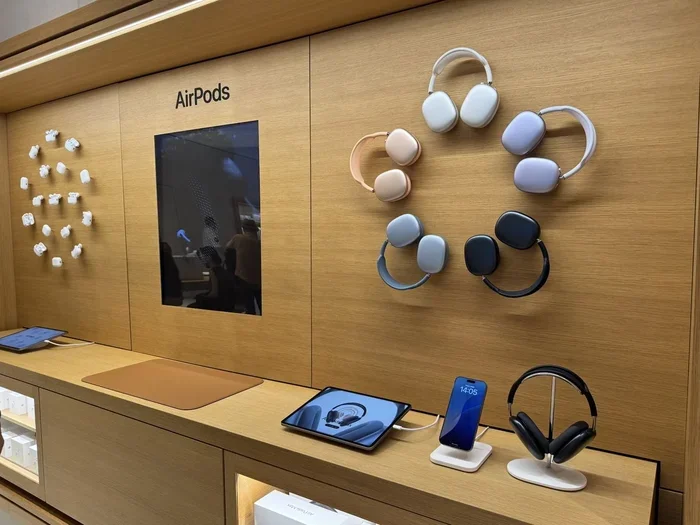
Featured image for Apple Store AirPods display
Image source: photos5.appleinsider.com
Apple officially discontinued AirPods 1 in 2019 and no longer sells them in Apple Stores or online. While you won’t find first-generation AirPods on Apple’s official shelves, you can still purchase them through third-party retailers like Amazon, eBay, and refurbished electronics shops. Most users today are better served by AirPods 2 or AirPods 4, which offer superior features at comparable prices. This guide covers everything you need to know about finding, buying, or replacing your original AirPods.
Remember when AirPods first hit the scene? It was late 2016, and Apple had created something genuinely new. Tiny white earbuds with no wires, a case that looked like dental floss, and a price tag that made everyone gasp. Fast forward to today, and those original AirPods have become a piece of tech history. But here’s the question many people still ask: can you actually buy them in 2026?
The short answer is no, not from Apple directly. The long answer is more interesting, and that’s exactly what we’re going to explore. Whether you’re trying to replace a lost pair, curious about budget options, or just wondering what happened to those iconic first-generation earbuds, this article has everything you need.
We’ll look at why Apple discontinued them, where you can still find them, what your alternatives are, and whether it even makes sense to buy them today. Think of this as your complete roadmap to AirPods 1 in the modern era.
Key Takeaways
- Discontinued Status: Apple stopped selling AirPods 1 in March 2019 when AirPods 2 launched, and they have not returned since.
- Third-Party Availability: You can still find new and refurbished AirPods 1 through Amazon, eBay, Walmart, and specialty retailers.
- Limited Apple Support: Apple continues to offer some support for AirPods 1, including battery service, but warranty coverage has expired.
- Better Alternatives Exist: AirPods 2, AirPods 4, and AirPods Pro offer dramatically better features for similar or lower prices today.
- Price Considerations: Used AirPods 1 typically sell for $40-$80, which is close to the price of new AirPods 2.
- Compatibility Concerns: AirPods 1 work with most Apple devices running iOS 12 or later, but miss out on modern features.
- Battery Degradation: Original AirPods batteries have significantly degraded for most users after 6+ years, making replacements costly.
📑 Table of Contents
- What Happened to AirPods 1 at Apple?
- Can You Still Find AirPods 1 Somewhere?
- Why Did Apple Discontinue AirPods 1?
- Where Can You Get AirPods 1 Replacements or Parts?
- Should You Buy AirPods 1 in 2026?
- Better Alternatives to AirPods 1
- How to Avoid AirPods Scams and Counterfeits
- The Future of AirPods and Apple’s Audio Strategy
- Making the Right Choice for You
What Happened to AirPods 1 at Apple?
Let’s start with the basics. AirPods 1 launched on December 13, 2016, alongside the iPhone 7. They were Apple’s first truly wireless earbuds, and they changed the audio game forever. Before AirPods, most wireless earbuds were bulky, had terrible battery life, and felt like you were wearing a small satellite dish on each ear. AirPods made wireless audio feel normal.
Apple sold them for $159 originally, and they flew off the shelves. According to Apple’s quarterly reports, AirPods became one of the company’s fastest-growing product categories. By 2018, AirPods revenue was growing at over 100% year-over-year, contributing to what analysts called Apple’s “wearables boom.”
The Official Discontinuation Date
On March 20, 2019, Apple launched AirPods 2. On that same day, AirPods 1 disappeared from Apple’s online store and physical retail locations. There was no grand announcement, no farewell sale, no clearance event. They simply vanished. This is standard Apple practice, by the way. When Apple discontinues a product, it usually happens overnight without warning.
The removal made sense from a business perspective. AirPods 2 shared the same basic design but included the new H1 chip, which offered faster connectivity, better battery life during calls, and “Hey Siri” voice activation. Apple wanted to push customers toward the upgraded model, and keeping the older version on shelves would have confused buyers.
Did You Know?
AirPods 1 originally used the W1 chip, not the H1 chip that came in AirPods 2. The W1 chip was efficient but limited. It didn’t support hands-free “Hey Siri,” and pairing took noticeably longer. Apple quietly referred to the original AirPods as “AirPods (1st generation)” to distinguish them from newer models.
Can You Still Find AirPods 1 Somewhere?
Here’s where things get interesting. Even though Apple doesn’t sell them anymore, AirPods 1 are absolutely still available in the wild. You just need to know where to look. Think of it like hunting for a classic car. The manufacturer stopped making them, but they exist in the used market and through resellers.
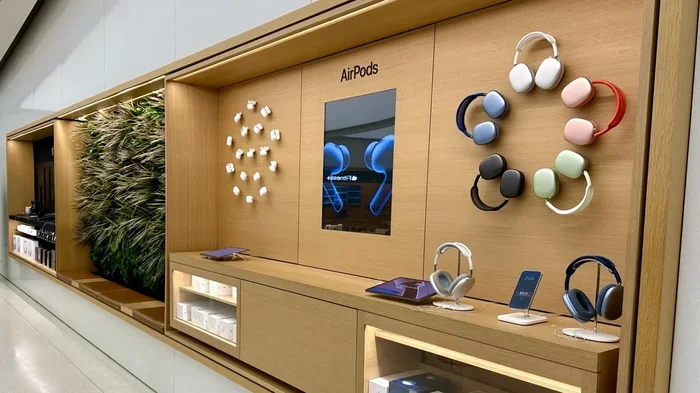
Visual guide about Apple Store AirPods display
Image source: photos5.appleinsider.com
Online Retailers and Marketplaces
Amazon still has listings for AirPods 1, though inventory fluctuates. You’ll find both new-old-stock (unopened retail units) and refurbished options. Walmart and Best Buy occasionally carry them through third-party sellers on their platforms, but be careful about pricing and authenticity.
eBay is probably the most active marketplace for AirPods 1. You’ll see hundreds of listings ranging from $30 to $90, depending on condition and whether you get the charging case. The tricky part? eBay is also full of counterfeit AirPods that look identical but offer vastly inferior performance. We’ll talk more about avoiding scams later.
Refurbished Electronics Specialists
Companies like Back Market, Gazelle, and Decluttr specialize in refurbished electronics, including AirPods 1. These businesses typically test, clean, and certify their products. They often offer warranties ranging from 30 days to one year, which gives you some protection if something goes wrong.
Refurbished AirPods 1 from reputable sources usually cost between $50 and $80. That’s significantly less than the original $159, but as we’ll discuss, it might not be the best value in 2026.
Local Options and Hidden Gems
Don’t forget about local options. Pawn shops, thrift stores, and Facebook Marketplace often have AirPods 1 sitting on shelves or listed by people who upgraded and forgot to throw away the old ones. You might find a great deal, or you might find a pair with a degraded battery that barely lasts 30 minutes.
When buying locally, always test the AirPods before purchasing. Put them in your ears, connect them to your device, and play music for at least 10 minutes. Check both earbuds individually. Listen for crackling sounds or connectivity drops. These are signs of aging components.
Why Did Apple Discontinue AirPods 1?
Understanding why Apple pulled the plug helps you make better decisions today. There were several reasons, and they weren’t all about the technology itself.
The H1 Chip Revolution
The biggest reason was simple: AirPods 2 were objectively better in almost every way. The H1 chip made pairing twice as fast. It improved call quality. It enabled hands-free “Hey Siri.” Battery life during phone calls jumped from 2 hours to 3 hours. These weren’t minor upgrades. They were meaningful improvements that changed how people used AirPods daily.
Apple realized that keeping AirPods 1 on shelves would cannibalize AirPods 2 sales. Why would someone pay $159 for AirPods 2 when they could get AirPods 1 for $99? Better to just remove the older model and offer AirPods 2 as the only option.
Market Positioning and Brand Perception
Apple has always positioned itself as a premium brand. Selling outdated technology alongside newer models can dilute that image. By discontinuing AirPods 1, Apple kept its audio lineup clean and modern. This is the same strategy the company used when it discontinued the iPhone 6, iPhone 7, and other older devices.
The Wearables Market Was Booming
In 2019, Apple’s wearables category (which includes AirPods, Apple Watch, and Beats products) was generating around $20 billion in annual revenue. AirPods alone accounted for a significant chunk of that. With demand skyrocketing, Apple didn’t need to keep old models around. They were selling everything they could make.
Did You Know? By early 2020, Apple had sold over 100 million AirPods worldwide, according to analyst estimates. The original AirPods were a massive success, but they were quickly overshadowed by newer versions that offered more features for similar prices.
Where Can You Get AirPods 1 Replacements or Parts?
Maybe you already own AirPods 1 and need a replacement. Maybe you lost one bud, or your charging case stopped working. Apple actually still supports AirPods 1 in some ways, even though they’re discontinued.
Apple’s Official Support for AirPods 1
Apple continues to offer battery service for AirPods 1, though availability varies by region. If your AirPods 1 won’t hold a charge, you can take them to an Apple Store or authorized service provider for a battery replacement. The cost typically runs around $49 per AirPod, which is steep considering the original purchase price.
Apple also provides software updates for AirPods 1 when you connect them to an iOS device. These updates can improve connectivity, fix bugs, and occasionally add minor features. However, new features introduced with AirPods 2, 3, and 4 won’t come to AirPods 1 due to hardware limitations.
Finding Replacement Parts
If you need a single replacement AirPod (not a pair), you have a few options. Apple will sell you a single replacement for around $69, but this service is mainly designed for AirPods Pro and AirPods 3. For AirPods 1, third-party sellers on Amazon and eBay are often your best bet.
Charging cases are even harder to find. Apple doesn’t sell replacement cases for AirPods 1 separately. You’ll need to hunt for a used or refurbished case, and you’ll need to make sure it’s compatible with your specific AirPods model.
The Battery Degradation Problem
Here’s a reality check. AirPods 1 launched in late 2016. If you’re still using a pair today, they’re at least 6-7 years old. Lithium-ion batteries don’t last forever. Most AirPods 1 in circulation today have batteries that hold 40-60% of their original capacity. That means instead of 5 hours of listening time, you’re getting maybe 2-3 hours.
Battery degradation is unavoidable, and it’s the main reason most people eventually upgrade. No amount of troubleshooting or resetting will bring back lost battery life. Once the cells are worn out, they’re worn out.
Should You Buy AirPods 1 in 2026?
Now for the million-dollar question: if you can find AirPods 1 for sale, should you actually buy them? The answer depends on your situation, but in most cases, the answer is no. Let me explain why.
The Price vs. Value Problem
AirPods 1 typically sell for $40-$80 in the used market. That’s roughly the same price as new AirPods 2, which are still manufactured and sold by Apple for $129 (often discounted to $99-$109). For just $20-$40 more, you get dramatically better technology.
Think of it like buying a 10-year-old used car versus a 3-year-old used car. Both will get you from A to B, but the newer one has modern safety features, better fuel economy, and won’t need repairs as soon.
What You Miss with AirPods 1
AirPods 1 lack features that many people now consider essential. Here’s what you’re giving up:
- Hands-free “Hey Siri”: You have to tap an AirPod to activate Siri, which feels clunky in 2026.
- Longer battery life: AirPods 2 offer 50% more talk time (3 hours vs 2 hours).
- Faster device switching: AirPods 1 can be slow when switching between iPhone, iPad, and Mac.
- Audio Sharing: This feature, introduced with AirPods 2, lets two people listen to the same audio source with separate AirPods.
- Find My improvements: Newer AirPods have better range and precision tracking in the Find My app.
None of these are deal-breakers on their own, but combined, they make AirPods 1 feel dated.
When AirPods 1 Still Make Sense
There are a few scenarios where buying AirPods 1 actually makes sense:
- You’re replacing a lost single bud: If you still have one working AirPod 1 and just need a replacement, finding a used pair to cannibalize for a single bud can save money.
- You’re on an extreme budget: If you absolutely cannot spend more than $30 on wireless earbuds, AirPods 1 beat most cheap knockoffs in terms of build quality.
- You’re a collector: Some people collect Apple products, and original AirPods have nostalgic value.
- You need a backup pair: Having cheap wireless earbuds as a backup for travel or emergencies can be useful.
Better Alternatives to AirPods 1
If you’ve decided that AirPods 1 aren’t the right choice (and we hope you have), here are the alternatives worth considering. These options offer better value and modern features.
AirPods 2: The Closest Successor
AirPods 2 are still sold by Apple, making them the most direct replacement for AirPods 1. They look almost identical but offer the H1 chip, hands-free Siri, and better battery life. At $129 (and often discounted to $99), they’re an excellent value in 2026.
AirPods 2 work with all iPhones from iPhone 5s and later, iPads from 2014 and later, and Macs from 2012 and later. They’re essentially universal in the Apple ecosystem.
AirPods 4: The Modern Choice
AirPods 4 launched in 2024 and represent Apple’s current entry-level option. They feature the H2 chip, USB-C charging, and improved sound quality. The standard AirPods 4 start at $129, while AirPods 4 with Active Noise Cancellation start at $179.
For most people buying AirPods today, AirPods 4 are the sweet spot. You get modern features, future-proof connectivity, and Apple’s latest audio technology.
AirPods Pro and AirPods Pro 2
If you want noise cancellation, consider AirPods Pro (2nd generation) at $249. They offer silicone noise cancellation, transparency mode, and spatial audio. They’re pricier, but the audio quality and noise cancellation are genuinely impressive.
AirPods Pro 2 also include the H2 chip, which enables advanced computational audio features. They’re the best AirPods for music lovers, frequent travelers, and anyone who wants premium sound.
Budget Third-Party Alternatives
If you don’t need AirPods specifically, consider alternatives like Samsung Galaxy Buds FE, Google Pixel Buds A-Series, or Anker Soundcore Liberty 4. These options offer excellent sound quality at lower prices than AirPods. The catch-all is that they work best with their own brands, not as AirPods do across all Apple products.
Did You Know?
According to Counterpoint Research, Apple controls over 50% of the global true wireless earbuds market. This dominance means third-party alternatives often have to compete on price, which is great for consumers looking for budget options.
How to Avoid AirPods Scams and Counterfeits
If you do decide to buy AirPods 1 from a third-party seller, you need to protect yourself from scams. Counterfeit AirPods are everywhere, and some are convincing enough to fool even tech-savvy buyers.
Red Flags to Watch For
The first red flag is pricing that’s too good to be true. If someone is selling brand new AirPods 1 in sealed packaging for $20, you’re looking at fakes. Genuine AirPods 1, even used, don’t sell for that little.
The second red flag is packaging quality. Authentic Apple products have impeccable packaging with crisp printing, precise cutouts, and premium materials. Counterfeiters often cut corners here. Compare the packaging to images on Apple’s website or unboxing videos on YouTube.
The third red flag is the serial number. Every genuine AirPod has a serial number printed on the inside of the charging case lid. You can verify this serial number on Apple’s coverage checker website. If the serial doesn’t match, or if it’s been flagged as already registered, you’re looking at fakes.
Testing for Authenticity
Once you have AirPods in hand (or ear), there are several tests you can perform:
- Check the Settings app: Genuine AirPods show up with proper naming and battery indicators. Fakes often show generic names or no battery information.
- Test the W1 chip features: Real AirPods 1 automatically pause when you take one out of your ear. Counterfeits usually lack this feature.
- Listen for audio quality: Genuine AirPods have balanced, clear sound. Counterfeits often have tinny audio, weak bass, or distortion at high volumes.
- Examine build quality: Real AirPods have smooth, seamless construction. Fakes often have visible seams, rough edges, or misaligned components.
Where to Buy Safely
Stick to reputable sources when buying AirPods 1. Apple’s Certified Refurbished store occasionally has older AirPods models, though inventory is unpredictable. Amazon’s “Renewed” program offers refurbished products with guarantees. Back Market and Gazelle certify their products and offer warranties.
When buying on peer-to-peer platforms like Facebook Marketplace or OfferUp, always meet in person, test the product thoroughly, and use payment methods that offer some protection (like PayPal Goods and Services, not Friends and Family).
The Future of AirPods and Apple’s Audio Strategy
AirPods 1 represent an important moment in tech history. They proved that people wanted truly wireless audio, and they kicked off a revolution in personal listening. But where does Apple go from here?
The AirPods Lineup in 2026
Apple currently sells AirPods 4, AirPods 4 with ANC, AirPods Pro 2, and AirPods Max. The AirPods Max, Apple’s over-ear headphones, launched in 2020 and received a USB-C update in 2024. The lineup has matured significantly since the original AirPods 1 launch in 2016.
Each AirPods model now serves a specific purpose. AirPods 4 are for casual listeners. AirPods 4 with ANC are for commuters. AirPods Pro 2 are for music enthusiasts. AirPods Max are for premium audio fans. This segmentation didn’t exist when AirPods 1 was the only option.
Health Features and Beyond
Apple is reportedly working on health-related features for future AirPods, including heart rate monitoring, body temperature sensing, and potentially even hearing aid functionality. These features would be impossible in AirPods 1 but make sense for newer models with more advanced processors and sensors.
The original AirPods were just about listening to music and taking calls. Today’s AirPods are evolving into health devices. This shift shows how far the category has come in less than a decade.
Did You Know?
According to Apple, AirPods are used in over 100 countries worldwide, and the company has sold more than 200 million pairs since 2016. That’s more than the population of Japan, Mexico, or most countries on Earth.
Making the Right Choice for You
So, do Apple stores still sell AirPods 1? No, they don’t. But the question itself reveals something interesting. Many people are still searching for these original earbuds, whether out of nostalgia, budget concerns, or simple curiosity.
Here’s what we recommend based on different situations:
- If you already own AirPods 1: Keep using them until they stop working. When they die, upgrade to AirPods 2 or AirPods 4 rather than trying to replace them.
- If you’re buying your first AirPods: Skip AirPods 1 entirely. Start with AirPods 4, which offer the best balance of features and value.
- If you need the absolute cheapest option: Consider AirPods 2 from a discount retailer, or explore budget alternatives from Samsung, Google, or Anker.
- If you’re replacing a single lost AirPod: Look for a used pair to cannibalize for parts, but only if you can verify authenticity.
The original AirPods were groundbreaking in 2016. They made wireless audio mainstream and showed the world that Apple could innovate beyond iPhones and Macs. But tech moves fast, and AirPods 1 have been left behind by newer, better options at similar prices.
If you’re attached to your original AirPods, we get it. They have sentimental value, and they still work (mostly). But if you’re shopping for wireless earbuds today, do yourself a favor and look at what’s available in 2026. Your ears (and your wallet) will thank you in the long run.
AirPods 1 will always have a special place in tech history. They just don’t have a place on store shelves anymore.
Frequently Asked Questions
When did Apple stop selling AirPods 1?
Apple officially discontinued AirPods 1 on March 20, 2019, the same day AirPods 2 launched. They were removed from Apple’s online store and all physical retail locations without any prior announcement or clearance sale.
Can I still buy AirPods 1 new in original packaging?
Yes, you can occasionally find sealed, brand-new AirPods 1 through third-party sellers on Amazon, eBay, and other marketplaces. However, these are old stock from resellers, not from Apple directly. Prices typically range from $50 to $100.
Are AirPods 1 still supported with software updates?
Apple continues to provide firmware updates for AirPods 1 when connected to iOS devices. However, these updates mainly fix bugs and improve connectivity. New features introduced with AirPods 2, 3, and 4 cannot be added to AirPods 1 due to hardware limitations.
How long do AirPods 1 batteries last today?
Most AirPods 1 purchased at launch in 2016 have batteries that now hold roughly 40-60% of their original capacity. This means instead of 5 hours of listening time, users typically get 2-3 hours. Apple offers battery service for around $49 per AirPod, but this is often more expensive than buying AirPods 2.
Is it worth buying AirPods 1 in 2026?
Generally, no. Used AirPods 1 cost $40-$80, which is similar to new AirPods 2 ($99-$129). AirPods 2 offer the H1 chip, hands-free “Hey Siri,” longer battery life, and faster device switching, making them a much better value. AirPods 1 only make sense for very tight budgets or specific replacement scenarios.
How can I tell if used AirPods 1 are genuine or counterfeit?
Check the serial number inside the charging case lid and verify it on Apple’s coverage website. Genuine AirPods connect properly through iOS Settings, show accurate battery levels, and have smooth, seamless construction. Counterfeits often have rough edges, misaligned components, poor sound quality, and unusual behavior in iOS. Pricing significantly below $40 is a major red flag for counterfeits.