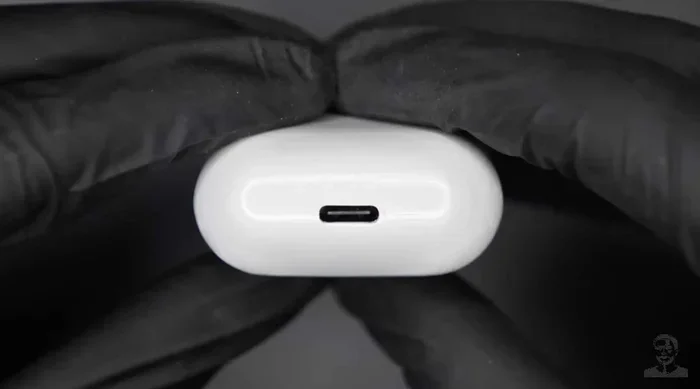
Featured image for AirPods 3 USB-C charging case
Image source: 9to5mac.com
Yes, AirPods third generation use USB-C for charging. Apple released a USB-C version of the AirPods 3 in September 2023, replacing the older Lightning model. However, the original AirPods 3 launched in 2021 still use Apple’s Lightning connector. If you’re buying new today, you’ll likely get the USB-C version.
Picture this: you just bought a shiny new pair of AirPods, plug them in to charge, and realize the cable doesn’t fit your phone. Frustrating, right? This exact scenario happened to millions of people when Apple finally made the jump from Lightning to USB-C with their third-generation AirPods. But here’s the thing—it’s not as simple as a flat yes or no answer.
The AirPods 3 actually have two different versions floating around in the wild. The original model launched in October 2021 with a Lightning connector, while a refreshed version arrived in September 2023 with USB-C. Knowing which one you’re getting matters, especially if you’re trying to standardize your cables or travel light.
This guide will clear up all the confusion. You’ll learn exactly which version uses USB-C, how to tell them apart, what changed (and what didn’t), and whether it’s worth upgrading if you already own the older model. Let’s dive in.
Key Takeaways
- Two Versions Exist: The original AirPods 3 (2021) use Lightning, while the updated AirPods 3 (2023) use USB-C for the charging case.
- EU Regulations Drove the Change: Apple’s switch to USB-C was largely influenced by European Union rules requiring a common charging standard by 2024.
- Same Audio Performance: Both versions deliver identical sound quality, battery life, and features—only the connector changed.
- Charging Cable Included: The USB-C AirPods 3 box includes a USB-C to USB-C cable, but no power adapter.
- Check Before You Buy: The model number tells you which version you have—A2565 (Lightning) versus A2566 (USB-C).
- Wireless Charging Still Works: Both versions support MagSafe and Qi-compatible wireless charging pads.
📑 Table of Contents
The Short Answer: Yes and No
Here’s where things get interesting. If you ask “do AirPods third generation use USB-C?” the answer depends entirely on when your pair was made.
The 2021 AirPods 3 use Lightning. When Apple first released the third-generation AirPods on October 26, 2021, the charging case came with a Lightning port. This was consistent with every iPhone Apple was selling at the time.
The 2023 AirPods 3 use USB-C. On September 22, 2023, Apple quietly updated the AirPods 3 lineup with a USB-C charging case. This was part of a broader company-wide transition away from Lightning connectors.
Why the Confusion Exists
Both versions look almost identical. The only visual difference is the charging port on the bottom of the case. Apple kept the same name “AirPods (3rd generation)” for both products, which creates real headaches for shoppers.
Did You Know? Apple’s switch to USB-C wasn’t voluntary in the strictest sense. The European Union passed a law in 2022 requiring all smartphones, tablets, and earbuds sold in EU countries to use USB-C by December 2024. Since Europe is a massive market, Apple essentially had to make the switch globally to streamline manufacturing.
Think of it like this: imagine if every car manufacturer suddenly had to use the same fuel pump design. That’s essentially what happened with USB-C for small electronics.
What About the AirPods Pro?
For comparison, the AirPods Pro 2 also got the USB-C treatment in September 2023. The standard AirPods (2nd generation) continue to be sold with a Lightning case as of early 2026, though Apple has been gradually phasing them out. The AirPods 4, released in late 2024, come in USB-C versions with and without active noise cancellation.
How to Tell Which Version You Have
Don’t want to read the tiny text on your charging case? No problem. There are several easy ways to figure out whether your AirPods 3 use USB-C or Lightning.
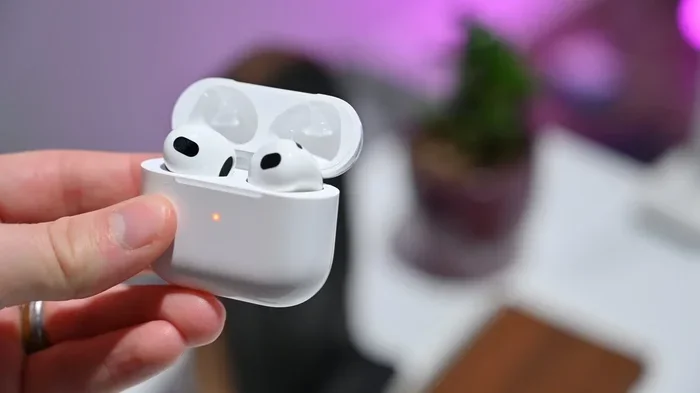
Visual guide about AirPods 3 USB-C charging case
Image source: photos5.appleinsider.com
Check the Port Visually
The most obvious method is to simply look at the bottom of your charging case. A Lightning port is small, oval-shaped, and quite narrow. A USB-C port is wider, more rectangular, and has rounded corners on both sides.
Lightning ports look like a tiny pill. USB-C ports look like a flat oval. If you’ve ever charged a modern Android phone, a Nintendo Switch, or a MacBook from the last decade, you’ve seen USB-C.
Find the Model Number
Every Apple product has a model number printed somewhere. For AirPods 3, you can find it in a few places:
- On the box: Look for “Model No.” printed on the side
- On your iPhone: Go to Settings > Bluetooth, tap the “i” next to your AirPods
- On the case: Flip open the lid and check the inside hinge area
The model numbers break down like this:
- A2565: AirPods 3 with Lightning case (original 2021 release)
- A2566: AirPods 3 with MagSafe Charging Case (Lightning)
- A2968: AirPods 3 with USB-C MagSafe Charging Case (2023 release)
If your model number starts with “A296,” congratulations—you have the USB-C version.
Use Your iPhone Settings
Here’s a neat trick. Connect your AirPods to your iPhone, open the Settings app, tap Bluetooth, then tap the small “i” icon next to your AirPods. Scroll down to find the model number. This works even if you don’t have the original box anymore.
Your iPhone can also tell you what version of firmware your earbuds are running. While this doesn’t directly tell you the charging port type, it can help you confirm which generation you own when combined with other details.
What Changed Between the Two Versions?
Here’s some good news: if you’re worried about missing out on features by buying the Lightning model, don’t be. The two versions are functionally identical in almost every way.
Visual guide about AirPods 3 USB-C charging case
Image source: images.techeblog.com
Audio Quality and Features
Both AirPods 3 versions deliver the exact same audio experience. You get:
- Spatial Audio with dynamic head tracking
- Adaptive EQ that tunes music to your ear shape
- Skin-detect sensors that pause playback when you remove an earbud
- IPX4 water and sweat resistance
- Force sensor controls on the stem
The drivers, chips, and acoustic design are identical. Apple didn’t change anything about the sound signature or feature set when switching the charging port.
Did You Know? Apple’s H2 chip powers the AirPods Pro 2 and AirPods 4, but the AirPods 3 use the older H1 chip. This means AirPods 3 don’t support some newer features like Adaptive Audio and personalized spatial audio. However, this is true for both the Lightning and USB-C versions.
Battery Life
Battery performance is also unchanged. You get up to 6 hours of listening time on a single charge and up to 30 hours total with the charging case. A quick 5-minute charge in the case gives you roughly 1 hour of listening time.
Both versions support the same charging methods: USB-C cable (for the 2023 model), Lightning cable (for the 2021 model), MagSafe wireless charging, and standard Qi-compatible wireless charging pads.
The Only Real Difference
To put it simply, the only meaningful difference between the two AirPods 3 versions is the physical charging port on the case. That’s it. If you bought the Lightning version in 2021 or 2022, you haven’t missed any software features or audio improvements.
Why Apple Made the Switch
The transition from Lightning to USB-C represents one of the biggest changes in Apple’s accessory ecosystem in over a decade. Understanding why it happened helps explain the broader shift across Apple’s entire product line.
The EU Common Charger Directive
In October 2022, the European Parliament passed legislation requiring a universal charging port for small electronic devices. The law specifically named USB-C as the standard and set a deadline of December 28, 2024, for compliance.
The rule applies to smartphones, tablets, digital cameras, headphones, earbuds, handheld game consoles, and portable speakers. Laptops got a later deadline of April 2026. The goal was to reduce electronic waste and consumer frustration with incompatible chargers.
Estimates from the European Commission suggested that the common charger rule could save consumers up to 250 million euros per year on unnecessary cable purchases. It could also reduce 11,000 tonnes of charger-related electronic waste annually.
Think of it like standardizing electrical outlets. In North America, you know any appliance you buy will work in any outlet. The EU wanted to create similar predictability for device charging.
Industry-Wide Impact
Apple wasn’t the only company affected. Every smartphone manufacturer selling in Europe had to comply. However, Apple was unique in having a proprietary connector (Lightning) that needed replacing, while most Android phones already used USB-C.
Rather than create a special Lightning version for Europe, Apple decided to transition its entire global product line to USB-C. This simplified manufacturing, packaging, and inventory management.
Beyond Regulatory Pressure
While EU rules were the primary catalyst, USB-C offers genuine benefits. The connector supports faster charging, faster data transfer, and higher power delivery. It can also handle audio and video signals, making it more versatile than Lightning ever was.
USB-C cables are also generally more durable than Lightning cables, thanks to their symmetric design and stronger connector housing. You can plug them in either way, which Lightning cables also allow—but USB-C feels sturdier in many users’ experience.
Practical Tips for Buyers
Whether you’re shopping for new AirPods or trying to figure out what to do with an older pair, here are some practical pointers to keep in mind.
If You’re Buying New in 2026
Good news: it’s nearly impossible to accidentally buy the Lightning version anymore. Apple has phased out the original AirPods 3 from most of its retail channels. The current AirPods lineup consists of AirPods 4 (USB-C), AirPods 4 with Active Noise Cancellation (USB-C), and AirPods Pro 2 (USB-C).
If you find a “new” AirPods 3 listing online at a suspiciously low price, double-check that it’s actually the USB-C version. Some retailers may still have Lightning-era inventory in stock, though this is increasingly rare.
If You Already Own the Lightning Version
Don’t stress about upgrading. Your AirPods work perfectly fine. The only real reason to upgrade would be if you want to consolidate cables or if your Lightning cable wears out and you don’t want to buy a replacement.
You can continue using your Lightning AirPods indefinitely. Apple will likely continue supporting them with firmware updates for several more years, even if they stop selling new units.
Maximizing Battery Longevity
Regardless of which version you own, proper charging habits can extend your battery life. Apple recommends avoiding extreme temperatures and not letting your AirPods sit at 0% charge for extended periods.
For the USB-C version, you can use any USB-C cable you already own—from your MacBook, iPad, Nintendo Switch, or Android phone. For the Lightning version, you’ll still need a Lightning cable, which Apple still includes with iPhones older than the iPhone 15.
Travel Considerations
If you’re a frequent traveler, the USB-C version offers a small but meaningful benefit. You can now charge your AirPods using the same cable and power adapter you use for your laptop, tablet, or modern iPhone (iPhone 15 and later). One less cable to pack.
Wireless charging remains available on both versions, so you can always bring a Qi-compatible charging pad if you want to eliminate cables entirely.
The Future of AirPods Charging
Looking ahead, the USB-C standard isn’t going anywhere soon. Apple’s entire ecosystem has moved toward USB-C, including iPhones, iPads, Macs, and now AirPods. The Lightning connector is essentially legacy technology at this point.
What About Wireless-Only Charging?
You might wonder whether Apple will eventually remove ports entirely. The iPhone has supported MagSafe wireless charging since 2020, and many Android phones have offered wireless charging for even longer.
However, wireless charging is still slower and less efficient than wired charging. Until that changes, expect Apple to keep USB-C ports on AirPods cases for the foreseeable future.
Speculation About AirPods 4 and Beyond
The AirPods 4, released in September 2024, came in two versions: standard and with Active Noise Cancellation. Both use USB-C charging cases. The AirPods Pro 3, when it eventually launches, will almost certainly continue the USB-C trend.
Apple has shown no indication of returning to Lightning or developing a new proprietary connector. USB-C appears to be the final common standard for the foreseeable future—at least until something genuinely better comes along.
Environmental Considerations
The EU’s common charger rule was partly motivated by environmental concerns. By standardizing on USB-C, the hope is that consumers will have fewer orphaned cables and chargers ending up in landfills.
If you own multiple devices, you’ve probably accumulated a drawer full of old cables. The shift to USB-C means future devices will all use the same cables, reducing redundancy over time.
Did You Know? The average household contains at least 3-4 unused charging cables, according to various surveys about cable accumulation. The EU estimates that obsolete cables account for about 11,000 tonnes of electronic waste each year in Europe alone.
Conclusion
So, does AirPods third generation use USB-C? The answer depends on which version you’re asking about. The original AirPods 3 from 2021 use Lightning, while the updated AirPods 3 from 2023 use USB-C. Both versions remain available in some channels, though Apple has been steadily transitioning to USB-C across its entire product line.
If you’re shopping today, you’ll almost certainly get the USB-C version. If you already own the Lightning version, there’s no urgent reason to upgrade—Apple hasn’t changed the audio performance or features between the two models. Your existing AirPods work just as well as they did the day you bought them.
The shift from Lightning to USB-C represents more than just a port change. It marks the end of an era for Apple’s proprietary connector standard and the beginning of a more universal approach to device charging. Whether you view it as regulatory compliance, environmental responsibility, or simply convenience, the change benefits consumers who want fewer cables and more compatibility across their gadgets.
Whichever version you own, enjoy your AirPods. They’re still among the most popular wireless earbuds on the planet, with millions of units sold every year. The sound quality, battery life, and seamless integration with Apple devices remain compelling reasons to choose them, regardless of which charging port they use.
Frequently Asked Questions
Do all AirPods 3 use USB-C?
Not all of them. The original AirPods 3 released in 2021 use a Lightning connector, while the updated version released in September 2023 uses USB-C. Both versions are still floating around in retail channels, so check the model number before buying.
How do I know if my AirPods 3 are USB-C or Lightning?
Check the model number on your AirPods case or in your iPhone’s Bluetooth settings. Model numbers starting with A296 are USB-C, while A2565 and A2566 are Lightning versions. You can also simply look at the charging port on the bottom of the case.
Can I charge AirPods 3 USB-C with an iPhone cable?
Yes, if you have an iPhone 15 or later, it comes with a USB-C cable that will work with the USB-C AirPods 3. For older iPhones with Lightning cables, you’ll need a USB-C cable for the 2023 AirPods 3 or stick with the Lightning version from 2021.
Is there any difference in sound quality between Lightning and USB-C AirPods 3?
No, both versions deliver identical audio performance. Apple did not change the drivers, chips, or acoustic design when switching to USB-C. You get the same Spatial Audio, Adaptive EQ, and overall sound signature on both models.
Will the Lightning AirPods 3 still work in 2026?
Absolutely. Your Lightning AirPods 3 will continue to function normally. Apple will likely provide firmware updates for several more years, and the hardware itself isn’t going to stop working. The only consideration is finding Lightning charging cables if yours wear out.
Why did Apple switch AirPods to USB-C?
Apple switched primarily due to European Union regulations requiring a common charging standard by December 2024. Rather than make separate Lightning versions for Europe, Apple transitioned its entire global AirPods lineup. USB-C also offers technical benefits like faster charging and better durability.