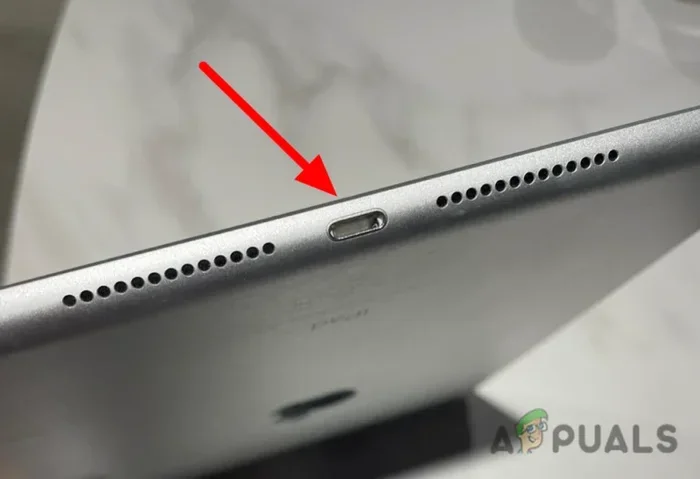
Featured image for iPad Air 3 charging port
Image source: cdn.appuals.com
The iPad Air 3 does NOT have a USB-C port. It uses Apple’s Lightning connector instead, which was the standard for iPads at the time of its release in 2019. USB-C connectivity didn’t arrive on the iPad Air line until the fourth generation, released in 2022. If you need USB-C on an iPad, you’ll need to upgrade to a newer model.
Picture this: you just bought a shiny new iPad Air 3, and you’re excited to plug in your USB-C accessories. But then you flip the device over and see a familiar narrow slot that looks nothing like USB-C. Frustrating, right? You’re not alone. Many iPad buyers have run into this exact confusion.
The question “does the iPad Air 3 have USB-C” is one of the most searched queries about this particular tablet. And the answer might surprise you. Apple made a big switch to USB-C across its iPad lineup, but the timing of that switch matters a lot when you’re trying to figure out which model has what.
In this complete guide, we’ll break down everything you need to know about the iPad Air 3’s port situation. You’ll learn what kind of port it actually has, why Apple chose that design, what you can do to work around the limitation, and whether it might be time to upgrade. Let’s dive in.
Key Takeaways
- iPad Air 3 Port Type: The iPad Air 3 (2019) uses a Lightning port, not USB-C, making it incompatible with USB-C accessories without an adapter.
- USB-C Arrived Later: Apple introduced USB-C to the iPad Air line with the iPad Air 4 in September 2022, three years after the Air 3 launched.
- Data Transfer Speeds: Lightning ports on the iPad Air 3 support USB 2.0 speeds (up to 480 Mbps), while USB-C offers significantly faster transfer rates.
- Charging Differences: Both Lightning and USB-C can charge your iPad, but USB-C supports faster charging and more power delivery options.
- Adapter Solutions: You can use a Lightning to USB-C cable or a Lightning Digital AV Adapter to connect some USB-C accessories to your iPad Air 3.
- Future-Proofing: If you plan to use modern accessories, external displays, or faster charging, upgrading to a USB-C iPad is worth considering.
- Compatibility Factor: The Lightning port on the iPad Air 3 is compatible with thousands of existing accessories, including chargers, docks, and audio devices.
📑 Table of Contents
- The Direct Answer: What Port Does the iPad Air 3 Actually Have?
- The History of Apple’s Port Transition on iPads
- What You Can and Cannot Do with the iPad Air 3’s Lightning Port
- Workarounds: How to Connect USB-C Devices to Your iPad Air 3
- iPad Air 3 vs Newer Models: Is It Time to Upgrade?
- The Future Is USB-C: What This Means for iPad Users
- Conclusion: Making the Best Choice for Your Needs
The Direct Answer: What Port Does the iPad Air 3 Actually Have?
Let’s cut straight to the chase. The iPad Air 3 does NOT have a USB-C port. Instead, it features Apple’s proprietary Lightning connector. This is the small, reversible port you’ve probably seen on iPhones, older iPads, AirPods charging cases, and various Apple accessories.
The iPad Air 3 was released in March 2019. At that time, Apple’s iPad Pro lineup had already moved to USB-C (starting with the 2018 iPad Pro models). However, the standard iPad, iPad Mini, and iPad Air lines still used Lightning. Apple kept this distinction for a few more years before fully transitioning.
To put it simply, if you’re holding an iPad Air 3 right now, flip it over and look at the bottom edge. You’ll see a Lightning port. That’s the only physical connection available on the device, aside from the Smart Connector on the side for keyboard attachments.
Why This Matters for You
Understanding your port type is crucial because it affects every accessory you might want to connect. Here’s a quick comparison to help you see the difference:
- Lightning Port: Small, narrow slot. Apple’s proprietary design. Used on iPhones (until iPhone 15), older iPads, AirPods, and many accessories.
- USB-C Port: Larger, oval-shaped port. Industry standard. Used on modern Android phones, newer iPads, MacBooks, and countless accessories.
Think of it like this: Lightning and USB-C are like two different electrical outlets used in different countries. You need an adapter to use appliances from one country in another. The same principle applies to your iPad Air 3 and USB-C accessories.
The History of Apple’s Port Transition on iPads
Apple’s journey from Lightning to USB-C on iPads is a fascinating story. It shows how technology standards evolve and how companies eventually embrace universal compatibility.
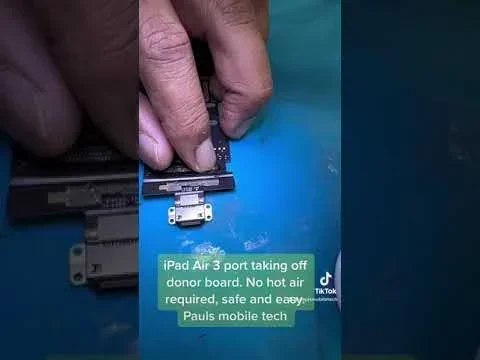
Visual guide about iPad Air 3 charging port
Image source: i.ytimg.com
The Lightning Era (2012-2018)
Apple introduced the Lightning connector in September 2012 with the iPhone 5. At the time, it was a revolutionary design. Unlike the old 30-pin connector, Lightning was small, reversible, and durable. You could plug it in either way, which felt like magic compared to the USB Micro-B connectors everyone else used.
For six years, Lightning was the standard across Apple’s mobile devices. The iPad Air, iPad Air 2, and many other iPad models all used this port. It worked fine for charging and basic data transfer. Millions of accessories flooded the market, from chargers to speakers to car mounts.
The USB-C Shift Begins (2018)
Did you know that Apple’s first iPad with USB-C was actually the 2018 iPad Pro? This was a significant moment. Apple chose to bring USB-C to its professional tablets first, likely because pro users demand more. They needed faster data transfer for large files, better external display support, and the ability to connect to professional cameras and equipment.
The 2018 iPad Pro’s USB-C port supported USB 3.1 Gen 2 speeds, which meant data transfers up to 10 Gbps. That’s about 20 times faster than what Lightning offered. Plus, you could connect directly to external monitors, cameras, and even charge other devices.
Spreading to Other iPad Lines (2020-2022)
After the iPad Pro made the switch, Apple gradually brought USB-C to other models:
- iPad Air 4 (2022): Finally brought USB-C to the Air lineup
- iPad Mini 6 (2021): The Mini line got USB-C too
- Standard iPad 10th Gen (2022): The basic iPad made the transition
By late 2022, every new iPad Apple sold featured USB-C. The iPad Air 3, being a 2019 release, predates this widespread change.
What You Can and Cannot Do with the iPad Air 3’s Lightning Port
Just because the iPad Air 3 doesn’t have USB-C doesn’t mean it’s useless for connectivity. Let’s explore what you can actually do with that Lightning port, and what limitations you’ll face.
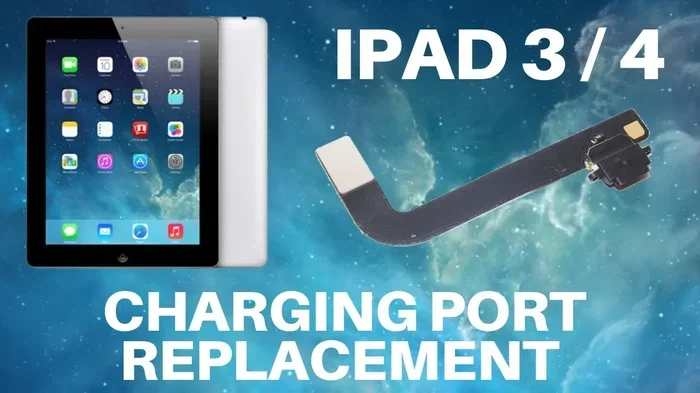
Visual guide about iPad Air 3 charging port
Image source: i.ytimg.com
What Works Well with Lightning
The Lightning port on your iPad Air 3 handles several tasks just fine:
- Charging: You can charge your iPad Air 3 using any Lightning cable and compatible power adapter. It supports up to 20W charging with the right adapter.
- Basic File Transfer: You can transfer photos, videos, and documents to and from your computer using a Lightning to USB cable.
- Audio Accessories: Lightning headphones, adapters for 3.5mm headphones, and audio interfaces all work perfectly.
- SD Card Readers: Apple’s Lightning to SD Card Camera Adapter lets you import photos directly from cameras.
- HDMI Output: With the Lightning Digital AV Adapter, you can connect your iPad to a TV or projector.
What’s Limited or Impossible
Here’s where things get tricky. Some tasks are difficult or impossible without USB-C:
- Connecting USB-C Drives Directly: You can’t plug a USB-C flash drive directly into your iPad Air 3.
- Faster Data Transfer: You’re limited to USB 2.0 speeds (480 Mbps), which feels slow when moving large video files.
- External Display Support: While you can mirror your screen via the AV adapter, you don’t get the flexible external display mode that USB-C iPads offer.
- Connecting to Modern Accessories: Many new accessories released in 2023 and beyond use USB-C exclusively.
Workarounds: How to Connect USB-C Devices to Your iPad Air 3
Don’t toss your iPad Air 3 in a drawer just yet. There are several clever workarounds that let you connect USB-C accessories to a Lightning port iPad.
Option 1: Use a Lightning to USB-C Cable
The simplest solution is a Lightning to USB-C cable. These cables have a Lightning connector on one end and USB-C on the other. They allow you to charge your iPad Air 3 using a USB-C power adapter, which is helpful because USB-C chargers are everywhere now.
Best for: Charging your iPad with modern USB-C power bricks you already own.
Limitation: These cables typically only handle charging, not data transfer to USB-C devices.
Option 2: Lightning to USB 3 Camera Adapter
Apple makes a “Lightning to USB 3 Camera Adapter” that opens up more possibilities. This adapter has a Lightning port (for power passthrough) and a USB-A port. You can plug USB accessories into it, including:
- USB flash drives (with the Files app)
- USB keyboards and mice
- USB microphones
- Ethernet adapters
- Some card readers
To connect USB-C devices, you can add a USB-A to USB-C adapter. It’s not the most elegant solution, but it works.
Option 3: Wireless Solutions
Sometimes the best workaround is no cable at all. Consider these wireless alternatives:
- AirDrop: Transfer files between Apple devices wirelessly
- Cloud Storage: Services like iCloud, Google Drive, and Dropbox let you access files without cables
- Bluetooth: Connect keyboards, mice, speakers, and headphones wirelessly
- Wi-Fi File Sharing: Apps like Documents by Readdle enable wireless file transfers
Option 4: Hub Solutions
There are third-party hubs designed specifically for Lightning iPads. These hubs plug into your Lightning port and offer multiple connections, including USB-A, HDMI, and SD card slots. While not as versatile as USB-C hubs, they expand your connectivity options significantly.
iPad Air 3 vs Newer Models: Is It Time to Upgrade?
If you’re frustrated by Lightning’s limitations, you might be wondering whether upgrading makes sense. Let’s compare the iPad Air 3 to newer options to help you decide.
iPad Air 3 vs iPad Air 4
The iPad Air 4 (2022) was the first iPad Air with USB-C. Here are the key differences:
- Port: USB-C (Air 4) vs Lightning (Air 3)
- Processor: A14 Bionic (Air 4) vs A12 Bionic (Air 3)
- Display: 10.9-inch Liquid Retina (Air 4) vs 10.5-inch Retina (Air 3)
- Apple Pencil Support: 2nd generation (Air 4) vs 1st generation (Air 3)
- Design: Flat edges, no home button (Air 4) vs curved edges, home button (Air 3)
The iPad Air 4 was a significant upgrade. It addressed the port issue and brought a modern design. If USB-C is essential for your workflow, this is the first iPad Air that delivers it.
iPad Air 3 vs iPad Air 5 (M1)
The iPad Air 5 (2022) took things even further with the M1 chip, the same processor found in MacBooks. This model also features USB-C with Thunderbolt-level speeds, making it a powerhouse for creative professionals.
iPad Air 3 vs iPad Air 6 (M2)
The latest iPad Air, released in 2024, includes the M2 chip and comes in two sizes: 11-inch and 13-inch. It fully embraces USB-C with faster transfer speeds and better external display support. If you’re buying new today, this is the top recommendation for most users.
Should You Upgrade?
Here’s a simple framework for deciding:
- Stay with iPad Air 3 if: You mainly browse the web, watch videos, take notes, and don’t need USB-C accessories. Your iPad still works great for these tasks.
- Upgrade if: You need to connect USB-C accessories regularly, want faster data transfer, use external displays, or find your current iPad running slowly with the latest iPadOS updates.
Consider this: Apple typically supports iPads with software updates for about 6-7 years. The iPad Air 3 launched in 2019, so it’s still receiving updates. However, as it ages, performance with new features will gradually decline.
The Future Is USB-C: What This Means for iPad Users
Apple’s transition to USB-C across all iPads wasn’t just a design choice. It reflects a broader shift in the tech industry toward universal standards.
Why USB-C Won
USB-C became the standard for good reasons. It’s versatile, fast, and used everywhere. The European Union even passed legislation requiring USB-C on most electronic devices by 2024. This pushed Apple to fully embrace the standard on iPads (and eventually iPhones with the iPhone 15).
Did you know that the EU’s common charger directive could save consumers up to $250 million annually? That’s the power of standardization. When everyone uses the same cable, electronic waste decreases, and life becomes simpler for consumers.
Benefits of USB-C for iPad Users
USB-C offers several advantages that Lightning simply can’t match:
- Faster Data Transfer: Up to 40 Gbps with Thunderbolt, versus 480 Mbps with Lightning
- Better External Display Support: Connect to 4K and even 6K monitors natively
- Universal Compatibility: One cable for your iPad, laptop, phone, and countless accessories
- More Power Delivery: Charge your iPad faster and even charge other devices from your iPad
- Accessory Ecosystem: Access to a vast ecosystem of USB-C hubs, docks, and peripherals
Think of USB-C as the universal remote of the tech world. One cable does almost everything, which simplifies your life and reduces the clutter in your bag.
What About the iPhone?
You might be wondering why iPhones kept Lightning longer than iPads. The simple answer is scale. iPhones sell in much higher volumes, and Apple’s accessory partners have invested heavily in Lightning. Plus, iPhones didn’t need the professional features that drove USB-C adoption on iPads.
However, with the iPhone 15 launch in September 2023, Apple finally brought USB-C to its smartphones. Today, Apple’s entire mobile lineup uses USB-C, leaving Lightning users (including iPad Air 3 owners) as a shrinking minority.
Conclusion: Making the Best Choice for Your Needs
So, does the iPad Air 3 have USB-C? No, it doesn’t. This 2019 tablet uses Apple’s Lightning connector, which was standard for iPads at the time but has since been replaced by USB-C across Apple’s lineup.
If you’re currently using an iPad Air 3, you have a few options. You can stick with it and use adapters and wireless solutions to work around Lightning’s limitations. You can also explore newer iPad models that offer USB-C connectivity, better performance, and modern features.
The right choice depends on your needs. If your iPad Air 3 still serves you well and you don’t need USB-C accessories, there’s no urgent reason to upgrade. But if you find yourself frustrated by adapter requirements or slow data transfers, a newer iPad Air with USB-C might be worth the investment.
Remember, technology evolves quickly. The iPad Air 3 was a great tablet in 2019, and it still handles everyday tasks well. But as we move further into the USB-C era, having that universal port becomes increasingly valuable. Consider your workflow, budget, and long-term needs before making a decision.
Whatever you choose, understanding your iPad’s capabilities is the first step to getting the most out of it. Now that you know the iPad Air 3 uses Lightning, you can plan your accessory purchases and connectivity solutions accordingly.
Frequently Asked Questions
Does the iPad Air 3 have a USB-C port?
No, the iPad Air 3 does not have a USB-C port. It features a Lightning connector, which was Apple’s standard port for iPads at the time of its release in March 2019. USB-C didn’t come to the iPad Air lineup until the iPad Air 4 in 2022.
Which iPad models have USB-C?
The first iPad with USB-C was the 2018 iPad Pro. Since then, Apple has added USB-C to the iPad Air 4 (2022), iPad Air 5 (2022), iPad Mini 6 (2021), and the standard iPad 10th generation (2022). Today, all new iPads sold by Apple include USB-C ports.
Can I connect USB-C accessories to my iPad Air 3?
You can connect some USB-C accessories using adapters like the Lightning to USB 3 Camera Adapter combined with a USB-A to USB-C adapter. However, this setup is less convenient than native USB-C support and may not work with all accessories.
Is Lightning or USB-C better for an iPad?
USB-C is generally better for iPads because it offers faster data transfer speeds (up to 40 Gbps with Thunderbolt), better external display support, faster charging, and universal compatibility with modern accessories. Lightning is limited to USB 2.0 speeds and works with fewer contemporary accessories.
Should I upgrade my iPad Air 3 to get USB-C?
If you regularly need to connect USB-C accessories, transfer large files quickly, or use external displays, upgrading to an iPad Air 4 or newer is worth considering. However, if your iPad Air 3 still meets your needs for browsing, streaming, and basic tasks, you can continue using it with adapters and wireless solutions.
What charger does the iPad Air 3 use?
The iPad Air 3 uses a Lightning cable for charging. It supports fast charging up to 20W with a compatible USB-C power adapter and a Lightning to USB-C cable. Apple includes this setup in the box with the iPad Air 3.