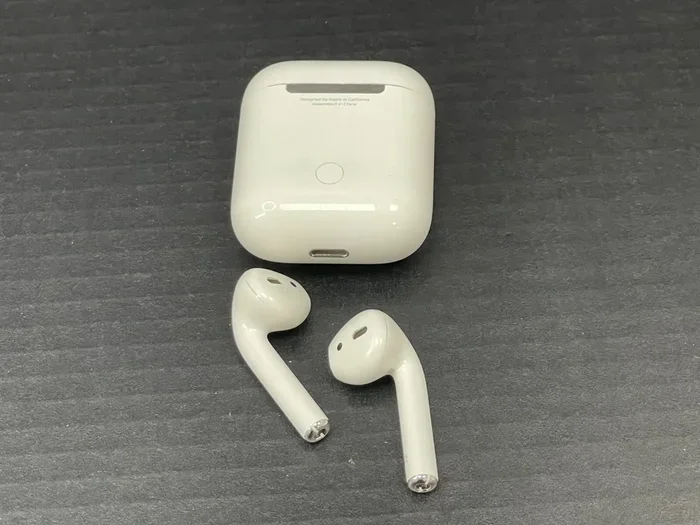
Featured image for Airpods 1st generation white
Image source: i.ebayimg.com
AirPods 1st Generation do NOT have active noise cancelling (ANC). They rely solely on a passive fit to block some external sound, but they lack the microphones and processing power needed to cancel noise electronically. If true noise cancellation is a must for you, you’ll need to upgrade to AirPods Pro or AirPods Max.
Picture this: you’re on a crowded subway, the train roaring beneath you, and all you want is a moment of peace with your favorite podcast. You pop in your AirPods, expecting that blissful silence premium earbuds are known for—but the chaos continues. Why? Because not all AirPods are created equal, and knowing the difference could save you hundreds of dollars and a lot of frustration.
If you’re searching for “do AirPods 1st Gen have noise cancelling,” chances are you already own a pair, are thinking about buying some, or are confused by Apple’s ever-growing lineup. The short answer is no, but the full story is way more interesting. By the end of this guide, you’ll know exactly what 1st Gen AirPods can do, what they can’t, and whether they’re the right choice for your ears and your lifestyle.
Let’s break it down in plain English, without the tech jargon nonsense.
Key Takeaways
- No Active Noise Cancelling: 1st Gen AirPods completely lack ANC technology—they have no built-in noise-cancelling microphones or software.
- Passive Isolation Only: They provide minimal noise reduction through their physical fit in your ears, similar to plugging your ears with your fingers.
- Better Options Exist: AirPods Pro and AirPods Max offer true ANC, along with Transparency mode for hearing your surroundings.
- Apple’s First Wireless Earbuds: Launched in December 2016, 1st Gen AirPods were revolutionary for their convenience but basic in features.
- Price vs. Performance: You can often find 1st Gen AirPods for under $100 today, making them a budget-friendly choice if ANC isn’t important.
- Use Case Matters: For quiet environments like home or office, 1st Gen AirPods work great; for planes, trains, or busy streets, look elsewhere.
- Check the Model Number: You can identify 1st Gen AirPods by model numbers A1523 and A1722 printed on the device.
📑 Table of Contents
- The Direct Answer: No Active Noise Cancelling on 1st Gen AirPods
- A Quick Look Back: The Original AirPods Story
- Which AirPods Actually Have Noise Cancelling?
- Why Don’t 1st Gen AirPods Have Noise Cancelling?
- Who Should (and Shouldn’t) Buy 1st Gen AirPods in 2025?
- Practical Tips: Getting the Most Out of Your 1st Gen AirPods
- The Future of AirPods and Noise Cancellation
The Direct Answer: No Active Noise Cancelling on 1st Gen AirPods
Let’s get right to the point. First-generation AirPods do NOT have active noise cancelling (ANC). Zero. Zilch. Nada. If you’re hoping to wave a magic wand and make airplane engine drone disappear with original AirPods, that simply isn’t going to happen.
What “Noise Cancelling” Actually Means
Here’s where things get tricky. The term “noise cancelling” gets tossed around like a frisbee at a beach party, but it has a specific meaning. True noise cancelling—also called Active Noise Cancellation (ANC)—uses tiny microphones to listen to the world around you, then creates an “anti-noise” sound wave to cancel it out. Think of it like this: if a loud noise is a wave in a pond, ANC creates a mirror wave that fills in the troughs and cancels the peaks. The result? Silence.
1st Gen AirPods don’t have the special microphones needed for this trick. They only have basic microphones for phone calls and talking to Siri. Without those extra noise-detecting mics, there’s no way for them to analyze and cancel ambient sound.
The Difference Between Noise Cancelling and Noise Isolating
Here’s something Apple stores don’t always explain well. There’s a HUGE difference between “noise cancelling” and “noise isolating.” 1st Gen AirPods offer some noise isolation—not cancellation. Noise isolation just means the earbud physically blocks your ear canal, like putting your fingers in your ears. Some sound gets blocked, but low-frequency rumbles (like bus engines or HVAC systems) leak right through.
Active noise cancellation, on the other hand, uses technology to actively fight sound waves. It’s like the difference between holding an umbrella in the rain (isolation) versus the rain suddenly stopping (ANC).
A Quick Look Back: The Original AirPods Story
To understand why 1st Gen AirPods lack ANC, you have to appreciate the time they came from. It was a different era for wireless earbuds—heck, it was a different era for Apple.
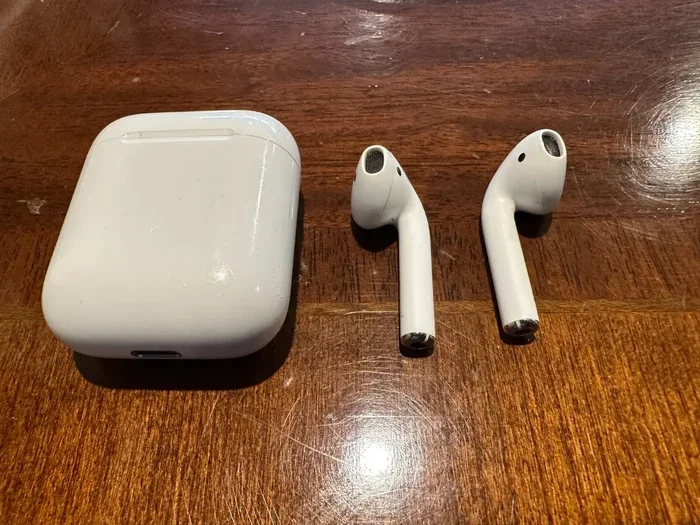
Visual guide about Airpods 1st generation white
Image source: i.ebayimg.com
When Did 1st Gen AirPods Launch?
Apple released the first-generation AirPods on December 13, 2016. Yes, almost a decade ago. At the time, truly wireless earbuds were rare and expensive. Remember those Bluetooth earpieces from the early 2000s that made people look like they were talking to themselves? AirPods were supposed to be Apple’s cool, modern answer.
They were the first pair of truly wireless earbuds Apple ever made, and they changed how we listen to music, take calls, and interact with our phones. But they were designed for simplicity, not for blocking out the world.
What Could the Original AirPods Actually Do?
Despite lacking ANC, 1st Gen AirPods were (and still are) pretty nifty for everyday use. Here’s what they brought to the table:
- Truly wireless design with no cables between the earbuds
- Quick pairing with iPhones thanks to Apple’s W1 chip
- 5 hours of listening time on a single charge
- 24 hours total with the charging case
- Automatic ear detection—music pauses when you remove them
- Access to Siri with a double-tap
- Decent sound quality for casual music listening and podcasts
For 2016, this was groundbreaking. But noise cancelling? That wasn’t on the menu.
Fun Fact: Did You Know?
When AirPods first launched, people were so confused by the design that many thought they were fake AirPods or just broken EarPods with the cord cut off. Even Apple had to create a tutorial video explaining how to use them. They became a cultural phenomenon—and a meme. Today, Apple has sold over 200 million pairs of AirPods across all generations, making them the most popular wireless earbuds on Earth.
Which AirPods Actually Have Noise Cancelling?
Now that we’ve established 1st Gen AirPods are ANC-free, let’s look at which AirPods DO have this coveted feature. This matters because you might be considering an upgrade or might have mixed up your AirPod generations.
AirPods Pro: The First ANC AirPods
Apple finally added active noise cancellation to AirPods Pro, released in October 2019. These were a game-changer for the AirPods lineup. They introduced:
- Active Noise Cancellation that blocks out the world
- Transparency mode so you can hear announcements without removing them
- Silicone ear tips in three sizes for a better, customizable fit
- Adaptive EQ that tunes music to your ear shape
- IPX4 sweat and water resistance
The AirPods Pro fit snugly in your ear canal, creating a seal that combined with ANC makes for some seriously quiet listening.
AirPods Pro 2 and Pro 3: Even Better
Apple released AirPods Pro 2 in September 2022, with double the noise cancellation power compared to the originals. Then, in September 2024, AirPods Pro 3 arrived with even more advanced ANC, plus a heart rate sensor and live translation features. If noise cancellation is your top priority, these are the cream of the crop.
AirPods Max: Over-Ear ANC Kings
For the ultimate noise-cancelling Apple experience, there’s AirPods Max—Apple’s premium over-ear headphones launched in December 2020. They offer the best ANC Apple makes, with 20 hours of listening time and a price tag that makes your wallet cry (originally $549). They use eight microphones for noise cancellation, plus two more for voice calls.
AirPods 4: Budget ANC Arrives
In September 2024, Apple surprised everyone by releasing AirPods 4 with ANC at a more accessible price point. So if you want noise cancellation without the Pro price, AirPods 4 are worth a look.
Why Don’t 1st Gen AirPods Have Noise Cancelling?
You might be wondering: if AirPods Pro can do it, why couldn’t the originals? There are some solid reasons.
The Technology Wasn’t Ready (or Affordable)
In 2016, fitting noise-cancelling tech into tiny earbuds was tough. ANC requires extra microphones, dedicated processing chips, and software algorithms. Cramming all that into a 4-gram earbud (yes, each 1st Gen AirPod weighs about 4 grams) was a tall order. Apple prioritized making the earbuds small, light, and affordable instead.
Even AirPods Pro, which launched three years later, were heavier and bulkier than 1st Gen AirPods because of the extra tech inside.
Battery Life Trade-Offs
Active noise cancellation is a battery hog. The microphones and processors working constantly to fight ambient sound drain power fast. Apple likely wanted to give 1st Gen AirPods their impressive 5-hour battery life without sacrificing it for ANC.
The Silicon Tip Factor
Here’s something many people don’t realize: noise cancellation works much better with a tight seal in your ear canal. That’s why AirPods Pro come with silicone tips. 1st Gen AirPods have a hard plastic design that just rests in your ear—no seal, no proper noise isolation, and definitely no platform for effective ANC.
Who Should (and Shouldn’t) Buy 1st Gen AirPods in 2025?
Even without ANC, 1st Gen AirPods aren’t completely useless. Far from it. They might actually be perfect for some people.
Great Use Cases for 1st Gen AirPods
- Home listening: If you mostly listen in quiet rooms, ANC doesn’t matter.
- Office work: For video calls, casual music, and podcasts, they work fine.
- Walking outside: Some ambient awareness is actually safer in traffic.
- Budget shoppers: You can often find them used or refurbished for $50 or less.
- First-time wireless earbud users: A low-risk way to test the Apple ecosystem.
- Workout companion (light use): Though they aren’t sweat-resistant, so be careful.
When to Skip 1st Gen AirPods
- Frequent flyers: You’ll want ANC for those engine roars.
- Public transit commuters: Buses and subways get LOUD without cancellation.
- Open office workers: Colleague chatter will leak through.
- Studying in cafes: Chatter and espresso machines will distract you.
- Anyone who values audio quality: Newer AirPods sound noticeably better.
Comparing 1st Gen AirPods to Modern Alternatives
Here’s a quick comparison to help you decide. In 2025, you can buy:
- 1st Gen AirPods: Around $50-$70 used. No ANC, basic features.
- AirPods 4 (with ANC): Around $129-$179. Modern features with noise cancelling.
- AirPods Pro 2: Around $199-$249 (often discounted). Best balance of price and features.
- AirPods Pro 3: Around $249. Cutting-edge everything.
- AirPods Max: Around $449-$549. Premium over-ear experience.
If your budget is tight and you just want AirPods for casual use, 1st Gen AirPods still work. But for most people, spending a bit more on AirPods 4 or Pro 2 is worth it for the ANC alone.
Practical Tips: Getting the Most Out of Your 1st Gen AirPods
Already own a pair of 1st Gen AirPods? You can squeeze better performance out of them with a few tricks.
Maximizing Passive Noise Isolation
Even without ANC, you can boost what little noise blocking 1st Gen AirPods offer. Try these tips:
- Push them deeper into your ears to create a better seal (gently, of course)
- Try different ear angles—everyone’s ears are shaped differently
- Turn up the volume to mask ambient noise (but don’t damage your hearing)
- Use foam covers—third-party foam tips can slip over AirPods to improve isolation
Software Tricks and Settings
- Enable “Automatic Ear Detection” in Bluetooth settings to save battery
- Use the EQ settings in Apple Music to tune sound quality
- Keep them updated—older AirPods may have firmware updates available
- Pair with Apple Watch for better battery life when on the go
Taking Care of Your 1st Gen AirPods
Since 1st Gen AirPods are no longer in production, taking care of your pair is crucial. Here are some pointers:
- Clean them gently with a dry, soft-bristled brush
- Avoid using water or harsh chemicals
- Store them in the charging case when not in use
- Keep them away from extreme heat and cold
- Replace the batteries eventually—they degrade over time
If your 1st Gen AirPods are aging and the battery is shot, consider recycling them through Apple’s trade-in program and upgrading to a newer model with ANC.
The Future of AirPods and Noise Cancellation
Apple isn’t slowing down with AirPods innovation. Here’s what we might see next.
Health Features Galore
AirPods Pro 3 already include heart rate monitoring. Future versions might add temperature sensors, blood oxygen monitoring, and even posture tracking. Your earbuds could become your next health wearable.
Better Noise Cancellation
Apple is reportedly working on adaptive ANC that adjusts in real-time based on your environment. Imagine AirPods that know when you’re on a plane and automatically crank up the noise cancellation.
AI Integration
With Apple Intelligence rolling out across the Apple ecosystem, future AirPods will likely include smarter Siri features, real-time language translation (already on Pro 3), and personalized audio profiles.
The Bottom Line
1st Gen AirPods will always be remembered as the pioneers that started it all. But for noise cancellation and modern features, you’ll want to look at newer models. The good news? Apple makes noise-cancelling AirPods at almost every price point now, so there’s something for everyone.
So, do 1st Gen AirPods have noise cancelling? No—but they did something equally important. They made wireless earbuds mainstream. For that, we owe them a thank you.
Frequently Asked Questions
Do AirPods 1st Generation have noise cancelling?
No, 1st Generation AirPods do not have active noise cancelling. They only offer passive noise isolation, which means they block some sound through their physical fit, but they cannot actively cancel out ambient noise using microphones and processors like AirPods Pro can.
What’s the difference between noise cancelling and noise isolating?
Noise isolating simply blocks sound physically, like earplugs. Noise cancelling (or Active Noise Cancellation) uses microphones and speakers to create inverse sound waves that actively cancel out ambient noise. 1st Gen AirPods only provide noise isolation, not cancellation.
How can I tell if my AirPods are 1st Generation?
Check the model number on the back of each AirPod. 1st Gen AirPods have model numbers A1523 (right earbud) and A1722 (left earbud). You can also find this information by going to Settings > Bluetooth on your iPhone and tapping the “i” icon next to your AirPods.
Are 1st Gen AirPods still worth buying in 2025?
They can be worth it for budget shoppers who want Apple earbuds for casual use in quiet environments. However, for the same or slightly more money, you can usually find AirPods 4 or AirPods Pro 2 with noise cancelling, which is a significant upgrade.
Can I add noise cancelling to my 1st Gen AirPods with an app?
Unfortunately, no. Active noise cancelling requires special hardware—specifically outward-facing microphones and a processing chip—that 1st Gen AirPods simply don’t have. No app can add this capability after the fact.
Which AirPods should I buy if I want noise cancelling?
For the best value, consider AirPods Pro 2, which offer excellent ANC at a reasonable price. If you want over-ear headphones, AirPods Max deliver premium noise cancellation. For a budget option, AirPods 4 with ANC launched in 2024 are a great choice.