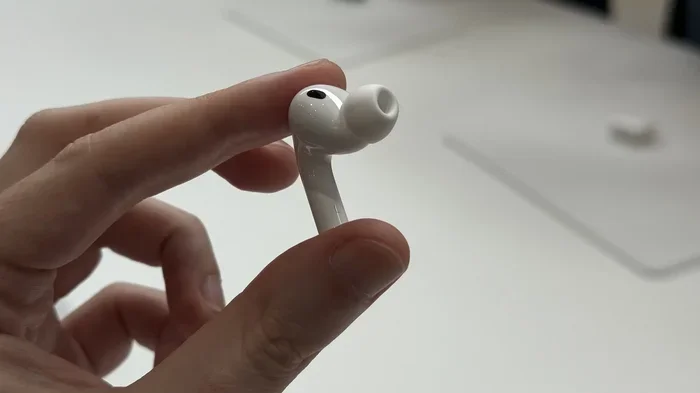
Featured image for AirPods noise cancelling demonstration
Image source: cdn.mos.cms.futurecdn.net
Not all AirPods have Active Noise Cancelling (ANC)—only AirPods Pro and AirPods Max feature this technology. Standard AirPods (1st through 4th generation) rely solely on passive noise isolation through their physical fit. Apple’s ANC uses advanced algorithms and external microphones to detect and cancel surrounding noise in real time, creating a much more immersive listening experience. If ANC matters to you, you’ll need to choose AirPods Pro or AirPods Max.
Imagine sitting on a noisy airplane, surrounded by engine hum, crying babies, and chatty passengers. Now imagine pressing a button and suddenly, the world goes quiet. That’s the power of Active Noise Cancelling (ANC), and it’s one of the most sought-after features in wireless earbuds today.
But here’s the thing: not every pair of AirPods offers this magic. If you’ve ever wondered, “Do AirPods have active noise cancelling?” the answer isn’t a simple yes or no. Apple offers several AirPods models, and only some of them include this premium feature. Understanding the difference can save you money—and help you pick the perfect pair for your lifestyle.
In this guide, we’ll break down everything you need to know about AirPods and noise cancellation. You’ll learn which models have ANC, how the technology actually works, what alternatives exist, and whether the upgrade is worth it for you. Let’s dive in!
Key Takeaways
- Only Premium Models Have ANC: AirPods Pro (all generations) and AirPods Max include active noise cancelling, while standard AirPods do not.
- How ANC Works: Tiny microphones listen to outside sounds, and the AirPods produce “anti-noise” sound waves to cancel them out before you hear them.
- Transparency Mode Bonus: Apple’s ANC system also includes Transparency Mode, which lets outside sounds in when you need to hear your surroundings.
- Adaptive Audio (Pro 2nd Gen): The latest AirPods Pro 2 automatically adjusts noise cancellation based on your environment.
- Price Difference: ANC-equipped AirPods cost significantly more than standard models, so budget matters when choosing.
- Battery Impact: Using ANC reduces battery life by about 20-30% compared to listening with ANC turned off.
- Best Use Cases: ANC shines on airplanes, public transit, noisy offices, and anywhere you want to focus without distractions.
📑 Table of Contents
- Which AirPods Models Have Active Noise Cancelling?
- How Does Active Noise Cancelling Actually Work?
- What Makes AirPods Pro’s ANC Special?
- AirPods Pro vs. Competitors: How Do They Compare?
- Is Active Noise Cancelling Worth the Extra Cost?
- Tips for Getting the Most Out of AirPods ANC
- Common Myths About AirPods and Noise Cancelling
- Conclusion: Making the Right Choice for Your Ears
Which AirPods Models Have Active Noise Cancelling?
The short answer: only two product lines in Apple’s AirPods family include ANC. If you buy standard AirPods, you’ll get decent sound quality but no active noise cancellation. Let’s look at each model clearly.
AirPods Pro: The ANC Champions
Every generation of AirPods Pro includes active noise cancelling. This includes the original AirPods Pro (2019), AirPods Pro 2 (2022), and AirPods Pro 3 (2025). The Pro line is specifically designed for users who want premium features, including ANC, Transparency Mode, and silicone ear tips for a better seal.
Apple has improved ANC with each generation. The AirPods Pro 2, for example, cancel up to twice as much noise as the first generation, according to Apple’s official claims. That’s a massive improvement for frequent flyers and city dwellers.
AirPods Max: Over-Ear ANC Powerhouse
AirPods Max, Apple’s premium over-ear headphones, also feature ANC. In fact, they use eight microphones dedicated to noise cancellation—more than any other AirPods model. This makes them especially effective at blocking out low-frequency sounds like airplane engines and HVAC systems.
The trade-off? AirPods Max cost significantly more (around $549) and are much heavier than earbuds. They’re designed for serious audio enthusiasts and professionals.
Standard AirPods: No ANC Here
Here’s where many people get confused. Standard AirPods—including AirPods 1, 2, 3, and 4—do not have active noise cancelling. They rely on passive noise isolation, which simply means the physical shape of the earbuds blocks some outside sound.
However, there’s one exception: AirPods 4 with Active Noise Cancellation, released in late 2024. This is a special variant that adds ANC to the standard AirPods design for the first time. It’s a budget-friendly option for people who want ANC without buying the Pro line.
Quick Reference:
- Has ANC: AirPods Pro (all gens), AirPods Max, AirPods 4 (ANC variant)
- No ANC: AirPods 1, 2, 3, AirPods 4 (standard)
How Does Active Noise Cancelling Actually Work?
Active Noise Cancelling sounds like magic, but it’s actually clever science. The concept is surprisingly simple once you understand it. Think of it like this: if you push a wave of water in one direction, and another wave pushes back, they cancel each other out. Sound works the same way.
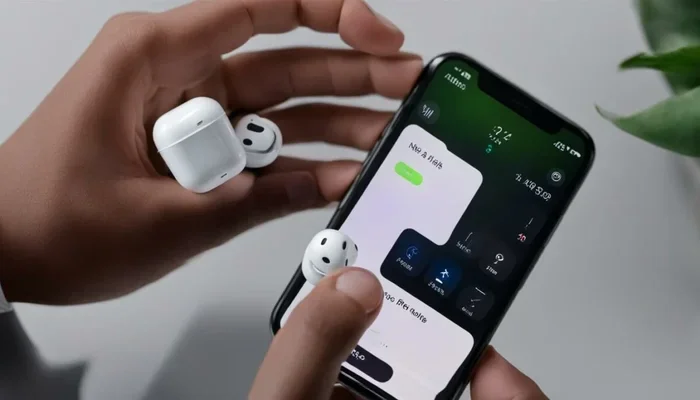
Visual guide about AirPods noise cancelling demonstration
Image source: descriptive.audio
The Science of Sound Waves
Sound travels in waves through the air. These waves have peaks (loud moments) and valleys (quiet moments). ANC uses tiny microphones on the outside of your AirPods to “listen” to the sounds around you in real time.
Once the microphones detect an incoming sound wave, the AirPods’ processor instantly creates an opposite sound wave—called an “anti-noise” signal. When this anti-noise wave meets the original sound wave at your ear, they cancel each other out. The result? Silence, or at least a much quieter listening environment.
Did You Know? The idea of noise cancellation was first developed in the 1930s by Paul Lueg, who figured out how to cancel sound waves using phase inversion. Bose later commercialized the technology for aviation headsets in the 1980s. Now it’s in your earbuds!
What ANC Works Best For
ANC is most effective against consistent, low-frequency sounds. This includes:
- Airplane engine hum
- Air conditioning units
- Traffic and train noise
- Office chatter (background murmur)
- Lawnmowers and appliances
However, ANC struggles with sudden, sharp noises—like a dog barking, someone clapping, or a car horn. These unpredictable sounds often slip through because the AirPods don’t have time to generate an anti-noise signal fast enough.
Passive vs. Active Noise Cancellation
Many people confuse these two terms. Here’s a simple analogy: passive noise cancellation is like wearing earplugs at a concert. It physically blocks sound from entering your ears. Active noise cancellation is like having a magic eraser that removes the remaining sound waves electronically.
Standard AirPods use passive noise isolation through their fit in your ears. AirPods Pro go further—they use silicone ear tips that create a tighter seal and add active noise cancelling on top of that. The combination is incredibly effective.
What Makes AirPods Pro’s ANC Special?
Apple doesn’t just copy and paste ANC technology. The company has developed its own unique features that make AirPods Pro stand out from competitors. Let’s explore what makes them special.
Transparency Mode: Hear the World When You Need To
Sometimes you want to hear what’s happening around you—like when a barista calls your coffee order or when you’re crossing a busy street. That’s where Transparency Mode comes in.
With a simple press and hold on the stem, AirPods Pro switch from noise cancelling to Transparency Mode. The microphones on the outside of the earbuds pipe in outside sounds, so you can hear conversations, announcements, and traffic without removing your AirPods. It feels almost natural, as if you’re not wearing earbuds at all.
Adaptive Audio: Smart Noise Control
Introduced with AirPods Pro 2, Adaptive Audio is one of the most impressive features. It automatically blends ANC and Transparency Mode based on your environment.
Here’s how it works: if you walk from a quiet office into a noisy street, Adaptive Audio instantly increases noise cancellation. If you start a conversation with someone, it switches to Transparency Mode automatically. You don’t have to touch anything—it just works.
Did You Know? Apple’s H2 chip in AirPods Pro 2 processes audio 48,000 times per second. That’s why Adaptive Audio feels so seamless and natural.
Conversation Awareness
This feature detects when you start speaking and automatically lowers your music volume while boosting the voices around you. It’s perfect for quick chats at the coffee shop or catching a flight announcement. Once you stop talking for a few seconds, your music returns to normal volume.
AirPods Pro vs. Competitors: How Do They Compare?
AirPods Pro aren’t the only ANC earbuds on the market. Brands like Sony, Bose, and Samsung offer strong alternatives. So how do AirPods Pro stack up?
Noise Cancellation Performance
In real-world tests, AirPods Pro 2 cancel approximately 70-80% of ambient noise in typical environments like cafes and public transit. Sony WF-1000XM5 and Bose QuietComfort Earbuds perform slightly better in pure noise cancellation tests, often reaching 85-90% noise reduction.
However, AirPods Pro excel in seamless integration with iPhones, iPads, and Macs. The instant pairing, automatic device switching, and Find My integration are hard to beat.
Sound Quality
AirPods Pro 2 deliver rich, balanced sound with deep bass and clear vocals. While audiophiles might prefer Sony or Sennheiser, most casual listeners will find AirPods Pro more than satisfying. The personalized spatial audio feature also creates an immersive listening experience for movies and music.
The Apple Ecosystem Advantage
If you own an iPhone, iPad, Mac, or Apple Watch, AirPods Pro offer unmatched convenience:
- Instant pairing across all your devices
- Automatic switching when you start using a different device
- Spatial audio with head tracking for movies
- Hands-free “Hey Siri” support
- Find My integration to locate lost earbuds
These features make AirPods Pro feel like a natural extension of your Apple devices—something competitors can’t quite replicate.
Is Active Noise Cancelling Worth the Extra Cost?
This is the million-dollar question. AirPods Pro cost around $249, while standard AirPods 4 cost $129 (or $179 with ANC). That’s a significant price difference. So is ANC worth it?
Who Should Definitely Buy ANC AirPods
Active noise cancelling is a game-changer for certain people. You should strongly consider ANC if you:
- Travel frequently: Airplanes, trains, and buses are much quieter with ANC. Your ears will thank you on long flights.
- Work in noisy environments: Open offices, cafes, and coworking spaces become more focused and productive.
- Commute daily: Subway noise and traffic become background whispers instead of distractions.
- Study or work from home: Block out family noise, neighbors, and street sounds.
- Want better audio quality: ANC helps you hear subtle details in music that you’d otherwise miss.
Who Can Skip ANC and Save Money
On the other hand, ANC might not be necessary if you:
- Mostly listen in quiet environments (like your home)
- Use AirPods mainly for short phone calls
- Are on a tight budget
- Prefer to stay aware of your surroundings for safety reasons
- Don’t mind turning up the volume to drown out background noise (not recommended for hearing health)
The Battery Trade-Off
One important consideration: ANC uses more battery. AirPods Pro 2 offer about 6 hours of listening time with ANC on, compared to 7 hours with ANC off. AirPods Max deliver around 20 hours with ANC enabled. If battery life is critical, you might want to disable ANC when you don’t need it.
Tips for Getting the Most Out of AirPods ANC
If you decide ANC AirPods are right for you, here are some practical tips to maximize their effectiveness.
Get the Right Ear Tip Fit
AirPods Pro come with four silicone ear tip sizes (XS, S, M, L). Choosing the right size is crucial. If your ear tips are too small, outside noise leaks in and ANC can’t work properly. If they’re too big, they’ll be uncomfortable and fall out.
Apple includes an “Ear Tip Fit Test” in iOS settings. It plays a few seconds of music and uses the microphones to check the seal. Take this test—it only takes 30 seconds and ensures optimal noise cancellation.
Keep Your AirPods Clean
Dust, earwax, and debris can block the microphones and reduce ANC performance. Clean your AirPods weekly using a soft, dry cloth and a small brush for the mesh areas. Avoid water and harsh chemicals.
Update Your Firmware
Apple regularly releases firmware updates that improve ANC performance and fix bugs. Make sure your AirPods are connected to your iPhone and have at least 50% battery. Updates happen automatically when conditions are right.
Use ANC Without Playing Music
Here’s a pro tip: you can use AirPods Pro’s ANC without playing any audio. This is perfect for focusing in a noisy environment, meditating, or just enjoying silence. Simply insert the AirPods and activate ANC from Control Center.
Switch Modes Based on Activity
Don’t leave ANC on all the time. Use these strategies:
- Walking in cities: Use Transparency Mode for safety
- Working out: Transparency Mode keeps you aware of traffic
- Focusing at work: Full ANC for maximum concentration
- On airplanes: Full ANC to block engine hum
- At home relaxing: Full ANC for immersive music
Common Myths About AirPods and Noise Cancelling
Let’s clear up a few misconceptions that often confuse AirPods shoppers.
Myth 1: All AirPods Cancel Noise
This is simply not true. Standard AirPods (1, 2, 3, and the non-ANC version of 4) do not have active noise cancelling. They offer only passive noise isolation, which is much less effective.
Myth 2: ANC Damages Your Hearing
False! Active noise cancelling does not damage your hearing. In fact, it can protect your hearing because you don’t need to turn up the volume to drown out background noise. Loud music at high volumes is what harms hearing—not ANC.
Myth 3: ANC Drains Battery Super Fast
Modern ANC technology is very efficient. AirPods Pro 2 lose only about 15-20% of battery life with ANC on. This is a small price to pay for the benefit, especially with the charging case providing multiple full charges on the go.
Myth 4: You Can’t Use ANC During Phone Calls
Wrong again. AirPods Pro actually use ANC during phone calls to help you hear the other person more clearly. The microphones also block background noise so the person on the other end hears you better. It’s a win-win.
Myth 5: ANC Works Perfectly on All Sounds
While ANC is amazing, it’s not magic. It works best on consistent low-frequency sounds. Sudden, sharp noises and high-frequency sounds (like baby cries or sirens) may still be partially audible. This is a limitation of all ANC technology, not just AirPods.
Conclusion: Making the Right Choice for Your Ears
So, do AirPods have active noise cancelling? The answer depends entirely on which model you choose. AirPods Pro and AirPods Max both feature excellent ANC, while standard AirPods do not—except for the special AirPods 4 with ANC variant.
If you value silence, focus, and immersion in your audio, ANC is absolutely worth the investment. The AirPods Pro 2, in particular, offer some of the best noise cancellation in the wireless earbud market, combined with features like Transparency Mode and Adaptive Audio that make them incredibly versatile.
On the other hand, if you primarily use earbuds in quiet environments or want to save money, standard AirPods still provide excellent sound quality and the convenience of the Apple ecosystem without the premium price tag.
Whatever you choose, remember that protecting your hearing is just as important as enjoying your music. With the right pair of AirPods and a little knowledge about how they work, you’ll get the most out of every listening session—wherever life takes you.
Happy listening!
Frequently Asked Questions
Do all AirPods have active noise cancelling?
No, not all AirPods have ANC. Only AirPods Pro (all generations), AirPods Max, and the AirPods 4 with Active Noise Cancellation variant include this feature. Standard AirPods 1, 2, 3, and the regular AirPods 4 rely on passive noise isolation only.
How do I turn on active noise cancelling on AirPods Pro?
You can turn on ANC by pressing and holding the stem of either AirPod, or by going to Settings > Bluetooth > AirPods Pro > Noise Control on your iPhone. You can also control it from Control Center by pressing and holding the volume slider.
Does active noise cancelling reduce sound quality?
No, modern ANC technology like Apple’s H2 chip actually preserves sound quality while blocking noise. Some users notice slightly different audio characteristics with ANC on versus off, but it’s not a reduction in quality—just a different listening experience.
Can I use AirPods ANC without playing music?
Yes! You can activate ANC on AirPods Pro even when no audio is playing. This is great for focusing in noisy environments, sleeping on planes, or just enjoying silence. Just insert the AirPods and enable ANC through your device settings.
How long does AirPods battery last with ANC on?
AirPods Pro 2 provide about 6 hours of listening time with ANC enabled, compared to 7 hours with ANC off. AirPods Max offer around 20 hours with ANC on. The charging case extends total listening time to about 30 hours for AirPods Pro.
Is AirPods Pro ANC better than AirPods Max ANC?
AirPods Max generally offer slightly better noise cancellation due to their over-ear design and 8 dedicated microphones. However, AirPods Pro 2 come remarkably close and are far more portable. For most users, AirPods Pro 2 provide excellent ANC that’s more than sufficient for daily use.