Yes, new AirPods do have noise cancelling, but only on specific models. Apple’s AirPods Pro and AirPods Max feature Active Noise Cancellation (ANC), while standard AirPods rely solely on passive noise isolation from their fit. If you want the best noise cancellation in the Apple ecosystem, the AirPods Pro 2 currently leads the pack with advanced computational audio. Understanding which models offer ANC—and how they compare—can save you money and help you choose the right pair.
Featured image for New AirPods noise cancelling
Image source: images.fonearena.com
If you’ve ever been on a crowded subway, a noisy airplane, or just trying to focus at a loud cafe, you already know why noise cancelling matters. It can turn chaos into calm. And if you’re an Apple fan, you’re probably wondering: do new AirPods have noise cancelling?
The short answer is yes—but with a big asterisk. Apple doesn’t include Active Noise Cancellation (ANC) in every AirPods model. Only certain premium versions get this feature, and the technology inside them varies quite a bit. So before you spend your hard-earned money, it’s worth knowing exactly what you’re getting.
In this guide, we’ll break down which AirPods have noise cancelling, how the technology actually works, how the different models compare, and whether it’s worth upgrading. We’ll also look at some smart alternatives if AirPods aren’t the right fit for you. Let’s dive in.
Key Takeaways
- Not All AirPods Have ANC: Only AirPods Pro and AirPods Max include Active Noise Cancellation; standard AirPods do not.
- AirPods Pro 2 Lead the Lineup: The second-generation AirPods Pro offer the most advanced noise cancelling with the H2 chip.
- Adaptive Audio Is a Game-Changer: Newer AirPods Pro automatically blend ANC and Transparency modes based on your environment.
- Battery Life Takes a Hit: Using noise cancelling reduces listening time by roughly an hour compared to Transparency mode.
- AirPods Max Are Premium but Aging: Despite excellent ANC, the AirPods Max haven’t been refreshed since 2020 and use the older H1 chip.
- Fit Affects Performance: Even the best ANC won’t work well if your ear tips don’t create a proper seal.
- Alternatives Exist: For less money, brands like Sony, Bose, and Samsung offer comparable or superior ANC.
📑 Table of Contents
- Which AirPods Have Noise Cancelling?
- How Does Active Noise Cancellation Work in AirPods?
- AirPods Pro 2: The Current Gold Standard
- AirPods Max: Premium but Aging
- What About the New AirPods 4?
- Noise Cancelling Alternatives Worth Considering
- Practical Tips for Getting the Most Out of AirPods ANC
- The Future of AirPods Noise Cancellation
- Final Verdict: Do New AirPods Have Noise Cancelling?
Which AirPods Have Noise Cancelling?
The first thing to clear up is which AirPods actually have noise cancelling. This is where many shoppers get confused, because Apple sells several models that look similar at a glance.
Standard AirPods (All Generations)
The regular AirPods—now in their fourth generation—do not have Active Noise Cancellation. They rely on a feature Apple calls “passive noise reduction,” which is really just a fancy way of saying the earbuds physically block some sound because of how they sit in your ears. Think of it like putting your hands over your ears. It helps a little, but it doesn’t actively fight noise.
If you want true noise cancelling from Apple, you need to look at the Pro or Max lines.
AirPods Pro (1st and 2nd Generation)
Both generations of AirPods Pro feature Active Noise Cancellation. The original AirPods Pro launched in 2019 with the H1 chip, and they were genuinely impressive at blocking out noise. Then in 2022, Apple released the AirPods Pro 2 with the newer H2 chip, which doubled the ANC performance compared to the first generation.
According to Apple, the AirPods Pro 2 cancel up to twice as much background sound as the previous model. That includes low-frequency rumbles like airplane engines, HVAC systems, and city traffic.
AirPods Max
The AirPods Max are Apple’s over-ear headphones, and yes, they have Active Noise Cancellation too. Each ear cup contains multiple microphones that listen to your environment and create anti-noise signals in real time. The result is a soundproof bubble that’s particularly effective for low, droning sounds.
However, the AirPods Max use the older H1 chip (one in each ear), and they haven’t been refreshed since their December 2020 launch. That makes them feel a bit dated compared to the AirPods Pro 2, despite their much higher price tag of $549.
How Does Active Noise Cancellation Work in AirPods?
To understand whether ANC matters for you, it helps to know what’s actually happening inside those tiny earbuds.
Visual guide about New AirPods noise cancelling
Image source: images.macrumors.com
The Science Made Simple
Imagine you’re at a concert, and the bass is so loud it’s rumbling your chest. Now imagine someone playing the exact opposite of that sound wave at the same time. The two waves would cancel each other out, and you’d hear… silence. That’s basically how ANC works.
Every AirPods Pro or AirPods Max has microphones both inside and outside the ear cup. The outside mic listens to the world around you. The chip inside the AirPods processes that sound and generates an “anti-sound” wave that’s the exact opposite. When the two meet, they cancel out, leaving you with much quieter surroundings.
This is incredibly fast—happening in milliseconds—so you don’t hear any delay. It’s like a real-time noise eraser.
Active vs. Passive Noise Cancellation
Passive noise cancellation is just physical blocking. Like earplugs at a construction site, your AirPods physically muffle some sound because they’re in your ears. ANC, on the other hand, actively fights noise with technology.
Here’s a quick analogy: Passive noise cancellation is like closing a window to block street noise. Active noise cancellation is like having a sound engineer in your living room actively cancelling out every car horn and siren.
The Role of the H2 Chip
The H2 chip in the AirPods Pro 2 is a huge upgrade over the H1 chip in older models. It processes audio faster and more efficiently, which means it can handle more complex sounds. This is why the AirPods Pro 2 can cancel up to twice as much noise as the first generation.
Did You Know? The H2 chip performs over 48,000 operations per second just for noise cancellation. That’s faster than most laptop processors from just 10 years ago.
AirPods Pro 2: The Current Gold Standard
If you want the best noise cancelling experience from Apple right now, the AirPods Pro 2 are the clear winner. Here’s why.
Adaptive Audio
One of the coolest new features is Adaptive Audio. This automatically blends Active Noise Cancellation and Transparency mode based on your surroundings. If you’re walking past a quiet park, you might hear more ambient sound. If you step into a noisy subway station, ANC kicks in automatically.
It’s like having a smart assistant that knows exactly how much quiet you need at any moment.
Conversation Awareness
When you start talking to someone, Conversation Awareness automatically lowers your music and reduces ANC, so you can have a quick chat. Once you stop talking, your audio ramps back up. It’s incredibly natural and feels almost magical the first time you try it.
Personalized Volume
Your AirPods Pro 2 can learn your listening habits over time and adjust volume automatically. They might turn it down in quiet places and up in noisy ones, all without you touching anything.
Battery Life Considerations
Noise cancelling uses extra power, so you’ll notice slightly shorter listening time when it’s on. Apple rates the AirPods Pro 2 at up to 6 hours of listening time with ANC on (compared to 7 hours without). With the charging case, you can get up to 30 hours total.
Tip: If you’re running low on battery, switching to Transparency mode can stretch your listening time by about an hour.
AirPods Max: Premium but Aging
The AirPods Max are gorgeous, well-built, and deliver excellent sound quality. Their noise cancellation is also very good—roughly on par with the first-generation AirPods Pro. But there are some important things to know.
The Pros
The over-ear design creates a natural seal around your ears, which gives them a head start on noise blocking even before ANC kicks in. The build quality is premium, with aluminum ear cups and a knit-mesh canopy that distributes weight nicely.
For long listening sessions at home or in an office, the AirPods Max are extremely comfortable and effective.
The Cons
At $549, they’re expensive. Very expensive. And because they use the older H1 chip, they lack Adaptive Audio, Conversation Awareness, and the improved ANC of the AirPods Pro 2. They also don’t support personalized spatial audio as effectively as the newer earbuds.
The Smart Case that comes with them doesn’t actually charge the headphones—you need a separate Lightning cable, which feels outdated.
Who Should Buy Them?
If you prefer over-ear headphones, have a big budget, and value premium materials, the AirPods Max still deliver a fantastic experience. But for most people, the AirPods Pro 2 offer 90% of the performance at less than half the price.
What About the New AirPods 4?
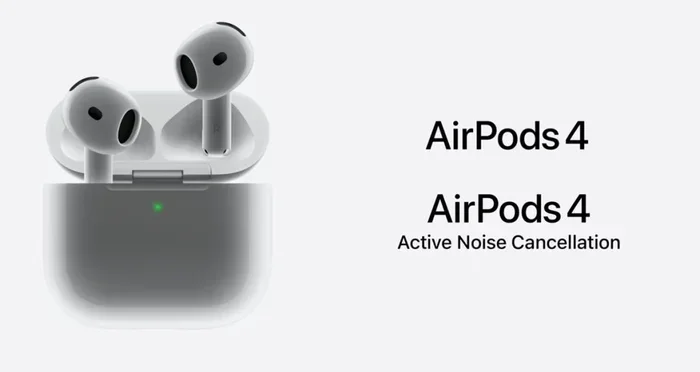
Apple launched the AirPods 4 in September 2024, and this is where things got interesting. The AirPods 4 come in two versions: a standard model and one with Active Noise Cancellation.
AirPods 4 with ANC
For the first time, Apple brought ANC to the non-Pro AirPods line. The AirPods 4 with ANC feature the H2 chip, which means you get the same advanced noise cancellation technology as the AirPods Pro 2.
However, the open-ear design (no silicone tips) means the seal isn’t as tight as the Pro models. This reduces the effectiveness of ANC significantly. Apple says it’s still effective, but most reviewers note that the AirPods Pro 2 block noticeably more noise.
Adaptive Audio Comes Too
One of the best surprises is that the AirPods 4 with ANC also support Adaptive Audio, Conversation Awareness, and Transparency mode. That brings premium features to a more affordable price point—around $179.
Who Should Get AirPods 4 with ANC?
If you don’t like silicone ear tips (some people find them uncomfortable) but still want some noise cancellation, the AirPods 4 are a great choice. They’re also ideal if you want modern features at a lower price than the Pro.
But if your top priority is maximum noise cancellation, the AirPods Pro 2 are still the better pick.
Noise Cancelling Alternatives Worth Considering
Apple’s AirPods aren’t the only option, and in some cases, they’re not even the best. Here are some alternatives that compete strongly in the ANC space.
Sony WF-1000XM5
Sony’s flagship earbuds are widely considered the gold standard for noise cancellation. Many reviewers say they outperform even the AirPods Pro 2 in noisy environments, especially for airplane travel. They cost around $299.
Bose QuietComfort Ultra Earbuds
Bose invented consumer noise cancelling headphones, and their latest earbuds continue that legacy. The ANC is exceptional, and the sound quality is rich and balanced. They’re priced around $299.
Samsung Galaxy Buds3 Pro
If you have a Samsung phone, the Galaxy Buds3 Pro offer excellent ANC and seamless integration with Android devices. They cost around $249 and work fine with iPhones too, though some features are limited.
Why Consider Alternatives?
If noise cancelling is your #1 priority and you’re not locked into the Apple ecosystem, you might find better value elsewhere. However, if you use an iPhone and value features like Find My, easy pairing, and spatial audio, AirPods are still hard to beat.
Practical Tips for Getting the Most Out of AirPods ANC
Buying the right AirPods is only half the battle. Here’s how to maximize your noise cancelling experience.
Get the Right Fit
Even the best ANC technology can’t overcome a poor seal. If you’re using AirPods Pro, try all four sizes of silicone tips (XS, S, M, L) that come in the box. Your iPhone has an “Ear Tip Fit Test” that helps you find the best size. Just go to Settings > Bluetooth > tap your AirPods > Ear Tip Fit Test.
Pro tip: Many people use the wrong size tips without realizing it. A proper seal should feel snug but not painful.
Use the Right Mode for the Situation
You have three main modes: Noise Cancellation (full silence), Transparency (hear everything), and Adaptive (automatic blending). Use ANC when you need focus—like on a plane or in a loud cafe. Use Transparency when you need to stay aware—like walking on a busy street.
Keep Them Clean
Earwax and debris can block the microphones that ANC relies on, reducing effectiveness. Clean your AirPods regularly with a soft, dry cloth. Avoid using water or harsh chemicals.
Update Your Firmware
Apple regularly improves ANC performance through firmware updates. Make sure your AirPods are running the latest software by placing them in their case, connecting them to your iPhone, and going to Settings > Bluetooth > tap your AirPods. If an update is available, it will install automatically when charging.
Manage Battery Life
ANC uses extra power, so turn it off when you don’t need it. If you’re just sitting in a quiet room, you don’t need ANC, and disabling it extends battery life by about 15-20%.
The Future of AirPods Noise Cancellation
The technology is only getting better. Here’s what to expect in coming years.
Improved Chips
Future AirPods will likely include even more powerful processors, enabling better real-time noise analysis. This could lead to smarter ANC that adapts not just to volume but to specific types of sounds—like isolating voices in a crowd.
Better Personalization
Apple is investing heavily in personalized audio. Future models might scan your ear shape and hearing profile to create a custom ANC experience tailored just for you.
Health Features
AirPods are increasingly becoming health devices. Future models might include hearing assistance features, similar to how the Apple Watch handles heart health. Apple has already added a hearing test feature to iOS, suggesting bigger plans are coming.
AirPods Max 2
Most analysts expect a refreshed AirPods Max in 2025 or 2026, with the H2 chip, USB-C charging, and improved ANC. If you’re not in a rush, it might be worth waiting.
Did You Know? The global noise cancellation headphone market is expected to reach $50 billion by 2027, according to industry analysts. Apple is one of the biggest players driving that growth.
Final Verdict: Do New AirPods Have Noise Cancelling?
So, do new AirPods have noise cancelling? Yes—but only if you choose the right model. Here’s a quick recap:
- AirPods 4 (standard): No ANC
- AirPods 4 with ANC: Yes, basic ANC with H2 chip
- AirPods Pro 2: Yes, best-in-class ANC with H2 chip
- AirPods Max: Yes, effective ANC but older H1 chip
If noise cancelling is your priority and you want the best Apple experience, the AirPods Pro 2 are the clear winner. They offer the most advanced features, the best ANC, and great value at around $249. For those who dislike silicone tips, the AirPods 4 with ANC are a solid alternative at $179.
If you’re shopping on a budget or don’t need ANC at all, the standard AirPods 4 deliver excellent sound and Apple integration at $129.
The bottom line? Apple’s noise cancelling technology has come a long way. Whether you’re commuting, traveling, working, or just trying to find some peace in a noisy world, there’s an AirPods model that fits your needs and budget. Choose wisely, get a proper fit, and enjoy the silence.
Frequently Asked Questions
Do all new AirPods have noise cancelling?
No, not all new AirPods have noise cancelling. Only the AirPods Pro, AirPods Max, and AirPods 4 with ANC feature Active Noise Cancellation. The standard AirPods 4 and older base-model AirPods rely only on passive noise isolation.
Which AirPods have the best noise cancelling?
The AirPods Pro 2 currently offer the best noise cancelling in the AirPods lineup, thanks to the H2 chip that cancels up to twice as much noise as the first generation. They also support Adaptive Audio for automatic sound adjustments.
Is AirPods noise cancelling worth it?
Yes, if you frequently find yourself in noisy environments like airplanes, subways, or open offices. ANC can significantly improve focus and reduce listening fatigue. However, if you mostly use earbuds at home in quiet spaces, you may not notice enough difference to justify the higher cost.
Does noise cancelling drain AirPods battery faster?
Yes, ANC uses extra processing power, which reduces battery life by about 15-20%. The AirPods Pro 2, for example, last up to 6 hours with ANC on versus 7 hours without. Turning off ANC when you don’t need it extends your listening time.
Can I use AirPods noise cancelling with Android?
Yes, AirPods Pro and AirPods Max work with Android phones, and ANC functions normally. However, you lose some Apple-exclusive features like Adaptive Audio, Conversation Awareness, and automatic ear detection. Basic pairing and noise cancelling still work fine.
Will there be new AirPods with better noise cancelling in 2025?
Apple is expected to release updated AirPods Max with the H2 chip in 2025 or 2026, which would significantly improve noise cancelling performance. The AirPods Pro line may also see a refresh, though no official announcement has been made.