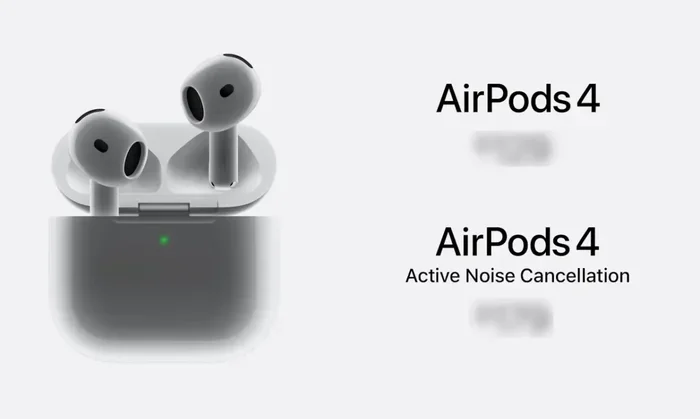
Featured image for New AirPods noise cancelling feature
Image source: beebom.com
Yes, the new AirPods Pro feature Active Noise Cancellation (ANC), while standard AirPods rely on passive noise isolation. Apple’s AirPods lineup includes multiple models, with noise cancelling available specifically in the AirPods Pro and AirPods Max variants. This guide breaks down which AirPods have noise cancelling, how the technology works, and what you need to know before buying.
Ever been on a loud subway and wished your earbuds could just block out the world? That’s exactly what noise cancelling does, and it’s become one of the most sought-after features in wireless earbuds today. Apple fans have been asking the same question for years: does the new AirPods have noise cancelling? The answer isn’t as simple as yes or no, because it depends on which AirPods model you’re talking about.
Apple’s AirPods lineup has grown significantly since the original launch in 2016. Today, there are multiple models available, each with different features and price points. Understanding which AirPods offer noise cancelling can save you money and help you pick the right pair for your lifestyle. Whether you’re a frequent flyer, a remote worker, or just someone who loves their music without distractions, this guide has you covered.
In this article, we’ll break down everything you need to know about AirPods and noise cancellation. You’ll learn which models have it, how the technology works, and what makes Apple’s approach unique. Plus, we’ll bust some common myths and share practical tips for getting the most out of your AirPods.
Key Takeaways
- AirPods Pro Have ANC: AirPods Pro 1st and 2nd generation feature Active Noise Cancellation technology that blocks external sounds.
- Standard AirPods Do Not Have ANC: The regular AirPods (2nd, 3rd, and 4th generation) only offer passive noise isolation through their earbud seal.
- AirPods Max Offers Premium ANC: The over-ear AirPods Max includes high-fidelity Active Noise Cancellation with multiple microphones.
- Transparency Mode Exists: AirPods Pro and Max include Transparency Mode, which lets outside sounds in when needed.
- Adaptive Audio is New: The AirPods Pro 2nd generation added Adaptive Audio, which automatically adjusts noise control based on your environment.
- Price Differences Matter: AirPods Pro costs more than standard AirPods, partly due to the noise cancelling hardware inside.
- Battery Impact: Active Noise Cancellation uses more battery, reducing listening time by roughly an hour compared to Transparency Mode or turning it off.
📑 Table of Contents
- Understanding AirPods Noise Cancelling Technology
- Which AirPods Models Have Noise Cancelling?
- AirPods Pro Features: Beyond Basic Noise Cancelling
- How Well Do AirPods Actually Cancel Noise?
- Common Myths About AirPods Noise Cancelling
- Practical Tips for Using AirPods Noise Cancelling
- How to Choose the Right AirPods for You
- The Future of AirPods Noise Cancelling
- Final Verdict: Does the New AirPods Have Noise Cancelling?
Understanding AirPods Noise Cancelling Technology
Let’s start with the basics. What exactly is noise cancelling, and how does it differ from simply stuffing something in your ears? Think of it like this: when you close a door to keep noise out, that’s passive noise reduction. But when you have a machine that creates “anti-noise” to cancel out sounds, that’s active noise cancellation.
What Is Active Noise Cancellation (ANC)?
Active Noise Cancellation is a smart technology that uses microphones to listen to the sounds around you. Then it creates an opposite sound wave that cancels out the unwanted noise. Imagine throwing a rock into a pond and then throwing another rock that perfectly cancels the first wave. That’s essentially how ANC works, but with sound instead of water.
Apple’s ANC system in AirPods Pro uses two microphones: one on the outside of the earbud and one near your ear canal. The outer mic picks up environmental sounds, while the inner mic listens to what reaches your ear. A chip inside processes this information up to 200 times per second, creating anti-noise in real-time.
Did You Know? The concept of noise cancellation was first developed in the 1930s for airplane pilots. Bose later commercialized it for headphones in the late 1980s, and now it’s a standard feature in premium earbuds.
Passive Noise Isolation vs. Active Noise Cancellation
Here’s where many people get confused. Standard AirPods don’t have active noise cancelling, but they do provide some noise reduction through their physical design. This is called passive noise isolation.
Passive noise isolation works like earplugs. The silicone or plastic tips physically block some sound waves from entering your ear. It’s effective for higher-frequency sounds like voices, but less effective for low-frequency rumbles like airplane engines or bus motors.
Active noise cancellation, on the other hand, excels at blocking low-frequency sounds. That’s why ANC headphones are so popular for air travel and office environments. The technology handles constant, droning noises particularly well.
How Apple’s H1 and H2 Chips Enhance Noise Cancelling
Apple’s custom-designed chips play a huge role in making AirPods noise cancelling effective. The H1 chip (in AirPods Pro 1st gen and AirPods Max) handles the audio processing. The newer H2 chip (in AirPods Pro 2nd gen) takes things further with better computational audio.
According to Apple, the H2 chip delivers up to twice as much noise cancellation as the previous generation. It processes audio faster and more efficiently, resulting in cleaner sound and better battery life even with ANC turned on.
Which AirPods Models Have Noise Cancelling?
Now for the main event: which AirPods actually have noise cancelling? Apple currently sells several AirPods models, and the answer varies depending on which one you choose.
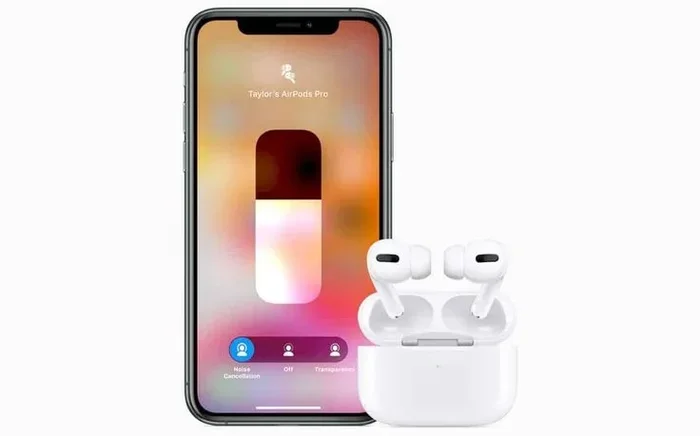
Visual guide about New AirPods noise cancelling feature
Image source: i.pinimg.com
AirPods Pro (1st and 2nd Generation)
Yes, the AirPods Pro have Active Noise Cancellation. Both the original AirPods Pro (released October 2019) and the AirPods Pro 2nd generation (released September 2022) feature ANC. They’re the in-ear option for users who want noise cancelling in a compact, portable form factor.
The AirPods Pro 2nd generation improved on its predecessor in several ways. It offers better noise cancellation, longer battery life (up to 6 hours with ANC on, compared to 4.5 hours on the first generation), and the new H2 chip for enhanced audio quality. It also introduced Adaptive Audio, which we’ll cover in more detail later.
AirPods Max
The AirPods Max, Apple’s over-ear headphones released in December 2020, also feature Active Noise Cancellation. With eight microphones dedicated to ANC (three on each ear cup and two for voice pickup), the AirPods Max offers premium noise cancellation in a larger, more immersive form factor.
AirPods Max are designed for audiophiles and professionals who want the best possible sound quality. They’re significantly heavier than in-ear options and come with a much higher price tag, but the noise cancelling performance is exceptional.
Standard AirPods (2nd, 3rd, and 4th Generation)
Here’s where things get interesting. The standard AirPods, including the 2nd generation (2019), 3rd generation (2021), and 4th generation (2024), do not have Active Noise Cancellation. They rely solely on passive noise isolation through their open-ear design.
The AirPods 4 generation, released in September 2024, introduced an interesting option: an ANC variant. Apple now sells the AirPods 4 in two versions: one without noise cancellation and one with Active Noise Cancellation at a higher price point. This is the first time the standard AirPods line has included ANC technology.
Did You Know? The AirPods 4 with ANC is the most budget-friendly way to get noise cancelling AirPods, priced lower than the AirPods Pro.
AirPods Lineup Comparison
- AirPods Pro 2: Premium ANC, in-ear design, latest features
- AirPods 4 (ANC version): Open-ear design with ANC, more affordable
- AirPods Max: Over-ear design, premium ANC, high-fidelity audio
- AirPods 4 (standard): No ANC, open-ear design
- AirPods 3: No ANC, open-ear design, older model
AirPods Pro Features: Beyond Basic Noise Cancelling
If you own or are considering AirPods Pro, you’re getting more than just noise cancellation. Apple has packed these earbuds with smart features that adapt to your environment and preferences.
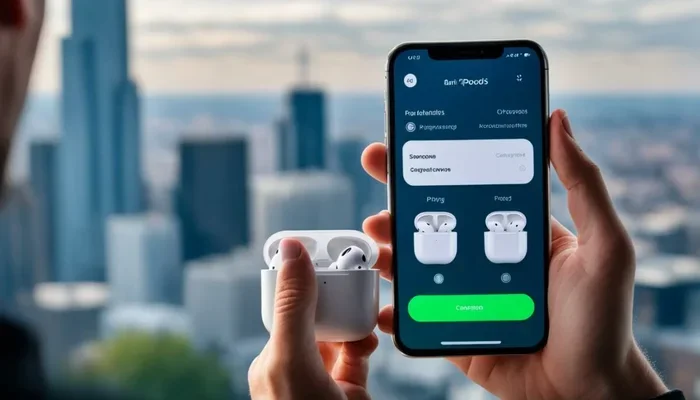
Visual guide about New AirPods noise cancelling feature
Image source: descriptive.audio
Transparency Mode
Transparency Mode is the opposite of Active Noise Cancellation. Instead of blocking outside sounds, it lets them in. This is useful when you need to hear announcements at an airport, have a quick conversation, or stay aware of traffic while walking.
AirPods Pro use their microphones to capture external sounds and play them through the earbuds as if you weren’t wearing anything at all. It’s remarkably natural-sounding, thanks to advanced processing that adjusts frequencies to match how your ears naturally perceive sound.
Adaptive Audio (AirPods Pro 2nd Generation)
One of the most impressive new features is Adaptive Audio, introduced with iOS 17 and the AirPods Pro 2nd generation. This feature automatically switches between Active Noise Cancellation and Transparency Mode based on your environment.
Imagine walking down a quiet street, and your AirPods are in Transparency Mode so you can hear traffic. Then you step into a loud coffee shop, and they automatically switch to ANC. That’s Adaptive Audio in action.
This feature uses machine learning to understand your surroundings and adjust settings in milliseconds. It’s like having a personal audio assistant that knows when you want to focus and when you need to stay aware.
Conversation Awareness
Another smart feature is Conversation Awareness. When you start talking to someone while wearing AirPods Pro, the music automatically lowers, and Transparency Mode activates. Once you stop talking, your audio returns to normal volume with ANC re-engaging.
This is incredibly useful for ordering coffee, asking for directions, or chatting with coworkers without removing your earbuds. It’s a small feature that makes daily life much more convenient.
Personalized Volume
Your hearing preferences change throughout the day based on your environment. Personalized Volume learns your volume habits and adjusts accordingly. If you typically turn up the volume in noisy places, AirPods Pro will do it for you automatically over time.
How Well Do AirPods Actually Cancel Noise?
Numbers and features are great, but how well do AirPods actually perform in real-world conditions? Let’s look at what users and experts say.
Real-World Performance
In practical testing, AirPods Pro 2nd generation can reduce ambient noise by approximately 30-35 decibels. That’s significant, considering a quiet library is around 40 decibels and busy traffic is around 80 decibels.
For context, ANC works best on:
- Airplane engine rumble
- Air conditioning hum
- Traffic and road noise
- Office chatter
- Gym equipment sounds
ANC is less effective on:
- Sudden loud noises (sirens, alarms)
- High-frequency sounds (baby cries, whistles)
- Voices in close proximity
Comparison with Competitors
How do AirPods Pro stack up against competitors like Sony WF-1000XM5 or Bose QuietComfort Earbuds? Generally, AirPods Pro 2nd generation offer competitive noise cancellation, though some reviewers give Sony and Bose a slight edge in pure ANC performance.
However, Apple’s integration with iPhones, iPads, and Macs is unmatched. Features like automatic device switching, spatial audio, and Find My integration create a seamless experience that competitors struggle to match.
Battery Life Considerations
Active Noise Cancellation uses more battery than standard listening. Here’s what you can expect:
- AirPods Pro 2 with ANC on: Up to 6 hours of listening time
- AirPods Pro 2 with ANC off: Up to 7 hours of listening time
- AirPods Pro 1 with ANC on: Up to 4.5 hours
- AirPods Max with ANC on: Up to 20 hours
The difference isn’t huge, but it’s something to consider for long flights or work sessions without charging breaks.
Common Myths About AirPods Noise Cancelling
There are plenty of misconceptions floating around about AirPods and noise cancellation. Let’s bust some myths.
Myth 1: All AirPods Have Noise Cancelling
False. As we’ve discussed, only AirPods Pro, AirPods Max, and the AirPods 4 (ANC version) feature Active Noise Cancellation. Standard AirPods do not have this technology.
Myth 2: Noise Cancelling Damages Your Hearing
False. Active Noise Cancellation actually protects your hearing by allowing you to listen at lower volumes in noisy environments. Instead of cranking up music to drown out an airplane engine, ANC reduces the engine noise, so you can keep volume at safe levels.
Myth 3: ANC Works on All Sounds Equally
False. ANC is most effective on constant, low-frequency sounds. It struggles with sudden, high-frequency noises. That’s why you might still hear someone yelling your name even with ANC turned on.
Myth 4: You Need Perfect Ear Tip Sealing for ANC
Mostly False. While a good seal improves ANC performance, Apple’s H2 chip can compensate somewhat for imperfect seals. However, for best results, you should use the right size ear tips. AirPods Pro come with four sizes (XS, S, M, L) to help you find the best fit.
Myth 5: AirPods Noise Cancelling Is a Gimmick
False. Apple invests heavily in audio technology, and their ANC is highly regarded. It’s particularly impressive considering the small size of AirPods Pro compared to over-ear headphones.
Did You Know? Apple’s noise cancelling AirPods use computational audio, which combines hardware and software for optimal performance. This is the same approach used in professional recording studios.
Practical Tips for Using AirPods Noise Cancelling
Getting the most out of your AirPods noise cancelling features requires a bit of know-how. Here are some practical tips.
Finding the Right Ear Tip Size
For AirPods Pro, ear tip fit is crucial. Apple includes an “Ear Tip Fit Test” in iOS settings. This test plays a few seconds of music and uses the microphones to determine if you have a good seal. If you don’t, try a different size.
A proper seal doesn’t just improve noise cancellation. It also enhances bass response and overall sound quality.
When to Use ANC vs. Transparency Mode
Use Active Noise Cancellation when:
- Working in a noisy environment
- Traveling on planes, trains, or buses
- Studying or focusing deeply
- Exercising in loud gyms
- Relaxing in noisy public spaces
Use Transparency Mode when:
- Walking in urban areas with traffic
- Having conversations without removing earbuds
- Listening for announcements (airports, train stations)
- Cycling or running outdoors
- Working from home and need to hear your doorbell or family members
Maximizing Battery Life
If you’re running low on battery, you can turn off ANC to extend listening time. You can do this from your iPhone’s Control Center or directly on the AirPods Pro by squeezing and holding the force sensor on the stem.
Another tip: the charging case provides multiple full charges. Keep it topped up, and you’ll rarely run out of battery during the day.
Using AirPods with Non-Apple Devices
Active Noise Cancellation works with non-Apple products, but you lose some features. You can still toggle ANC on AirPods Pro using the force sensor, even when connected to Android or Windows devices. However, you won’t get Adaptive Audio or personalized features without an iOS device.
Updating Your AirPods Firmware
Apple regularly updates AirPods firmware to improve performance, including noise cancellation. Make sure your AirPods are updated by keeping them connected to your iPhone and placing them in their case near a charger. Updates happen automatically.
How to Choose the Right AirPods for You
With multiple options available, choosing the right AirPods depends on your needs and budget.
For Noise Cancelling Enthusiasts
If Active Noise Cancellation is your top priority, the AirPods Pro 2nd generation is the best choice. It offers excellent ANC, a comfortable in-ear design, and the latest features like Adaptive Audio. The AirPods Max is the premium choice for those who want over-ear comfort.
For Budget-Conscious Buyers
The AirPods 4 with ANC is the most affordable option with noise cancellation. It offers a good balance of features and price, though the open-ear design means less passive noise isolation than AirPods Pro.
For Casual Listeners
If you primarily listen in quiet environments and don’t need ANC, standard AirPods 4 or AirPods 3 are excellent choices. They’re more comfortable for some users who dislike in-ear tips and cost less.
For Apple Ecosystem Users
All AirPods work well within the Apple ecosystem, but Pro models offer the best integration. Features like automatic switching between devices, spatial audio with head tracking, and Find My are optimized across the lineup, but AirPods Pro have the richest feature set.
For Audiophiles
The AirPods Max remains the top choice for sound quality, thanks to its larger drivers and over-ear design. If portability isn’t a concern, the AirPods Max delivers studio-quality audio with exceptional noise cancellation.
The Future of AirPods Noise Cancelling
Apple continues to invest in audio technology. What can we expect from future AirPods?
Industry rumors suggest future AirPods Pro models will include even better noise cancellation, possibly with health monitoring features like heart rate tracking and body temperature measurement. There’s also speculation about cameras for AI-powered spatial awareness, though these features are likely years away.
One thing is certain: noise cancellation will continue to improve. As chip technology advances, ANC will become more efficient, effective, and accessible across all price points.
Final Verdict: Does the New AirPods Have Noise Cancelling?
So, does the new AirPods have noise cancelling? The answer is a qualified yes. If you’re buying AirPods Pro, AirPods Max, or the AirPods 4 with ANC, you’re getting Active Noise Cancellation. Standard AirPods do not have this feature.
For most users, AirPods Pro 2nd generation offers the best balance of features, comfort, and price. The noise cancellation is excellent, the fit is customizable, and features like Adaptive Audio make daily use effortless. If budget is a concern, the AirPods 4 with ANC provides good noise cancelling at a lower price point.
Before making your purchase, consider where you’ll use them, what features matter most, and how much you’re willing to spend. All AirPods deliver excellent sound quality, but noise cancellation can transform your listening experience in loud environments.
Whichever model you choose, you’re getting one of the most refined wireless earbud experiences on the market. Apple’s attention to detail, seamless integration, and ongoing software updates ensure your AirPods will continue improving long after you buy them.
Frequently Asked Questions
Does the standard AirPods have noise cancelling?
No, standard AirPods (2nd, 3rd, and the basic 4th generation) do not have Active Noise Cancellation. They rely on passive noise isolation from their earbud shape, but they don’t include ANC technology. Only AirPods Pro, AirPods Max, and the AirPods 4 ANC version feature noise cancelling.
Which AirPods have Active Noise Cancellation?
Three current AirPods models offer Active Noise Cancellation: AirPods Pro (1st and 2nd generation), AirPods Max, and the AirPods 4 with ANC. The AirPods Pro 2nd generation offers the best noise cancelling performance among in-ear options, while AirPods Max provides premium over-ear noise cancellation.
How effective is AirPods Pro noise cancellation?
AirPods Pro 2nd generation can reduce ambient noise by approximately 30-35 decibels. It’s highly effective at blocking constant low-frequency sounds like airplane engines, air conditioners, and traffic. However, sudden loud noises and high-frequency sounds may still be partially audible.
Does noise cancelling drain AirPods battery faster?
Yes, Active Noise Cancellation uses more battery than standard listening. AirPods Pro 2 last up to 6 hours with ANC on versus 7 hours with it off. The difference is relatively small, but turning off ANC can extend listening time when battery is running low.
Can you use AirPods noise cancelling with Android phones?
Yes, Active Noise Cancellation works when AirPods Pro or AirPods 4 ANC are connected to Android devices. You can toggle ANC by pressing and holding the force sensor on the stem. However, advanced features like Adaptive Audio and automatic switching require an Apple device.
What’s the difference between Transparency Mode and noise cancelling?
Transparency Mode lets outside sounds in so you can hear your surroundings, while Active Noise Cancellation blocks external sounds. AirPods Pro and Max include both modes, allowing you to switch based on your situation. Transparency Mode is useful for conversations or staying aware of traffic.