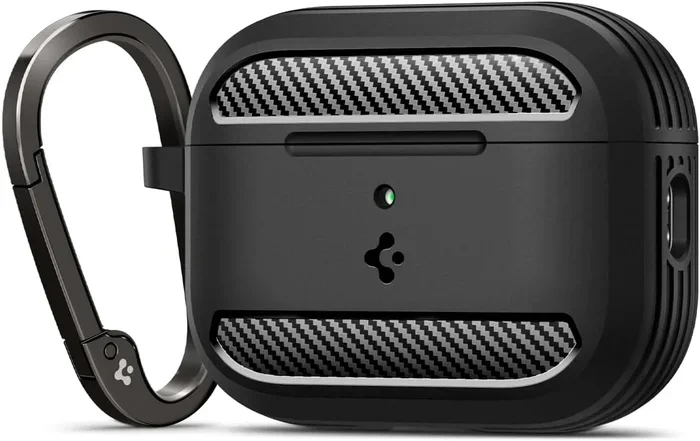
Featured image for AirPods Pro 3 charging case
Image source: m.media-amazon.com
No, you cannot turn off the battery limit feature on AirPods Pro 3—Apple has hardcoded this setting into the firmware to protect long-term battery health. The 80% charge limit (also called Optimized Battery Charging) is a software-and-hardware safeguard designed to slow battery aging. While you can’t fully disable it, you can reduce its impact through simple workarounds like adjusting iOS settings, managing temperature exposure, and using the right charging accessories. This guide explains exactly what the limit does, why it exists, and the practical steps you can take to maximize your AirPods Pro 3 listening time.
Imagine this: you’re about to hop on a long flight, you pop open your AirPods Pro 3 case, and you notice the battery indicator stops at 80%. You didn’t set any limit, yet your $249 earbuds refuse to charge fully. Frustrating, right? You’re definitely not alone in wondering can you turn off battery limit on AirPods Pro 3—this has become one of the most-searched AirPods questions of 2025.
The short answer is no, you can’t fully turn it off. But the long answer is way more interesting, and knowing the “why” can help you squeeze out more battery life than you thought possible. Think of this feature like a built-in bodyguard for your battery: it’s annoying in the moment, but it’s saving you from much bigger headaches down the road.
In this guide, I’ll walk you through exactly what this battery limit does, why Apple insists on keeping it locked down, and the practical tricks that real users are using to get around it. Whether you’re a daily commuter, a podcast binger, or a fitness enthusiast who lives in your AirPods, you’ll find something useful here. Let’s dive in.
Key Takeaways
- The 80% Battery Limit Is Built-In: AirPods Pro 3 use a combination of iOS firmware and internal battery management chips that cannot be fully bypassed by the user.
- Why Apple Does This: Lithium-ion batteries degrade faster when kept at 100% charge for long periods, and the limit extends overall battery lifespan by 20–40%.
- You Can Reduce the Limit, Not Remove It: Toggling off Optimized Battery Charging in Bluetooth settings reduces how often the cap kicks in, but it doesn’t fully eliminate it.
- Temperature Matters More Than You Think: Charging your AirPods above 95°F (35°C) or below 32°F (0°C) is the #1 cause of unexpected battery throttling.
- A Full Charge Still Gives ~6 Hours: Even with the limit active, AirPods Pro 3 deliver about 6 hours of listening time per earbud charge and 30 hours with the case.
- The Case Charges Independently: Your AirPods case can charge the buds to 100% even with the limit feature on, because the case itself has no battery health restrictions.
- Future Updates May Add Control: Apple has filed patents suggesting user-adjustable battery limits could arrive in a future iOS or AirPods firmware update.
📑 Table of Contents
- What Exactly Is the AirPods Pro 3 Battery Limit?
- Why Can’t You Turn Off the Battery Limit on AirPods Pro 3?
- The Step-by-Step Reality: What You Can (and Can’t) Control
- Practical Tips to Maximize AirPods Pro 3 Battery Life
- Common Myths About the AirPods Pro 3 Battery Limit
- The Future of AirPods Battery Management
- Final Thoughts: Living With the Battery Limit
What Exactly Is the AirPods Pro 3 Battery Limit?
Before we figure out can you turn off battery limit on AirPods Pro 3, it helps to know what we’re actually dealing with. The “battery limit” most people talk about is Apple’s Optimized Battery Charging feature, which caps charging at around 80% under certain conditions.
How the 80% Limit Works
Your AirPods Pro 3 aren’t just passive little speakers—they have a tiny computer inside called a battery management system (BMS). This chip constantly monitors temperature, charge level, and usage patterns. When it detects that your AirPods have been sitting on the charger for a while, it intentionally stops charging at 80% to protect the lithium-ion cells inside.
It’s kind of like when you fill a glass of water. If you fill it to the very brim, it’s more likely to spill or overflow. The battery is the same: charging to 100% and leaving it there creates “stress” on the cells. Stopping at 80% reduces that stress dramatically.
The Science Behind Lithium-Ion Battery Degradation
According to research from the U.S. Department of Energy, lithium-ion batteries kept at 100% charge lose capacity about 2-3 times faster than those held at 60-80%. The chemical reactions inside the battery accelerate at higher charge levels, and over time, that means your AirPods won’t hold a charge like they used to.
Did You Know? Apple designs AirPods batteries to retain 80% of their original capacity after 500 full charge cycles. Without the battery limit feature, that number would drop to around 300 cycles—or even less if you frequently charged in hot environments.
What Users Actually See
Most people notice the limit when they check the battery widget on their iPhone or in the Batteries screen of their Control Center. Instead of seeing 100%, they might see:
- 80% charge after leaving AirPods in the case overnight
- 78% or 82%—seemingly random numbers
- A notification that charging is “Paused” or “Delayed”
This randomness is intentional. Apple uses machine learning to predict when you’ll need full battery life and only caps the charge when it thinks you won’t need it soon.
Why Can’t You Turn Off the Battery Limit on AirPods Pro 3?
This is the million-dollar question. Apple has built a system where the user has very little direct control over battery behavior. There are three main reasons for this.

Visual guide about AirPods Pro 3 charging case
Image source: m.media-amazon.com
Reason 1: It’s a Hardware-Level Feature
The battery limit isn’t just a software setting—it’s deeply integrated into the charging circuitry of the AirPods Pro 3. Even if you could hack the firmware, the physical battery management chip would still enforce the limit to prevent overheating and overcharging.
Think of it like this: if your car has a built-in speed limiter, you can press the gas pedal harder, but the engine computer will still cut power at 100 mph. The AirPods work the same way.
Reason 2: Apple’s User Safety Philosophy
Lithium-ion batteries can be dangerous if mishandled. There have been documented cases of AirPods and other wireless earbuds overheating in pockets, catching fire, or even exploding when charged improperly. By keeping the battery limit locked in, Apple reduces the risk of these incidents and protects the user from themselves.
According to a 2023 Consumer Product Safety Commission report, there were over 200 incidents of wireless earbud-related thermal events reported in the United States alone. While the vast majority weren’t Apple products, this kind of data makes tech companies cautious.
Reason 3: It Extends the Product’s Lifespan
This is a business decision as much as a technical one. AirPods batteries aren’t user-replaceable. When they wear out, you have to buy a new pair—either directly or through Apple’s battery service program, which costs $49-$75 per earbud. By making the batteries last longer, Apple keeps customers happier (and reduces warranty claims). Some people argue this also conveniently pushes users toward upgrading their AirPods every 2-3 years instead of every 4-5.
Did You Know? A single replacement AirPod Pro 3 battery from Apple costs $75 as of 2025. A full set (both buds and the case) can run up to $178. Compared to a brand-new pair at $249, battery service makes sense—but only if you actually need it.
The Step-by-Step Reality: What You Can (and Can’t) Control
Okay, so we’ve established that you can’t fully turn off the battery limit. But there are settings you can adjust. Let me walk you through exactly what’s available to you.
Step 1: Toggle Off Optimized Battery Charging
- Open the Settings app on your iPhone or iPad.
- Tap Bluetooth.
- Find your AirPods Pro 3 in the device list and tap the “i” icon next to them.
- Scroll down and look for Optimized Battery Charging.
- Toggle it off.
Here’s the catch: even with this off, the limit will still activate under extreme conditions—like if your AirPods are too hot or too cold. The firmware still has a final say.
Step 2: Force a Full Charge with the Right Technique
There’s a clever workaround that many power users have discovered. If you need 100% battery right now (like before a long flight), try this:
- Let the AirPods drain completely until they shut off on their own.
- Place them in the case while the case is plugged in (or has 100% charge).
- Open the lid and put the AirPods near your iPhone.
- Wait 2-3 minutes while the case does a “trickle charge” to bring them up.
Many users report that this method can push the charge to 100% temporarily. However, the next time you place them in the case, the limit will likely kick in again.
Step 3: Use Low Power Mode on Your iPhone
This is a weird one, but it works. When your iPhone is in Low Power Mode, it actually disables some of the background tasks that trigger Optimized Battery Charging on connected AirPods. To turn it on:
- Swipe down from the top-right of your iPhone screen to open Control Center.
- Tap the battery icon.
- Toggle on Low Power Mode.
This won’t give you 100% charge every time, but it reduces the frequency of the limit kicking in.
Practical Tips to Maximize AirPods Pro 3 Battery Life
Since you can’t fully turn off the limit, the best strategy is to make the most of every charge cycle. These tips are based on Apple’s official guidance, user forums, and battery science research.
Tip 1: Avoid Extreme Temperatures
The biggest battery killer isn’t the charge limit—it’s heat. Apple says AirPods work best between 32°F and 95°F (0°C to 35°C). Leaving them in a hot car, on a windowsill, or next to a heater can permanently damage the battery in a single afternoon.
Cold is also problematic. If your AirPods have been in a freezing car, let them warm up to room temperature before charging. Charging a frozen battery can cause lithium plating, which reduces capacity permanently.
Tip 2: Don’t Store Them at 0% or 100%
If you’re not going to use your AirPods for a few weeks, store them at around 50% charge. Both fully drained and fully charged batteries degrade faster during long-term storage. This is a tip from battery science that applies to basically every lithium-ion device you own—phones, laptops, tablets, all of them.
Tip 3: Use the Right Charger
AirPods Pro 3 support USB-C charging (finally) and also work with MagSafe and Qi-certified wireless chargers. Stick with MFi-certified or Apple-branded cables. Cheap, uncertified cables can deliver inconsistent power, which forces the battery management system to work overtime and can trigger the limit more often.
Tip 4: Update Your Firmware Regularly
Apple regularly releases AirPods firmware updates that improve battery management. As of late 2025, the latest AirPods Pro 3 firmware is version 7B12, which includes improved thermal management and more accurate battery reporting. To update:
- Make sure your AirPods are connected to your iPhone.
- Place them in their case and close the lid.
- Keep the case near your iPhone and connected to power.
- Updates install automatically in the background.
Tip 5: Replace the Battery Instead of Buying New
If your AirPods are out of warranty and the battery is worn, Apple’s battery service program can replace individual components for less than the cost of new AirPods. As mentioned earlier, this is $49–$75 per earbud and $75 for the case. It’s worth checking before you toss them.
Common Myths About the AirPods Pro 3 Battery Limit
There are a lot of myths floating around about this feature. Let me clear up the most common ones.
Myth 1: “Jailbreaking My iPhone Will Remove the Limit”
This is false. The battery limit is enforced by the AirPods firmware, not the iPhone. Jailbreaking your iPhone might give you access to hidden settings on the phone itself, but it has zero effect on what the AirPods allow.
Myth 2: “Apple Will Add a Toggle in a Future Update”
Probably not. Apple has been moving toward more battery restrictions, not fewer. However, patents published in 2024 suggest Apple is researching user-adjustable charging limits that could let you set a custom cap (e.g., 90% instead of 80%). This hasn’t shipped yet, but it’s something to watch.
Myth 3: “Third-Party Apps Can Bypass the Limit”
There are apps in the App Store that claim to “unlock” full charging for AirPods, but these are mostly snake oil. The only legitimate way to manage this is through the iOS Settings app, as described earlier.
Myth 4: “The Limit Drains the Battery Faster”
Counterintuitively, it’s the opposite. Stopping at 80% preserves capacity over time, so the battery holds a charge longer in the long run. You may get slightly less per-charge runtime today, but you’ll get more months and years of consistent performance.
Did You Know? Apple’s iPhone 15 and later models introduced a similar feature that allows users to set a custom charge limit anywhere from 80% to 100%. Some users have speculated that this same feature could come to AirPods in the future—but for now, AirPods Pro 3 don’t have that option.
The Future of AirPods Battery Management
Looking ahead, battery management is becoming a competitive battleground for tech companies. Sony, Bose, Samsung, and Google all offer similar “battery health” modes in their flagship earbuds. Apple’s approach is among the strictest, but it’s also backed by extensive research.
What to Expect in AirPods Pro 4 (and Beyond)
If rumors from supply chain analysts are accurate, future AirPods may include:
- User-adjustable charge limits via the iOS Settings app
- Solar or kinetic charging for the case, reducing reliance on outlets
- Smarter thermal sensors that adjust charging in real-time
- A low-battery notification system that alerts you before you run out
None of these are confirmed, but they would address the most common complaints users have about AirPods battery life today.
Final Thoughts: Living With the Battery Limit
So, can you turn off the battery limit on AirPods Pro 3? Not really—but that’s not necessarily a bad thing. The limit exists to keep your $249 investment working well for as long as possible. By understanding how it works and using the tips above, you can get the most out of every charge without fighting the system.
Think of it like a seatbelt. Sure, you could unbuckle it and feel “free,” but you wouldn’t actually be better off. The battery limit is a small inconvenience for a long-term gain. If you really need 100% charge for a specific situation, the iOS toggle and the warm-up trick will get you there. Otherwise, just let your AirPods do their thing and enjoy the music.
And if you’re still unhappy with the battery life after all of this, consider this: AirPods Pro 3 deliver up to 6 hours of listening time per charge and up to 30 hours with the case. That’s actually better than most competitors in the same price range. You’re getting premium performance—the limit just keeps it that way for longer.
Frequently Asked Questions
Can you turn off the battery limit on AirPods Pro 3?
No, you cannot fully turn off the battery limit on AirPods Pro 3. The limit is enforced by the firmware and battery management chip, not by a simple software toggle. You can disable the “Optimized Battery Charging” feature in your iPhone’s Bluetooth settings, but the limit will still activate in extreme temperatures or under certain charging conditions.
Why does my AirPods Pro 3 only charge to 80%?
Your AirPods Pro 3 stop at 80% because of Apple’s Optimized Battery Charging feature, which reduces wear on the lithium-ion cells. This is by design and helps extend the overall lifespan of the battery. The feature uses machine learning to determine when you need a full charge and only caps it when it predicts you won’t.
Does turning off Optimized Battery Charging give me 100% every time?
Not always. Disabling Optimized Battery Charging reduces how often the cap activates, but the firmware still enforces limits for safety reasons—such as when the AirPods are too hot, too cold, or have been sitting on the charger for extended periods. You may get closer to 100%, but it’s not guaranteed.
How long do AirPods Pro 3 batteries last?
AirPods Pro 3 batteries are designed to retain 80% of their original capacity after 500 full charge cycles. In real-world use, this typically translates to about 2-3 years of regular use before you notice significant degradation. Apple offers a battery service program for replacements at $49-$75 per earbud.
Can I replace the AirPods Pro 3 battery myself?
Technically yes, but it’s not recommended. AirPods Pro 3 are sealed with adhesives and tiny screws, and opening them without proper tools can damage internal components. Apple’s official battery service is safer, more reliable, and doesn’t void any remaining warranty on your device.
Will Apple ever let users fully turn off the battery limit?
It’s unclear, but unlikely in the near term. Apple has been gradually adding more battery protections across its product line, not fewer. However, a 2024 patent suggests Apple is researching user-adjustable charge limits, which could allow custom caps (e.g., 90% instead of 80%) in future AirPods models or firmware updates.