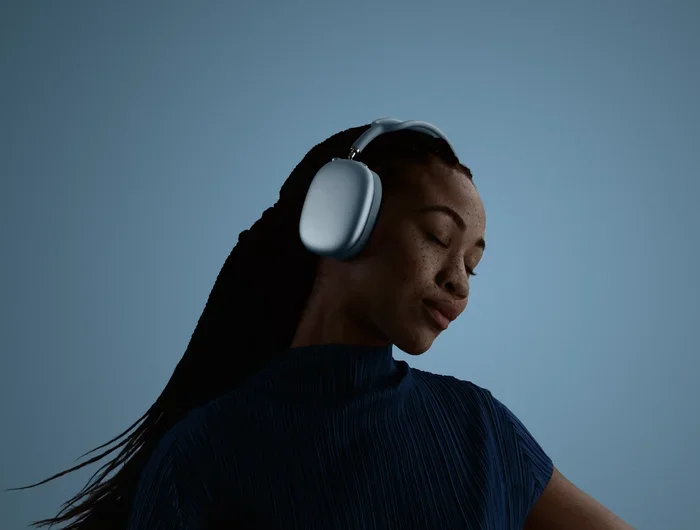
Featured image for person wearing AirPods Max publicly
Image source: apple.com
Yes, people nearby can sometimes hear sound leaking from your AirPod Max, especially at high volumes or when noise cancellation and Transparency mode settings affect audio output. The AirPod Max features an over-ear design that minimizes leakage, but it’s not completely soundproof. Understanding your headphone’s modes, fit, and volume levels helps you keep your listening experience private in coffee shops, offices, and shared spaces. This guide breaks down exactly when and why sound bleeds, plus practical fixes to keep your audio to yourself.
Ever been on a bus or in a quiet office and worried that the person next to you can hear every word of your podcast? You’re not alone. The question “can people hear my AirPod Max” is one of the most common concerns among Apple headphone users, especially those who use their AirPod Max in public spaces like cafes, libraries, and shared workspaces.
Here’s the good news: AirPod Max is designed with sound isolation in mind. Its over-ear (circumaural) design physically covers your entire ear, creating a natural barrier between the speaker drivers and the outside world. Unlike earbuds that sit inside your ear canal, the AirPod Max cushions sit around your ears, forming a seal that significantly reduces how much sound escapes.
However, no headphone is 100% soundproof. At certain volumes and in certain conditions, some sound will leak out. This guide will walk you through exactly when, why, and how much sound leaks, plus what you can do to keep your listening completely private.
Key Takeaways
- Sound Leakage Is Real but Limited: AirPod Max uses a sealed over-ear design that reduces leakage, but high volumes can still let sound escape.
- ANC Mode Matters: Active Noise Cancellation creates a tighter seal effect, which actually reduces leakage compared to Transparency mode.
- Volume Is the Biggest Factor: Anything above 60-70% volume significantly increases the chance others will hear your audio.
- Fit and Seal Affect Leakage: Proper positioning on your ears creates a better acoustic seal, keeping sound contained.
- Environmental Noise Plays a Role: In quiet rooms, even small leaks become obvious; in loud spaces, nobody notices.
- Sharing Audio Isn’t Possible: AirPod Max doesn’t support two-person listening from one device like some other headphones.
- Simple Fixes Work: Lowering volume, adjusting fit, and using ANC mode can eliminate most leakage concerns.
📑 Table of Contents
- Understanding AirPod Max Sound Leakage
- When Can People Actually Hear Your AirPod Max?
- Active Noise Cancellation vs. Sound Leakage
- Comparing AirPod Max to Other Headphones
- Tips to Prevent Sound Leakage
- Common Myths About AirPod Max Sound Leakage
- The Social Etiquette of Public Listening
- What If You’re the One Hearing Leaked Audio?
- Technical Details: How Apple Designed for Privacy
- Real-World Scenarios: How Much Leakage Actually Happens?
- The Bottom Line: Yes, But Rarely
Understanding AirPod Max Sound Leakage
Sound leakage happens when audio from your headphones escapes the ear cup and becomes audible to people nearby. Think of it like water leaking through a tiny crack in a cup. Even a small gap can let some sound out, especially when the pressure (volume) inside is high.
The AirPod Max uses Apple’s custom acoustic design with memory foam ear cushions that adapt to the shape of your head. This design helps create what’s called an “acoustic seal” — basically a snug fit that keeps sound inside the ear cup. The headphones also feature a dual-driver system per ear, which delivers sound more efficiently and at lower volumes than many competitors.
How the Over-Ear Design Helps
Over-ear headphones like the AirPod Max are inherently better at containing sound than on-ear or in-ear designs. The ear cups fully enclose your ears, meaning sound waves have to bounce off the cushion material and around the cup edges to escape. This is why most audiophiles prefer over-ear designs for private listening.
The AirPod Max takes this further with its breathable knit-mesh canopy and memory foam cushions, which balance comfort with acoustic sealing. It’s like wearing a small, soundproof booth on each ear — though not a perfect one.
The Physics of Sound Leakage
Sound travels in waves, and those waves will always take the path of least resistance. With headphones, that path is any gap between the ear cup and your head, or through the cushion material itself. Higher volumes create stronger sound waves, which push harder against these barriers.
Did You Know? Sound leakage is measured in decibels (dB). Most headphones start leaking audible sound at around 60-70% of their maximum volume. Below that, leakage is usually below 30 dB — quieter than a whisper — and essentially undetectable by people around you.
When Can People Actually Hear Your AirPod Max?
Not all situations are equal. The chance of someone hearing your AirPod Max depends on three main factors: volume, environment, and your headphone settings. Let’s break each one down.
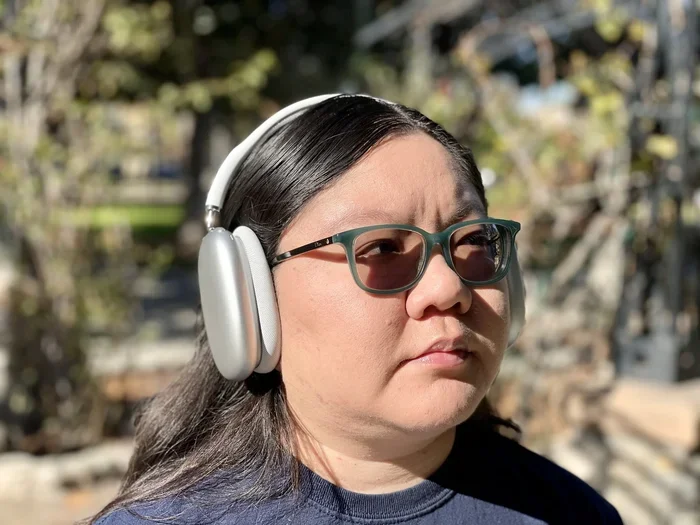
Visual guide about person wearing AirPods Max publicly
Image source: imore.com
High Volume Levels (Above 70%)
The single biggest reason people can hear your audio is volume. When you crank your AirPod Max up to 70%, 80%, or 90% volume, you’re pushing more sound energy through the drivers. This energy has to go somewhere, and some of it escapes through the ear cup seals.
In practical terms, if you’re playing music at full volume on an airplane to drown out engine noise, there’s a good chance the person next to you can hear a faint tinny version of your song. It’s not loud, but in a quiet environment, it’s noticeable.
Quiet Environments Make Leakage Worse
This is counterintuitive but important: leakage is more noticeable in quiet places. In a bustling coffee shop with blenders, chatter, and music, even significant sound leakage gets masked by ambient noise. But in a library, a quiet office, or a serene park bench, even a tiny bit of leaking audio becomes obvious.
Think of it like a flashlight beam in daylight versus at night. The beam is the same brightness, but you only notice it when it’s dark. Sound leakage works the same way.
Transparency Mode Increases Leakage
AirPod Max has three listening modes: Active Noise Cancellation (ANC), Transparency Mode, and Off. Transparency Mode is designed to let outside sounds in so you can hear announcements or conversations without removing your headphones. To do this, the headphones actually play a tiny bit of your audio through external-facing speakers, which can increase leakage.
If privacy is your main concern, stick with ANC mode or turn the headphones off entirely. ANC actively processes sound to cancel it, which actually helps contain your audio better.
Active Noise Cancellation vs. Sound Leakage
Many users wonder if noise cancellation affects whether others can hear their music. The answer is yes, and it’s more nuanced than you might think.
How ANC Works
Active Noise Cancellation uses microphones on the outside of the ear cups to listen to ambient noise. It then generates an “anti-noise” signal that’s the exact opposite waveform of the surrounding sound. When these two waves meet, they cancel each other out, reducing the noise you hear.
It’s like adding a number and its negative (5 + -5 = 0). The result is silence, or at least a significant reduction in unwanted sound.
Why ANC Reduces Perceived Leakage
Here’s the clever part: when ANC is on, your audio doesn’t need to be as loud to overcome background noise. Because the headphones are actively canceling external sound, you can listen at lower volumes and still hear your content clearly. Lower volumes mean less sound energy, which means less leakage.
Did You Know? Studies on headphone listening habits show that ANC users tend to listen at 20-30% lower volumes than those using passive isolation or Transparency Mode. This not only protects your hearing but also dramatically reduces sound leakage.
When ANC Doesn’t Help
ANC is great at canceling consistent, low-frequency sounds like airplane engines, HVAC systems, and traffic. It’s less effective at canceling sudden, high-frequency sounds like voices or clattering dishes. In these environments, you might still need to raise your volume to hear clearly, which brings back the leakage risk.
Comparing AirPod Max to Other Headphones
How does the AirPod Max stack up against other popular headphones when it comes to sound leakage? Let’s take a look.
AirPod Max vs. AirPods Pro
AirPods Pro (the in-ear version) sit inside your ear canal, which creates a different kind of seal. In theory, in-ear designs can isolate sound better, but they also tend to “bleed” more directly into the ear canal, which can feel uncomfortable at high volumes. AirPod Max’s over-ear design spreads sound over a larger area, which often results in less perceived leakage to outside observers.
AirPod Max vs. Sony WH-1000XM5
The Sony WH-1000XM5 is a direct competitor to the AirPod Max and is widely regarded as having excellent noise cancellation. Both headphones feature over-ear designs with memory foam cushions. In independent tests, both leak minimal sound at moderate volumes (below 60%). At maximum volume, the AirPod Max tends to leak slightly less due to its tighter ear cup clamping force.
AirPod Max vs. Bose QuietComfort
Bose has long been the gold standard for noise cancellation, and the QuietComfort series is no exception. The QC Ultra and QC45 headphones have similar leakage profiles to the AirPod Max. Most users won’t notice a significant difference in public settings unless they’re listening at very high volumes.
The Bottom Line on Comparisons
Across the premium headphone market, sound leakage is generally well-controlled at reasonable volumes. The AirPod Max performs on par with or slightly better than its main competitors, especially when ANC is engaged. If you’re choosing based purely on leakage prevention, you won’t go wrong with any major premium option.
Tips to Prevent Sound Leakage
Now that you understand the why behind sound leakage, let’s talk about practical solutions. These tips will help you keep your audio completely private in any setting.
Tip 1: Keep Your Volume at 60% or Below
This is the single most effective change you can make. At 60% volume or lower, the AirPod Max’s sound output is typically below 70 dB at the ear, which is quiet enough that leakage is virtually undetectable beyond a foot or two. Your hearing will also thank you — the WHO recommends keeping personal audio devices below 60% of maximum volume to prevent long-term hearing damage.
Tip 2: Use Active Noise Cancellation
Switch to ANC mode whenever you’re in noisy environments. You’ll be able to hear your audio clearly at lower volumes, which reduces leakage. To toggle ANC on your AirPod Max, press and hold the noise control button on the right ear cup.
Tip 3: Adjust the Fit
A proper fit is crucial. The ear cups should sit squarely over your ears with no gaps around the edges. The headband should be adjusted so the headphones feel snug but comfortable. If you wear glasses, make sure the temples don’t break the seal between the cushions and your head.
Pro tip: Do the “seal check” by pressing the ear cups gently against your ears. If the bass response noticeably improves, you had a poor seal. Readjust and try again.
Tip 4: Avoid Transparency Mode in Quiet Spaces
Transparency Mode is great for walking in cities or having quick conversations, but it actively routes audio in a way that can increase leakage. In quiet environments like libraries or offices, switch to ANC or off mode to keep your audio contained.
Tip 5: Choose Your Environment Wisely
If you know you’ll be listening at higher volumes (like on a noisy flight), accept that some leakage might occur and choose seats away from other passengers when possible. In shared workspaces, consider using a gentle volume and taking breaks to remove your headphones — both for ear health and social courtesy.
Tip 6: Replace Worn Ear Cushions
Over time, the memory foam in your AirPod Max cushions can compress and lose its sealing properties. Apple sells replacement ear cushions, and installing fresh ones can restore the tight acoustic seal that minimizes leakage. If your cushions are visibly worn or your headphones feel looser than they used to, it’s time for a replacement.
Common Myths About AirPod Max Sound Leakage
There are several misconceptions floating around about AirPod Max and sound leakage. Let’s clear up the most common ones.
Myth 1: “Premium Headphones Don’t Leak Sound”
Even the most expensive headphones leak some sound at high volumes. Physics doesn’t care about price tags. The AirPod Max minimizes leakage through design, but it can’t eliminate it entirely.
Myth 2: “ANC Makes Leakage Worse”
Some users believe that because ANC uses external microphones, it must somehow broadcast audio outward. This is false. ANC only processes incoming sound to cancel it; it doesn’t project your audio outward. In fact, ANC typically reduces the volume you need, which decreases leakage.
Myth 3: “If I Can’t Hear Outside Noise, No One Can Hear My Music”
This is a logical but incorrect assumption. The seal that blocks outside noise from entering isn’t perfectly symmetrical. Sound can still escape through the same gaps, just at lower levels than what’s blocked from coming in.
Myth 4: “Bluetooth Headphones Leak More Than Wired Ones”
Bluetooth and wired headphones leak sound at similar rates. The connection type doesn’t affect how much sound escapes the ear cups. What matters is the driver size, ear cup design, and volume level.
Myth 5: “AirPod Max Has a ‘Privacy Mode'”
There’s no dedicated privacy mode on the AirPod Max. The closest thing is simply using ANC mode at moderate volumes. Don’t be fooled by apps or websites claiming to enable such a feature — they don’t exist.
The Social Etiquette of Public Listening
Beyond the technical aspects, there’s a social dimension to consider. Sound leakage isn’t just a technical issue — it’s also about being considerate to the people around you.
Why It Matters
Nobody wants to hear someone else’s music, podcast, or video during their commute, work session, or quiet time. Even if you can’t hear the leakage clearly, it can be distracting and intrusive. Being mindful of your volume and mode settings is a small courtesy that makes shared spaces more pleasant for everyone.
Did You Know? A 2022 survey on public transit etiquette found that 78% of commuters consider headphone leakage to be “rude” or “very rude,” ranking it among the top three most annoying behaviors on public transportation.
Best Practices for Public Use
- Keep volume at conversation level or lower in shared spaces
- Use ANC to avoid blasting audio to overcome noise
- Take one ear cup off when someone is trying to talk to you (instead of raising your voice)
- Be especially mindful in libraries, hospitals, and other quiet zones
- Clean your ear cushions regularly, as buildup can affect the seal
When to Take Your Headphones Off
There are times when removing your AirPod Max is the considerate choice: during face-to-face conversations, when ordering food, when crossing busy streets, and when someone explicitly asks for your attention. Transparency Mode is helpful here, but fully removing the headphones signals respect and engagement.
What If You’re the One Hearing Leaked Audio?
Sometimes the tables are turned, and you’re the person hearing someone else’s headphone leakage. Here’s how to handle that gracefully.
Polite Approaches
If you’re in a situation where someone’s audio is bothering you, a polite comment usually works. Something like, “Hey, I can hear your music a bit — would you mind lowering the volume?” Most people don’t realize they’re leaking sound and will happily adjust.
When to Speak Up vs. Move Away
In transient situations like public transit, moving to another seat or section is often easier than confronting a stranger. In semi-permanent situations like a shared workspace, a friendly conversation is usually the better path. Most leakage issues are accidental and easily fixed once the person is aware.
Using ANC to Your Advantage
If you’re an AirPod Max user yourself and find yourself distracted by others’ audio, your own ANC mode can help mask the intrusion. While it’s not a perfect solution, it can make shared spaces more tolerable.
Technical Details: How Apple Designed for Privacy
Apple put significant engineering effort into making the AirPod Max leak as little sound as possible. Here’s a peek behind the curtain.
The Custom Acoustic Design
The AirPod Max features a unique dual-driver system per ear: a tweeter for high frequencies and a larger driver for lows and mids. This setup allows each driver to operate at lower volumes while still delivering full-range sound. Lower volume output per driver means less total energy that could potentially leak.
The Memory Foam Ear Cushions
Apple’s ear cushions use acoustically engineered memory foam that conforms to the unique shape of your head and ears. This personalized seal is more effective than generic foam, reducing gaps where sound could escape. The cushions attach magnetically, making them easy to replace when worn.
The H1 Chip’s Role
Each ear cup contains Apple’s H1 chip, which processes audio in real time. This processing enables Adaptive EQ, which automatically tunes the sound to the seal and fit of your cushions. A better seal means more efficient sound delivery, which translates to lower volumes and less leakage.
The Stainless Steel and Aluminum Build
The premium materials aren’t just for looks. The stainless steel headband frame and aluminum ear cups create a rigid structure that doesn’t flex or vibrate, which helps contain sound. Cheaper headphones with plastic builds can resonate, which actually amplifies leakage.
Real-World Scenarios: How Much Leakage Actually Happens?
Let’s put all this theory into practice with some everyday scenarios. Understanding these situations can help you gauge your own risk.
Scenario 1: The Coffee Shop
You’re in a moderately busy coffee shop, listening to a podcast at 50% volume with ANC on. The ambient noise is around 65 dB. At this volume, your audio output is roughly 60 dB at the ear, and leakage would be around 35-40 dB — well below the ambient noise. Nobody can hear your podcast.
Scenario 2: The Quiet Office
You’re working in a quiet office at 70% volume because you’re trying to focus. The office is around 40 dB ambient. Your audio is about 75 dB at the ear, and leakage would be around 50 dB. The person at the next desk can definitely hear faint audio, especially during quieter parts of your content.
Scenario 3: The Airplane
You’re on a plane with engine noise around 80 dB. You crank your AirPod Max to 90% with ANC on to compensate. Despite the high volume, the ANC reduces perceived engine noise by about 25 dB, so your effective listening level is moderate. Leakage might be 45-50 dB, but the surrounding engine noise masks it. The person next to you might hear something if they lean in, but it’s not obvious.
Scenario 4: The Library
You’re in a library at 30% volume (it’s a quiet book on tape). Ambient noise is 25 dB. Your audio is 50 dB at the ear, and leakage is around 30-35 dB. Even at this low volume, the library is so quiet that someone nearby might hear faint audio if they’re within a foot or two. Best to use earbuds or remove headphones in such settings.
Key Takeaway from Scenarios
The pattern is clear: in noisy environments, leakage is masked. In quiet environments, even small leaks become noticeable. Match your listening habits to your environment, and you’ll rarely have a problem.
The Bottom Line: Yes, But Rarely
So, can people hear your AirPod Max? In most realistic scenarios, the answer is no — especially if you follow a few simple guidelines. The AirPod Max is one of the better premium headphones for sound containment, thanks to its over-ear design, quality materials, and effective ANC.
To recap the key points:
- Keep your volume at 60% or below whenever possible
- Use Active Noise Cancellation in noisy environments to avoid raising volume
- Ensure a proper fit for the best acoustic seal
- Avoid Transparency Mode when privacy matters
- Be extra mindful in quiet spaces like libraries and offices
- Replace ear cushions when they wear out
By following these tips, you’ll keep your audio private while also protecting your hearing for the long term. The AirPod Max is a fantastic pair of headphones, and with a little awareness, you can enjoy them without worrying about broadcasting your playlist to the world.
Whether you’re commuting, working, or just relaxing at home, the AirPod Max offers a premium listening experience that respects both your privacy and that of those around you. A few mindful habits are all it takes to make sure your audio stays exactly where it belongs — in your ears.
Frequently Asked Questions
Can people hear my AirPod Max in public?
At moderate volumes (below 60%), most people won’t hear your AirPod Max, especially in environments with ambient noise. At higher volumes or in very quiet settings, some sound leakage can occur, but it’s generally minimal compared to earbuds or on-ear headphones.
Does Active Noise Cancellation prevent sound leakage?
ANC doesn’t directly prevent leakage, but it allows you to listen at lower volumes by canceling ambient noise. Lower volumes mean less sound energy that could escape, so ANC users typically experience less leakage overall.
Is the AirPod Max sound leakage worse than other headphones?
No, the AirPod Max performs on par with or better than most premium over-ear headphones in terms of sound leakage. Its tight seal and quality ear cushions help contain audio effectively at reasonable volumes.
Can I share audio with someone using my AirPod Max?
The AirPod Max does not support two-person audio sharing from a single device like some other Apple headphones. Each person needs their own AirPod Max or compatible headphones to listen together.
How do I reduce sound leakage on my AirPod Max?
Keep your volume at 60% or below, use Active Noise Cancellation mode, ensure a proper fit, avoid Transparency Mode in quiet spaces, and replace worn ear cushions to maintain a tight acoustic seal.
Does Transparency Mode make leakage worse?
Yes, Transparency Mode can increase sound leakage because it actively processes and mixes external audio with your content. For maximum privacy, switch to ANC mode or turn the headphones off in quiet environments.