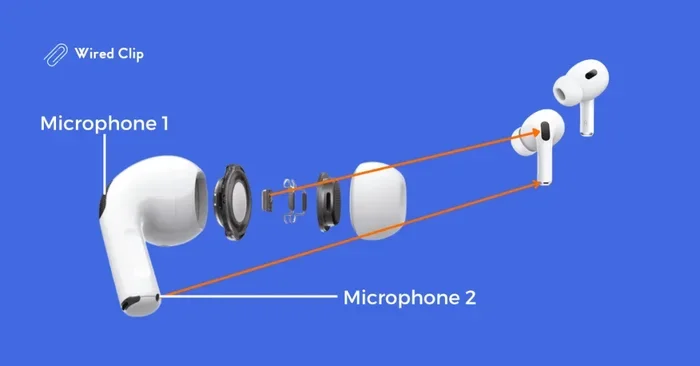
Featured image for AirPods Pro 2 case microphone detail
Image source: wiredclip.com
The AirPods Pro 2 charging case does include a microphone, but it serves a very specific set of functions rather than general call audio. The built-in mic enables features like Siri voice commands, Find My location pings, and accessibility announcements, but your voice during phone calls and FaceTime is picked up exclusively by the earbuds themselves. Understanding this design choice helps you get the most out of your AirPods Pro 2 without expecting features that simply do not exist.
If you have ever stared at the little hole on the bottom of your AirPods Pro 2 case and wondered whether it is a microphone, you are not alone. It is one of the most commonly asked questions in the Apple community, and the answer is more interesting than a simple yes or no. Apple packed a surprisingly capable little microphone into that tiny case, but it does not work the way most people expect.
The confusion usually comes from how microphones are used in everyday tech. On your iPhone, the mic handles calls, voice memos, and Siri. On AirPods, the earbuds carry the mic for calls. So when people see what looks like another mic on the case, they naturally wonder if they have been missing a hidden feature. The truth is that Apple designed the case mic to play a supporting role, and once you understand what it does, the whole product makes a lot more sense.
In this guide, we will break down exactly what the AirPods Pro 2 case microphone does, how it compares to the earbud mics, and why Apple chose to include it in the first place. By the end, you will know every trick that little hole can do, and you will avoid the common mistakes people make when trying to use it.
Key Takeaways
- The case mic is real but limited: It is designed only for Find My alerts, Siri interactions, and accessibility chimes, not for phone calls or music control.
- The earbuds handle all call audio: Each AirPod contains its own microphone array that captures your voice during calls, voice memos, and video chats.
- Find My ping is the star feature: You can make the case emit a sound through its speaker, helping you locate it when lost.
- Battery life is not drained by the mic: The case mic activates only on demand, so it does not meaningfully impact standby time.
- The USB-C version adds nothing new: Apple did not add a second mic or change the mic function when switching from Lightning to USB-C.
- Siri hears you through the case mic: If your AirPods are in the case with the lid open, Siri can still process commands through that microphone.
- It cannot replace a headset mic: You cannot use the case alone as a microphone for your Mac, iPhone, or any other device.
📑 Table of Contents
- What Exactly Is the Microphone on the AirPods Pro 2 Case?
- Why Did Apple Add a Microphone to the Case?
- How the Case Mic Compares to the Earbud Mics
- Common Misconceptions About the Case Microphone
- Practical Tips for Using the AirPods Pro 2 Case Microphone
- The USB-C vs. Lightning Version: Does It Matter?
- How the Case Mic Fits into Apple’s Broader Ecosystem
- Final Thoughts: Should You Care About the Case Microphone?
What Exactly Is the Microphone on the AirPods Pro 2 Case?
Let us start with the basics. Yes, the AirPods Pro 2 case has a microphone. You can find it on the bottom front of the case, right near the Lightning or USB-C port, depending on which version you own. It looks like a tiny pinhole, almost invisible unless you hold the case up to a bright light. It is part of a small speaker grille that also doubles as the speaker for Find My alerts.
Apple officially describes this microphone as being used for “Siri and Find My” functions. That is a deliberately short description, because the mic does not have a wide range of uses. It is not a general-purpose microphone like the ones on your laptop or phone. Instead, it is a specialized tool that only activates in certain situations.
To put it in simple terms, think of the case mic like the intercom on a delivery truck. The driver uses it to communicate in very specific situations, but it is not meant to replace a normal conversation. The case mic wakes up when you ask it to, listens for very specific commands or triggers, and then goes back to sleep.
The Two Functional Areas: Mic and Speaker
The grille on the front bottom of the AirPods Pro 2 case actually serves two purposes. One side is a microphone, and the other is a small speaker. Apple combined them into one opening to keep the design clean and minimal. When you trigger a Find My ping, the speaker side emits a loud chime. When Siri is listening through the case, the microphone side picks up your voice.
This dual-purpose design is one reason people miss the microphone entirely. They see the speaker grille and assume it is only for sound output. In reality, both the speaker and the microphone share that same little window.
Why Did Apple Add a Microphone to the Case?
The big question is, why bother putting a mic in the case at all? The answer is rooted in usability and the Find My ecosystem. When Apple redesigned the AirPods Pro 2 case in 2022, they wanted to make it a first-class citizen in the Find My network. That meant giving it the ability to play sounds, broadcast its location, and respond to voice commands, even when the AirPods themselves are not in your ears.
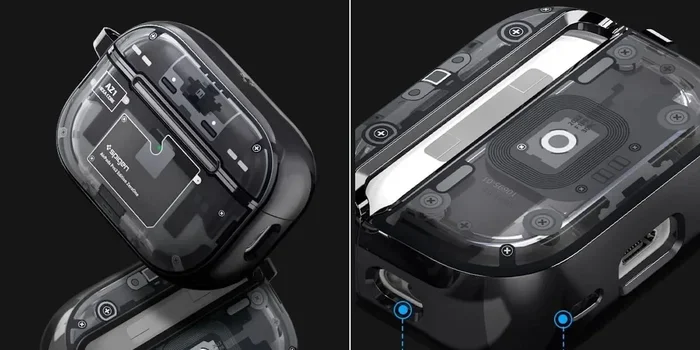
Visual guide about AirPods Pro 2 case microphone detail
Image source: 9to5toys.com
Before the AirPods Pro 2, the case was essentially a silent brick once your earbuds were missing. You could see its last known location on a map, but you could not make it beep. That was a frustrating experience, because cases are even easier to lose than the earbuds themselves. Apple fixed this by adding both a speaker and a microphone.
The Role of Siri in the Case
Siri is one of the main reasons the case has a listening device. If your AirPods are sitting in the case and the lid is open, you can still invoke Siri just by saying “Hey Siri” or holding the case near your mouth. The microphone picks up your voice, and Siri responds through your paired iPhone or the case itself.
This is especially useful for accessibility. People who rely on Siri for setting reminders, sending texts, or making calls can do so without ever putting the earbuds in. The case becomes a tiny Siri remote that fits in your pocket.
Find My Announcements
Another important function is accessibility-focused announcements. When the battery is low, or when the case has been left behind, the case can use its microphone in combination with iOS to deliver spoken alerts. This makes it easier for users with visual impairments to locate and manage their devices.
How the Case Mic Compares to the Earbud Mics
This is where things get really interesting. The AirPods Pro 2 earbuds each contain multiple microphones of their own. There is an inward-facing mic that listens to the inside of your ear canal, and outward-facing mics that handle voice pickup, noise cancellation, and transparency mode. These are the workhorses that actually handle your calls, voice memos, and FaceTime audio.
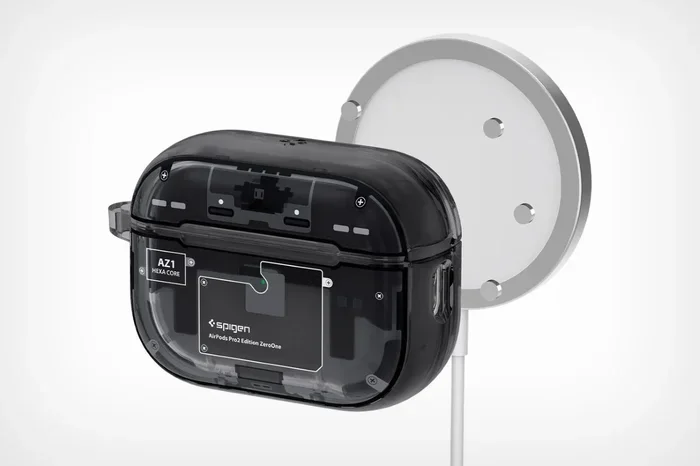
Visual guide about AirPods Pro 2 case microphone detail
Image source: yankodesign.com
The case mic, by contrast, is a single, simplified microphone. It does not need to handle noise cancellation or beamforming, because it is only used in quiet, close-range situations like asking Siri or initiating a Find My ping. It is built for clarity at short distances, not for full-spectrum audio capture.
Think of it like the difference between a studio microphone and a walkie-talkie. The earbuds have the studio-quality setup for your calls and music. The case mic is the walkie-talkie, designed for quick, clear exchanges in specific scenarios.
Call Quality Comes from the Earbuds
If you take a phone call while wearing your AirPods Pro 2, your voice is captured by the earbuds, not the case. The case is sitting in your pocket or on a table, far away from your mouth. That would result in terrible audio quality. So Apple wisely routes all call audio through the earbud microphones, which sit just a few centimeters from your mouth.
This design ensures consistent call quality regardless of where the case is. You could leave the case at home, and your calls would sound exactly the same. The mic in the case never participates in live conversations.
Noise Cancellation and Transparency Mode
The earbuds also use their microphones for active noise cancellation and transparency mode. These features require constant, high-quality audio input to function properly. The case mic is not involved at all. It is essentially idle during music playback, calls, and any audio-related function that involves the speakers in your ears.
Common Misconceptions About the Case Microphone
Now that we have covered what the mic does, let us clear up some of the most common myths. These are the misunderstandings that pop up again and again in forums, Reddit threads, and YouTube comments.
Myth 1: You Can Use the Case as a Wireless Mic for Your Computer
This is a popular idea, but it does not work. The case does not broadcast its microphone audio over Bluetooth in a way that other devices can pick up. It is not a standalone Bluetooth microphone. You cannot pair the case alone with your Mac and use it for Zoom calls, gaming, or podcasting. The microphone is only accessible to the AirPods system itself.
Myth 2: The Case Mic Improves Call Quality
Some people assume that having more microphones means better call performance. That is not how it works here. The case mic is never active during calls, so it does not contribute to your voice clarity. Call quality is determined entirely by the earbud microphones and the wireless connection to your phone.
Myth 3: The Mic Drains the Case Battery
This is a fair concern, but it is not a problem in practice. The microphone only activates when Siri is listening or when the case is performing a Find My action. These are brief moments, and the power draw is minimal. Apple does not publish specific battery drain figures for the case mic, but in real-world use, you will not notice any meaningful impact on battery life.
Myth 4: All AirPods Cases Have Mics
Only the AirPods Pro 2 case has a built-in microphone. Earlier AirPods cases, including the original AirPods, AirPods 2, and AirPods Pro 1, did not include this feature. It was introduced with the second-generation AirPods Pro in 2022. If you own an older model, your case is silent and mic-free.
Practical Tips for Using the AirPods Pro 2 Case Microphone
Now that you know what the case mic can and cannot do, here are some practical tips to get the most out of it. These are the features and tricks that most people never explore, even after owning the AirPods Pro 2 for years.
Tip 1: Use Find My to Make the Case Beep
If you misplace your case, open the Find My app on your iPhone, select your AirPods Pro 2, and tap “Play Sound.” The case will emit a loud chime that makes it much easier to locate. This works even if the AirPods themselves are inside or missing. The sound is surprisingly loud for such a tiny device, and it can be heard from another room or inside a bag.
Tip 2: Talk to Siri Without Wearing the Earbuds
Open the case lid and say “Hey Siri.” As long as the case is near you and the lid is open, the microphone will pick up your command. This is handy when your phone is across the room and you want to set a quick reminder or send a message without getting up.
Tip 3: Keep the Case Mic Clean
The microphone hole is small, and it can get clogged with dust, lint, or debris over time. If Siri stops responding through the case or the Find My sound seems muffled, try cleaning the grille gently with a dry, soft-bristled brush. Avoid using compressed air, which can push debris further into the case.
Tip 4: Use the Case Mic for Accessibility Features
If you rely on VoiceOver or other accessibility tools, the case mic adds extra convenience. You can hear spoken battery status, location announcements, and pairing confirmations. Make sure these features are enabled in your iPhone’s Accessibility settings to take full advantage.
Tip 5: Know When the Mic Is Active
Apple does not provide a visible indicator for the case mic, which is part of its minimalist design philosophy. However, you can confirm it is working by triggering Siri or using Find My. If those features respond as expected, the mic is functioning properly.
The USB-C vs. Lightning Version: Does It Matter?
In 2023, Apple released a USB-C version of the AirPods Pro 2 to comply with new European regulations and to match the iPhone 15 lineup. Many people wondered whether this new version included any microphone changes. The short answer is no. The USB-C version has the exact same microphone and speaker setup as the Lightning version.
Apple did not add a second mic, did not upgrade the audio quality, and did not change the functionality. The only differences are the port type, slight improvements to dust and water resistance (IP54 versus IPX4), and support for lossless audio when used with the Vision Pro. The case microphone behaves identically across both versions.
Why Apple Kept It the Same
From a design standpoint, there was no reason to change the microphone setup. The existing mic handles the limited functions it needs to handle, and adding more would have increased cost and complexity without delivering meaningful benefits. Apple tends to refine components rather than reinvent them between minor hardware revisions, and the case mic is a good example of that philosophy.
How the Case Mic Fits into Apple’s Broader Ecosystem
Zoom out for a moment, and you will see that the case mic is part of a larger trend. Across Apple’s product lineup, microphones are being added to devices that traditionally did not have them. The Apple TV remote has a microphone for Siri. The HomePod mini uses far-field microphones for voice control. Even the AirTag has a tiny speaker for location pings.
The AirPods Pro 2 case fits neatly into this ecosystem. Apple wants every product to be a potential entry point for Siri and Find My. The case mic ensures that even your charging case is a smart, connected device rather than a passive accessory.
The Privacy Angle
Privacy is always a concern when microphones are involved. Apple has addressed this by ensuring the case mic only activates in specific, user-triggered scenarios. It is not always listening, and it does not record audio in the background. Siri processing happens on-device for many commands, and any audio sent to Apple’s servers is anonymized. You can review Apple’s privacy documentation for full details, but the case mic is not a hidden surveillance tool. It is a simple, on-demand input device.
Future Possibilities
Looking ahead, it is possible that future AirPods cases will expand the role of the microphone. Apple could add live translation features, more advanced Find My capabilities, or even integration with new Vision Pro spatial audio features. The hardware is already there, so future software updates could unlock new functionality without requiring a new case.
Final Thoughts: Should You Care About the Case Microphone?
For most users, the case microphone is a background feature that quietly does its job without requiring any attention. You will rarely think about it, and you will rarely need to interact with it directly. But when you do need it, such as when you lose your case or want to use Siri hands-free, it becomes incredibly valuable.
The AirPods Pro 2 case microphone is a small detail that reflects Apple’s broader design philosophy: every component should have a purpose, and even the most overlooked features should work seamlessly. It is not a gimmick, and it is not a half-baked addition. It is a thoughtful piece of engineering that solves real problems.
So the next time someone asks, “Does the AirPods Pro 2 case have a mic?” you will know exactly what to say. Yes, it does. And it does more than most people realize.
Frequently Asked Questions
Does the AirPods Pro 2 case microphone work for phone calls?
No. The case microphone is not used for phone calls, FaceTime, or any voice communication. All call audio is handled by the microphones inside the earbuds themselves, which sit closer to your mouth for better clarity.
Can I use the AirPods Pro 2 case as a Bluetooth microphone for my computer?
No. The case does not function as a standalone Bluetooth microphone. It only communicates with paired Apple devices through the AirPods system, and it cannot be used as a generic mic input for Zoom, Discord, or other apps.
Where exactly is the microphone located on the AirPods Pro 2 case?
The microphone is part of the small grille on the bottom front of the case, near the charging port. This same grille also houses the speaker used for Find My alerts, which is why it looks like a single combined opening.
Does the case microphone always listen for Siri?
The case microphone only activates when you trigger Siri directly, such as by saying “Hey Siri” with the lid open, or when the Find My app sends a ping. It does not continuously listen in the background, which helps protect your privacy and battery life.
Do older AirPods cases have microphones?
No. Only the AirPods Pro 2 case (both Lightning and USB-C versions) includes a built-in microphone. Earlier AirPods cases, including the original AirPods and AirPods Pro 1, do not have this feature.
Can the case microphone help me find lost AirPods inside the case?
Yes. Through the Find My app, you can make the case emit a loud sound even if the AirPods are inside. This is one of the most practical uses of the case speaker, and it works independently of the earbuds themselves.