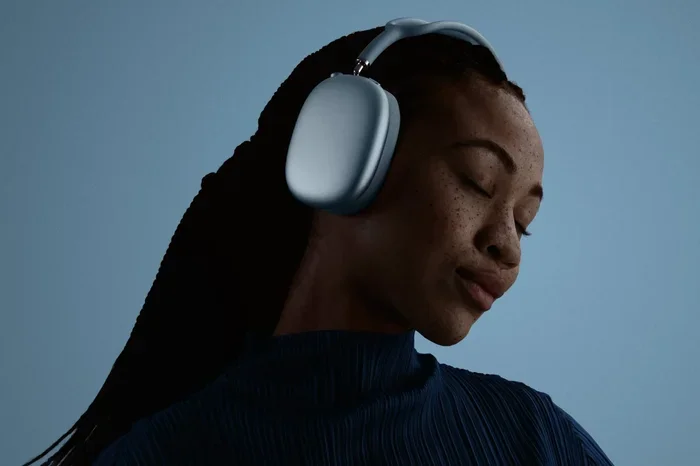
Featured image for AirPods Max adaptive audio feature
Image source: cdn.wccftech.com
AirPods Max do not have Adaptive Audio. This smart feature, which adjusts noise control based on your surroundings, is exclusive to AirPods Pro 2, AirPods 4, and AirPods Pro 3. AirPods Max offer premium Active Noise Cancellation and Transparency mode, but lack the automatic environment-switching technology found in newer Apple earbuds.
Picture this: you’re walking down a busy street wearing your favorite headphones. A friend starts talking to you, and your headphones automatically lower the music while letting their voice through clearly. No buttons to press, no settings to adjust. Just seamless sound that adapts to your world. That’s the magic of Adaptive Audio, a feature many Apple fans wonder about when considering the premium AirPods Max.
The short answer might surprise you. AirPods Max, Apple’s top-tier over-ear headphones launched in December 2020, do not include Adaptive Audio. This feature arrived three years later with the AirPods Pro 2 update in 2023. But don’t let that disappointment keep you from considering these beautiful cans. They pack serious audio firepower that still impresses audiophiles worldwide.
Understanding what your headphones can and cannot do helps you make smarter buying choices. In this guide, we’ll break down everything about Adaptive Audio, explain why AirPods Max miss this feature, explore what they do offer, and help you decide if they’re still worth your hard-earned money in today’s market.
Key Takeaways
- No Adaptive Audio on AirPods Max: Apple’s over-ear headphones launched in 2020 with premium sound but missing the Adaptive Audio feature that came later in 2023.
- Adaptive Audio Requires H2 Chip: The feature needs the H2 processor, which AirPods Max lack since they use the older H1 chip.
- AirPods Max Still Offer ANC: Active Noise Cancellation and Transparency mode work great, but you must switch them manually.
- Three Noise Modes Available: Users can toggle between Noise Cancellation, Transparency, and Off using the Digital Crown.
- Future Updates Unlikely: Apple cannot add Adaptive Audio through software updates because the H1 chip lacks necessary processing power.
- Better Alternatives Exist: AirPods Pro 2 and AirPods 4 offer Adaptive Audio at lower price points.
- Premium Build Remains: Despite missing this feature, AirPods Max deliver exceptional sound quality and build craftsmanship.
📑 Table of Contents
- What Is Adaptive Audio and Why Does It Matter?
- Why AirPods Max Don’t Have Adaptive Audio
- What Audio Features Do AirPods Max Actually Have?
- AirPods Max vs. AirPods Pro 2: Feature Comparison
- How to Maximize Your AirPods Max Experience
- The Future of AirPods Max: What to Expect
- Final Verdict: Are AirPods Max Worth Buying Without Adaptive Audio?
What Is Adaptive Audio and Why Does It Matter?
Think of Adaptive Audio like a smart thermostat for your ears. Just as a thermostat adjusts temperature based on room conditions, Adaptive Audio adjusts sound settings based on your environment. It blends Active Noise Cancellation with Transparency mode in real-time, creating a perfect audio bubble that shifts as your surroundings change.
Apple designed this feature to solve a common problem. Users constantly toggled between noise cancellation and transparency modes. Walking from a quiet office to a noisy street meant fumbling with controls. Adaptive Audio handles this automatically, using advanced algorithms and microphones to detect environmental changes.
The Science Behind Smart Sound
Adaptive Audio relies on several technologies working together. The H2 chip processes audio data at lightning speed. Multiple microphones sample your environment continuously. Machine learning algorithms analyze sound patterns to predict what you need to hear.
Here’s how it works in practice. When you enter a coffee shop, your AirPods detect the chatter and adjust accordingly. Background noise gets reduced, but you can still hear the barista call your name. Step outside into traffic, and the system ramps up noise cancellation. Walk into a quiet library, and transparency increases so you stay aware.
Three Components of the Adaptive Audio System
Apple’s Adaptive Audio actually combines several features into one smart package:
- Adaptive Noise Control: Automatically switches between ANC and Transparency based on your environment
- Conversation Awareness: Detects when you start speaking and lowers media volume automatically
- Personalized Volume: Learns your listening preferences over time and adjusts volume accordingly
Did you know? Apple spent over five years developing the machine learning models behind Adaptive Audio. The system processes over 48,000 environmental sound samples per second to make split-second decisions about what you should hear.
Why AirPods Max Don’t Have Adaptive Audio
The main reason comes down to one tiny component: the chip inside your headphones. AirPods Max use Apple’s H1 chip, the same processor found in the original AirPods Pro from 2019. Adaptive Audio requires the newer H2 chip, which debuted with AirPods Pro 2 in 2022.
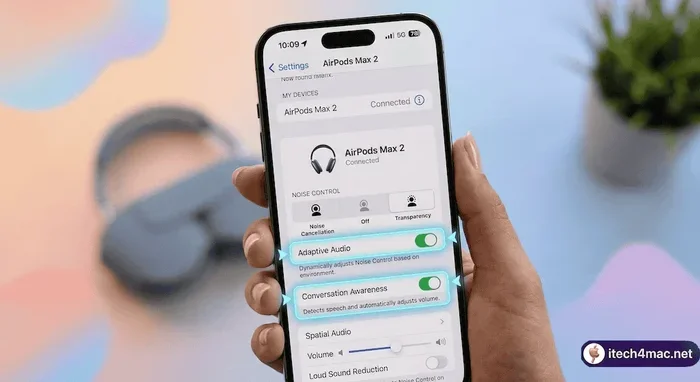
Visual guide about AirPods Max adaptive audio feature
Image source: itech4mac.net
Think of it like this: the H1 chip is a competent brain that can handle basic tasks like noise cancellation. The H2 chip is a supercomputer brain that can process complex algorithms in real-time. Without the H2’s processing power, Adaptive Audio simply cannot run on AirPods Max.
The Hardware Limitation Explained
The H2 chip isn’t just a minor upgrade. It represents a massive leap in processing capability. It handles twice the audio processing tasks of the H1 while using less power. This extra horsepower enables the real-time environmental analysis that Adaptive Audio demands.
AirPods Max cannot receive this chip through a software update. The H1 hardware physically lacks the neural engine capabilities needed. No amount of firmware magic can add new silicon to existing chips. This limitation frustrates many users who hoped Apple would add the feature later.
Launch Date Matters Too
Timing played a crucial role in this feature gap. AirPods Max launched in December 2020. Adaptive Audio arrived in September 2023 with iOS 17. That three-year gap meant Apple designed AirPods Max before Adaptive Audio existed as a concept. They built beautiful headphones with excellent traditional noise cancellation, but missed the smart features wave.
Apple has not announced any plans to release a second-generation AirPods Max with updated internals. The current model remains in its original form, which means the Adaptive Audio gap will persist indefinitely.
What Audio Features Do AirPods Max Actually Have?
Despite lacking Adaptive Audio, AirPods Max deliver a premium listening experience that rivals competitors costing twice as much. Let’s explore what makes these headphones special and why audiophiles still love them.
Active Noise Cancellation That Impresses
AirPods Max feature industry-leading Active Noise Cancellation. Each ear cup contains three outward-facing microphones that detect environmental noise. One inward-facing microphone listens to the sound reaching your ears. The H1 chip processes all this information and generates anti-noise signals within milliseconds.
In practice, this means a jet engine becomes a quiet hum. Office chatter disappears into silence. The subway transforms from a roar into a gentle whoosh. Apple claims the AirPods Max block 1.5 times more noise than standard ANC headphones, putting them at the top of the cancellation game.
Transparency Mode for Natural Awareness
When you need to hear your surroundings, Transparency mode lets outside sound in naturally. It’s like not wearing headphones at all. The system processes external sounds and plays them through your drivers in real-time, creating an open, airy feeling without removing your headphones.
This mode uses the same microphone array as noise cancellation but flips its function. Instead of canceling outside sound, it amplifies and clarifies it. Conversations flow naturally. Traffic awareness stays intact. Announcements at airports come through clearly.
Switching Between Modes
Without Adaptive Audio, you must switch modes manually. AirPods Max make this easy through the Digital Crown, the small dial on the right ear cup. Here’s how to toggle:
- Press and hold the Digital Crown to switch between Active Noise Cancellation and Transparency mode
- Single press to play or pause audio
- Rotate up or down to adjust volume
- Double press to skip forward, triple press to skip back
You can also customize which modes the button cycles through in your iPhone settings. Some users prefer ANC only, while others want the full cycle including Off mode.
Spatial Audio with Dynamic Head Tracking
AirPods Max shine when it comes to immersive sound. They support Spatial Audio with Dolby Atmos, creating a three-dimensional listening experience. Movies feel like theaters. Music surrounds you from all directions. The magic happens through dynamic head tracking, which anchors sound to your device even as you turn your head.
Imagine watching a movie on your iPad. A car drives from left to right across the screen. Turn your head, and the sound stays locked to the screen position. This works through built-in gyroscopes and accelerometers that track your head movements precisely.
Computational Audio Magic
Each ear cup contains its own H1 chip, giving AirPods Max dual processing power. This setup enables real-time computational audio that adjusts sound 200 times per second. The system considers fit, seal, and ambient conditions to optimize your listening experience continuously.
AirPods Max vs. AirPods Pro 2: Feature Comparison
Understanding the differences helps you make the right choice. Let’s compare these two Apple audio powerhouses side by side, focusing on smart features and practical usage.
Smart Features Showdown
AirPods Pro 2 win the smart features battle decisively. They include every intelligent audio feature Apple offers: Adaptive Audio, Conversation Awareness, Personalized Volume, and more. AirPods Max offer premium core features but miss these newer additions.
| Feature | AirPods Max | AirPods Pro 2 |
|---|---|---|
| Adaptive Audio | No | Yes |
| Conversation Awareness | No | Yes |
| Personalized Volume | No | Yes |
| Active Noise Cancellation | Yes (Excellent) | Yes (Excellent) |
| Transparency Mode | Yes | Yes (Adaptive) |
| Spatial Audio | Yes | Yes |
| Chip | H1 | H2 |
Price and Value Considerations
Here’s where things get interesting. AirPods Max retail for $549. AirPods Pro 2 cost $249. That’s a $300 difference for headphones that offer fewer smart features. However, the comparison isn’t completely fair because you’re paying for different experiences.
AirPods Max deliver superior sound quality through larger drivers and better acoustics. The build quality uses premium materials like aluminum and memory foam. Battery life reaches 20 hours compared to 6 hours on AirPods Pro 2. You’re paying for over-ear luxury versus in-ear convenience.
Who Should Choose Which?
Choose AirPods Max if you prioritize:
- Best-in-class sound quality
- Comfortable over-ear design for long sessions
- Premium materials and build quality
- Long battery life for travel
- Home or office listening primarily
Choose AirPods Pro 2 if you prioritize:
- Smart features like Adaptive Audio
- Portability and travel convenience
- Workout and active lifestyle use
- Lower price point
- All-day awareness of surroundings
How to Maximize Your AirPods Max Experience
Even without Adaptive Audio, you can create a smart listening experience through other means. Here are practical tips to get the most from your investment.
Use Siri for Hands-Free Control
Siri integration makes switching modes easier than ever. Just say “Hey Siri, turn on Transparency mode” or “Hey Siri, switch to Noise Cancellation.” Your AirPods Max respond instantly without touching any controls.
You can also ask Siri to adjust volume, change songs, make calls, or send messages. This voice control somewhat compensates for the missing automatic features. You get manual control with voice convenience.
Create Custom Shortcuts
iOS lets you create automation shortcuts that adjust audio settings based on location or time. For example:
- Morning commute: Automatically enable Transparency mode when you leave home
- Office arrival: Switch to Noise Cancellation when you reach work
- Gym time: Activate Transparency during workouts for safety
These workarounds require initial effort but create an almost-automatic experience afterward. Set them up once, and your iPhone handles the rest based on your routines.
Leverage Focus Modes
iOS Focus Modes can trigger specific AirPods behaviors. Set up a Work Focus that enables Noise Cancellation automatically. Create a Personal Focus for Transparency mode. Combine these with the shortcuts above for a comprehensive smart audio system.
Keep Firmware Updated
While firmware updates cannot add Adaptive Audio, they improve existing features. Apple regularly releases updates that enhance noise cancellation algorithms, fix bugs, and optimize battery life. Keep your AirPods Max updated by connecting them to your iPhone regularly.
Did you know? AirPods Max update automatically when placed near your iPhone while charging. The process happens silently in the background without any notification.
The Future of AirPods Max: What to Expect
Apple remains quiet about AirPods Max 2, but rumors and patents hint at exciting possibilities. Understanding these potential developments helps you decide whether to buy now or wait.
Expected Improvements in Next Generation
Industry analysts predict AirPods Max 2 will adopt the H2 chip, finally bringing Adaptive Audio to the over-ear line. Other expected upgrades include:
- H2 chip for Adaptive Audio support
- USB-C charging replacing Lightning
- Lighter weight through material improvements
- Longer battery life beyond 20 hours
- Improved ANC with better algorithms
Bloomberg’s Mark Gurman reported in 2024 that Apple was developing a lighter version. The current AirPods Max weigh 384 grams, which some users find heavy during extended wear. A lighter design could address this complaint while adding new features.
Should You Wait?
Timing your purchase depends on your priorities. Buy now if you want premium over-ear headphones immediately and don’t mind missing Adaptive Audio. The current model still delivers excellent sound quality and noise cancellation.
Wait if you specifically want Adaptive Audio and can hold off for 6-12 months. The next-generation model will likely include this feature. However, waiting means missing out on the joy of premium audio today.
Consider this perspective: AirPods Max launched in 2020 and still haven’t received a successor. Apple typically takes 3-4 years between audio product updates. This timeline suggests AirPods Max 2 could arrive in late 2024 or 2025, but Apple hasn’t confirmed any release date.
Final Verdict: Are AirPods Max Worth Buying Without Adaptive Audio?
AirPods Max remain exceptional headphones despite missing Adaptive Audio. They deliver premium sound quality, industry-leading noise cancellation, and stunning build quality that justifies their price for many users. The absence of Adaptive Audio is a genuine drawback, but not a dealbreaker for everyone.
Your decision depends on what you value most in headphones. If smart features and automatic environment adaptation matter most, look at AirPods Pro 2 or wait for AirPods Max 2. If pure sound quality, comfort, and premium materials top your list, AirPods Max deliver an experience few competitors can match.
Remember that Adaptive Audio is a convenience feature, not a quality feature. AirPods Max offer superior drivers, better acoustic chambers, and more refined audio output than any in-ear alternative. The sound signature is fuller, richer, and more detailed. For serious music lovers and audio professionals, this quality difference matters more than automatic mode switching.
Before making your final decision, try both options if possible. Visit an Apple Store and test AirPods Max alongside AirPods Pro 2. Listen to your favorite music on both. Experience the noise cancellation. Feel the build quality. Your ears and your preferences will guide you to the right choice.
Whether you choose AirPods Max or another option, you’re investing in Apple’s ecosystem of quality audio products. Both choices deliver the seamless iPhone integration, reliable connectivity, and polished user experience that makes Apple audio products special.
Frequently Asked Questions
Do AirPods Max have Adaptive Audio?
No, AirPods Max do not have Adaptive Audio. This feature is available only on AirPods Pro 2, AirPods Pro 3, and AirPods 4, which use the H2 chip required for the technology.
Can Adaptive Audio be added to AirPods Max through a software update?
No, Adaptive Audio cannot be added through software updates. The H1 chip inside AirPods Max lacks the processing power needed. Adaptive Audio requires the H2 chip’s advanced neural engine capabilities.
What noise cancellation features do AirPods Max have?
AirPods Max offer Active Noise Cancellation and Transparency mode. You can switch between them using the Digital Crown or by asking Siri. Both modes perform excellently but require manual switching.
Which AirPods have Adaptive Audio?
Adaptive Audio is available on AirPods Pro 2 (with USB-C or Lightning), AirPods Pro 3, and AirPods 4 (both ANC and standard versions with H2 chip). All these models use the H2 processor that enables the feature.
Is AirPods Max worth buying without Adaptive Audio?
AirPods Max remain worth buying for users who prioritize premium sound quality, build materials, and over-ear comfort. However, if Adaptive Audio and smart features matter most to you, consider AirPods Pro 2 instead at a lower price.
Will there be AirPods Max 2 with Adaptive Audio?
Apple has not officially announced AirPods Max 2. However, industry rumors suggest a successor could arrive in 2024 or 2025, likely featuring the H2 chip and Adaptive Audio support. Apple has not confirmed any release timeline.