
Featured image for Person wearing wireless earbuds commuting
Image source: static.vecteezy.com
Noise cancelling AirPods are worth it if you frequently deal with loud environments, take lots of calls in public, or simply want to protect your hearing. They use active technology to reduce background sounds, making music clearer at lower volumes. However, if you mostly listen in quiet spaces or are on a tight budget, standard AirPods may serve you just fine.
Picture this: you’re on a crowded train, trying to enjoy your favorite podcast. The rumble of the wheels, the chatter of strangers, and the screech of brakes turn your audio into a muddy mess. You crank up the volume to hear it clearly, but now your ears ache. Sound familiar? If so, noise cancelling AirPods might just change your daily life.
Here’s the thing: not everyone needs them. Some people use AirPods mostly at home or on quiet walks, where expensive noise cancelling tech would be overkill. Others practically live in loud environments and wonder how they ever survived without them. The truth sits somewhere in the middle, and it really depends on your habits, your ears, and your budget.
This guide will walk you through everything you need to know. We’ll cover what it actually does, who it helps the most, how it works in plain English, and how to decide if it’s worth your money. No jargon, no fluff, just clear answers you can use today.
Key Takeaways
- Noise cancelling AirPods reduce background noise: Active Noise Cancellation (ANC) uses tiny microphones and sound waves to cancel outside sounds, unlike basic earbuds that only block noise passively.
- They’re best for noisy environments: Commuters, frequent flyers, open-office workers, and students in loud cafes benefit the most from noise cancelling features.
- Hearing protection is a hidden benefit: By blocking outside noise, you can listen at lower volumes, which may help protect your long-term hearing health.
- There are two types to know: Active Noise Cancellation (ANC) uses technology to fight sound, while Passive Noise Isolation (PNI) simply seals your ear physically.
- Battery life takes a small hit: Turning on ANC uses extra power, typically reducing listening time by about 1-2 hours per charge.
- They cost more upfront: Noise cancelling AirPods carry a premium price, so consider whether you’ll use the feature enough to justify it.
- Transparency mode adds flexibility: Most ANC AirPods let you hear the world with one tap, combining the best of both worlds when you need awareness.
📑 Table of Contents
- What Exactly Are Noise Cancelling AirPods?
- Who Really Needs Noise Cancelling AirPods?
- How Does Active Noise Cancellation Actually Work?
- Active vs. Passive Noise Cancellation: What’s the Difference?
- What Are the Real Benefits of Noise Cancelling AirPods?
- Are There Any Downsides to Noise Cancelling AirPods?
- How to Decide If You Need Noise Cancelling AirPods
- Quick Tips If You Decide to Buy
- The Final Word
What Exactly Are Noise Cancelling AirPods?
Let’s start with the basics. Noise cancelling AirPods are wireless earbuds that include a special feature called Active Noise Cancellation, often shortened to ANC. This feature uses tiny built-in microphones to listen to the sounds around you. Then, in real time, it creates a mirror-image sound wave that cancels out the unwanted noise.
Think of it like this: imagine you’re standing in a room with someone playing a trumpet. Now imagine another person playing the exact opposite notes at the exact same time. The two sounds would crash into each other and create silence. That’s basically what ANC does, but with electronics instead of musicians.
Apple first introduced this technology to its AirPods line with the AirPods Pro in 2019. Before that, only over-ear headphones from brands like Bose and Sony had serious ANC. Today, both AirPods Pro (2nd and 3rd generation) and AirPods Max come with noise cancellation built in.
How It’s Different From Regular AirPods
Standard AirPods, like the basic AirPods 4, don’t have active noise cancellation. They fit loosely in your ears and let in a fair amount of outside sound. You hear traffic, conversations, and that blender at the coffee shop. They work great for quiet places, but they struggle in loud ones.
Noise cancelling AirPods, on the other hand, use silicone tips that seal your ear canal. This physical seal blocks some noise on its own. Then the ANC kicks in to fight the rest. The result is a much quieter canvas for your music, podcasts, or calls.
The “Did You Know?” Factor
Did you know that the World Health Organization estimates 1.1 billion young people worldwide are at risk of hearing loss due to loud noise exposure? Many of them don’t realize that cranking up music to drown out background noise is a major cause. Noise cancelling headphones can help reduce this risk by letting you enjoy clear sound at safer volumes.
Who Really Needs Noise Cancelling AirPods?
This is the big question, right? Not everyone needs ANC, and that’s totally okay. Let’s break down who benefits most, and who can skip it without missing much.
Visual guide about Person wearing wireless earbuds commuting
Image source: electrpro.com
You Probably Need Them If You’re a Commuter
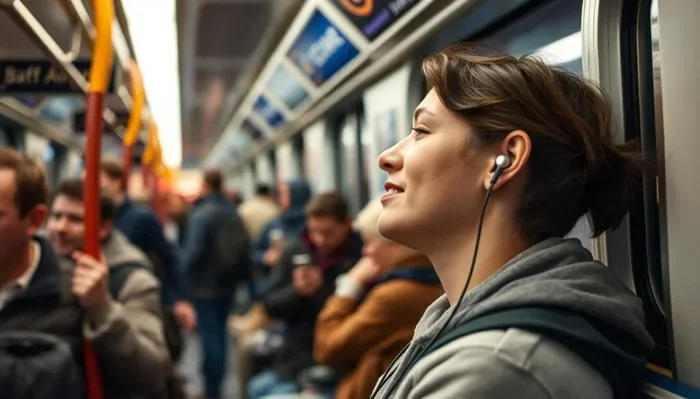
If you take the subway, bus, or train every day, you know the struggle. Trains can reach 80-100 decibels, which is loud enough to damage your hearing over time. Noise cancelling AirPods can cut that rumble down to a gentle hum, making your commute peaceful and protecting your ears.
Take Sarah, for example. She rides the London Underground for 45 minutes each way. Before ANC, she’d blast music at 80% volume to hear it. Now, she listens at 50% volume and hears every word of her audiobooks clearly. Her ears feel better, and her battery lasts longer.
You Probably Need Them If You Travel Often
Frequent flyers absolutely love noise cancelling AirPods. Airplane cabins are filled with engine drone, crying babies, and chatty seatmates. The AirPods Pro can reduce that engine drone by up to 90%, according to Apple. That means you arrive at your destination more rested and less grumpy.
You Probably Need Them If You Work in an Open Office
Open offices are famous for being distracting. Phones ringing, keyboards clicking, and coworkers chatting can make focus nearly impossible. Noise cancelling AirPods create a little bubble of calm around your ears, helping you concentrate on deep work.
You Probably Need Them If You’re a Student
Libraries, dorms, and coffee shops all have their own soundtrack. ANC helps you study in peace, even when the table next to you is having a loud group project. Many students report better focus and better grades after switching to noise cancelling earbuds.
You Probably DON’T Need Them If You Mostly Listen at Home
If your AirPods spend most of their life in your living room or backyard, you don’t need ANC. A quiet home environment doesn’t give noise cancellation anything to cancel. Save your money and grab the standard version.
You Probably DON’T Need Them If You Want to Stay Aware
Some people need to hear their surroundings for work or safety. Cyclists, runners, and parents of small children often need to stay alert. ANC can be dangerous in these situations because it blocks important sounds like cars or crying kids. (Though many AirPods have a Transparency Mode that lets sound in when you need it.)
How Does Active Noise Cancellation Actually Work?
Okay, let’s pull back the curtain on the tech. It’s actually pretty cool once you understand it, and it doesn’t require an engineering degree to get.
The Three Key Ingredients
ANC works using three main parts working together:
- Microphones: Tiny mics on the outside and inside of each earbud listen to the world around you and the sound inside your ear canal.
- Processor: A small chip inside the AirPod analyzes that sound 200 times per second (or more) to identify what to cancel.
- Speaker: The speaker in the earbud plays a sound wave that is the exact opposite of the noise. When the two waves meet, they cancel each other out.
The Magic of Wave Cancellation
Here’s a simple way to picture it. Imagine dropping a pebble in a pond. Ripples spread out in circles. Now imagine dropping another pebble at the exact same spot at the exact same time. The ripples would crash into each other and the water would go still.
Sound works the same way. It’s made of waves. When you create a wave that is the mirror image of another wave, they collide and silence each other. Your brain receives no signal, so you hear nothing. It’s physics poetry.
What ANC is Good At (and Not So Good At)
ANC is amazing at canceling low, steady sounds. Airplane engines, train rumble, air conditioners, and dishwasher hums are its bread and butter. These constant, predictable noises are easy to analyze.
However, ANC struggles with sudden, sharp sounds. A dog barking, a car horn, or someone shouting nearby can still get through. That’s because these sounds change too fast for the processor to fully cancel. You might hear them, but they’ll be quieter than they would be without ANC.
Active vs. Passive Noise Cancellation: What’s the Difference?
This is a point that confuses a lot of people. There are actually two ways to block noise, and they are very different.
Active Noise Cancellation (ANC)
ANC uses technology. It needs power, microphones, and processors to work. You can turn it on and off, usually with a button or gesture. It’s the fancy option that costs more money.
Passive Noise Isolation (PNI)
PNI is just a fancy way of saying “the earbud blocks sound by being in your ear.” Think of putting your fingers in your ears when loud noises happen. That’s passive noise isolation. The silicone tips on AirPods Pro create a seal that physically blocks some sound waves from entering your ear canal.
How They Work Together
Good noise cancelling AirPods use both. The silicone tips passively block some noise. Then the ANC actively fights the rest. Together, they create a much quieter experience than either could alone. That’s why AirPods Pro feels so much quieter than basic AirPods.
What Are the Real Benefits of Noise Cancelling AirPods?
Beyond just “less noise,” there are some surprising benefits that make ANC a game-changer for many people.
Better Audio Quality at Lower Volumes
When background noise is reduced, your music doesn’t have to fight to be noticed. This means you can listen at 40% volume and hear every detail clearly, rather than cranking it to 80% just to compete with the train noise. Lower volumes are much better for your hearing over time.
Improved Focus and Productivity
A study from the University of California found that background noise reduces productivity by up to 15%. Noise cancelling AirPods can help you reclaim that focus, whether you’re working, studying, or just trying to read a book in peace.
Better Phone Calls
ANC doesn’t just help you hear others. It also helps them hear you. The AirPods Pro uses its microphones to filter out background noise from your voice during calls. This means your voice sounds clear even when you’re walking down a windy street.
Reduced Stress and Fatigue
Loud environments tire your brain out. It’s constantly working to filter and process sounds. Reducing that input can leave you feeling calmer and less drained at the end of the day. Many users say noise cancelling AirPods help them feel less stressed during commutes.
Sleep and Relaxation
Some people use noise cancelling AirPods without any music at all. They just turn on ANC to enjoy silence in a noisy world. This can be a huge help for falling asleep on planes or in loud neighborhoods.
Are There Any Downsides to Noise Cancelling AirPods?
It wouldn’t be fair to only talk about the good stuff. Here are some real downsides to consider before you buy.
Higher Price Tag
ANC technology costs money. AirPods Pro 2 typically retail for around $249, while standard AirPods 4 are about $129. That’s a big difference. If you don’t need ANC, that extra $120 could buy a lot of other things.
Shorter Battery Life
Running ANC uses power. AirPods Pro with ANC on get about 6 hours of listening time, compared to 7 hours without it. That hour difference might not sound like much, but on long flights, every minute counts.
Slight Pressure Sensation
Some people feel a slight pressure or “fullness” in their ears when ANC is on. This is because the cancellation waves create a subtle change in air pressure. It’s not painful, but it can feel weird at first. Most people get used to it, but a small number never do.
Not Great for Safety-Critical Situations
As mentioned earlier, blocking noise can be dangerous when you need to hear your surroundings. Crossing busy streets, biking in traffic, or watching small children all require you to stay aware. ANC can put you at risk in these situations.
They Need a Proper Seal to Work Well
ANC depends on a good fit. If the silicone tips don’t seal your ear canal properly, sound leaks in and ANC can’t do its job. Apple includes multiple tip sizes in the box, and there’s even an ear tip fit test in iOS settings. If you can’t get a good seal, ANC won’t work as well for you.
How to Decide If You Need Noise Cancelling AirPods
Alright, we’ve covered a lot. Let’s bring it all together with a simple decision framework you can use right now.
Ask Yourself These Questions
- Where do I use my AirPods most? If the answer is “on the train,” “in a coffee shop,” “at the gym,” or “on planes,” you likely need ANC.
- How loud is my typical environment? If you often find yourself turning up the volume to fight background noise, ANC will help.
- Do I take a lot of calls in public? If yes, the call quality improvement alone might justify the cost.
- Is my budget flexible? If $249 fits comfortably in your budget, the upgrade is worth considering. If not, standard AirPods still sound great.
- Do I want one pair for everything? If yes, ANC AirPods are more versatile thanks to Transparency Mode.
The Honest Verdict
If you spend more than an hour a day in noisy environments, noise cancelling AirPods are worth every penny. The audio quality improvement, hearing protection, and stress reduction add up to a meaningful quality of life boost.
If your AirPods mostly stay in quiet spaces, skip ANC and save your money. Standard AirPods sound fantastic and work perfectly for casual listening.
Quick Tips If You Decide to Buy
If you’ve decided noise cancelling AirPods are for you, here are some tips to get the most out of them.
Get the Right Fit
Spend a minute trying different ear tip sizes. The right fit makes ANC work better and keeps the AirPods from falling out. Use the built-in Ear Tip Fit Test on your iPhone to find your perfect size.
Use Transparency Mode
Don’t forget about Transparency Mode. With a long press on the stem, you can switch between full ANC and full transparency. Use transparency when you need to hear announcements, order coffee, or chat with a coworker.
Keep Them Charged
ANC drains the battery faster. Top up your case regularly, and consider turning ANC off when you don’t need it to extend listening time.
Update Your Software
Apple regularly improves ANC and audio quality through software updates. Keep your AirPods firmware up to date by leaving them in their case near your iPhone for a while.
Don’t Lose Them
This one’s a no-brainer, but AirPods Pro are tiny and expensive. Consider a case with a tracker, or enable Find My in your settings before you misplace them.
The Final Word
Noise cancelling AirPods aren’t a must-have for everyone, but they are a life-changer for the right person. If you’re constantly battling noisy environments, dealing with stressful commutes, or just want to protect your hearing for the long haul, ANC is worth the investment.
Take a moment to think about your daily routine. Where do your AirPods actually live? Quiet spaces or loud ones? Your honest answer will tell you everything you need to know.
At the end of the day, the best AirPods are the ones you’ll actually use and enjoy. Whether that’s with ANC or without, your ears (and your wallet) will thank you for making an informed choice.
Frequently Asked Questions
Do noise cancelling AirPods actually work?
Yes, noise cancelling AirPods use Active Noise Cancellation (ANC) technology with built-in microphones to detect outside sounds and counter them with opposite sound waves. They’re highly effective at reducing low, constant noises like engines, fans, and traffic, though sudden sharp sounds may still get through partially.
Can noise cancelling AirPods damage your hearing?
No, noise cancelling AirPods actually help protect your hearing by allowing you to listen at lower volumes. Since they block outside noise, you don’t need to crank up the music to compete with background sounds, reducing the risk of noise-induced hearing loss over time.
What’s the difference between AirPods Pro and regular AirPods?
AirPods Pro feature Active Noise Cancellation, silicone ear tips for a better seal, and Transparency Mode. Regular AirPods have a one-size-fits-all hard plastic design with no noise cancellation. AirPods Pro also offer better water resistance and slightly improved audio quality.
How long does the battery last with noise cancelling on?
AirPods Pro with ANC activated provide approximately 6 hours of listening time on a single charge, compared to about 7 hours with ANC off. The charging case extends total listening time to around 30 hours before needing a recharge.
Are noise cancelling AirPods worth the extra money?
They are worth it if you frequently use AirPods in loud environments like commutes, airplanes, open offices, or busy cafes. If you mostly listen in quiet spaces, the extra cost may not be justified since there’s less noise to cancel in those situations.
Can you use noise cancelling AirPods without playing music?
Yes, you can turn on Active Noise Cancellation without playing any audio. Many people use this feature to enjoy silence for relaxation, focus, or sleep, especially in noisy environments like planes or loud neighborhoods.