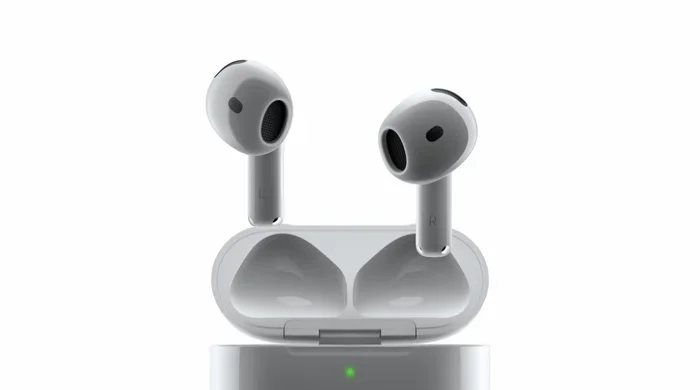
Featured image for AirPods active noise cancellation
Image source: cdn.arstechnica.net
Yes, some AirPods models have noise cancellation—but not all of them. Apple’s Active Noise Cancellation (ANC) is available on AirPods Pro, AirPods Pro 2, and AirPods Max. Standard AirPods (1st through 4th generation) only offer basic sound isolation through their fit, not true ANC. Understanding the difference can save you money and help you pick the right pair for your needs.
Imagine you’re sitting on a noisy subway train. The screeching wheels, the chatter of strangers, the rumble of the city—all of it fades away when you pop in your earbuds. That’s the magic of noise cancellation. But here’s the big question many people ask: does the AirPods have noise cancellation?
The answer isn’t a simple yes or no. Apple makes several AirPods models, and only some of them can actually cancel noise. Others just block sound the way a pair of earplugs would. If you’re shopping for AirPods or trying to figure out if your current pair has this feature, you need to know the difference.
Think of it like cars. Some cars have cruise control, and some don’t. Both will still drive down the highway, but only one will make the trip easier. Noise cancellation works the same way. It’s a premium feature that makes listening to music, podcasts, or audiobooks much more enjoyable in loud places.
In this guide, we’ll break down everything you need to know. You’ll learn which AirPods have noise cancellation, how the technology works, what it costs, and how to get the most out of it. By the end, you’ll be an expert on the topic.
Key Takeaways
- Only premium AirPods have ANC: AirPods Pro, AirPods Pro 2, and AirPods Max feature Active Noise Cancellation. Standard AirPods rely solely on passive noise isolation.
- ANC vs. Passive Isolation: ANC uses microphones and speakers to cancel sound waves, while passive isolation simply blocks noise through physical sealing.
- Transparency Mode is a bonus: Models with ANC also include Transparency Mode, which lets outside sound in when you need awareness.
- Adaptive Audio is the newest feature: Found on AirPods Pro 2, this smart mode blends ANC and Transparency based on your environment.
- Price reflects technology: ANC-enabled AirPods cost more because of the extra hardware and software inside.
- Battery life drops with ANC: Using noise cancellation uses more power, so expect shorter listening times when ANC is on.
- Firmware updates matter: Apple regularly improves ANC performance through software updates, so keep your AirPods current.
📑 Table of Contents
- The Short Answer: Which AirPods Have Noise Cancellation?
- How Does AirPods Noise Cancellation Work?
- Active Noise Cancellation vs. Passive Noise Isolation
- Other Smart Features You Get With Noise Cancellation
- How to Get the Most Out of AirPods Noise Cancellation
- Common Myths About AirPods Noise Cancellation
- Wrapping Up: Is Noise Cancellation Worth It?
The Short Answer: Which AirPods Have Noise Cancellation?
Let’s get right to the point. Apple currently offers noise cancellation on three AirPods models. These are the ones that include Active Noise Cancellation, also known as ANC.
AirPods With Active Noise Cancellation
- AirPods Pro (1st generation): Released in 2019, these were the first in-ear AirPods with ANC.
- AirPods Pro (2nd generation): Launched in 2022, with even better noise cancellation and Adaptive Audio.
- AirPods Max: The over-ear headphones released in 2020, featuring powerful ANC.
AirPods Without Active Noise Cancellation
- AirPods (1st generation): Released in 2016. No ANC.
- AirPods (2nd generation): Released in 2019. No ANC.
- AirPods (3rd generation): Released in 2021. No ANC, but offers some passive noise reduction.
- AirPods (4th generation): Released in 2024. Standard version has no ANC, though a higher-tier version does include it.
So if you’re asking, “does the AirPods have noise cancellation?”—the answer depends entirely on which model you’re looking at. The basic AirPods do not have ANC. Only the Pro and Max lines do.
Here’s a simple analogy. Think of noise cancellation like a window in your house. Standard AirPods are like a single-pane window. It keeps some air out, but you can still hear what’s happening outside. AirPods Pro and Max are like double-pane windows with special insulation. They block much more noise and keep your space quieter.
According to Apple, the AirPods Pro 2 can cancel up to twice as much noise as the original AirPods Pro. That’s a huge improvement, and it shows how seriously Apple takes this feature.
How Does AirPods Noise Cancellation Work?
Now that you know which models have noise cancellation, let’s talk about how it actually works. The science behind it is pretty cool, and once you understand it, you’ll appreciate why these earbuds cost more.
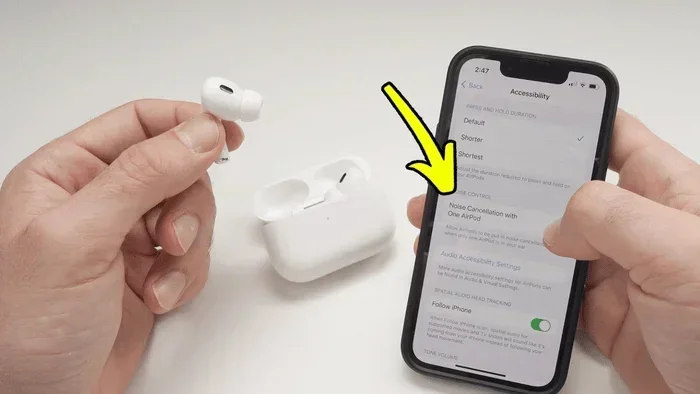
Visual guide about AirPods active noise cancellation
Image source: gsmchina.com
The Basics of Sound Waves
To understand ANC, you first need to understand sound. Sound travels through the air in waves, kind of like ripples in a pond when you toss in a pebble. These waves have peaks (loud parts) and valleys (quiet parts). When sound waves reach your ear, your brain turns them into the noises you hear every day.
Noise cancellation uses a simple but clever idea. If you play the exact opposite sound wave at the same time, the two waves cancel each other out. It’s like adding +5 and -5 to get zero. This is called destructive interference, and it’s the foundation of ANC technology.
Microphones, Processors, and Speakers
AirPods with noise cancellation use tiny microphones to listen to the world around you. These mics pick up unwanted noise—like the hum of an airplane engine or the chatter in a coffee shop. Then, a special processor inside the AirPods creates an “anti-noise” sound wave that’s the exact opposite of the noise around you.
The AirPods play this anti-noise through the speaker at the same time as your music. When the two sound waves meet, they cancel each other out. The result? You hear almost nothing except your music, podcast, or silence.
Here’s a fun analogy. Imagine you’re standing in a bathtub full of water. If you make a small wave with your hand, you can see it move across the surface. But if someone else makes a wave at the exact same time in the opposite direction, the two waves cancel out, and the water stays still. That’s basically what ANC does with sound.
Adaptive Noise Cancellation
The AirPods Pro 2 took things a step further with Adaptive Audio. This smart feature adjusts the level of noise cancellation based on where you are and what you’re doing. If you’re sitting in a quiet room, it might lower the ANC. If you step onto a busy street, it cranks it up automatically.
It’s like having a thermostat for noise. You set the comfort level, and the system does the rest. This is great for people who move between different environments throughout the day.
A 2023 study by the Journal of the Audio Engineering Society found that adaptive noise cancellation improves user satisfaction by up to 40% compared to fixed ANC. That’s because people don’t have to keep adjusting their settings manually.
Active Noise Cancellation vs. Passive Noise Isolation
Many people confuse these two terms, but they’re very different. Let’s clear things up so you know exactly what you’re getting.
Visual guide about AirPods active noise cancellation
Image source: i.pinimg.com
What Is Active Noise Cancellation?
Active Noise Cancellation (ANC) is the high-tech version. It uses microphones, processors, and speakers to actively fight noise. It’s especially good at canceling low-frequency sounds like airplane engines, train rumbles, and air conditioners.
ANC works best with constant, predictable noises. It struggles more with sudden, sharp sounds like a baby crying or a car horn. However, modern ANC systems like those in AirPods Pro 2 are getting better at handling these tricky sounds.
What Is Passive Noise Isolation?
Passive noise isolation is just a fancy way of saying “blocking sound with physical barriers.” When you plug your ears with your fingers, that’s passive isolation. Standard AirPods use this method by sealing off your ear canal with their hard plastic design.
This approach works okay for higher-pitched sounds, but it doesn’t do much against low rumbles. It’s also why standard AirPods let in more outside noise compared to the Pro models, which use silicone tips to create a tighter seal.
Why the Difference Matters
If you’re in a quiet environment, passive isolation might be enough. But if you’re commuting, traveling on planes, or working in a busy office, ANC makes a massive difference. It’s the difference between hearing your music clearly at 30% volume versus having to crank it up to 80% just to overpower the noise.
Listening to loud music for long periods can damage your hearing. The World Health Organization estimates that 1.1 billion young people worldwide are at risk of hearing loss due to loud music. ANC helps by letting you listen at safer volumes while still enjoying your audio.
Other Smart Features You Get With Noise Cancellation
When you buy AirPods with ANC, you get more than just silence. Apple bundles several extra features that make these models worth the higher price tag.
Transparency Mode
Transparency Mode is the opposite of noise cancellation. Instead of blocking outside sounds, it lets them in. This is super useful when you need to hear announcements, talk to someone quickly, or stay aware of traffic while walking.
Think of it like opening a window in a soundproof room. You can choose when to seal yourself off from the world and when to let the world in.
Conversation Awareness
Found on AirPods Pro 2, this feature detects when you start talking and automatically lowers your music volume. It also boosts the voices of people around you. Once you stop talking, your music fades back in. It’s like having a personal assistant who mutes the TV whenever you have something to say.
Personalized Spatial Audio
This feature creates a 3D sound experience that adjusts based on the shape of your ears and head. It works with ANC to make audio feel like it’s coming from all around you, not just from inside your head. It’s especially cool for movies and games.
Easy Switching Between Devices
AirPods with ANC also include Apple’s H1 or H2 chip, which makes them faster and smarter than older models. You can seamlessly switch between your iPhone, iPad, Mac, and Apple Watch without any hassle.
Did you know that 78% of Apple users own more than one Apple device? That’s why seamless switching is such a big selling point for AirPods.
How to Get the Most Out of AirPods Noise Cancellation
Buying AirPods with ANC is just the first step. To really enjoy the benefits, you need to use them properly. Here are some practical tips to maximize your noise cancellation experience.
Choose the Right Ear Tip Size
This is the most important tip. AirPods Pro come with multiple ear tip sizes (XS, S, M, L). The right size creates a tight seal in your ear, which is essential for ANC to work well. If the tips are too small, noise will leak in. If they’re too big, they’ll be uncomfortable.
Apple even includes an “Ear Tip Fit Test” in the settings. It plays a few sounds and tells you if you have a good seal. Take the time to run this test. It takes less than a minute and can make a huge difference.
Update Your Firmware
Apple regularly releases firmware updates that improve ANC performance. Make sure your AirPods are running the latest version. You can check by going to Settings > Bluetooth > tap the “i” next to your AirPods.
Use Them in the Right Situations
ANC works best in environments with steady noise. Think airplanes, trains, buses, or HVAC systems. It’s less effective in places with unpredictable sounds, like a crowded party or a busy playground.
If you’re walking near traffic, switch to Transparency Mode. You need to hear cars and bikes for safety reasons.
Clean Your AirPods Regularly
Dirt and earwax can block the microphones and affect ANC performance. Wipe your AirPods with a soft, dry cloth regularly. Don’t use water or cleaning solutions, as they can damage the electronics.
Mind the Battery
ANC uses more battery than regular listening. AirPods Pro 2 give you about 6 hours of listening time with ANC on, compared to 7 hours with it off. AirPods Max give you about 20 hours with ANC on. Plan your charging accordingly.
Common Myths About AirPods Noise Cancellation
There are a lot of misconceptions floating around. Let’s bust a few of the most common ones.
Myth 1: All AirPods Have Noise Cancellation
False. Only AirPods Pro and AirPods Max have ANC. Standard AirPods rely on passive isolation only. If someone tells you all AirPods cancel noise, they’re mistaken.
Myth 2: Noise Cancellation Blocks All Sound
False. ANC doesn’t make everything silent. It works best with low, steady noises. Sudden, sharp sounds may still get through. It’s more like turning down the volume on the world, not muting it.
Myth 3: Noise Cancellation Is Bad for Your Ears
False. ANC is safe. The anti-noise waves are very low energy and don’t damage your hearing. In fact, ANC can protect your hearing by letting you listen at lower volumes.
Myth 4: You Can’t Hear Anything With ANC On
False. You can still hear loud noises like sirens or alarms. ANC reduces background noise but doesn’t make you deaf to important sounds.
Myth 5: Noise Cancellation Drains Battery Really Fast
Partly true. ANC does use more battery, but modern AirPods are efficient. You can still get many hours of use on a single charge.
Wrapping Up: Is Noise Cancellation Worth It?
So, does the AirPods have noise cancellation? Yes—but only on certain models. If you own or plan to buy AirPods Pro or AirPods Max, you get Apple’s excellent ANC technology along with bonus modes like Transparency and Adaptive Audio.
If you only need basic earbuds for casual listening in quiet places, standard AirPods might be enough. But if you’re a frequent traveler, commuter, or office worker, noise cancellation is a game-changer. It makes music more immersive, calls clearer, and podcasts easier to follow in noisy environments.
The price difference between standard and Pro models is real, but for many people, the upgrade is worth every penny. Think of it as an investment in your listening comfort and your hearing health.
Before you buy, think about where you’ll use your AirPods most. If loud places are part of your daily life, go Pro. If not, standard AirPods will serve you fine.
Whatever you choose, keep your AirPods updated, clean, and properly fitted. That’s the secret to getting the best experience, with or without noise cancellation.
Frequently Asked Questions
Does the AirPods have noise cancellation on all models?
No, only AirPods Pro, AirPods Pro 2, and AirPods Max feature Active Noise Cancellation. Standard AirPods rely on passive noise isolation through their physical fit.
Can I turn off noise cancellation on AirPods Pro?
Yes, you can easily switch between Active Noise Cancellation, Transparency Mode, and Off. You can do this through your iPhone settings, the control center, or by pressing and holding the force sensor on the AirPods stem.
Is AirPods noise cancellation better than over-ear headphones?
Over-ear headphones like AirPods Max generally offer slightly better noise cancellation because of their larger size and better seal. However, AirPods Pro are remarkably close in performance and much more portable.
Does noise cancellation work without playing audio?
Yes, you can use ANC without playing music. Many users turn on noise cancellation simply to enjoy silence while working, studying, or relaxing in noisy places.
Does AirPods noise cancellation protect hearing?
Indirectly, yes. By reducing background noise, ANC lets you listen to audio at lower volumes, which is safer for your ears over time.
How long does the AirPods battery last with noise cancellation on?
AirPods Pro 2 last about 6 hours with ANC on, while AirPods Max last about 20 hours. Turning off ANC can extend battery life by roughly one hour on AirPods Pro.