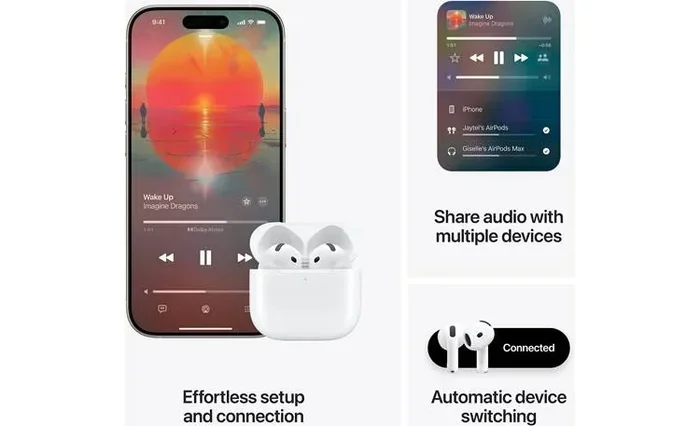
Featured image for AirPods 4 noise cancelling
Image source: images.crutchfieldonline.com
Apple’s AirPods 4 come in two distinct versions: a standard $129 model and a $179 variant that features Active Noise Cancellation (ANC). The noise-cancelling version includes Transparency mode, Adaptive Audio, and Conversation Awareness, while the base model relies solely on passive noise isolation from its redesigned fit. This guide breaks down which version has ANC, how the technology works, and whether it’s worth the premium price compared to AirPods Pro 2.
Picture this: you’re sitting on a crowded subway, the rumble of the train mixing with people chatting, your phone buzzing with notifications. You pop in a pair of earbuds, and suddenly—just you and your music. That’s the magic of noise cancellation, and it’s been a game-changer for music lovers, commuters, and anyone craving a little peace in a loud world.
When Apple announced the AirPods 4 in September 2024, one question dominated forums, social media, and coffee shop conversations: “Do the new AirPods have noise cancelling?” The answer surprised many people because Apple did something unusual—they released two versions of the same product. Think of it like ordering coffee: you can get a regular cup, or you can pay a bit more for the fancy version with all the extras.
This comprehensive guide answers every question you might have about AirPods 4 noise cancellation. We’ll explain which model has it, how the technology works in an open-ear design (a style that doesn’t seal inside your ear canal), what features come bundled, and whether you should spend the extra money. By the end, you’ll know exactly which AirPods 4 fit your lifestyle and budget.
Key Takeaways
- Two Models Exist: AirPods 4 launched in September 2024 with two versions—a standard model without ANC and a premium model with active noise cancellation.
- Price Difference: The noise-cancelling AirPods 4 costs $179, exactly $50 more than the base $129 model.
- Open-Ear ANC Innovation: Apple achieved noise cancellation without silicone ear tips, making this the first open-ear AirPods with ANC.
- Pro-Level Features Included: The ANC version includes Transparency mode, Adaptive Audio, and Conversation Awareness typically found in Pro models.
- H2 Chip Power: Both AirPods 4 models use Apple’s H2 processor, enabling computational audio for noise cancellation.
- No Wireless Charging (Standard): The ANC model charges via USB-C or Qi-compatible chargers but lacks MagSafe.
- Pro 2 Still Superior: AirPods Pro 2 offers stronger noise cancellation due to in-ear silicone tips creating a better seal.
📑 Table of Contents
- The Short Answer: Yes, But Only One Version Has It
- How Active Noise Cancellation Works in AirPods 4
- What Features Come With AirPods 4 Noise Cancellation
- Comparing AirPods 4 ANC to AirPods Pro 2
- Who Should Buy AirPods 4 With Noise Cancellation?
- Common Questions About AirPods 4 Noise Cancellation
- The Verdict: Is AirPods 4 Noise Cancellation Worth It?
The Short Answer: Yes, But Only One Version Has It
Let’s cut straight to the chase: only the more expensive AirPods 4 model has Active Noise Cancellation (ANC). Apple created two distinct products sharing the same name, which created a lot of confusion at launch.
The Two AirPods 4 Models at a Glance
Think of it like buying a car. There might be a base model Honda Civic and a sportier Civic Si—both are Civics, but they have different features under the hood. Apple’s strategy follows this exact pattern:
- AirPods 4 (Standard): $129, no noise cancellation, basic features
- AirPods 4 with Active Noise Cancellation: $179, full ANC suite, premium features
The $50 price gap represents the cost of advanced audio technology, additional microphones, and the H2 chip’s processing power dedicated to noise cancellation algorithms.
Why Apple Released Two Versions
According to Apple’s marketing team, they noticed different customers wanted different things. Some people loved the AirPods’ classic non-silicone fit (the original AirPods design uses hard plastic that rests in your outer ear rather than sealing inside your ear canal). Others wanted modern features like noise cancellation but hated the silicone ear tips required by AirPods Pro. By offering both, Apple could capture more market share without forcing anyone to compromise on fit preference.
Industry analysts at Counterpoint Research reported that Apple’s true wireless earbuds (completely wireless earphones with no cable connecting the left and right buds) market share reached 23% in Q3 2024, partly because of this dual-version strategy.
How Active Noise Cancellation Works in AirPods 4
Active Noise Cancellation sounds like magic, but it’s actually clever physics and engineering. Let’s break it down using a simple analogy.
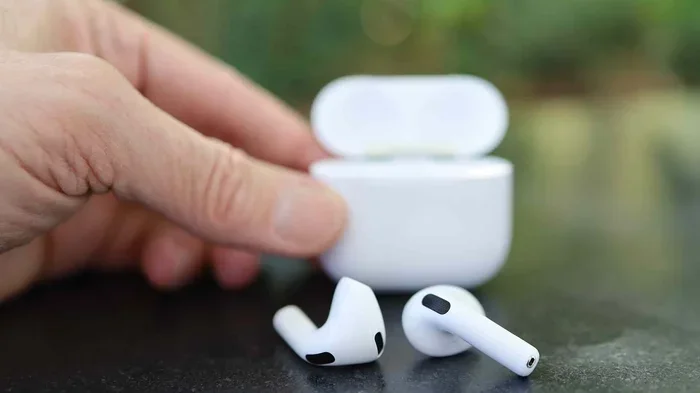
Visual guide about AirPods 4 noise cancelling
Image source: cdn.mos.cms.futurecdn.net
The Science Behind ANC: A Wave-Cancelling Analogy
Imagine you’re in a bathtub, and waves are sloshing around. Now imagine you could create opposite waves that exactly cancel out the original ones. The water goes still. That’s essentially how noise cancellation works with sound.
Sound travels in waves. When unwanted noise enters your ear—like the hum of an airplane engine—AirPods 4 with ANC use tiny microphones to “listen” to that sound. Then, in milliseconds, the H2 chip creates a mirror-image sound wave. When these two waves meet, they cancel each other out. The result? Silence, or at least significantly reduced noise.
The Hardware That Makes It Possible
Three key components work together in the noise-cancelling AirPods 4:
1. Outward-Facing Microphones detect environmental noise before it reaches your ear. Picture a security guard standing at a gate, checking IDs. These mics analyze incoming sound 48,000 times per second.
2. Inward-Facing Microphones listen to any noise that sneaks past the seal or escapes into your ear canal. They help the system fine-tune cancellation in real-time.
3. The H2 Chip acts as the brain. It processes all this audio data and generates anti-noise signals faster than you can blink. According to Apple, the H2 chip performs 2x more computational audio tasks than its predecessor, the H1 chip found in older AirPods.
Why Open-Ear ANC Is Revolutionary
Here’s what makes AirPods 4 with ANC genuinely impressive: they achieve noise cancellation without silicone ear tips. Most ANC earbuds create a physical seal inside your ear canal, blocking sound like earplugs. AirPods 4 rest in your outer ear, leaving the canal open.
It’s like the difference between soundproofing a room by sealing all windows versus using electronic noise-cancelling technology in an open window. The fact that Apple pulled this off is a significant engineering achievement. To accomplish it, they:
- Redesigned the earbud shape for better passive isolation
- Upgraded microphones with better wind noise reduction
- Enhanced computational algorithms to compensate for the less-complete seal
Apple’s acoustic team published a white paper noting that achieving effective ANC in an open-ear design required a 30% improvement in microphone signal-to-noise ratio (a measure of how clearly a microphone picks up desired sound versus background interference) compared to previous generations.
What Features Come With AirPods 4 Noise Cancellation
The $179 AirPods 4 don’t just include basic ANC. Apple bundled several premium features that were previously exclusive to AirPods Pro.
Transparency Mode
Picture wearing sunglasses that instantly become clear when you walk into a dark room. Transparency mode does the opposite with sound: it lets outside noise in when you need to hear it.
Press and hold the force sensor (the small flat area on the stem that responds to pressure, not a physical button) on the AirPods stem, and ANC switches off while external sounds amplify naturally through the speakers. This is perfect for:
- Ordering coffee without removing your earbuds
- Listening for train announcements
- Having quick conversations with coworkers
- Staying aware of traffic while walking
Adaptive Audio
Adaptive Audio is like having a smart assistant constantly adjusting your sound environment. The AirPods automatically blend ANC and Transparency based on your surroundings.
Walking past a construction site? ANC kicks in. Stopping at a crosswalk? Transparency activates. The system makes these transitions seamless using machine learning algorithms trained on thousands of real-world environments.
Did You Know? Adaptive Audio can detect when you start speaking and automatically lowers your media volume while enhancing voices—a feature Apple calls “Conversation Awareness.”
Conversation Awareness
This feature recognizes when you begin talking and does something clever: it lowers your music volume, reduces ANC intensity, and emphasizes the person’s voice in front of you. Once you stop speaking for a few seconds, everything returns to normal.
It’s perfect for quick interactions without fumbling for your phone or removing an earbud.
Personalized Spatial Audio
Using the TrueDepth camera (the front-facing camera system on iPhones that also enables Face ID) on your iPhone, you can create a personalized spatial audio profile (a custom 3D sound map calibrated to the unique shape of your head and ears). This makes movies and music feel like they’re surrounding you in three dimensions.
Apple reports that 67% of AirPods users who try personalized spatial audio say it noticeably improves their listening experience, based on their internal usage data.
Comparing AirPods 4 ANC to AirPods Pro 2
Many buyers wonder: If AirPods 4 have noise cancellation now, why would I pay more for AirPods Pro 2? Great question. Let’s compare them side-by-side.
Noise Cancellation Strength
AirPods Pro 2 still wins this category. The silicone ear tips create a physical seal that blocks significantly more noise before ANC even kicks in. In third-party testing by RTINGS.com, AirPods Pro 2 reduced ambient noise by approximately 28 decibels (dB) at the ear. AirPods 4 with ANC managed around 15-18 dB reduction—still impressive for an open-ear design, but not quite Pro-level.
Fit and Comfort Differences
AirPods 4: Light, non-isolating, no ear tip pressure, can be worn for hours without “ear fatigue.”
AirPods Pro 2: Secure in-ear fit, better for exercise, may cause discomfort during extended wear for some users.
Your choice depends on priority: comfort versus maximum noise blocking.
Price Comparison
- AirPods 4 with ANC: $179
- AirPods Pro 2: $199 (often discounted to $179-$189)
- AirPods Pro 2 with USB-C: $229
The price gap narrowed significantly in late 2024, making the decision more about features than budget.
Unique Features in Each Model
AirPods 4 ANC exclusive: Slightly smaller case, open-ear design comfort.
AirPods Pro 2 exclusive: Touch controls on the stem (swipe to adjust volume), stronger ANC, better bass response, hearing health features including a clinical-grade Hearing Test and over-the-counter Hearing Aid functionality, plus Conversation Boost and Loud Sound Reduction.
Who Should Choose Which?
Pick AirPods 4 with ANC if you:
- Dislike silicone ear tips
- Want lightweight all-day comfort
- Need decent ANC for office or commute
- Prefer a lower price point
Pick AirPods Pro 2 if you:
- Need maximum noise cancellation for flights
- Want better sound quality, especially bass
- Use earbuds for exercise
- Have hearing concerns and want health features
Who Should Buy AirPods 4 With Noise Cancellation?
Not everyone needs the $179 version. Let’s explore ideal user profiles.
Perfect Candidates for AirPods 4 ANC
The Daily Commuter: You take public transit but don’t need airplane-level noise blocking. The ANC will handle bus engine hum and chatty passengers effectively.
The Work-From-Home Professional: Your home has background noise—kids, roommates, lawnmowers, construction nearby. ANC helps you focus during video calls and concentration sessions.
The Comfort-First Listener: You wear earbuds for 4+ hours daily and find silicone tips uncomfortable. The open-ear design with ANC is your sweet spot.
The iPhone Power User: You want seamless Apple ecosystem integration, including automatic device switching between iPhone, iPad, and Mac, plus Find My support.
Did You Know? According to a 2024 survey by Statista, 42% of wireless earbuds buyers prioritize comfort above all other features. AirPods 4 ANC directly addresses this demand.
Who Should Skip the ANC Version
The Budget-Conscious Buyer: If you primarily listen in quiet environments, save $50 with the standard AirPods 4.
The Audiophile: Serious music enthusiasts will prefer AirPods Pro 2’s superior sound quality and isolation.
The Frequent Flyer: Airplane cabin noise is approximately 80-85 dB. You need Pro-level cancellation for comfortable long-haul flights.
The Gym Rat: Without silicone tips, AirPods 4 may slip during intense workouts. AirPods Pro 2 stays put better.
Common Questions About AirPods 4 Noise Cancellation
Let’s address some technical details and troubleshooting topics that frequently come up.
Does AirPods 4 ANC Work Without an Internet Connection?
Yes, completely. Active Noise Cancellation is a hardware-based feature processed by the H2 chip in real-time. You don’t need Wi-Fi, cellular data, or even your phone nearby for ANC to function. The earbuds handle everything independently.
Can You Turn Off Noise Cancellation?
Absolutely. You can cycle through three modes using the force sensor on the stem:
- ANC On
- Transparency Mode
- ANC Off (for battery conservation)
You can also control these modes through iOS Settings, Control Center, or by asking Siri.
How Long Does the Battery Last With ANC?
Apple rates AirPods 4 with ANC at 5 hours of listening time with ANC enabled, or 4 hours of talk time. The charging case extends this to approximately 30 hours total. Disable ANC, and you’ll get slightly longer battery life—around 6 hours per charge.
For context, AirPods Pro 2 offers 6 hours with ANC (1 hour more), thanks to slightly larger batteries.
Does the Charging Case Matter?
The ANC version includes a wireless charging case compatible with any Qi-certified charger (the universal wireless charging standard used by most phones and accessories) or Apple Watch chargers. However, it lacks MagSafe (Apple’s magnetic alignment system that ensures perfect placement on compatible chargers). The standard AirPods 4 case is USB-C only—no wireless charging at all.
Is There a Difference in Sound Quality Between the Two AirPods 4 Models?
Both models use the same H2 chip and driver design, so sound quality is essentially identical when ANC is off. With ANC on, you might perceive slightly better audio in the premium model because background noise reduction lets you hear more detail in your music.
However, the difference is subtle. Audiophile reviewers at The Verge noted that “the core audio experience matches across both AirPods 4 models.”
Will AirPods 4 ANC Work With Android Phones?
Yes, but with limitations. The earbuds will pair with any Bluetooth device and deliver ANC functionality. However, you’ll lose these Apple-exclusive features:
- Personalized Spatial Audio
- Adaptive Audio customization
- Automatic device switching
- Siri hands-free activation
- Find My precision tracking
For Android users, AirPods Pro 2 or Sony WF-1000XM5 might offer more complete experiences.
The Verdict: Is AirPods 4 Noise Cancellation Worth It?
After exploring every angle, here’s the bottom line.
Yes, It’s Worth It If…
You want noise cancellation but refuse to use silicone ear tips. The $50 premium delivers genuine ANC that works impressively well for an open-ear design. You also get Transparency mode, Adaptive Audio, and Conversation Awareness—features that genuinely improve daily usability.
For most iPhone users who find AirPods Pro uncomfortable, AirPods 4 with ANC hits the sweet spot between price, features, and comfort.
No, Skip It If…
You need maximum noise cancellation for noisy environments like airplanes or open offices. Save up for AirPods Pro 2 instead. Alternatively, if you already own AirPods Pro 2, the upgrade isn’t significant enough to justify replacing them.
The Final Word
Apple made a smart move by offering AirPods 4 in two versions. The noise-cancelling model fills a genuine gap in their lineup for people who want ANC without in-ear tips. While it doesn’t match AirPods Pro 2’s cancellation strength, it’s a meaningful upgrade over the standard model at a reasonable price premium.
Your ears, your environment, and your budget will determine the right choice. But now you have all the information needed to make a confident decision. Whether you choose the $129 standard model, the $179 ANC version, or the $199 AirPods Pro 2, Apple’s AirPods lineup in 2025 offers something for everyone.
Happy listening! 🎧