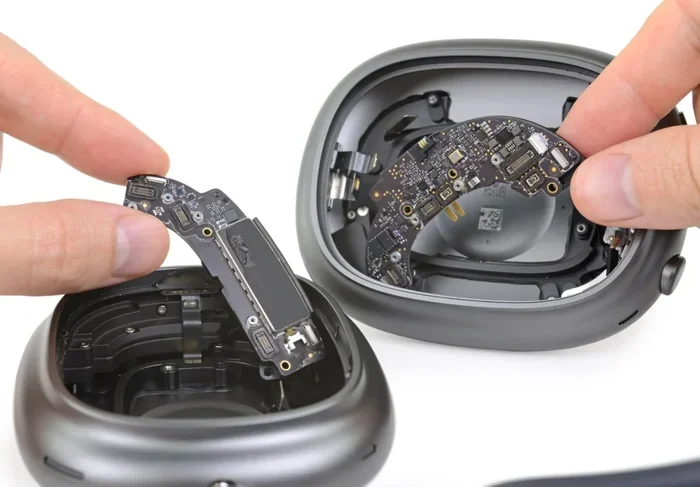
Featured image for Apple AirPods Max chip technology
Image source: static.electronicsweekly.com
The AirPods Max do NOT include Apple’s U1 (Ultra Wideband) chip. While many premium Apple devices feature this chip for precise spatial awareness, AirPods Max rely on the H1 chip instead. This means they miss out on certain precise-finding and directional audio features found in newer Apple products.
Have you ever wondered if your premium headphones have the same “smart” tracking chip as your iPhone? If you own or are thinking about buying AirPods Max, this question matters a lot. Apple’s ecosystem is famous for how well its devices work together, and the U1 chip is a big part of that magic.
Let’s cut straight to the chase: the AirPods Max do NOT have a U1 chip. That’s a surprising fact considering these headphones cost $549. Many cheaper Apple products, including the tiny AirTag tracker, do include this chip. So why did Apple leave it out of their flagship headphones? And what does that mean for your listening experience?
In this guide, we’ll break down everything you need to know about the U1 chip, why it’s missing from AirPods Max, what you get instead, and how this affects your daily use. Think of this as your friendly roadmap to understanding the tech inside your headphones.
Key Takeaways
- No U1 Chip: AirPods Max do not contain Apple’s U1 Ultra Wideband chip found in iPhones and AirTags.
- H1 Chip Instead: These headphones use the H1 chip in each ear cup for audio processing and connectivity.
- Missing Precision Features: Without the U1, AirPods Max lack precise directional tracking and Ultra Wideband-specific features.
- Standard Spatial Audio: They still support Spatial Audio and Dolby Atmos, but not U1-enhanced spatial awareness.
- Future Possibility: A U1 or U2 chip could appear in a future AirPods Max refresh.
- Workarounds Exist: You can still use Find My with AirPods Max, though with less precision than AirTags.
- Price Point Context: Despite costing $549, they omit a chip found in much cheaper AirTags ($29).
📑 Table of Contents
- What Is the U1 Chip and Why Should You Care?
- The Technical Reality: AirPods Max and the U1 Chip
- Why Did Apple Leave Out the U1 Chip?
- What Features Do You Lose Without the U1 Chip?
- Comparing AirPods Max to Other Apple Products with U1
- The Future: Will AirPods Max 2 Have a U1 or U2 Chip?
- Making Your Decision: Does the Missing U1 Matter?
- Conclusion
What Is the U1 Chip and Why Should You Care?
Before we dive into AirPods Max specifically, let’s talk about what the U1 chip actually does. Think of it like a super-powered GPS that works indoors. Your regular GPS uses satellites way up in space, which is great for driving directions but pretty useless when you’re trying to find your keys in your couch cushions.
The U1 chip, made by Apple, uses something called Ultra Wideband (UWB) technology. Imagine if your devices could talk to each other and figure out exactly how far apart they are, down to a few inches. That’s what U1 does. It sends out radio waves across a very wide range of frequencies, allowing devices to measure distance with incredible precision.
The “Who” Behind the U1 Chip
Apple introduced the U1 chip in September 2019 with the iPhone 11. Since then, they’ve put it in many products. You’ll find it in newer iPhones, Apple Watch Series 6 and later, AirTags, and the HomePod mini. Samsung and Google have made similar chips for their own devices, showing this technology is becoming industry standard.
The “What” Exactly Does It Do?
The U1 chip does several cool things:
- Precise Finding: AirTags use the U1 to show you exactly which direction to walk and how far away your lost keys are, with arrows on your iPhone screen.
- Directional AirDrop: Point your iPhone at another iPhone to prioritize it for AirDrop file sharing.
- Digital Car Keys: Some cars use UWB to know when you’re approaching, so they unlock automatically.
- Future Possibilities: Apple is working on making UWB work with smart home devices, payments, and more.
The “Why” It’s a Big Deal
Did you know that the U1 chip can locate items within a few centimeters of accuracy? That’s like being able to tell if your keys are on the left or right side of your couch cushion. Regular Bluetooth can only tell you if something is “nearby” or “far away” without specific direction. This precision is what makes the U1 special.
The Technical Reality: AirPods Max and the U1 Chip
Now let’s get into the nitty-gritty of what AirPods Max actually have inside. When Apple launched AirPods Max in December 2020, they made a curious choice. Instead of including the U1 chip, they put the H1 chip in each ear cup.
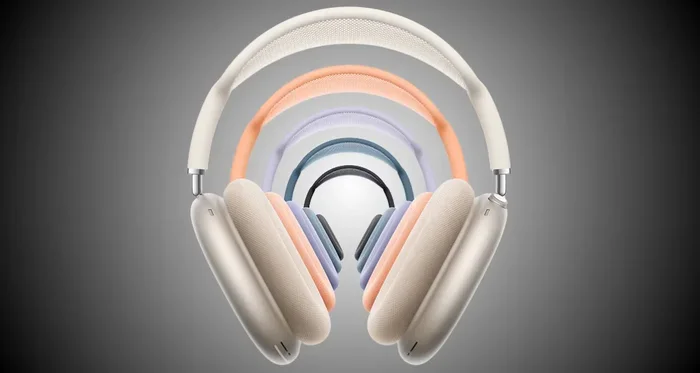
Visual guide about Apple AirPods Max chip technology
Image source: prabumulihpos.bacakoran.co
What Chip Do AirPods Max Use?
Each AirPods Max ear cup contains its own Apple-designed H1 chip. That’s right, there are two H1 chips total, one for each ear. The H1 chip is specifically designed for headphones. It handles:
- Active Noise Cancellation (ANC)
- Transparency Mode (letting outside sound in)
- Adaptive EQ (adjusting sound based on fit and seal)
- Spatial Audio processing
- Siri voice commands
- Bluetooth connectivity
- Seamless device switching across Apple devices
The H1 chip is powerful for audio, but it doesn’t have Ultra Wideband capabilities. It’s optimized for sound quality and noise processing, not spatial tracking.
Confirming the Absence of U1
Apple’s official tech specs for AirPods Max list the H1 chip but make no mention of Ultra Wideband or the U1 chip. When reviewers and tech experts took apart AirPods Max to examine their internal components, they found the H1 chips and standard Bluetooth/Wi-Fi chips, but no U1.
This isn’t a hidden feature Apple forgot to mention. The U1 chip is genuinely absent from the device’s hardware.
Why Did Apple Leave Out the U1 Chip?
This is the million-dollar question, and Apple hasn’t given an official answer. However, we can make some educated guesses based on what we know about the product.
Possible Reason #1: Battery Life Concerns
Ultra Wideband technology uses more power than standard Bluetooth. AirPods Max already have a somewhat controversial battery situation. They don’t have an off button and rely on a “Smart Case” to put them in ultra-low power mode. Adding a U1 chip could drain the battery faster, and Apple likely wanted to maintain their 20-hour battery life claim.
Think of it like this: your car might have room for a bigger engine, but adding it would kill your gas mileage. Sometimes engineers have to make trade-offs.
Possible Reason #2: Limited Use Cases
When AirPods Max launched in 2020, AirTags didn’t even exist yet. They came out in April 2021. The main U1 use cases at that time were iPhone-to-iPhone interactions and HomePod handoff features. Neither of these make much sense with over-ear headphones sitting on your head.
Why would you need precise directional tracking between your AirPods Max and your iPhone? They’re usually on your head, connected to your iPhone in your pocket. There’s no real benefit to knowing if your headphones are “12.7 centimeters to the left” of your phone.
Possible Reason #3: Cost and Design Constraints
At $549, AirPods Max are expensive, but every component adds to the cost. The U1 chip, while small, requires additional antenna design and testing. Apple may have decided that the extra cost wasn’t justified by the potential benefits at that point in the product’s lifecycle.
Possible Reason #4: Product Positioning
AirPods Max are positioned as premium audio devices, not smart home hubs or tracking devices. Apple may have wanted to keep the focus on audio quality rather than smart features. The H1 chip is specifically optimized for sound, while the U1 is optimized for spatial awareness.
What Features Do You Lose Without the U1 Chip?
So what exactly are you missing out on by not having the U1 chip? Let’s break it down feature by feature.
Missing Feature: Precise Find My Tracking
With AirTags, you get arrows on your iPhone pointing exactly to your lost item, plus distance indicators like “3 feet away.” With AirPods Max, you only get a general location on a map and basic proximity feedback like “near” or “far.” You won’t get the cool AR arrows that walk you right to your headphones.
This is a real downside. If you misplace $549 headphones, having precise tracking would be valuable. You can still play a sound through AirPods Max via Find My, but you can’t get directional guidance.
Missing Feature: Directional Audio Sharing
Some newer Apple devices can detect which direction audio should play based on the orientation of devices. While AirPods Max still support Audio Sharing with two pairs of AirPods, they don’t have UWB-enhanced directionality.
What You STILL Get: Spatial Audio and Dolby Atmos
Here’s the good news. AirPods Max fully support Spatial Audio with dynamic head tracking. When you’re watching a movie on your iPhone or iPad, the audio stays “fixed” in space as you turn your head, creating a theater-like experience. This uses sensors in the AirPods Max (gyroscopes and accelerometers), not the U1 chip.
So you don’t need to worry about losing the immersive movie experience. That’s handled by different technology.
Comparing AirPods Max to Other Apple Products with U1
Let’s look at how AirPods Max stack up against other Apple products that DO have the U1 chip. This comparison might help you decide if this missing feature matters to you.
AirPods Max vs. AirTags
AirTags are tiny trackers that cost $29 (or $99 for a four-pack). Despite being 20 times cheaper than AirPods Max, they have the U1 chip. This is the most common comparison people make, and it’s a bit shocking. However, the use case for AirTags is fundamentally different. They’re meant to be attached to things you frequently lose, while headphones are usually worn or placed in one consistent spot.
AirPods Max vs. iPhone 15 and Newer
Every iPhone from the 11 onward has a U1 or U2 chip (newer models have an upgraded version called U2). These chips enable precise AirDrop, Car Key features, and location tracking. AirPods Max can connect to these iPhones via Bluetooth and benefit from Apple’s ecosystem, but they can’t reciprocate with UWB features.
AirPods Max vs. Apple Watch
Apple Watch Series 6 and later have the U1 chip. This enables features like precise unlocking and future smart home controls. AirPods Max don’t have any chips that interact with Apple Watch in a UWB-specific way.
The Surprising Truth About Find My
Even without the U1, AirPods Max work with Apple’s Find My network. This means other Apple devices can detect your AirPods Max (via Bluetooth) and relay their location to you anonymously. You’ll see their general location on a map, and you can play a sound to find them if they’re nearby. It’s not as precise as AirTag tracking, but it’s better than nothing.
The Future: Will AirPods Max 2 Have a U1 or U2 Chip?
Apple hasn’t officially announced a successor to AirPods Max, but rumors and industry speculation suggest a refresh is coming. Let’s look at what we might expect.
The Case for Including U1/U2
By 2024-2025, Apple has many more U1/U2-enabled devices in the ecosystem. AirTags are now mainstream. The HomePod has UWB. The Apple Vision Pro uses spatial computing heavily. It would make sense for Apple to include the U2 chip (or whatever the latest version is called) in AirPods Max 2 to enable:
- Precise Find My tracking with directional arrows
- Better integration with Vision Pro for spatial audio
- Potential smart home controls
- Improved device handoff features
The Case Against Including It
On the flip side, adding a U2 chip could:
- Reduce battery life (a known concern with AirPods Max)
- Increase the price further
- Add complexity to the design
What Industry Experts Predict
Most tech analysts believe a U1 or U2 chip will appear in the next AirPods Max. Bloomberg’s Mark Gurman, who has a strong track record with Apple leaks, has suggested that future AirPods models will incorporate more Ultra Wideband features. While he hasn’t specifically confirmed it for AirPods Max, the trend in Apple’s product lineup makes it likely.
Making Your Decision: Does the Missing U1 Matter?
After all this information, you might be wondering: should I still buy AirPods Max? Or if I already own them, am I missing out?
Who Should Still Buy AirPods Max
- Audio Purists: If you prioritize sound quality, ANC, and build quality above all else, the missing U1 chip shouldn’t be a dealbreaker.
- Apple Ecosystem Fans: You’ll still get seamless switching, Spatial Audio, and Find My (basic version).
- Professional Users: Musicians, podcasters, and audio engineers will appreciate the premium sound and microphone quality.
Who Might Want to Wait
- Tech Early Adopters: If you want the latest features including UWB, waiting for AirPods Max 2 makes sense.
- Frequently Lose Items: If you’re prone to misplacing things, the precise tracking of AirTags might make you want to wait for U1-equipped AirPods Max.
- Budget-Conscious Buyers: If the $549 price is already stretching your budget, a newer version with more features will likely cost even more.
Practical Tips for Current AirPods Max Owners
- Use the Smart Case: Always store your AirPods Max in the Smart Case to preserve battery life and prevent accidental button presses.
- Enable Find My: Make sure Find My is enabled for your AirPods Max during setup so you can locate them if lost.
- Play a Sound: If you misplace your headphones, use Find My to play a loud sound to help locate them.
- Check Last Location: The Find My app shows the last known location where your AirPods Max connected to your iPhone.
Conclusion
So, do AirPods Max have a U1 chip? The clear answer is no. They rely on the H1 chip instead, which excels at audio processing but lacks Ultra Wideband capabilities. This means missing out on precise Find My tracking and certain UWB-specific features, though you still get excellent audio quality, Spatial Audio, and basic Find My functionality.
While it might seem strange that $549 headphones lack a chip found in $29 AirTags, the missing U1 doesn’t significantly impact the core listening experience. Apple likely made this choice based on battery life, cost, and the limited use cases for UWB in over-ear headphones at the time of release.
If you own AirPods Max, you have a premium product with great features, even if it lacks this specific chip. If you’re considering buying them and the missing U1 is a dealbreaker, it might be worth waiting for a rumored refresh that could include this technology. However, if audio quality and noise cancellation are your priorities, AirPods Max remain a top-tier choice.
The bottom line: The U1 chip is a nice-to-have feature for headphones, not a must-have. Apple’s decision to leave it out reflects a focus on audio excellence, and for most users, that trade-off makes perfect sense.
Frequently Asked Questions
Do AirPods Max have a U1 chip like AirTags?
No, AirPods Max do not include Apple’s U1 Ultra Wideband chip. They use the H1 chip in each ear cup for audio processing and Bluetooth connectivity. The U1 chip is found in AirTags, iPhones (11 and later), Apple Watch (Series 6 and later), and HomePod mini, but not in AirPods Max.
What chip do AirPods Max use instead of U1?
AirPods Max use Apple’s H1 chip, with one chip in each ear cup. The H1 chip is specifically designed for headphones and handles Active Noise Cancellation, Transparency Mode, Adaptive EQ, Spatial Audio, Siri commands, and seamless device switching across Apple products.
Can I still track my AirPods Max with Find My?
Yes, AirPods Max work with Apple’s Find My network even without the U1 chip. You can see their general location on a map, get proximity notifications, and play a sound to help locate them. However, you won’t get precise directional arrows like you do with AirTags.
Will AirPods Max 2 have a U1 or U2 chip?
While nothing is confirmed, most industry experts and analysts believe future AirPods Max models will include Apple’s U1 or U2 Ultra Wideband chip. This would enable precise Find My tracking, better Vision Pro integration, and potential smart home features. However, Apple has not officially announced this.
Does AirPods Max support Spatial Audio without the U1 chip?
Yes, AirPods Max fully support Spatial Audio with dynamic head tracking despite not having the U1 chip. This feature uses gyroscopes and accelerometers built into the headphones to track your head movement and create an immersive surround sound experience when watching movies or listening to Dolby Atmos content.
Why are AirPods Max so expensive without a U1 chip?
AirPods Max cost $549 because of premium materials (aluminum, stainless steel), high-quality drivers, advanced Active Noise Cancellation, multiple microphones, the dual H1 chip setup, and Apple’s brand premium. The absence of the U1 chip reflects a focus on audio quality over tracking features, not a reduction in overall component quality.