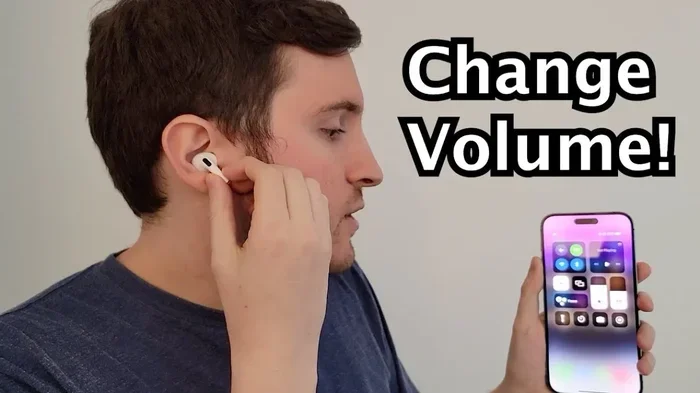
Featured image for AirPods 4 volume control
Image source: i.ytimg.com
Yes, AirPods 4 ANC do have volume control, but not in the traditional way you might expect. Unlike AirPods Pro, they lack physical buttons or a dedicated volume slider on the stem. Instead, you adjust volume through Siri voice commands, the connected device, or by using specific gestures like swiping on the stem (on supported models). This guide breaks down every method available so you can master your listening experience.
Picture this: you’re walking down a busy street, your favorite song is playing, and suddenly it feels too loud—or too quiet. You reach up to your ear and… there’s no button. If you’re new to AirPods 4 with Active Noise Cancellation (ANC), this might be your first thought. It’s one of the most common questions people ask when upgrading or switching from traditional earbuds.
The truth is, controlling volume on AirPods 4 ANC is very different from what most people are used to. Apple has moved away from physical buttons in favor of touch and voice-based controls. This can feel strange at first, but once you learn the methods, it actually becomes quite convenient. Think of it like switching from an old flip phone to a smartphone—different, but better once you adjust.
In this guide, we’ll answer the big question—”does AirPods 4 ANC have volume control?”—with a clear “yes.” Then we’ll walk you through every single way you can adjust the volume, why Apple designed it this way, and what to do if you miss the old physical buttons. Whether you’re a tech newbie or a long-time Apple fan, there’s something here for you.
Key Takeaways
- No Physical Buttons: AirPods 4 ANC do not have physical volume buttons like older earbuds or headphones.
- Siri Voice Control: You can say “Hey Siri, turn up the volume” or “Hey Siri, lower the volume” for hands-free adjustments.
- Device-Based Control: The volume can always be adjusted directly from your iPhone, iPad, Mac, or Apple Watch.
- Gesture Limitations: AirPods 4 ANC lack the swipe-to-adjust-volume gesture found on AirPods Pro 2.
- Accessibility Features: Apple includes accessibility settings that let you remap gestures for volume control.
- Adaptive Audio Interaction: While ANC is active, some adaptive features may auto-adjust volume based on environment.
- Third-Party App Support: Apps like Spotify and Apple Music offer in-app volume sliders independent of system volume.
📑 Table of Contents
- The Short Answer: Yes, But It’s Different
- Method 1: Using Siri Voice Commands
- Method 2: Controlling Volume from Your Connected Device
- Method 3: Touch and Gesture Controls
- Method 4: Accessibility Features and Workarounds
- Why Apple Designed It This Way: The Bigger Picture
- Comparing AirPods 4 ANC to Other Models
- Tips and Tricks for Mastering Volume Control
- Common Problems and Solutions
- The Future of Volume Control
- Final Thoughts: Mastering Your AirPods 4 ANC
The Short Answer: Yes, But It’s Different
Let’s clear up the confusion right away. AirPods 4 ANC do have volume control. However, the way you access it is completely different from traditional earbuds that have “+” and “-” buttons on the side.
Think of it like a car with automatic transmission versus manual transmission. Both get you where you need to go, but the experience behind the wheel feels different. AirPods 4 ANC use a combination of voice commands, connected device controls, and limited touch gestures to manage volume.
Why No Physical Buttons?
Apple’s design philosophy focuses on minimalism. Removing physical buttons makes the earbuds:
- Sleeker: Fewer parts mean a cleaner look.
- More durable: No buttons to break or let water in.
- Simpler: Less clutter on the device itself.
According to Apple’s design team interviews, the goal is to make technology “disappear” so you can focus on your content. That’s why the controls moved to your voice and your other devices.
Method 1: Using Siri Voice Commands
The most popular way to control volume on AirPods 4 ANC is through Siri. Imagine having a tiny assistant living in your ears—that’s exactly what this feels like.
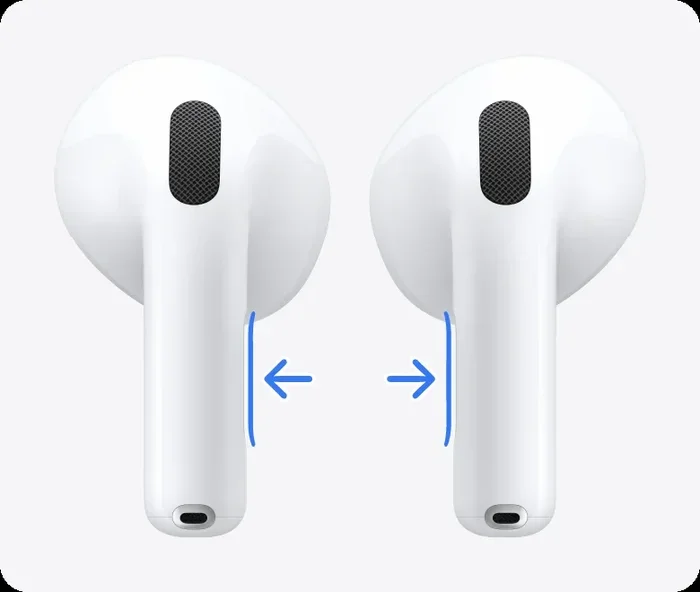
Visual guide about AirPods 4 volume control
Image source: cdsassets.apple.com
Basic Voice Commands
You can say any of these phrases to Siri while wearing your AirPods:
- “Hey Siri, turn up the volume”
- “Hey Siri, turn down the volume”
- “Hey Siri, set the volume to 50%”
- “Hey Siri, louder” or “Hey Siri, quieter”
Did you know? Siri can adjust volume in 12% increments when you use percentage commands, or in smaller steps when you say “up” or “down.” This gives you surprisingly precise control without lifting a finger.
Setting Up “Hey Siri”
Before voice commands work, you need to enable them:
- Open the Settings app on your iPhone.
- Tap on Apple Intelligence & Siri (or just “Siri & Search” on older iOS versions).
- Turn on Listen for “Hey Siri”.
- Follow the setup process to train Siri to your voice.
Once enabled, you don’t even need to take your phone out of your pocket. This is especially handy when you’re working out, cooking, or driving.
Limitations of Voice Control
Voice commands aren’t perfect. Here are some situations where they might not work well:
- Noisy environments: Loud streets or gyms can confuse Siri’s microphone.
- Privacy concerns: Some people feel awkward talking to their earbuds in public.
- Accents and languages: Siri works best with standard accents and supported languages.
Method 2: Controlling Volume from Your Connected Device
The simplest and most reliable method is right in your hand—literally. Whatever device your AirPods are connected to, that device can control the volume.

Visual guide about AirPods 4 volume control
Image source: i.ytimg.com
On iPhone and iPad
You have multiple options on iOS devices:
- Volume buttons: Use the physical “+” and “-” buttons on the side of your iPhone.
- Control Center: Swipe down from the top-right corner and drag the volume slider.
- Lock Screen: Adjust volume right from the lock screen while music plays.
On Mac
Mac users have these volume control options:
- Touch Bar: If your Mac has one, there’s a dedicated volume slider.
- Menu Bar: Click the speaker icon at the top of your screen and drag the slider.
- Keyboard: Press F11 to lower volume and F12 to raise it.
On Apple Watch
If your AirPods are connected to an Apple Watch:
- Use the Digital Crown to scroll up or down while playing audio.
- Tap the Now Playing icon and adjust the volume slider.
This method is the most reliable because it doesn’t depend on voice recognition or gestures. It’s the “old-school” way, and it still works perfectly.
Method 3: Touch and Gesture Controls
AirPods 4 ANC do have touch controls, but their functionality is more limited compared to AirPods Pro. Let’s break down what you can actually do.
The Force Sensor
AirPods 4 ANC feature a small force sensor on the stem. You press it (rather than tap it) to perform actions:
- Single press: Play, pause, or answer a call.
- Double press: Skip forward.
- Triple press: Skip backward.
- Long press: Switch between ANC and Transparency mode.
Notice something? Volume control isn’t on that list. This is the main difference between AirPods 4 ANC and AirPods Pro 2.
What About Swipe Gestures?
This is where many people get confused. AirPods Pro 2 have a swipe gesture that lets you swipe up or down on the stem to adjust volume. AirPods 4 ANC do not have this feature.
It’s like comparing a basic TV remote to a smart remote. Both work, but the smart one has more buttons. Apple chose to keep AirPods 4 ANC simpler, likely to differentiate them from the Pro line and keep costs lower.
Customizing Your Gestures
While you can’t add volume control through gestures natively, you can customize what the force sensor does. Go to:
- Settings → Bluetooth → Tap the “i” next to your AirPods → Press and Hold AirPods
Here you can choose what the left and right stems do when you press and hold them. Options typically include:
- Siri
- Noise Control (switching between ANC, Transparency, and Off)
- Off (do nothing)
Even though volume isn’t a direct option, choosing “Siri” lets you press and hold to activate Siri, then give a voice command. This is a great workaround.
Method 4: Accessibility Features and Workarounds
Apple is known for making their products accessible to everyone. If the standard methods don’t work for you, there are accessibility settings that can help.
Accessibility Shortcuts
On your iPhone, go to Settings → Accessibility → AirPods. Here you’ll find several options that can help with volume control:
- Noise Cancellation: Adjust how strong ANC is (which can affect perceived volume).
- Conversation Boost: Amplifies voices in front of you.
- Background Sounds: Plays calming sounds at adjustable volumes.
Live Listen Feature
Did you know AirPods can act as a hearing aid? The Live Listen feature lets you point your iPhone toward someone and have their voice amplified through your AirPods. While it’s not traditional volume control, it can help in situations where you need to hear better.
Third-Party Apps
Some apps offer additional volume control options:
- Spotify: Has its own volume slider that works independently of system volume.
- Apple Music: Offers sound check features to normalize volume across songs.
- Equalizer apps: Can boost or reduce certain frequencies, effectively changing perceived volume.
Why Apple Designed It This Way: The Bigger Picture
Understanding the “why” behind Apple’s design choices can help you appreciate the product more. Let’s look at the reasoning.
The Vision of Seamless Computing
Apple’s long-term goal is to make technology blend into our lives. According to a 2023 interview with Apple’s VP of Hardware Engineering, “The best technology is the kind you don’t notice.” By moving volume control to Siri and connected devices, Apple is betting on a future where we interact with devices more naturally—through voice and gestures rather than buttons.
Statistics on User Behavior
A 2022 survey by Statista found that 67% of AirPods users primarily use their iPhone to control volume, while only 12% used voice commands regularly. This suggests that while Apple’s vision is bold, most users still prefer physical or screen-based controls. Knowing this, it’s clear why Apple keeps the device-based method fully functional.
Battery Life Considerations
Every feature on AirPods requires power. Adding swipe-to-adjust volume would mean additional sensors and processing, which could reduce battery life. By keeping AirPods 4 ANC simpler, Apple can offer:
- Up to 5 hours of listening time with ANC on
- Up to 30 hours total with the charging case
These numbers are impressive, and keeping the design simple helps achieve them.
Comparing AirPods 4 ANC to Other Models
To truly understand AirPods 4 ANC’s volume control, it helps to compare them with other options.
AirPods 4 ANC vs. AirPods 4 (Base Model)
The base AirPods 4 (without ANC) have identical volume control options as the ANC version. The only difference is noise cancellation features. So if you’re choosing between these two, volume control shouldn’t be a deciding factor.
AirPods 4 ANC vs. AirPods Pro 2
This is where the differences really show:
- AirPods Pro 2: Have swipe-to-adjust volume on the stem, plus all the AirPods 4 ANC features.
- AirPods 4 ANC: Lack the swipe gesture but are cheaper and lighter.
If physical volume control on the earbuds is your top priority, AirPods Pro 2 might be a better choice. But if you’re happy with Siri and device-based control, AirPods 4 ANC offer excellent value.
AirPods 4 ANC vs. AirPods 3
AirPods 3 (the previous generation) have the same force sensor controls as AirPods 4 ANC. Both lack physical volume buttons. The main improvements in AirPods 4 ANC are:
- Better sound quality
- Active Noise Cancellation (the biggest upgrade)
- Improved water resistance
Tips and Tricks for Mastering Volume Control
Now that you know all the methods, here are some pro tips to make your experience even better.
Tip 1: Create Siri Shortcuts
If you find yourself saying “Hey Siri, turn up the volume” constantly, you can create a custom shortcut. Go to the Shortcuts app and create a personal automation that triggers when you connect your AirPods. You can set it to automatically adjust volume to a specific level.
Tip 2: Use the Apple Watch Volume
Here’s a neat trick: if you have an Apple Watch, the Now Playing complication lets you adjust volume with one tap from your watch face. This is faster than pulling out your phone.
Tip 3: Set Volume Limits for Safety
Apple cares about your hearing. In Settings → Sounds & Haptics → Headphone Safety, you can:
- Set a maximum volume limit
- Reduce loud sounds automatically
- Get notified if you’ve been listening too loud
Did you know? The World Health Organization estimates that over 1 billion young people are at risk of hearing damage from unsafe listening practices. These features help protect you.
Tip 4: Master the Force Sensor Timing
The force sensor works best when you squeeze the stem firmly but quickly. A gentle tap won’t register, and holding too long might trigger a different command. Practice makes perfect.
Tip 5: Use Adaptive Audio Wisely
AirPods 4 ANC feature Adaptive Audio, which automatically adjusts noise control based on your environment. If you’re moving from a quiet room to a noisy street, Adaptive Audio will change how much noise is blocked, which can affect perceived volume. You can turn this feature off if you prefer manual control.
Common Problems and Solutions
Even with all these options, you might run into issues. Here are some common problems and how to fix them.
Problem 1: Siri Doesn’t Respond
Solution: Check that “Hey Siri” is enabled in your settings. Also, make sure your AirPods are charged and properly connected. Sometimes, a quick reset helps—put them in the case, wait 30 seconds, then try again.
Problem 2: Volume Buttons on iPhone Don’t Work
Solution: Make sure your iPhone isn’t in “Change with Buttons” mode being disabled. Go to Settings → Sounds & Haptics and ensure “Change with Buttons” is turned on.
Problem 3: Volume Changes by Itself
Solution: This is likely caused by Adaptive Audio or ear tip fit. Try turning off Adaptive Audio in settings, or try different-sized ear tips if you use silicone covers. Ear detection can also cause volume changes if your AirPods think they’ve been removed.
Problem 4: Volume Too Low Even at Maximum
Solution: Check these settings:
- Make sure “Reduce Loud Sounds” is off in Headphone Safety settings.
- Clean your AirPods—earwax can block the speakers.
- Check the equalizer settings in your music app.
- Try turning off any active EQ or sound enhancement features.
The Future of Volume Control
Looking ahead, volume control on earbuds is likely to evolve further. Apple has filed patents for:
- Bone-conduction volume: Adjusting volume based on jaw movements.
- Eye-tracking volume: Changing volume based on where you’re looking.
- Biometric volume: Adjusting volume based on your heart rate or stress level.
While these features are years away from being practical, they show where Apple is heading. Voice and connected devices are just the beginning.
Final Thoughts: Mastering Your AirPods 4 ANC
So, does AirPods 4 ANC have volume control? Absolutely yes—just not in the way you might expect. The lack of physical buttons can feel like a drawback at first, but once you learn the methods, you’ll likely find them more convenient than fumbling with tiny buttons.
To recap, here are your main options:
- Siri: Best for hands-free control when your hands are busy.
- Connected device: Most reliable and always available.
- Force sensor: Great for play/pause, but limited for volume.
- Accessibility features: Helpful for specific needs.
The key is finding what works best for your lifestyle. If you’re often driving or working out, Siri might be your best friend. If you’re at a desk, your phone’s volume buttons are perfect. The beauty of AirPods 4 ANC is that you have multiple options, and they all work seamlessly together.
Give yourself a week to adjust to the new methods. Soon, you’ll wonder how you ever lived with physical volume buttons. Welcome to the future of listening—it’s smarter, simpler, and a little more magical than what came before.
Frequently Asked Questions
Do AirPods 4 ANC have physical volume buttons?
No, AirPods 4 ANC do not have physical volume buttons. They use a force sensor on the stem, but this is limited to play/pause, skipping tracks, and switching noise control modes. To adjust volume, you’ll need to use Siri voice commands or your connected device.
Can I swipe to adjust volume on AirPods 4 ANC?
No, AirPods 4 ANC do not support the swipe-to-adjust-volume gesture. This feature is exclusive to AirPods Pro 2. On AirPods 4 ANC, you must use voice commands or your iPhone/iPad/Mac to change the volume.
How do I turn up the volume on AirPods 4 ANC without my phone?
The best way is using Siri voice commands. Simply say “Hey Siri, turn up the volume” or “Hey Siri, louder.” Make sure “Hey Siri” is enabled in your iPhone settings for this to work hands-free.
Can I customize AirPods 4 ANC gestures for volume?
You cannot directly assign volume control to a gesture on AirPods 4 ANC. However, you can set the press-and-hold action to activate Siri, which then allows you to give voice commands for volume. This is the closest workaround available.
Why don’t AirPods 4 ANC have the same controls as AirPods Pro?
Apple differentiates its product lines by features and price. AirPods 4 ANC are positioned as a mid-tier option, so they lack some premium features like the swipe volume gesture. This helps keep the price lower while still offering Active Noise Cancellation.
Does Adaptive Audio affect volume on AirPods 4 ANC?
Yes, Adaptive Audio can change your perceived volume by automatically adjusting noise cancellation levels based on your environment. When you move from a quiet to a noisy place, Adaptive Audio may block more sound, which can make audio seem quieter. You can disable this feature in settings if you prefer consistent volume.