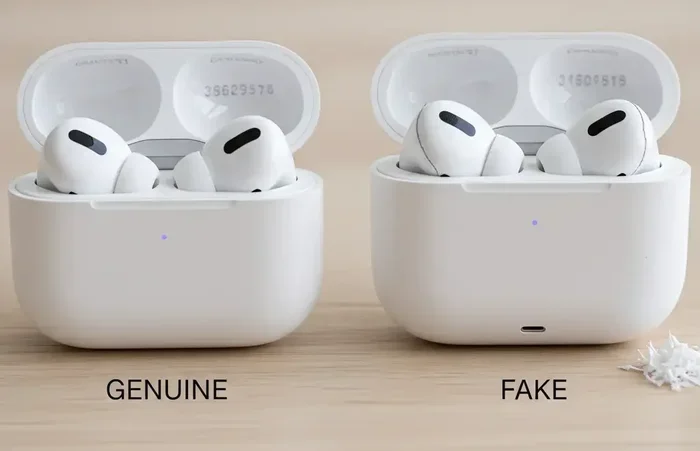
Featured image for Fake vs real AirPods comparison
Image source: globalmusicvibe.com
Fake AirPods do not have true noise cancellation. While some counterfeit models advertise “ANC” features, they lack the advanced hardware and software needed for genuine active noise cancellation. Genuine AirPods use sophisticated microphones, processors, and algorithms to block ambient sound—components that knockoffs simply cannot replicate at their low price points. Understanding this difference can save you money and protect your hearing.
Have you ever spotted a pair of “AirPods Pro” online for just $25 and wondered how they could possibly be so cheap? You’re not the only one. The counterfeit earbuds market has exploded into a multi-billion dollar industry, flooding online marketplaces with lookalike products that promise premium performance. One of the most commonly faked features? Noise cancellation.
Here’s the thing: noise cancellation isn’t just a fancy buzzword. It’s a complex technology that requires specific hardware, sophisticated software, and precise engineering. Think of it like trying to build a sports car using bicycle parts—you might end up with something that has four wheels and a steering wheel, but it’s not going to perform like a Ferrari.
In this guide, we’ll break down exactly what noise cancellation is, how it works in genuine AirPods, why fake AirPods can’t truly deliver this technology, and how you can protect yourself from being scammed. Whether you’re considering a purchase or already own a suspicious pair, this article will give you the knowledge you need to make smart decisions about your audio gear.
Key Takeaways
- True ANC requires real hardware: Active noise cancellation depends on specialized microphones, dedicated processors, and proprietary algorithms that fake AirPods lack.
- Passive isolation is not the same: Counterfeit AirPods may block some sound through their silicone tips, but this is merely physical sealing, not engineered noise cancellation.
- Fake AirPods often “fake” ANC: Many knockoffs display ANC in their settings or packaging but produce no actual noise-canceling effect when activated.
- Genuine AirPods use H1/H2 processors: Apple’s custom chips perform 48,000 adjustments per second to deliver real-time noise cancellation, something fake AirPods cannot duplicate.
- Health risks exist with fakes: Counterfeit AirPods may produce poor audio quality at high volumes, potentially damaging your hearing over time.
- Price is a major red flag: If AirPods Pro are sold for under $50, they’re almost certainly counterfeit and won’t offer legitimate noise cancellation.
- You can spot fakes easily: Checking serial numbers, build quality, and packaging can help you identify whether your AirPods have real ANC capability.
📑 Table of Contents
- What Exactly Is Noise Cancellation and Why Do Fakes Struggle With It?
- The Technical Reality: Why Fake AirPods Cannot Deliver True ANC
- How Fake AirPods “Fake” Noise Cancellation
- Real Risks of Using Fake AirPods Beyond Poor Noise Cancellation
- How to Identify If Your AirPods Have Real Noise Cancellation
- Legitimate Alternatives If Real AirPods Are Out of Budget
- The Bottom Line: Protecting Your Wallet and Your Ears
What Exactly Is Noise Cancellation and Why Do Fakes Struggle With It?
Before we talk about fake AirPods specifically, let’s understand what noise cancellation actually means. There are two main types: passive noise cancellation and active noise cancellation (ANC). Understanding the difference is crucial.
Passive Noise Cancellation: The Basic Barrier
Passive noise cancellation is exactly what it sounds like—it’s just physical blocking of sound. Think of putting your hands over your ears when a loud truck passes by. The sound is reduced simply because something physical is in the way.
Regular earbuds, including fake AirPods, can achieve some passive noise cancellation. When you insert silicone tips into your ear canal, they create a seal that blocks some outside noise. This is similar to how earplugs work at a concert. It’s basic physics—no electricity, no fancy processing, just a physical barrier.
The effectiveness of passive cancellation depends on three main factors:
- Fit and seal: How well the ear tip matches your ear canal shape
- Material quality: Better silicone creates better seals
- Design: How deeply the ear tip sits in your ear
Good passive isolation can block maybe 15-20 decibels of sound. That’s helpful, but it’s not the magical “silence” experience that genuine ANC provides.
Active Noise Cancellation: The Smart Technology
Active noise cancellation is where things get interesting—and expensive. This is the technology that lets AirPods Pro users sit on a noisy subway and barely hear the screeching brakes. It’s not magic; it’s science.
Here’s how it works in simple terms: Imagine you’re in a room where someone is playing a constant humming sound. Now imagine you have a speaker that creates the exact opposite sound wave. When these opposing waves meet, they cancel each other out, creating peace and quiet. That’s essentially what ANC does.
But here’s what most people don’t realize: this process happens 48,000 times per second in genuine AirPods Pro. Your environment is constantly changing—people talking, traffic passing, AC humming—and the AirPods must analyze all these sounds and generate anti-noise signals instantly. This requires:
- Multiple microphones: Usually at least two per earbud (one inside, one outside)
- Powerful processors: Dedicated chips like Apple’s H1 or H2
- Sophisticated algorithms: Years of research encoded into software
- Quality drivers: Speakers that can produce precise anti-noise waves
Think of it this way: passive cancellation is like closing a window to block traffic noise. Active cancellation is like having a smart system that detects the noise and creates a counter-sound to eliminate it. One is simple and cheap; the other is complex and expensive.
The Technical Reality: Why Fake AirPods Cannot Deliver True ANC
Now that you understand what ANC requires, let’s discuss why counterfeit AirPods simply cannot provide it. It’s not that manufacturers don’t want to include it—they physically and economically cannot.
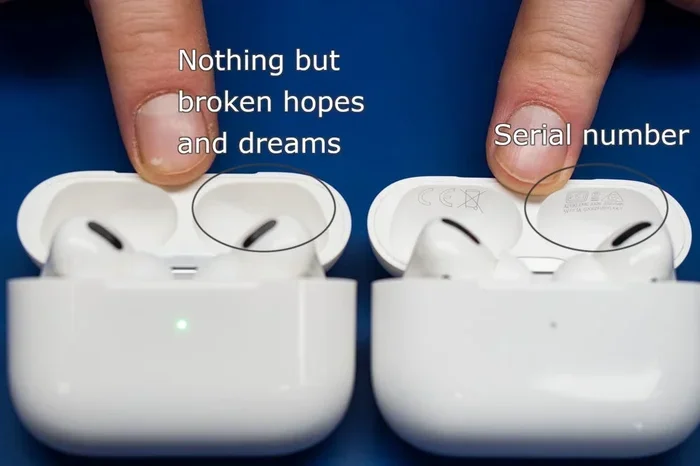
Visual guide about Fake vs real AirPods comparison
Image source: m-cdn.phonearena.com
The Hardware Problem
Real active noise cancellation requires specialized components that cost money—real money. Apple’s H2 chip alone costs more to produce than many entire fake AirPods sell for. When you buy fake AirPods for $20-30, there’s simply no budget left for proper ANC hardware after paying for the plastic shell, basic Bluetooth chip, and cheap batteries.
A genuine pair of AirPods Pro contains:
- Apple H1/H2 chip: Performs 48,000 sound adjustments per second
- Multiple beamforming microphones: Capture environmental noise accurately
- Custom acoustic chambers: Precisely engineered spaces that enhance performance
- Adaptive EQ processors: Continuously tune audio to your ear shape
- Premium drivers: High-quality speakers with tight tolerances
Counterfeit versions might have a single, low-quality microphone, a generic Bluetooth chip, and a basic speaker driver. These components cannot perform the complex calculations needed for true ANC, regardless of what the packaging claims.
The Software and Algorithm Challenge
Even if counterfeit manufacturers somehow included the right hardware (which they don’t), they lack the software expertise. Apple has spent over a decade refining their noise-canceling algorithms. Their engineers have analyzed millions of noise patterns and developed machine learning models to combat everything from airplane drone to office chatter.
Did you know that Apple’s noise cancellation technology involves processing over 200 million operations per second on the H2 chip alone? This level of computational power is necessary to create anti-noise waves that perfectly match incoming sound waves. Get the timing wrong by even a microsecond, and instead of canceling noise, you’ll create more noise.
Fake AirPods manufacturers typically use off-the-shelf Bluetooth chips with basic firmware. They don’t have the engineering resources to develop, test, or refine noise-canceling algorithms. What you get is essentially a fancy-looking earbud with no brain behind it.
How Fake AirPods “Fake” Noise Cancellation
Here’s where things get sneaky. Many counterfeit AirPods now advertise “active noise cancellation” right on the box. Some even have ANC toggle options in companion apps. So what’s actually happening?
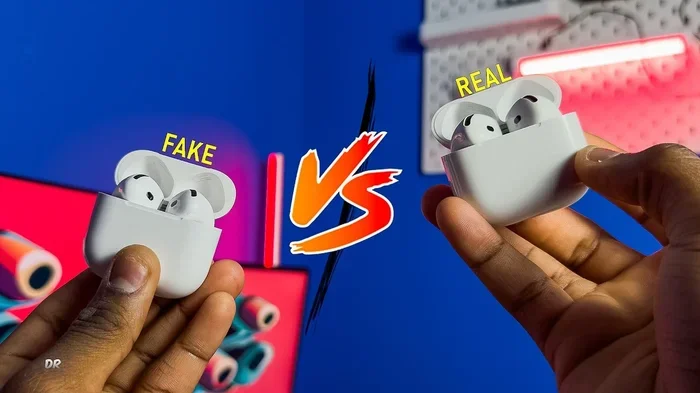
Visual guide about Fake vs real AirPods comparison
Image source: i.ytimg.com
The Illusion of Features
Most fake AirPods use one of three tricks to simulate ANC:
Trick #1: Marketing claims without substance. The box says “Active Noise Cancellation,” but there are no microphones positioned for ANC, no processors capable of running it, and no actual noise-canceling function. It’s purely a marketing lie designed to justify a higher price point.
Trick #2: Basic frequency filtering. Some higher-quality fakes use passive filtering to block certain frequencies, primarily low-end hum. They might reduce some bass frequencies from external noise, creating an illusion of noise cancellation. However, this isn’t real ANC—it’s just a rudimentary equalizer setting.
Trick #3: Software placeholders. A few sophisticated counterfeits include apps or settings that show ANC controls, but pressing them does absolutely nothing. It’s similar to having a light switch connected to nothing—the switch works, but the light doesn’t turn on because there’s no wiring behind it.
The Transparency Mode Confusion
To make their products seem more legitimate, fake AirPods often advertise “transparency mode” alongside ANC. Genuine transparency mode uses external microphones to pipe in outside sound—useful for hearing announcements or conversations without removing your earbuds.
Counterfeit versions either lack this feature entirely or provide a poor simulation that simply lowers volume and amplifies whatever the cheap microphone picks up. The result is often distorted, noisy, and barely functional.
Real Risks of Using Fake AirPods Beyond Poor Noise Cancellation
While the absence of true noise cancellation is disappointing, it’s actually one of the smaller problems with counterfeit AirPods. Several other risks might affect your health, safety, and wallet.
Hearing Health Concerns
Did you know that the World Health Organization estimates 1.1 billion young people worldwide are at risk of hearing loss due to unsafe listening practices? Poor-quality audio devices contribute significantly to this problem.
Fake AirPods often have inconsistent volume levels, distorted sound at higher volumes, and lack proper volume limiting features. Users frequently turn up the volume to compensate for poor sound quality, potentially exposing their ears to dangerous decibel ranges. Genuine AirPods include features like loud sound reduction and headphone accommodations to protect your hearing.
Additionally, fake AirPods may have unpredictable bass response—either too weak or overwhelmingly strong. This uneven frequency response can cause listener fatigue and even contribute to tinnitus over time.
Battery and Safety Hazards
Counterfeit AirPods use cheap lithium batteries from unverified manufacturers. These batteries have caused numerous safety incidents, including:
- Overheating: Poor battery management can cause dangerous temperature spikes
- Swelling: Low-quality cells may expand and damage the earbuds
- Fire risk: In extreme cases, defective batteries have caught fire
- Short lifespan: Many fake AirPods die within weeks or months
Genuine AirPods undergo rigorous safety testing and use high-quality battery cells with proper thermal management. The price difference reflects not just features, but safety.
Connectivity and Compatibility Issues
Fake AirPods use generic Bluetooth chips that may work initially but often develop problems over time. Common issues include:
- Frequent disconnections from your device
- Audio lag that makes video watching frustrating
- Poor microphone quality for phone calls
- Inability to receive firmware updates
- Random pairing failures
Perhaps most frustratingly, fake AirPods can’t access Apple’s ecosystem features like automatic device switching, spatial audio, or Find My integration. You’re paying for an “iPhone accessory” that doesn’t actually integrate with your iPhone.
How to Identify If Your AirPods Have Real Noise Cancellation
Whether you’re shopping for AirPods or already own a pair, here’s how to determine if they have genuine noise cancellation capability.
Check the Price Point
This is the simplest indicator. Genuine AirPods Pro retail for $249 in the United States, with discounts occasionally bringing them to $199. If you’re seeing prices below $100, especially significantly below, they’re almost certainly counterfeit.
The economics are simple: Apple spends billions on research and development, uses premium materials, and employs advanced manufacturing processes. A $20 pair of “AirPods Pro” cannot possibly include the same technology.
Verify the Serial Number
Every genuine Apple product has a unique serial number. You can verify it by:
- Connecting the AirPods to your iPhone
- Going to Settings > Bluetooth
- Tapping the “i” icon next to your AirPods
- Checking the serial number on Apple’s coverage website (checkcoverage.apple.com)
If the serial number is invalid, already registered to another device, or doesn’t match Apple records, you have counterfeits. This is the most reliable verification method and takes less than two minutes.
Examine the Build Quality
Genuine AirPods have remarkably consistent build quality. Check for:
- Weight: Real AirPods have a specific heft due to internal components
- Finish: Smooth, consistent plastic with no rough edges
- Hinge quality: The case hinge should feel solid and consistent
- Charging contacts: Precisely aligned metal contacts inside the case
- Speaker mesh: Fine, consistent metal mesh covering the drivers
Fake AirPods often have visible seams, uneven plastic, misaligned charging contacts, or rough finishing. The differences are usually visible within seconds if you know what to look for.
Test the Actual ANC Performance
The ultimate test is functionality. Real ANC should dramatically reduce ambient sound in specific environments:
- Airplane test: The drone of engines should significantly diminish
- Office test: HVAC hum and computer fans should nearly disappear
- Traffic test: Road noise should reduce substantially
- Café test: Background chatter should become muffled
With genuine AirPods Pro, the difference between ANC on and off is dramatic and immediately noticeable. With fakes, you’ll likely notice little to no difference, regardless of settings.
Inspect the Box and Documentation
Apple’s packaging is famously difficult to replicate perfectly. Look for:
- Print quality: Apple boxes have crisp, clear printing with precise color matching
- Typography: Fonts are consistent and properly aligned
- Included accessories: Multiple ear tip sizes, proper Lightning or USB-C cable, documentation
- Regulatory information: Proper certification marks and regulatory text
Fake AirPods packaging often has blurry printing, wrong colors, missing documentation, or incomplete regulatory information. These details matter because counterfeiters often overlook them.
Legitimate Alternatives If Real AirPods Are Out of Budget
If genuine AirPods are financially out of reach, you don’t have to settle for dangerous counterfeits. Several legitimate alternatives offer real noise cancellation at various price points.
Previous Generation AirPods
Older AirPods models like the AirPods 3 or AirPods Pro (1st generation) are often available at significant discounts through authorized retailers. While they may not have the latest H2 chip, they still feature genuine ANC and Apple ecosystem integration.
Check authorized resellers like Amazon (sold by Apple), Best Buy, or directly from Apple’s refurbished store. These come with warranties and verified authenticity.
Other Brands Offering Legitimate ANC
Several reputable manufacturers produce excellent noise-canceling earbuds at various price points:
- Sony WF-1000XM4/XM5: Often considered the best noise cancellation in the industry
- Bose QuietComfort Earbuds: Premium noise canceling with excellent comfort
- Samsung Galaxy Buds Pro: Great ANC with seamless phone integration
- Google Pixel Buds Pro: Solid performance with smart features
- Anker Soundcore Liberty series: Budget-friendly with surprisingly good ANC
Many of these alternatives offer 80-90% of the AirPods Pro experience at 50-70% of the price, with genuine noise cancellation that actually works.
Certified Refurbished Options
Apple’s Certified Refurbished store offers genuine AirPods at 15-20% discounts. These products undergo full testing, come with new batteries and cases, and include the same warranty as new products. It’s an excellent way to own genuine AirPods without paying full price.
The Bottom Line: Protecting Your Wallet and Your Ears
Let’s wrap up what we’ve covered. The question “does fake AirPods have noise cancellation” has a clear answer: No, fake AirPods do not have true active noise cancellation, despite what their packaging might claim. The technology requires specialized hardware, sophisticated software, and years of engineering expertise that counterfeit manufacturers simply don’t have or include in their budget products.
What you might get from fake AirPods is some passive noise isolation from their silicone tips—essentially the same noise reduction you’d get from putting your fingers in your ears. It’s not nothing, but it’s a far cry from the immersive silence that genuine ANC provides.
More importantly, fake AirPods pose real risks to your hearing health, personal safety, and digital security. The money you save upfront often gets spent on replacements, medical bills, or simply frustration.
If you value quality audio, effective noise cancellation, and your long-term hearing health, invest in genuine products from authorized sellers. If genuine AirPods are beyond your budget, consider legitimate alternatives from established brands or certified refurbished options that guarantee authenticity.
Remember: if a deal seems too good to be true, it almost always is. Your ears—and your wallet—will thank you for choosing genuine products that actually deliver on their promises.
Frequently Asked Questions
Do fake AirPods actually have noise cancellation?
No, fake AirPods do not have genuine active noise cancellation. While some counterfeit models advertise ANC features on their packaging or in apps, they lack the specialized microphones, processors, and algorithms required for true noise cancellation. Any noise reduction you experience is simply passive isolation from the silicone ear tips physically sealing your ear canal.
How can I tell if my AirPods noise cancellation is real?
The most reliable method is to verify your serial number on Apple’s official coverage website. You can also test the ANC by exposing yourself to constant background noise (like airplane engines or HVAC systems) and toggling the feature on and off—genuine ANC produces dramatic, immediately noticeable differences. Price points below $100 for AirPods Pro are almost certainly counterfeit.
What do fake AirPods use instead of real ANC?
Fake AirPods typically rely on passive noise isolation from their silicone ear tips, which create a physical seal in your ear canal. Some higher-quality counterfeits use basic frequency filtering to reduce certain sound ranges, but this is fundamentally different from true active noise cancellation. Most simply advertise features they don’t possess without any technical implementation at all.
Are fake AirPods dangerous to use?
Yes, fake AirPods can pose several risks including potential hearing damage from poor audio quality and unpredictable volume levels, battery hazards like overheating or swelling, connectivity issues, and lack of safety certifications. The lithium batteries in counterfeit products are often low-quality and may malfunction, creating potential safety hazards during charging or use.
Why are real AirPods so expensive compared to fakes?
Genuine AirPods contain sophisticated technology including Apple’s custom H1/H2 processors, multiple high-quality microphones, premium audio drivers, advanced battery management systems, and proprietary noise-canceling algorithms developed over years of research. The price reflects not just the hardware but also safety testing, quality control, warranty support, and ongoing software updates that fake AirPods cannot provide.
What should I buy if I can’t afford real AirPods?
Consider legitimate alternatives from brands like Sony, Bose, Samsung, or Anker, which offer genuine noise cancellation at various price points. You can also purchase certified refurbished AirPods directly from Apple at 15-20% discounts with full warranties. Previous generation AirPods models are another option, often available at reduced prices through authorized retailers like Best Buy or Amazon (sold by Apple directly).