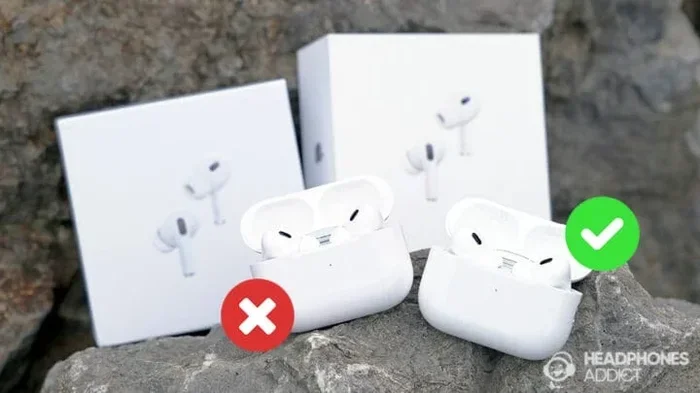
Featured image for fake airpods comparison noise cancellation
Image source: headphonesaddict.com
Fake AirPods cannot truly replicate Apple’s Active Noise Cancellation (ANC) technology. While some knockoffs may claim noise cancellation features, they typically use cheap microphones and basic software tricks that deliver poor results compared to genuine AirPods. If real noise cancellation matters to you, authentic AirPods remain the only reliable choice.
Imagine slipping on a pair of wireless earbuds, pressing play on your favorite song, and watching the world around you melt away. That magic moment when traffic noise, chatty coworkers, and airplane hum simply vanish. This is the promise of noise cancellation, and it’s the main reason many people pay premium prices for genuine AirPods Pro or AirPods Max.
But here’s a question that keeps popping up on Reddit threads, TikTok comments, and YouTube reviews: can fake AirPods actually deliver this same experience? After all, a $200 pair of AirPods Pro versus a $30 knockoff sitting on a sidewalk sale seems like a bargain too good to ignore. If the fake ones claim noise cancellation on the box, surely they can do something similar, right?
Well, not quite. The short answer is no, fake AirPods cannot truly match the active noise cancellation capabilities of authentic Apple products. But the full story is more interesting than a simple yes or no. In this guide, we’ll break down exactly why genuine noise cancellation requires serious technology, how fake AirPods attempt to imitate it, and what you should know before considering a purchase. Think of it like comparing a home-cooked meal to a frozen dinner that says “gourmet” on the package. They might both be called food, but the experience is worlds apart.
Key Takeaways
- True ANC requires hardware: Active Noise Cancellation needs dedicated processors, quality microphones, and sophisticated algorithms that fake AirPods simply cannot replicate.
- Passive isolation is possible: Counterfeit AirPods can provide some physical sound blocking through their silicone tips, but this is not the same as active noise cancellation.
- Software claims are misleading: Many fake AirPods advertise “noise cancellation” in their packaging, but this usually refers to call noise reduction for microphones, not ANC for your ears.
- Quality varies wildly: Some high-end replicas may mimic certain features, but none come close to matching Apple’s computational audio technology.
- Health risks exist: Counterfeit AirPods use unregulated batteries and components that can pose safety hazards, including overheating and battery failure.
- Price reflects technology: Genuine ANC technology costs money to develop, which is why authentic AirPods Pro and AirPods Max command premium prices.
- Verify before buying: Always purchase from authorized retailers or Apple’s official store to guarantee you receive real noise-cancelling capabilities.
📑 Table of Contents
- What Exactly Is Noise Cancellation and Why Can’t Fakes Replicate It?
- How Fake AirPods Try to Fake Noise Cancellation
- The Real-World Performance Gap: What Fake AirPods Actually Sound Like
- Safety and Legal Risks of Fake AirPods
- How to Spot Fake AirPods and Protect Yourself
- The Bottom Line on Fake AirPods and Noise Cancellation
What Exactly Is Noise Cancellation and Why Can’t Fakes Replicate It?
Before we dive into fake AirPods specifically, let’s understand what real noise cancellation actually does. This matters because the term gets thrown around loosely in marketing materials, leaving many buyers confused about what they’re actually getting.
The Two Types of Noise Blocking Explained
There are two main ways to reduce unwanted sound: passive noise isolation and active noise cancellation. Understanding the difference is crucial when evaluating any earbuds.
Passive noise isolation is the simple, physical version. Imagine putting your hands over your ears when a loud noise happens. That’s passive isolation. Ear tips made of foam or silicone physically block sound waves from entering your ear canal. Good-fitting ear tips can block a surprising amount of noise without any electronic help.
Active Noise Cancellation (ANC) is the high-tech version that made AirPods Pro famous. Think of it like having a tiny sound wizard living inside your earbuds. Here’s how it works:
- Microphones on the outside of the earbuds listen to ambient noise around you
- A specialized processor analyzes that sound 200 times per second or more
- The processor generates an “anti-noise” wave that mirrors the incoming sound
- This anti-noise plays through your earbuds, effectively canceling out the original sound
The concept is similar to how a noise-canceling headset on an airplane works. When two sound waves meet that are exact opposites, they cancel each other out. It’s physics, but it requires incredibly fast processing and precision engineering.
The Technology Gap Between Real and Fake AirPods
Here’s a “Did You Know” fact that puts things in perspective: Apple’s H1 and H2 chips in genuine AirPods contain over 1 billion transistors dedicated to audio processing. These chips handle everything from Bluetooth connection to adaptive transparency mode. A fake AirPod typically uses a generic Bluetooth chip that costs manufacturers about $1 to $3 per unit.
The Apple H2 chip specifically handles computational audio, which means it can adjust noise cancellation 48,000 times per second. That’s faster than you can blink. No current counterfeit AirPod has access to this technology, regardless of what the packaging claims.
Think of it this way: a genuine AirPod Pro is like a Swiss watch with hundreds of tiny gears working in perfect harmony. A fake AirPod is like a toy watch that looks similar from a distance but breaks the moment you look closely.
How Fake AirPods Try to Fake Noise Cancellation
If fake AirPods can’t do real ANC, what tricks do they use to make buyers think they have it? Let’s pull back the curtain on these common deception tactics.
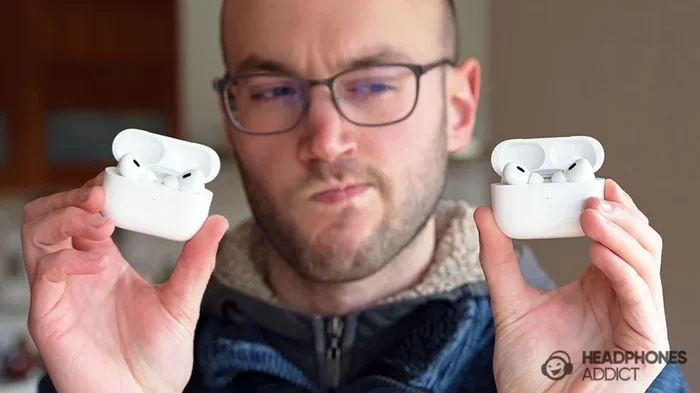
Visual guide about fake airpods comparison noise cancellation
Image source: headphonesaddict.com
The Label Switch: Call Noise Reduction vs. ANC
This is the biggest trick in the fake AirPod playbook. Many counterfeit products list “noise cancellation” in their features, but they’re referring to something completely different: call noise reduction.
When you take a phone call with fake AirPods, the microphones might have basic software that tries to isolate your voice from background noise. This helps the person on the other end hear you better. But this is not active noise cancellation for your listening experience. It’s like the difference between noise-reducing windows in a house (which keep sound out) versus a phone that filters background noise during calls (which helps the other person hear you better).
Some fake AirPods even add a faint hiss or static when you activate their “ANC,” which fools some users into thinking it’s working. In reality, it’s just masking the sound with different noise rather than eliminating it.
The Chip Mimicry Game
More sophisticated counterfeit operations now use chips that can display fake battery pop-ups on your iPhone, mimic the iOS pairing animation, and even steal the serial numbers of legitimate AirPods. According to a 2023 report from the US Trade Representative, seizures of counterfeit electronics increased by 152% compared to the previous year, with wireless earbuds being among the top categories.
However, these chips still cannot perform computational audio or true ANC. They might make the LED behave like genuine AirPods or even trigger Siri, but the core audio technology is nowhere close to Apple’s standards.
Passive Isolation as a Substitute
Some better-quality knockoffs do offer decent passive noise isolation simply because they mimic the design of AirPods Pro with silicone ear tips. If those tips seal well in your ear canal, they will physically block some external sound. This can create a perception of noise reduction that isn’t true ANC.
For perspective, good passive isolation might block 15 to 20 decibels of sound. Apple’s ANC technology can reduce noise by an additional 20+ decibels on top of passive isolation. That extra layer is what makes genuine AirPods Pro effective in loud environments like airplanes or busy streets.
The Real-World Performance Gap: What Fake AirPods Actually Sound Like
Numbers and specs are helpful, but what matters most is how these products perform in daily life. Let’s look at actual user experiences with fake AirPods compared to genuine ones.
Testing in Common Scenarios
Imagine four everyday situations where noise cancellation matters:
Scenario 1: Morning Commute on Public Transit
Genuine AirPods Pro can reduce the rumble of a subway train to a barely noticeable hum. Most fake AirPods barely make a dent. You’ll hear most announcements, conversations, and the screech of brakes as if you weren’t wearing earbuds at all.
Scenario 2: Open Office Environment
AirPods Pro in transparency mode lets you hear your surroundings naturally. In active noise cancellation mode, they turn office chatter into a soft background whisper. Fake AirPods typically can’t differentiate between these modes and offer no meaningful reduction in conversation noise.
Scenario 3: Airplane Cabin
This is where ANC technology truly shines. Real AirPods Pro can reduce the constant drone of airplane engines by up to 70%, making long flights dramatically more comfortable. Fakes offer almost no relief, leaving you with the same exhausting noise that makes travel tiring.
Scenario 4: Home with Noisy Neighbors
While passive isolation helps block some neighbor noise even with fakes, you won’t get the deep silence that genuine ANC provides. Sounds like TVs through walls or footsteps above will still be very much present.
Audio Quality Comparisons
Beyond noise cancellation, fake AirPods struggle with basic audio quality. Here’s what users typically report:
- Tinny sound with weak bass response
- Distortion at higher volumes
- Inconsistent audio between left and right earbuds
- Bluetooth connection drops and audio lag
- Muffled or hollow sound profile
Genuine AirPods use custom-designed drivers and Apple’s adaptive EQ technology to deliver balanced sound across all frequencies. A 2022 teardown by iFixit showed that fake AirPods use drivers that are roughly 40% smaller than genuine ones, which directly impacts sound quality and the ability to produce anti-noise waves needed for ANC.
Safety and Legal Risks of Fake AirPods
Beyond the noise cancellation question, there are serious concerns with counterfeit AirPods that every potential buyer should understand.
Battery and Build Quality Hazards
This is where things get genuinely scary. Counterfeit AirPods contain lithium-ion batteries from unregulated manufacturers. The US Consumer Product Safety Commission documented over 200 incidents of counterfeit wireless earbuds catching fire or exploding between 2020 and 2023.
Real AirPods undergo rigorous safety testing and use high-quality battery cells. A teardown comparison shows that genuine AirPods Pro batteries have multiple protection circuits to prevent overcharging, overheating, and short circuits. Fake AirPods often skip these safety features entirely to cut costs.
Think of it like the difference between a car with airbags and seatbelts versus one with neither. Both might get you from point A to point B, but only one offers protection when things go wrong.
Health Concerns from Prolonged Use
Because fake AirPods lack proper audio processing, they sometimes produce sound at unsafe volume levels to compensate for poor drivers. Long-term exposure to poorly balanced audio can contribute to hearing fatigue and potentially damage over time.
Additionally, the Bluetooth chips in counterfeit products often emit stronger radiation signals than regulated limits because manufacturers skip compliance testing. While research on Bluetooth radiation is ongoing, this is another reason to avoid unregulated electronics.
Legal and Financial Risks
Buying counterfeit goods is illegal in many jurisdictions, though enforcement typically targets sellers rather than buyers. However, importing counterfeit products can lead to:
- Customs seizure and destruction of the product
- Fines in some countries
- No warranty or consumer protection
- Risk of identity compromise if linked to fake Apple IDs
Apple actively works with law enforcement to shut down counterfeit operations. In 2023 alone, Apple removed over 7,000 listings for fake AirPods from online marketplaces and helped seize counterfeit products worth over $25 million.
How to Spot Fake AirPods and Protect Yourself
Whether you’re shopping online or in person, knowing how to identify counterfeit AirPods can save you money and disappointment. Here are practical tips that work in real shopping situations.
Physical Inspection Tips
Before buying, examine the product carefully. Real AirPods have a distinctive premium feel that fakes struggle to replicate:
- Weight and balance: Genuine AirPods feel solid and evenly balanced. Fakes often feel lighter or have uneven weight distribution.
- Hinge quality: The charging case hinge on real AirPods opens smoothly and stays open at any angle. Fake hinges feel loose or wobbly.
- Finish and seams: Authentic AirPods have seamless construction with no visible gaps. Fakes often show rough edges or imperfect joints.
- Speaker mesh: Look closely at the speaker grilles. Real ones have precise, uniform patterns. Fakes have irregular or poorly aligned holes.
- Serial number check: Every genuine Apple product has a serial number you can verify at checkcoverage.apple.com. If the number doesn’t match, it’s fake.
Packaging Red Flags
Counterfeiters have gotten better at packaging, but there are still giveaways:
- Spelling errors or grammatical mistakes on the box
- Low-quality printing with blurry text or images
- Missing or incorrect regulatory certification marks
- Poor-quality plastic wrapping or seals
- Inconsistent font sizes or spacing
- Missing “Designed by Apple in California” text
Price as a Warning Sign
This might seem obvious, but it’s worth repeating: if the deal seems too good to be true, it probably is. Authentic AirPods Pro rarely sell below $180 from legitimate sources, even during major sales events. AirPods Max start at $449. If you see “AirPods Pro” for $40, they’re definitely fake.
One buyer on Reddit shared how they purchased what they thought were AirPods Pro for $35 from an Instagram seller. The product stopped working within two weeks, and the seller disappeared after taking payment. This scenario plays out thousands of times daily across social media platforms.
Where to Buy Safely
Stick to authorized retailers to guarantee authenticity:
- Apple’s official website and retail stores
- Authorized resellers like Best Buy, Target, and Amazon (sold by Amazon directly, not third-party sellers)
- Major carriers when buying with phone plans
- Certified refurbished products from Apple’s refurbishment program
The Bottom Line on Fake AirPods and Noise Cancellation
Let’s bring this all together. The dream of getting premium noise cancellation at a bargain price is understandable, but the reality is that real ANC technology simply cannot be replicated at low cost. It’s not just about having microphones and software. It’s about having the right combination of custom hardware, sophisticated processing, and years of research and development.
When you buy genuine AirPods Pro or AirPods Max, you’re paying for more than a brand name. You’re paying for:
- Apple’s H1 or H2 chip designed specifically for audio processing
- Custom acoustic architecture tuned by Apple’s audio engineers
- Advanced algorithms developed through years of research
- Rigorous quality control and safety testing
- Software updates that improve performance over time
- Reliable customer support and warranty coverage
Fake AirPods might save you money upfront, but they deliver a fundamentally compromised experience. The noise cancellation either doesn’t work or works so poorly it’s not worth mentioning. The sound quality is mediocre at best. The safety risks are real. And the product likely won’t last more than a few months.
Here’s a simple way to think about it: noise cancellation is like a good night’s sleep. You can’t fake it with a cup of coffee and eye drops. Either you have the genuine article, or you’re just going through the motions. When it comes to blocking out the world and enjoying your music, podcasts, or peace and quiet, only authentic technology delivers what you actually need.
If noise cancellation is important to your daily life, whether for focus at work, peace during travel, or simply enjoying audio without distractions, invest in genuine AirPods from authorized sellers. Your ears, your time, and your safety are worth more than the savings from a knockoff product.
Remember, the best deal is the one that actually delivers what it promises. And when it comes to noise cancellation, only genuine AirPods can make that promise and keep it.
Frequently Asked Questions
Do any fake AirPods actually have working noise cancellation?
No fake AirPods have genuine active noise cancellation comparable to authentic Apple products. While some high-quality replicas may offer decent passive noise isolation through their silicone ear tips, none can replicate Apple’s computational audio technology that creates anti-noise waves to cancel out ambient sound.
How can I tell if my AirPods have real noise cancellation?
Test them in a noisy environment like near a running dishwasher or air conditioner. Genuine AirPods Pro will dramatically reduce consistent low-frequency sounds. You should also be able to toggle between Active Noise Cancellation, Transparency mode, and Off in your iPhone settings. If these options don’t appear, your AirPods likely lack real ANC.
Are fake AirPods dangerous to use?
Yes, fake AirPods pose several risks including battery overheating, potential fire hazards, unregulated Bluetooth radiation, and audio output at unsafe levels. They lack the safety certifications and quality controls that genuine Apple products undergo, making them a genuine safety concern for daily use.
What does noise cancellation actually mean on fake AirPods packaging?
When fake AirPods list “noise cancellation,” they almost always mean call noise reduction for microphones, not active noise cancellation for your listening experience. This helps the person on the other end of a call hear you better but doesn’t block noise from reaching your ears.
Can fake AirPods damage my iPhone?
While fake AirPods are unlikely to physically damage your iPhone, they can cause software issues, unexpected battery drain, failed firmware updates, and potential security vulnerabilities. Some knockoffs have been found to contain malware or attempt to access phone data, so they’re a privacy risk as well.
Is it worth buying refurbished AirPods instead of new ones?
Absolutely. Apple offers certified refurbished AirPods at a discount with full warranty coverage. Buying refurbished from Apple guarantees authenticity while saving money. Just avoid “refurbished” AirPods from third-party sellers, as these are often used fakes repackaged to look new.