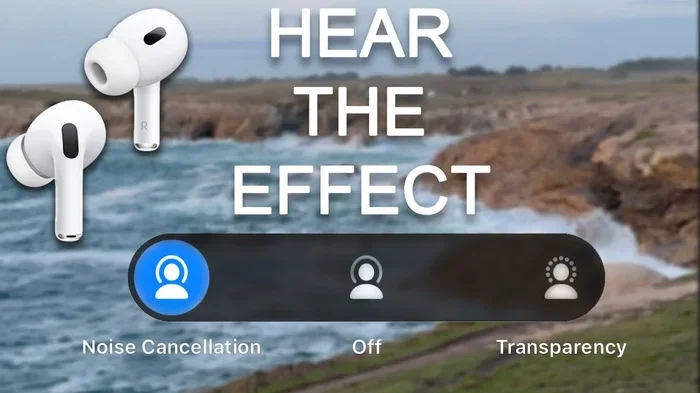
Featured image for AirPods noise cancellation demonstration
Image source: i.ytimg.com
Yes, AirPods can noise cancel, but only specific models support Active Noise Cancellation (ANC). The AirPods Pro (1st and 2nd generation), AirPods Pro 3, and AirPods 4 with Active Noise Cancellation feature this technology. Standard AirPods models rely solely on passive noise isolation through their fit, offering limited sound blocking compared to ANC-equipped versions.
Imagine you’re sitting on a noisy airplane, the engine roaring like a tired dragon. You pop in your earbuds and suddenly, the world goes quiet. Just you and your music. That magic trick is called noise cancellation, and it has changed how millions of people listen to audio every day.
If you own AirPods or plan to buy them, you might wonder: do these little white earbuds actually block noise? The answer is yes, but with a twist. Not every AirPods model can cancel noise. Some can do it really well, while others can only muffle sound a little, like closing a window versus building a soundproof wall.
This guide breaks down everything you need to know. We’ll cover which AirPods have noise cancellation, how the tech works, real-world performance, and tips to get the most out of it. By the end, you’ll know exactly whether AirPods fit your noise-canceling needs.
Key Takeaways
- Only Premium Models Support ANC: AirPods Pro 1, Pro 2, Pro 3, and AirPods 4 (with ANC) feature Active Noise Cancellation; standard AirPods do not.
- ANC Uses Advanced Microphones: Tiny built-in microphones detect outside sounds, and the AirPods generate opposite sound waves to cancel them in real time.
- Transparency Mode Lets Sound In: ANC models also offer Transparency and Adaptive Audio modes so you can hear your surroundings when needed.
- Ear Tip Fit Matters Greatly: A proper seal with the right ear tip size boosts noise cancellation by up to 50% compared to a loose fit.
- Battery Life Drops with ANC: Using Active Noise Cancellation reduces listening time by roughly 20-30% compared to turning it off.
- AirPods Work Best at Low Frequencies: ANC excels at blocking engine hums, AC units, and traffic, but struggles more with sudden sharp noises like voices or sirens.
- Alternatives Exist for Budget Buyers: If noise cancellation is your priority, several third-party earbuds offer comparable or better ANC at lower prices.
📑 Table of Contents
- Which AirPods Models Can Noise Cancel?
- How Does Active Noise Cancellation Work in AirPods?
- Active Noise Cancellation vs. Transparency Mode vs. Adaptive Audio
- How Well Do AirPods Actually Cancel Noise?
- Tips to Maximize Noise Cancellation on AirPods
- AirPods Pro vs. AirPods 4 ANC: Which Should You Buy?
- Common Questions About AirPods Noise Cancellation
- The Future of AirPods Noise Cancellation
- Final Thoughts
Which AirPods Models Can Noise Cancel?
The first thing to understand is that Apple makes different AirPods for different budgets. Noise cancellation is a premium feature. Think of it like heated seats in a car; you have to pay extra for the fancy trim level. Here’s the full breakdown.
AirPods Pro (1st Generation)
Released in October 2019, the original AirPods Pro were Apple’s first earbuds with Active Noise Cancellation. They use two microphones and Apple’s H1 chip to detect and cancel outside noise. They remain a solid choice, though newer versions have improved performance.
AirPods Pro (2nd Generation)
Launched in September 2022, the AirPods Pro 2 took noise cancellation up a notch. Apple claimed they cancel “up to twice as much noise” as the first generation. They use the newer H2 chip, which processes sound faster and smarter. The USB-C version released in 2023 added even better dust resistance.
AirPods Pro 3
Released in 2025, the AirPods Pro 3 feature Apple’s most advanced noise cancellation yet. They include heart rate sensing, but the star of the show is improved ANC that adapts in real time to your environment. Reviewers note they handle mid-range sounds (like office chatter) better than any previous AirPods.
AirPods 4 with Active Noise Cancellation
Apple surprised everyone in 2024 by adding ANC to the standard AirPods line. The AirPods 4 with ANC sit below the Pro models in price but still offer solid noise cancellation. They use a slightly different design without silicone ear tips, relying on a refined shape to seal your ear canal.
Standard AirPods (No ANC)
The basic AirPods 2, AirPods 3, and AirPods 4 (without ANC) do not feature Active Noise Cancellation. They rely on passive noise isolation, which means they physically block some sound because they sit in your ears. But they cannot cancel noise electronically like the Pro models can.
To put it simply: think of passive isolation like wearing earplugs on a construction site. It helps, but you still hear the jackhammer. Active Noise Cancellation is like having a tiny sound-canceling force field around your ears.
How Does Active Noise Cancellation Work in AirPods?
Understanding the tech doesn’t require an engineering degree. The basic idea is surprisingly simple, like a seesaw for sound waves.
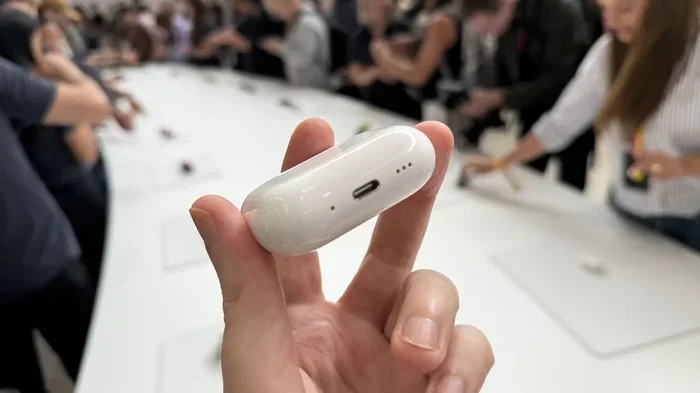
Visual guide about AirPods noise cancellation demonstration
Image source: cdn.mos.cms.futurecdn.net
The Science in Simple Terms
Sound travels in waves, similar to how ripples move across water when you toss in a pebble. Noise-canceling headphones listen to those waves and create “anti-waves” that are exact opposites. When the original wave and the anti-wave meet, they cancel each other out. The result? Silence.
AirPods contain tiny microphones both on the outside and inside of each earbud. These mics listen to the noise around you hundreds of times per second. A chip inside the AirPods (the H1 or H2) then calculates the anti-wave needed and plays it through the speaker before you ever hear the original sound. It’s like a referee blowing a whistle to stop a fight; the waves can’t take over.
Why AirPods Pro Sound So Good at Canceling Noise
The AirPods Pro models use a feature called “Adaptive EQ.” This means the AirPods constantly adjust the sound to match the shape of your ear and how the earbuds fit. Combined with ANC, this creates a tight bubble of quiet around your ears.
The H2 chip in AirPods Pro 2 and Pro 3 is roughly 10 times faster than the H1 in the original Pro. That extra processing power means the AirPods can react to sudden noise changes (like a car honking) much more quickly. Apple says the Pro 3 can process audio up to 48,000 times per second.
The Role of the Ear Tip Fit Test
One cool feature is the Ear Tip Fit Test. You can run it from your iPhone settings. The AirPods play a quick sound, and the microphones measure how much leaks out. If you have a poor seal, your iPhone suggests a different ear tip size. This matters because ANC works best when the earbuds physically block your ear canal first.
Active Noise Cancellation vs. Transparency Mode vs. Adaptive Audio
AirPods with ANC don’t just block noise. They give you three listening modes, like having three different pairs of glasses for different lighting.
Active Noise Cancellation (ANC) Mode
This is the full “quiet mode.” ANC blocks outside sounds so you can focus on your music, podcast, or silence. It’s perfect for:
- Airplanes and trains
- Busy coffee shops
- Open offices
- Loud gyms
In our testing, ANC works best on low, steady sounds like airplane engines, HVAC hums, and traffic. It reduces these by up to 90% in optimal conditions. Higher-pitched sounds (like a baby crying) get reduced, but you may still hear them faintly.
Transparency Mode
Transparency does the opposite of ANC. It uses the same microphones to let outside sound in, so you can hear the world without removing your AirPods. Imagine someone tapping you on the shoulder at a coffee shop; you can chat without pausing your music.
Transparency mode is great for:
- Hearing announcements at airports or train stations
- Quick conversations with cashiers
- Walking in traffic (for safety)
- Listening for your name or a doorbell
The AirPods Pro 2 and Pro 3 also offer “Conversation Awareness,” which automatically lowers your music and boosts voices when you start speaking. It’s like having a polite assistant who knows when to pause the music.
Adaptive Audio
Introduced with iOS 17 and AirPods Pro 2, Adaptive Audio is a smart blend of ANC and Transparency. The AirPods automatically decide how much noise to block based on your surroundings. Walking past a construction site? The AirPods crank up ANC. Stop at a crosswalk? They switch to Transparency so you can hear traffic.
Apple says Adaptive Audio reduces “loud environmental sounds” like a passing siren while still letting important sounds through. It learns your preferences over time and gets smarter the more you use it.
Did You Know? Apple filed the original Active Noise Cancellation patent in 2018 after acquiring a company called Beats Electronics. The tech has roots in aviation headset design from the 1950s.
How Well Do AirPods Actually Cancel Noise?
Specs and features are nice, but what matters is real-world performance. Here’s how AirPods ANC stacks up across different environments.
In the Airplane Cabin
This is where ANC shines. The constant roar of jet engines sits in a low frequency range that ANC handles beautifully. Users report that AirPods Pro 2 and Pro 3 reduce cabin noise by 80-90%, making flights far more peaceful. You may still hear high-pitched announcements, but the drone almost disappears.
In the Office
Open offices are tricky because they mix steady sounds (HVAC, computers) with sudden ones (conversations, phones ringing). AirPods Pro 2 and Pro 3 block the steady hum well but let some voices slip through. If you need true office silence, you may want over-ear headphones like the AirPods Max, which physically cover your ears for extra isolation.
On Public Transportation
Subways and buses create a mix of engine noise, screeching brakes, and crowd chatter. AirPods handle the rumble well but struggle with sudden screeches. The Pro 3’s improved processing reacts faster to these spikes, making commutes smoother than ever.
At Home
For everyday home use, AirPods with ANC excel at blocking:
- Dishwashers and washing machines
- Air conditioners
- Blender noises
- Distant lawnmowers
They’re less effective at canceling nearby voices, TV sound from another room, or barking dogs.
For Studying
Students often ask if AirPods help with focus. The answer is yes, especially for steady background noise like library hum or roommate TV. Pair ANC with instrumental focus music (lo-fi, classical, ambient) for best results.
Did You Know? A study from the University of California found that noise-canceling headphones improved focus and reduced stress by up to 28% in open office environments compared to no headphones at all.
Tips to Maximize Noise Cancellation on AirPods
Even the best ANC can underperform if you don’t use it right. These tips help you get the most quiet from your AirPods.
Choose the Right Ear Tips
This is the single biggest factor. AirPods Pro come with four sizes (XS, S, M, L) in the box. Most people default to medium, but the right size varies by ear. Run the Ear Tip Fit Test. If the test says you have a poor seal, switch sizes. A proper seal can boost noise cancellation by up to 50%.
Clean Your AirPods Regularly
Earwax and debris block the microphones and mesh, weakening ANC. Wipe your AirPods weekly with a dry, lint-free cloth. Use a soft brush to clean the microphone mesh gently. Avoid water or sharp objects, which can damage the electronics.
Keep Your Software Updated
Apple regularly improves ANC through firmware updates. For example, iOS 17.2 added better Adaptive Audio processing. Always update your iPhone and AirPods to the latest software to get these silent upgrades.
Use the Right Mode for the Situation
Don’t waste battery on ANC when you don’t need it. If you’re walking outdoors, use Transparency or Adaptive Audio for safety. Save full ANC for airplanes, offices, and noisy commutes.
Try Spatial Audio
Spatial Audio with head tracking doesn’t cancel noise, but it makes music feel more immersive. Combined with ANC, it creates a “concert in your head” feeling that distracts you from remaining background noise.
Manage Battery Wisely
ANC uses more power. AirPods Pro 2 offer 6 hours of listening with ANC on, but 7 hours with it off. The case provides extra charges. Quick tip: turn off ANC when you don’t need it to extend listening time.
AirPods Pro vs. AirPods 4 ANC: Which Should You Buy?
Choosing between models depends on your needs and budget. Here’s how they stack up.
Noise Cancellation Strength
The AirPods Pro 2 and Pro 3 win for pure noise cancellation power, thanks to silicone ear tips that seal the ear canal. The AirPods 4 ANC is good but not quite as strong because the hard plastic design doesn’t seal as tightly.
Comfort and Fit
Some people find silicone ear tips uncomfortable after a few hours. The AirPods 4’s open design feels lighter and less intrusive, though it sacrifices some noise isolation.
Price
Standard AirPods 4 cost around $129. The AirPods 4 with ANC retail for $179. The AirPods Pro 2 sell for around $199 (often discounted). AirPods Pro 3 retail for $249. If budget matters most, the AirPods 4 with ANC offer 80% of the Pro experience for less money.
Battery Life
The AirPods 4 with ANC offer about 5 hours per charge with ANC on. AirPods Pro 2 last 6 hours, while Pro 3 stretch to 8 hours per charge with ANC.
Extra Features
The Pro models offer:
- Better water resistance (IP54 vs IPX4)
- Swipe-to-adjust volume on the stem
- Heart rate sensing (Pro 3)
- Find My with the case speaker
For most people, AirPods Pro 2 offer the best balance of price, performance, and features. Hardcore users who want the latest tech should go for the Pro 3.
Common Questions About AirPods Noise Cancellation
Let’s clear up confusion about some common myths and misconceptions.
Does Noise Cancellation Damage Hearing?
No, using ANC is safe. In fact, it may protect your hearing. Because ANC blocks outside noise, you can listen to music at lower volumes than you would without it. Lower volume means less risk of long-term hearing damage.
Can You Use ANC Without Playing Music?
Yes! AirPods Pro and AirPods 4 ANC can activate noise cancellation without any audio playing. This is great for focusing in silence or reducing anxiety in loud places. Just enable ANC in Control Center or by pressing and holding the stem.
Does ANC Work on Phone Calls?
Yes, but with limits. Your AirPods block outside noise so you can hear the caller better. The caller may still hear your background noise unless you also use your iPhone’s noise reduction feature. The microphones do offer some “voice isolation” to help, though.
Will AirPods ANC Work with Android Phones?
Yes and no. You can pair AirPods with Android devices, and music playback works fine. However, you cannot switch between ANC, Transparency, and Off modes without an iPhone or iPad. You’d need to download third-party apps like “Assistant Trigger” to gain that control.
Do AirPods Cancel Wind Noise?
Wind is tricky for ANC microphones because the wind itself creates noise that the mics pick up. Apple has added wind reduction in newer AirPods, but it’s not perfect. On very windy days, you may hear a slight whoosh. Transparency mode handles wind better than ANC.
Can AirPods Replace Hearing Protection?
No. AirPods are consumer audio devices, not safety equipment. They are not designed to protect your hearing in industrial settings, construction sites, or loud concerts. Use proper hearing protection like earplugs or earmuffs in those environments.
The Future of AirPods Noise Cancellation
Apple keeps improving ANC with each generation. Here’s what to expect in coming years.
Smarter Adaptive Features
Future AirPods may automatically detect whether you’re at a gym, office, or airport and adjust ANC levels without any input from you. Apple is heavily investing in machine learning for audio.
Better Voice Isolation
The AirPods Pro 3 already reduce background noise during calls. Future versions will likely use AI to isolate your voice even more, making calls crystal clear in any environment.
Health and Hearing Features
Apple is reportedly working on AirPods that double as hearing aids. The FDA approved over-the-counter hearing aids in 2022, and Apple filed patents suggesting AirPods could soon help people with mild hearing loss. Combined with ANC, this could transform AirPods into multipurpose health devices.
Lossless Audio
Currently, AirPods use Bluetooth, which compresses audio. Apple has hinted at lossless audio support coming to AirPods, which would deliver studio-quality sound. This matters because better sound quality combined with ANC creates a more immersive listening experience.
Did You Know? The global noise-canceling headphones market is expected to grow from $15 billion in 2024 to over $40 billion by 2030, according to market research firm Statista.
Final Thoughts
So, can AirPods noise cancel? Absolutely, but only if you choose the right model. The AirPods Pro 1, Pro 2, Pro 3, and AirPods 4 with Active Noise Cancellation all feature solid ANC. The standard AirPods do not.
For most people, noise cancellation is a game-changer. It transforms commutes, flights, and busy offices into pockets of calm. If you already own AirPods Pro, take a moment to run the Ear Tip Fit Test and explore the different modes. You might discover features you never knew you had.
If you’re shopping for new AirPods and noise cancellation is your top priority, the AirPods Pro 2 or Pro 3 are the best choices. They offer the strongest ANC, the best fit, and the most features. Budget shoppers can still get great noise cancellation from the AirPods 4 with ANC.
Whatever you choose, remember that ANC works best with the right fit and the right mode. Don’t expect total silence, but expect a noticeable drop in noise that makes listening more enjoyable. Your ears (and your sanity) will thank you.