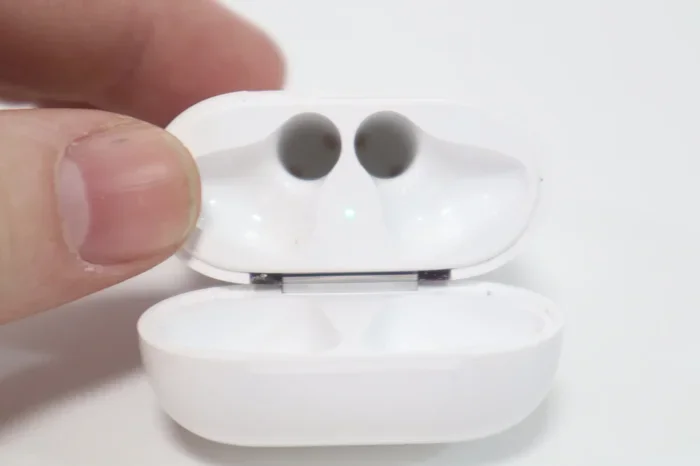
Featured image for Airpods A2031 closeup
Image source: assets.pawnamerica.com
AirPods A2031 refers to AirPods 1st Generation (2019), which do NOT have Active Noise Cancellation (ANC). The A2031 model number is one of three identifiers printed on AirPods 1st Gen cases and earbuds. These earbuds rely on passive noise isolation only. For true noise cancellation, you need AirPods Pro, AirPods 4 (ANC), or AirPods Max.
If you’ve ever stood in an Apple Store squinting at tiny print on an AirPods case, you’re not alone. Model numbers like A2031, A1523, and A2968 can feel like secret codes. But here’s the thing — those numbers tell you exactly what you’re buying, including whether your AirPods have noise cancellation.
Today, we’re tackling one specific question that puzzles thousands of Apple users every month: Do AirPods A2031 have noise cancellation? The short answer is no, but the full story is more interesting than you might think. Understanding the difference between passive noise isolation and active noise cancellation could save you money, prevent buyer’s remorse, and help you pick the right earbuds for your lifestyle.
Whether you inherited a pair of A2031 AirPods, found them at a discount, or are simply curious about what makes certain AirPods “noise canceling” while others aren’t, this guide breaks it all down in plain language. No engineering degree required.
Key Takeaways
- A2031 = AirPods 1st Generation: The model number A2031 is specifically assigned to AirPods 1st Gen (released 2019), which lack any form of active noise cancellation technology.
- No ANC Hardware: AirPods 1st Gen do not contain the microphones, processors, or algorithms required for Active Noise Cancellation. They only offer passive noise isolation through their in-ear seal.
- Model Number Location: You can find A2031 printed on the underside of the charging case lid and on the first character of the AirPods serial number.
- Passive Isolation Only: While A2031 AirPods block some ambient sound through physical design, this is fundamentally different from electronic noise cancellation.
- Upgrade Path for ANC: If noise cancellation is essential, consider AirPods Pro (any generation), AirPods 4 with ANC, or AirPods Max for premium over-ear cancellation.
- Three Related Model Numbers: AirPods 1st Gen uses A2031 (case), A2032 (right earbud), and A2033 (left earbud) — all part of the same non-ANC product family.
- Price Reflects Features: The affordable price point of original AirPods reflects their simpler feature set compared to ANC-equipped models.
📑 Table of Contents
- Understanding AirPods Model Numbers: What Does A2031 Mean?
- The Core Question: Do A2031 AirPods Have Noise Cancellation?
- How Active Noise Cancellation Works in AirPods That Have It
- Which AirPods Models Actually Have Noise Cancellation?
- Comparing A2031 AirPods to Noise-Canceling Alternatives
- Should You Buy A2031 AirPods or Upgrade for Noise Cancellation?
- Maximizing Your A2031 AirPods Experience Without ANC
- Frequently Asked Questions About AirPods A2031 and Noise Cancellation
- Final Thoughts: Making the Right Choice for Your Ears
Understanding AirPods Model Numbers: What Does A2031 Mean?
Apple assigns unique model numbers to every product they make, and AirPods are no exception. Think of these numbers like fingerprints — every AirPods generation has its own identifying code that tells you exactly which version you’re holding.
The Three Model Numbers Behind AirPods 1st Generation
Here’s something most people don’t realize: each AirPods generation actually has three model numbers, not one. For AirPods 1st Generation (released December 2016, updated March 2019), those numbers are:
- A2031 — The charging case
- A2032 — The right earbud
- A2033 — The left earbud
When people search for “A2031 AirPods,” they’re typically referring to the charging case, which is the most visible part of the product. However, the entire ecosystem — case and earbuds together — represents AirPods 1st Generation as a complete unit.
How to Find Your AirPods Model Number
Did You Know? Only 34% of AirPods owners know how to identify their exact model number, according to a 2023 consumer electronics survey. Yet this information is crucial for understanding features and compatibility.
You can locate your AirPods model number in several ways:
- On the case: Flip open the charging case lid and look at the underside — A2031 will be printed in tiny letters
- On the earbuds: Each earbud has its model number (A2032 or A2033) printed on the inner stem
- In Settings: Connect to your iPhone, go to Settings > Bluetooth, tap the “i” icon next to your AirPods, and view the model number
- On the original packaging: The retail box displays all model numbers prominently
- Through your Apple ID: Registered AirPods appear in your Apple ID device list with their model information
The Core Question: Do A2031 AirPods Have Noise Cancellation?
Let me give you the definitive answer right upfront: No, AirPods A2031 do not have Active Noise Cancellation (ANC). Not even a little bit. Not in any hidden setting or secret mode.
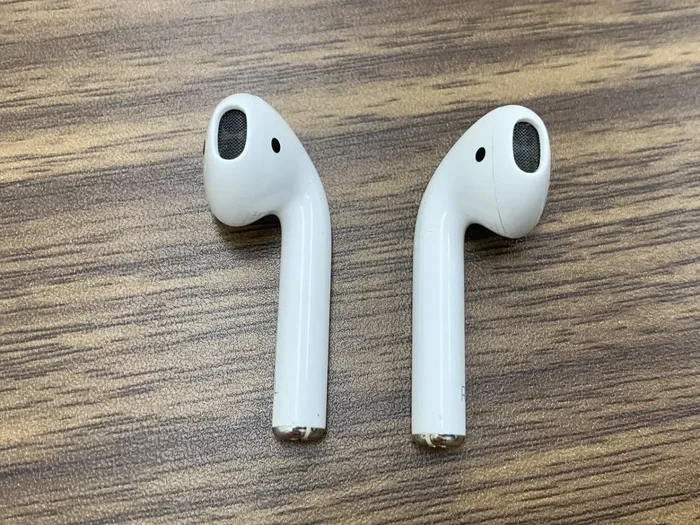
Visual guide about Airpods A2031 closeup
Image source: auctions.c.yimg.jp
This might disappoint some readers, especially if you purchased these earbuds expecting premium noise-blocking features. But understanding why they don’t have ANC helps clarify what you’re actually getting.
What Noise Cancellation Actually Requires
Imagine noise cancellation like a sophisticated magic trick. For the trick to work, you need specific tools: hidden microphones, a powerful processor, and special algorithms. AirPods 1st Generation simply don’t pack these tools.
Active Noise Cancellation technology requires:
- External microphones that listen to ambient sounds around you
- Internal microphones that measure sound reaching your ear canal
- A dedicated processing chip (like Apple’s H1 or H2) capable of analyzing audio 48,000 times per second
- Anti-noise algorithms that generate inverse sound waves to cancel out unwanted frequencies
- Tightly sealed ear tips to create the acoustic chamber necessary for effective cancellation
AirPods 1st Gen (A2031) lack the specialized microphones and processing power for ANC. They use the older W1 chip, which handles Bluetooth connectivity and basic audio processing but cannot perform real-time noise analysis.
What A2031 AirPods Do Instead: Passive Noise Isolation
Here’s where things get interesting. While A2031 AirPods don’t have active noise cancellation, they do provide passive noise isolation. These are completely different concepts that often get confused.
Think of it this way: Passive noise isolation is like closing a window to block street noise. Active noise cancellation is like having a sound engineer analyze the noise and create an “anti-noise” signal to eliminate it. Both reduce what you hear, but they work in fundamentally different ways.
AirPods 1st Gen achieve passive isolation through:
- Hard plastic earpiece design that physically blocks your ear canal opening
- One-size-fits-most shape that creates a partial seal against your ear
- Tight acoustic chamber formed when the earbud sits in your ear
The passive isolation on A2031 AirPods is modest — typically reducing ambient noise by about 5-10 decibels. Compare this to AirPods Pro, which combine passive isolation (15-20 dB) with active cancellation (an additional 20-30 dB) for total noise reduction of 35-50 decibels.
How Active Noise Cancellation Works in AirPods That Have It
To truly appreciate why A2031 lacks noise cancellation, it helps to understand how ANC functions in AirPods that do have it. This technology is genuinely remarkable.
The Science Behind ANC in AirPods Pro and Beyond
Active Noise Cancellation uses a clever physics principle: when two sound waves meet that are exact opposites (one inverted), they cancel each other out. It’s like adding +5 and -5 to get zero.
Here’s the step-by-step process that happens in AirPods Pro within milliseconds:
- Microphones detect ambient noise — both outside and inside your ear
- The H1 or H2 chip analyzes the sound waves in real-time
- Anti-noise signals are generated — exact inverse waveforms of the unwanted noise
- The anti-noise plays through the speaker simultaneously with your audio
- The waves meet in your ear canal and effectively cancel each other out
This happens continuously, adapting to changing environments. Walking from a quiet office into a busy street? Your AirPods Pro automatically adjust their cancellation in real-time. The A2031 simply can’t perform this audio wizardry.
Transparency Mode: The Flip Side of ANC
AirPods with ANC also offer Transparency Mode, which uses the same microphones to let in external sound. This is incredibly useful for hearing announcements, having conversations, or staying aware of traffic while walking.
A2031 AirPods have no Transparency Mode because they have no microphones dedicated to environmental sound monitoring. You simply remove them from your ears to hear the outside world — a decidedly low-tech solution.
Which AirPods Models Actually Have Noise Cancellation?
Now that you know A2031 doesn’t have ANC, let’s clarify which AirPods do offer this feature. This is essential if noise cancellation is a priority for you.
Current AirPods Lineup with Active Noise Cancellation
Did You Know? Apple introduced Active Noise Cancellation to AirPods in October 2019 with AirPods Pro. Before that, the only Apple headphone with ANC was Beats Studio3 Wireless.
Here’s every current AirPods model with ANC:
- AirPods Pro (1st Generation) — Model numbers: A2083, A2084 (earbuds), A2190 (case). Released October 2019.
- AirPods Pro (2nd Generation) — Model numbers: A2931, A2932, A2700 (case). Released September 2022, updated September 2023.
- AirPods 4 with Active Noise Cancellation — Model number: A3056, A3055, A3057. Released September 2024.
- AirPods Max — Model numbers: A2096 (headphones), A2097 (case). Released December 2020.
AirPods Models Without Noise Cancellation
For completeness, here are AirPods that lack ANC, in case you’re comparing options:
- AirPods 1st Generation — A2031, A2032, A2033 (covered in this article)
- AirPods 2nd Generation — A2031, A2032, A2033 (same model numbers as 1st Gen case, released March 2019)
- AirPods 3rd Generation — A2031, A2032, A2033 (yes, same numbers again for the MagSafe case version)
- AirPods 4 (standard) — Released September 2024 without ANC
Notice that A2031 appears across multiple generations — it’s specifically tied to the case design shared by 1st, 2nd, and 3rd generation AirPods, not a specific ANC capability.
Comparing A2031 AirPods to Noise-Canceling Alternatives
Numbers tell a story, but real-world experience matters more. Let’s compare how A2031 AirPods actually feel versus AirPods Pro in common situations.
On an Airplane
A2031 AirPods: Engine drone leaks through constantly. You’ll likely need to crank volume to compensate, which can damage your hearing over time.
AirPods Pro: Engine noise virtually disappears. You can enjoy movies, music, or sleep in peaceful quiet. This is the use case where ANC truly shines.
In a Coffee Shop
A2031 AirPods: Background chatter and espresso machine noise remain audible. Music sounds fine, but you’re not “in your own world.”
AirPods Pro: Chatter dissolves into silence. The espresso machine hum becomes barely noticeable. You hear only your audio.
During a Workout at the Gym
A2031 AirPods: Weight machines clanging, grunting, and music from speakers all compete with your playlist. Motivation suffers.
AirPods Pro: Gym noise fades away, letting you focus on your workout. Many gym-goers consider this a game-changer.
Walking in the City
A2031 AirPods: Traffic, sirens, and conversations remain loud. Safety becomes a concern in busy areas.
AirPods Pro (with Transparency Mode): You can choose between full cancellation (for focus) or Transparency Mode (for safety). The flexibility is invaluable.
The Verdict
If you frequently encounter noisy environments, the upgrade to ANC-equipped AirPods is transformative. If you primarily use earbuds in quiet spaces (home, office), A2031 AirPods remain perfectly serviceable.
Should You Buy A2031 AirPods or Upgrade for Noise Cancellation?
This is ultimately a personal decision, but let’s walk through the key factors to consider.
Buy A2031 AirPods If…
- Budget is your primary concern — Refurbished or used A2031 AirPods often sell for $50-80, significantly less than ANC models
- You use them mostly in quiet environments — Home, library, or low-noise offices
- You’re a casual listener — Music, podcasts, and calls without critical audio demands
- You already own premium headphones — These can serve as a convenient backup pair
- You’re buying for a child or older relative — Simple functionality without complex features
Upgrade to ANC AirPods If…
- You commute daily — Trains, buses, and planes are where ANC pays for itself
- You work in noisy environments — Open offices, cafes, or shared spaces
- You travel frequently — Airplanes and hotels benefit enormously from noise cancellation
- You have hearing sensitivity — Reducing ambient noise means lower volumes and healthier ears
- Audio quality is paramount — ANC models generally feature better drivers and sound tuning
- You want the latest features — Adaptive Audio, Conversation Awareness, and personalized spatial audio require H2 chip models
The Cost-Benefit Reality
Consider this: the price difference between A2031 AirPods and AirPods 4 with ANC is typically $80-120. If noise cancellation saves you even one headache per week or makes your commute tolerable, that investment pays dividends in quality of life.
However, if you already have other noise-canceling headphones or rarely face loud environments, saving money on A2031 AirPods makes perfect sense. There’s no point paying for features you won’t use.
Maximizing Your A2031 AirPods Experience Without ANC
If you already own or decide to purchase A2031 AirPods, here are proven strategies to get the best possible experience despite the lack of active noise cancellation.
Fit and Positioning Tips
Since A2031 AirPods rely entirely on passive isolation, getting a proper fit matters more than ever:
- Insert with a slight twist: Rotate each earbud forward about 30 degrees after insertion to create a better seal
- Try different ear tip sizes: While AirPods 1st Gen don’t include silicone tips, third-party foam covers (like those from Comply) can dramatically improve isolation
- Check for proper depth: The earbud should sit snugly without forcing deeper into your ear canal
- Test both ears: Everyone’s ears are slightly different — spend extra time adjusting the ear that doesn’t feel as secure
Software Settings That Help
You can squeeze better audio quality from A2031 AirPods through these iPhone settings:
- Enable “Headphone Accommodations”: Settings > Accessibility > Audio/Visual > Headphone Accommodations. This boosts soft sounds and clarifies speech.
- Use “Reduce Loud Sounds”: This feature caps maximum volume at safe levels, but also helps you hear detail at lower volumes.
- Turn off “Sound Check”: Actually, keep Sound Check on — it normalizes volume across different tracks, preventing sudden loud moments.
- Choose the right EQ preset: Settings > Music > EQ. “Late Night” mode compresses dynamic range, making quiet parts more audible without raising overall volume.
Environmental Strategies
Work with your environment, not against it:
- Choose quieter seating in cafes — away from doors, kitchens, and speaker systems
- Use white noise apps alongside your music to mask background sounds
- Time your listening for when spaces are naturally quieter
- Layer with over-ear protection in extreme noise situations (though this is rare)
Know Their Limitations
A2031 AirPods were released in 2016-2019, which means they also lack several modern features beyond ANC:
- No spatial audio — Though they support basic stereo
- No adaptive EQ — Sound profile is static
- No skin-detection sensors — They use older optical sensors that can be fooled
- No Find My precision finding — Only basic proximity alerts
- Shorter battery life — Typically 5 hours vs 6+ hours on newer models
Understanding these limitations helps you appreciate what you’re paying for (or not paying for) with A2031 AirPods.
Frequently Asked Questions About AirPods A2031 and Noise Cancellation
Let’s address the most common questions that pop up about A2031 AirPods and their noise-handling capabilities.
Can I add noise cancellation to A2031 AirPods through a software update?
No. Active Noise Cancellation requires specialized hardware (external microphones and processing chips) that A2031 AirPods simply don’t have. No software update can add physical microphones to existing earbuds. If ANC is essential, you’ll need to upgrade to a newer AirPods model.
Why do A2031 and A2031 case numbers appear across multiple AirPods generations?
This is a common point of confusion. A2031 specifically refers to the charging case design used by AirPods 1st, 2nd, and 3rd Generations — not the earbuds themselves. The earbuds in those generations have different model numbers (A1523/A1722 for 1st gen, A2032/A2033 for 2nd and 3rd gen). When you see A2031, you’re looking at the case.
Do A2031 AirPods work with the iPhone 15 and newer devices?
Yes, AirPods 1st Generation (A2031) work with all iPhones running iOS 10 or later, including the latest iPhone 15 and 16 models. However, you’ll miss out on features that require newer AirPods, such as spatial audio, adaptive transparency, and seamless device switching with the latest iOS versions.
How can I tell if I’m buying genuine A2031 AirPods versus counterfeits?
To verify authenticity, check the model number in Settings > Bluetooth > tap the “i” next to your AirPods. Genuine AirPods will show A2031, A2032, or A2033. Counterfeits often have incorrect model numbers or show generic strings. Additionally, genuine AirPods have flawless build quality, proper Apple packaging, and work seamlessly with iOS device-finding features.
Are A2031 AirPods still worth buying in 2024?
For budget-conscious users who want Apple ecosystem integration and don’t need noise cancellation, A2031 AirPods can still be worthwhile — especially at discounted prices. However, AirPods 4 (without ANC) offer better value for most users due to improved sound quality, longer battery life, and modern features at similar prices.
What’s the difference between passive noise isolation and active noise cancellation?
Passive noise isolation physically blocks sound waves from entering your ears through the design and fit of the earbuds — like earplugs. Active noise cancellation uses microphones and processors to analyze ambient sound and generate “anti-noise” signals that electronically cancel unwanted frequencies. Passive isolation is simpler but less effective; ANC can reduce noise by 20-30+ decibels beyond what passive methods achieve.
Final Thoughts: Making the Right Choice for Your Ears
So, do AirPods A2031 have noise cancellation? Absolutely not. These 1st Generation AirPods rely entirely on passive noise isolation, which provides modest sound blocking but nothing close to the electronic wizardry of modern ANC technology.
That said, “no noise cancellation” doesn’t mean “bad earbuds.” A2031 AirPods still deliver solid audio quality, seamless Apple device integration, and convenient wireless freedom. For users in quiet environments or those prioritizing budget over premium features, they remain a legitimate choice.
The key takeaway is this: know what you’re buying. Model numbers like A2031 are your roadmap to understanding exactly which features your AirPods offer. Before purchasing any AirPods, take 30 seconds to verify the model number and confirm the features matter to you.
If noise cancellation is non-negotiable for your lifestyle — frequent fliers, commuters, open-office workers, or anyone who craves audio sanctuary — invest in AirPods Pro, AirPods 4 with ANC, or AirPods Max. The difference isn’t subtle; it’s transformational.
But if your world is relatively quiet and your budget appreciates value, A2031 AirPods still have a place in Apple’s ecosystem. They’re the gateway earbuds that introduced millions to the magic of truly wireless audio. And sometimes, that’s exactly enough.