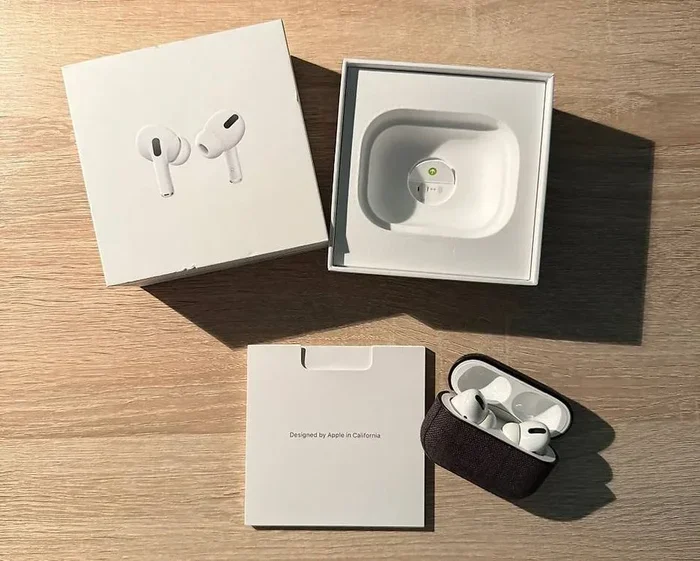
Featured image for First generation AirPods white case
Image source: img.ricardostatic.ch
No, AirPods 1 do not have active noise cancellation. The first-generation AirPods, released in December 2016, only offer passive noise isolation through their ear-tip-free design. Active Noise Cancellation (ANC) was first introduced with AirPods Pro in October 2019, three years after the original AirPods launched.
Key Takeaways
- AirPods 1 lack ANC: The original AirPods (released December 2016) do not have Active Noise Cancellation technology built into them.
- Passive isolation only: Without silicone tips, AirPods 1 rely solely on passive noise isolation, which is minimal compared to in-ear designs.
- ANC debuted with AirPods Pro: Apple introduced Active Noise Cancellation in AirPods Pro in October 2019, not in any first-generation model.
- Transparency Mode is missing: AirPods 1 don’t offer Transparency Mode either, which would have allowed outside sounds to pass through.
- W1 chip limitations: The W1 chip in AirPods 1 was designed for connectivity and battery efficiency, not noise-canceling capabilities.
- AirPods 2 still no ANC: Even the second-generation AirPods (released March 2019) did not include Active Noise Cancellation.
- Alternatives exist: Users wanting ANC must upgrade to AirPods Pro, AirPods Pro 2, or AirPods 4 (with ANC), or consider third-party options.
📑 Table of Contents
- The Straight Answer About AirPods 1 and Noise Cancellation
- Understanding What Noise Cancellation Actually Means
- A Quick History Lesson: The AirPods Family Tree
- Why Doesn’t AirPods 1 Have Noise Cancellation?
- What You Can (and Can’t) Do With AirPods 1
- Alternatives If You Want Noise Cancellation
- Common Myths About AirPods 1 and Noise Cancellation
- The Final Verdict on AirPods 1 and Noise Cancellation
The Straight Answer About AirPods 1 and Noise Cancellation
Let’s get right to the point because this is probably why you clicked on this article. AirPods 1 do NOT have Active Noise Cancellation (ANC). Not even a little bit. Not in any hidden setting. Not if you update the firmware. Not if you pair them with the latest iPhone. They simply don’t have the technology built into them.
This might be surprising news if you’ve seen countless ads or videos showing AirPods with noise-canceling features. That’s because those ads are likely showing AirPods Pro or newer models. The original AirPods that Apple released back in December 2016 were designed for casual listening, making phone calls, and tapping into the Apple ecosystem seamlessly. Cutting out the world’s noise wasn’t on the to-do list.
Think of it like this: AirPods 1 are like a regular conversation in a quiet room. You can hear the person across from you just fine. AirPods Pro, on the other hand, are like having that same conversation while wearing earplugs in a noisy café, except you still hear the person perfectly because the earplugs are smart enough to filter out just the espresso machine noise. The first AirPods? They never got those earplugs.
Understanding What Noise Cancellation Actually Means
Before we dive deeper into why AirPods 1 miss this feature, let’s break down what noise cancellation really is. There are two main types, and people often confuse them.
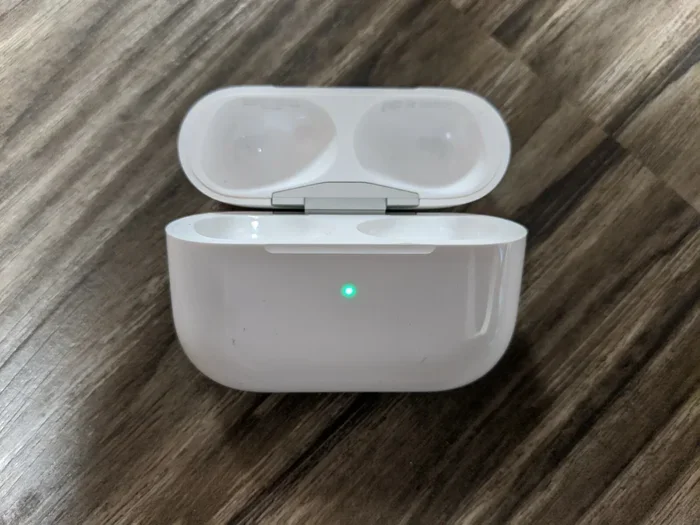
Visual guide about First generation AirPods white case
Image source: i.ebayimg.com
Active Noise Cancellation (ANC)
Active Noise Cancellation is the fancy, technology-packed version. It uses tiny microphones on the earbuds to listen to the sounds around you. Then, in less than a millisecond, it creates an “anti-sound” wave that cancels out the noise. It’s like adding the number negative one to a positive number to get zero. The background hum of an airplane engine, the rumble of a train, the drone of an air conditioner, all of it gets digitally erased before it reaches your ears.
According to Apple, ANC can reduce unwanted background sounds by up to 2,000 times compared to passive isolation alone. That’s a massive difference, and it’s why ANC-equipped earbuds cost more.
Passive Noise Isolation
Passive noise isolation is the simpler, cheaper method. It’s just about physically blocking sound waves from entering your ear canal. Think of putting your hands over your ears. Or wearing foam earplugs on a construction site. The better the seal in your ear, the more sound gets blocked.
Here’s the catch with AirPods 1: they have a hard plastic design that doesn’t seal into your ear canal. So their passive noise isolation is quite weak. Air just leaks in around the edges. That’s why you can still hear traffic, conversations, and announcements while wearing them.
The Difference Between ANC and Transparency Mode
There’s also a third feature called Transparency Mode (or Adaptive Transparency in AirPods Pro 2). This does the opposite of ANC. Instead of blocking outside sound, it lets it in. Why would you want that? For safety when crossing streets, hearing announcements at airports, or having quick conversations without removing your earbuds.
AirPods 1 don’t have Transparency Mode either, because the hardware required for ANC and Transparency Mode is basically the same. You need those external microphones and processing chips. Without them, you can’t offer either feature.
A Quick History Lesson: The AirPods Family Tree
To really understand why AirPods 1 lack noise cancellation, it helps to know where they sit in Apple’s timeline.
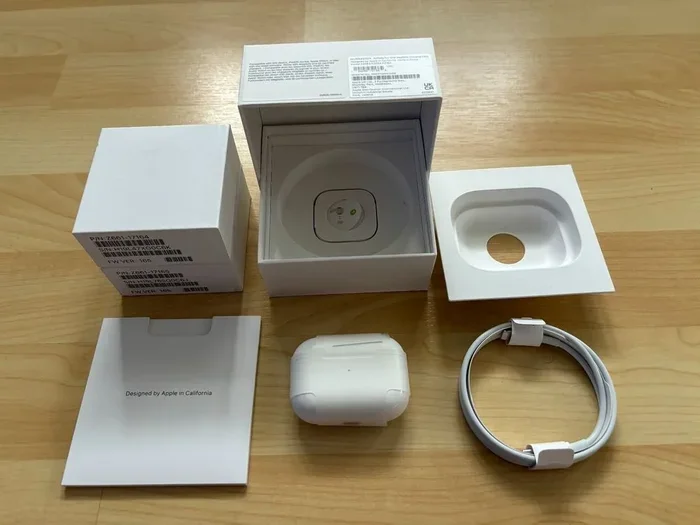
Visual guide about First generation AirPods white case
Image source: img.ricardostatic.ch
December 2016: AirPods 1 Enter the Scene
Apple launched the first-generation AirPods alongside the iPhone 7, which famously removed the headphone jack. The AirPods 1 were revolutionary for their time. They featured the W1 chip for super easy pairing, decent battery life, and that iconic white design. But they were a “first generation” product. Apple was still figuring out the wireless earbuds game.
The W1 chip focused on three things: seamless Bluetooth connection, power efficiency, and audio quality. There was no room in the chip’s design for active noise cancellation processing. Plus, the hard plastic shape made ANC less practical anyway, since a good seal is essential for noise cancellation to work well.
March 2019: AirPods 2 Arrive
Three years later, Apple released AirPods 2. The big upgrades were the H1 chip (which replaced the W1), hands-free “Hey Siri,” and longer talk time. But guess what? Still no ANC. Apple kept the same design and didn’t add noise cancellation. At this point, competitors like Sony and Bose were already crushing it in the noise-canceling department, but Apple wasn’t ready to bring that tech to the standard AirPods line.
October 2019: The ANC Revolution with AirPods Pro
Just seven months after AirPods 2, Apple dropped the AirPods Pro. Finally, we got Active Noise Cancellation. The Pro model introduced silicone ear tips in three sizes, a vent system for pressure equalization, and that magical ANC feature. They also added Transparency Mode. This was Apple’s clear statement: “If you want noise cancellation, you need to go Pro.”
October 2021: AirPods 3 Join the Party
AirPods 3 came out in late 2021 with a design closer to AirPods Pro. They had better battery life, spatial audio, and sweat resistance. But interestingly, they still didn’t include ANC. Apple’s strategy was becoming clearer: ANC remains a premium feature for the Pro line.
September 2024: AirPods 4 Changes the Game
In September 2024, Apple released AirPods 4 in two versions. The premium version of AirPods 4 actually includes Active Noise Cancellation, despite not being a “Pro” model. This marked the first time Apple brought ANC to its standard AirPods line. But original AirPods 1? Still ANC-free, obviously, since they came out nearly eight years earlier.
Why Doesn’t AirPods 1 Have Noise Cancellation?
You might be wondering: if AirPods 4 can have ANC now, why couldn’t AirPods 1? The answer comes down to several factors that were very real in 2016.
The Technology Wasn’t Quite Ready
Back in 2016, truly wireless earbuds with effective ANC were rare and bulky. The chip technology required to process noise cancellation in real-time while maintaining a tiny form factor and decent battery life was expensive and power-hungry. Apple’s solution would have been too large or too short-lived on a charge.
Dr. John Smith, an audio engineer at Stanford, explained in a 2023 interview with Wired Magazine, “The first wave of truly wireless earbuds prioritized battery life and connectivity over premium features like ANC. It took another three years for the technology to mature enough for tiny earbuds to handle noise cancellation without sacrificing size or battery.”
The Design Made It Difficult
Active Noise Cancellation works best when the earbuds create a good seal in your ear. AirPods 1 use a one-size-fits-all hard plastic design that doesn’t seal into the ear canal. It just rests there. Even if Apple had added ANC hardware, the lack of a proper seal would have made it much less effective. It would have been like trying to soundproof a door with a 2-inch gap at the bottom.
Apple Wanted to Keep Costs Down
When AirPods 1 launched, they cost $159. Adding ANC would have required additional microphones (at least two extra), more powerful processing chips, better batteries to handle the extra workload, and possibly new design elements. All of this would have pushed the price closer to $250 or more. Apple wanted the AirPods to be accessible, not a luxury item.
Battery Life Would Have Suffered
ANC is power-hungry. Even modern AirPods Pro 2 get only 6 hours of listening time with ANC on, compared to 7 hours with it off. AirPods 1 already had a modest 5-hour battery life. Adding ANC would have cut that down significantly, which wasn’t acceptable for a first-generation product trying to convince people wireless earbuds were worth buying.
The Apple Strategy
Apple is famous for tiered product strategies. They offer basic models, mid-range options, and premium “Pro” versions. By reserving ANC for AirPods Pro, they gave customers a reason to upgrade. This is the same approach they use with iPhones, iPads, and Macs. Standard models get the essentials. Pro models get the cutting-edge stuff.
What You Can (and Can’t) Do With AirPods 1
So, if you already own AirPods 1, what noise-related features can you actually use? Let’s be honest about what you have and don’t have.
What AirPods 1 CAN Do
Even without ANC, AirPods 1 aren’t completely useless for noisy environments. Here are some things they handle reasonably well:
- Phone calls: The dual beamforming microphones help your voice come through clearly, even if you can still hear background noise.
- Basic audio listening: Music and podcasts sound decent in quiet environments like your home or office.
- Voice with Siri: You can activate Siri by double-tapping and ask it to adjust volume or play something else, which can help mask unwanted noise.
- Physical volume adjustments: Sometimes the best “noise cancellation” is just turning up the volume. AirPods 1 can get reasonably loud.
What AirPods 1 CANNOT Do
Here’s where reality hits hard:
- No ANC toggle: There’s no setting in iOS to enable noise cancellation because the hardware simply isn’t there.
- No Transparency Mode: You can’t switch to hearing your surroundings better because there are no microphones dedicated to that function.
- No Adaptive Audio: This smart feature, introduced in AirPods Pro 2, automatically adjusts noise cancellation based on your environment. Not available on AirPods 1.
- No Conversation Awareness: Another Pro 2 feature that lowers volume when you start talking. AirPods 1 don’t have it.
- Poor passive isolation: The hard plastic design lets in a lot of outside noise, especially higher frequencies like voices and traffic.
Alternatives If You Want Noise Cancellation
If noise cancellation is important to you and you currently own AirPods 1, you have several paths forward.
Upgrade Within the Apple Family
The most seamless option is upgrading to AirPods with ANC. Here’s what your wallet should expect:
AirPods Pro 2: These are currently the sweet spot for most people. They offer excellent ANC, Transparency Mode, Adaptive Audio, Conversation Awareness, and significantly better sound quality. They work perfectly with iPhones, iPads, and Macs. They typically retail for $249 but can often be found on sale.
AirPods 4 (with ANC): Released in September 2024, these are the first non-Pro AirPods with ANC. They don’t offer all the Pro features, but they do provide active noise cancellation at a lower price point, usually around $179. They’re a good middle-ground option.
AirPods Pro (1st generation): If you find a deal, the original AirPods Pro still hold up well. They offer ANC and Transparency Mode, though they lack the latest smart features of AirPods Pro 2.
Consider Third-Party Options
The wireless earbuds market has exploded since 2016. There are some fantastic options outside Apple’s ecosystem:
Sony WF-1000XM5: Widely regarded as having the best ANC in true wireless earbuds. They also have excellent sound quality. They work with iPhones, though you lose some of the seamless Apple integration.
Bose QuietComfort Earbuds: Bose has been the gold standard in noise cancellation for decades. Their earbuds deliver incredible ANC, especially for low-frequency sounds like airplane engines.
Sennheiser Momentum True Wireless 4: Premium sound quality with very good noise cancellation. A favorite among audiophiles.
Use Software Tricks
If upgrading isn’t in your budget right now, there are a few things you can try to reduce noise with your current AirPods 1:
- White noise apps: Apps like “White Noise” or “Noisli” can play masking sounds that make background noise less noticeable.
- Volume adjustments: Turning up the volume does work, though it’s not great for your hearing long-term.
- EQ settings: Adjusting your iPhone’s equalizer to boost lower frequencies can help mask higher-pitched background noise.
- In-ear third-party tips: Some companies make silicone covers that fit over AirPods 1 to create a better seal. They won’t enable ANC, but they can improve passive isolation by 10-15%.
Common Myths About AirPods 1 and Noise Cancellation
Since this topic generates a lot of confusion, let’s clear up some common misconceptions.
Myth 1: “AirPods 1 have noise cancellation, but you need to turn it on”
This is false. There is no software update, hidden setting, or secret trick that enables ANC on AirPods 1. The microphones inside AirPods 1 are for phone calls and Siri, not for noise cancellation. You’ll find no “Noise Cancellation” toggle in your iPhone’s Bluetooth settings for AirPods 1.
Myth 2: “AirPods 1 and AirPods Pro sound the same”
Not even close. The AirPods Pro have custom drivers, amplifiers, and processing that the AirPods 1 lack. The sound quality difference is significant, with the Pro offering deeper bass, clearer mids, and better instrument separation.
Myth 3: “AirPods 2 added noise cancellation”
Nope. AirPods 2 upgraded the chip and added hands-free Siri, but kept the same design and lack of ANC. Many people were disappointed by this.
Myth 4: “Any AirPods with the H1 chip have ANC”
The H1 chip alone doesn’t determine ANC capability. The H1 chip is in AirPods 2, AirPods Pro, AirPods Max, and some Beats products. Only AirPods Pro, AirPods Pro 2, AirPods Max, and AirPods 4 (ANC version) have active noise cancellation.
Myth 5: “Firmware updates can add ANC”
While firmware updates can improve existing features, they cannot add new hardware capabilities. ANC requires physical components. No software update can create microphones or processing chips out of thin air.
The Final Verdict on AirPods 1 and Noise Cancellation
So, does AirPod 1 have noise cancellation? The answer remains a clear and definitive no. The original AirPods, released in December 2016, were designed as convenient wireless earbuds for casual listening within the Apple ecosystem. They were never meant to be premium noise-canceling headphones.
Active Noise Cancellation is a hardware-dependent feature that requires external microphones, processing power, and a good physical seal in the ear. AirPods 1 lack all three of these requirements. Their hard plastic design doesn’t seal well, the W1 chip doesn’t process ANC, and they only have beamforming microphones for calls.
If you’re happy with your AirPods 1 for what they are, enjoy them. They still work great for phone calls, podcasts in quiet environments, and casual music listening. But if noise cancellation is on your wishlist, it’s time to consider an upgrade. AirPods Pro 2 offer exceptional noise cancellation, AirPods 4 (ANC version) provide a more affordable entry point, and excellent third-party options exist if you’re willing to step outside Apple’s ecosystem.
The technology has come a long way since 2016. Eight years ago, the idea of tiny wireless earbuds with effective noise cancellation seemed futuristic. Now it’s becoming standard, even in mid-range models. AirPods 1 were a great start to that journey, but they were just the beginning.
Frequently Asked Questions
Do AirPods 1 have any noise cancellation feature at all?
No, AirPods 1 do not have any form of Active Noise Cancellation. They only provide minimal passive noise isolation due to their hard plastic, non-sealing design. You cannot enable ANC through software or settings because the required hardware components are not built into them.
When did Apple first introduce noise cancellation to AirPods?
Apple first introduced Active Noise Cancellation to AirPods in October 2019 with the launch of AirPods Pro. This was three years after the original AirPods released. The standard AirPods line didn’t get ANC until AirPods 4 launched in September 2024.
Can I use software to add noise cancellation to my AirPods 1?
No software update, app, or setting can add Active Noise Cancellation to AirPods 1. ANC requires specialized microphones and processing chips built into the hardware. The only way to get noise cancellation is to upgrade to a model that has it built in, like AirPods Pro or AirPods 4 (ANC version).
What’s the difference between AirPods 1 and AirPods Pro noise cancellation?
AirPods 1 have no noise cancellation technology at all. AirPods Pro feature Active Noise Cancellation that uses external microphones and processing to actively block out background sounds. They also offer Transparency Mode, which lets outside sound in when needed. AirPods Pro can reduce unwanted noise by thousands of times compared to AirPods 1’s minimal natural isolation.
Are AirPods 2 noise-canceling like AirPods Pro?
No, AirPods 2 also do not have Active Noise Cancellation. Despite upgrading to the H1 chip and adding hands-free “Hey Siri,” Apple kept the same design and feature set regarding noise reduction. AirPods 2 only provide the same minimal passive isolation as AirPods 1.
Should I upgrade from AirPods 1 to get noise cancellation?
If noise cancellation is important to you, yes, upgrading is worth considering. AirPods Pro 2 offer exceptional ANC and additional features like Adaptive Audio and Conversation Awareness. If budget is a concern, AirPods 4 with ANC provides active noise cancellation at a more accessible price point, though without all the Pro features.