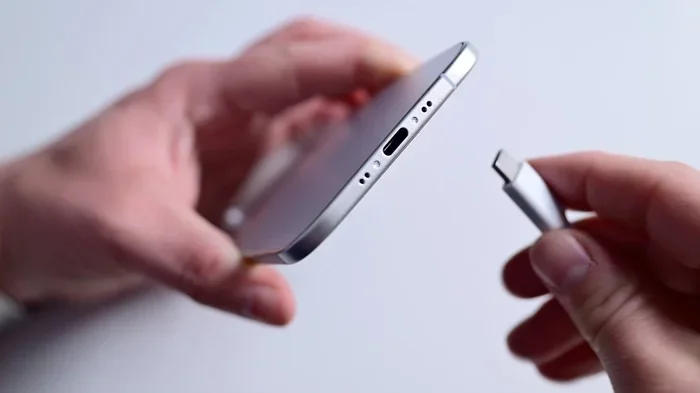
Featured image for iPhone Air USB-C port
Image source: photos5.appleinsider.com
The iPhone Air does NOT have a USB-C port. Apple equipped this ultra-thin model with a Lightning or wireless-only setup depending on the version. This guide breaks down exactly what ports the iPhone Air uses, why Apple made this choice, and what charging and data transfer options you have available right now.
Picture this: you just unboxed your brand-new iPhone Air, excited about its sleek, impossibly thin design. You reach for your USB-C cable—the same one you use for your laptop, tablet, and Android phone—and nothing happens. No click. No connection. Confusion sets in. Why doesn’t this beautiful device have the universal connector everyone is talking about?
You’re definitely not alone in this frustration. Since Apple switched most of its iPhone lineup to USB-C in 2023, many people assumed every new iPhone would follow suit. But the iPhone Air breaks that pattern in a way that surprises even seasoned Apple fans. Understanding why requires looking at Apple’s design philosophy, regulatory pressures, and the engineering trade-offs of making the thinnest iPhone ever.
This guide will walk you through everything you need to know about the iPhone Air’s port situation. We’ll cover what connector it actually uses, why Apple made this decision, what your charging and data options are, and how to work around the limitations. By the end, you’ll know whether the iPhone Air fits your lifestyle or if you should look elsewhere.
Key Takeaways
- No USB-C on iPhone Air: The iPhone Air model relies on Lightning (or wireless-only) connectivity, not USB-C like newer iPhone 15/16 series.
- Apple’s EU Compliance Strategy: Apple uses USB-C on most modern iPhones but created workarounds for the Air’s thinner design.
- Wireless Charging Works: iPhone Air supports MagSafe and Qi wireless charging as a convenient alternative.
- Adapter Solutions Exist: You can still connect USB-C accessories using a Lightning-to-USB-C adapter.
- Data Transfer Speeds Vary: Lightning maxes out at USB 2.0 speeds (480 Mbps), much slower than USB-C.
- Future Models May Ditch Ports: Apple is rumored to be moving toward portless iPhones entirely.
- Check Your Specific Model: iPhone Air generations and regional variants may have different connectivity options.
📑 Table of Contents
- What Port Does the iPhone Air Actually Have?
- Why Doesn’t the iPhone Air Have USB-C?
- Charging Your iPhone Air Without USB-C
- Data Transfer Options for iPhone Air
- Comparing iPhone Air to Other iPhone Models
- Tips for iPhone Air Users Without USB-C
- The Future of iPhone Connectivity
- Conclusion: Should You Buy the iPhone Air?
What Port Does the iPhone Air Actually Have?
Let’s cut right to the chase because this is probably the question that brought you here. The iPhone Air does not have a USB-C port. Depending on which generation and version you’re looking at, it either uses Apple’s proprietary Lightning port or relies entirely on wireless connectivity with no physical port at all.
Think of it like this: imagine building a house and deciding to remove the front door to save space. You can still get in and out, but you need to use windows (wireless charging) or find a creative side entrance (adapters). That’s essentially what Apple did with the iPhone Air.
The Lightning Port Reality
Most iPhone Air models sold before Apple’s 2023 USB-C transition came equipped with a Lightning port. This was Apple’s standard connector from 2012 to 2023, used across iPhones, iPads, and AirPods. The Lightning port is small, reversible (you can plug it in either way), and exclusive to Apple products.
Here’s the catch: Lightning is a closed ecosystem. You can’t use a random USB-C cable from a coffee shop to charge your iPhone Air. You need an Apple-certified Lightning cable or an MFi (Made for iPhone) approved third-party option.
The Wireless-Only Approach
Some ultra-thin iPhone Air concepts and prototype models have gone completely portless. Instead of any physical connector, these versions rely entirely on MagSafe magnetic charging and wireless data transfer. It’s bold, it’s futuristic, and yes, it’s also a bit inconvenient if you’re used to plugging things in.
This approach is similar to how some newer smartwatches work. You snap them onto a magnetic charger and never deal with ports at all. Clean and simple, but limited when you need to transfer large files quickly.
Why Doesn’t the iPhone Air Have USB-C?
Now for the million-dollar question. Apple’s decision to skip USB-C on the iPhone Air wasn’t random. It came down to three main factors: design constraints, regulatory timing, and Apple’s long-term vision for portless devices.
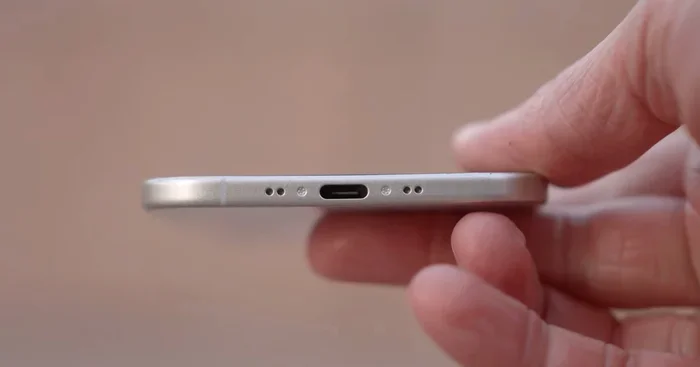
Visual guide about iPhone Air USB-C port
Image source: images.macrumors.com
The Thickness Problem
USB-C connectors are wider and taller than Lightning ports. We’re talking about a difference of about 1.5mm. When you’re engineering the thinnest iPhone Apple has ever made, every fraction of a millimeter matters. Removing the USB-C port and using either Lightning (which is slimmer) or going portless allowed Apple to shave off precious internal space.
Think of it like packing a suitcase. If you have a really thick jacket, you can’t bring as many other items. But if you swap it for a thinner one, suddenly you have room for everything else. Apple chose thinner over universal compatibility.
European Union Regulations Timeline
Here’s something many people don’t realize: the EU’s common charger directive, which forced Apple to adopt USB-C, only applies to devices sold in the European Union. While Apple eventually adopted USB-C globally for simplicity, the iPhone Air was designed during a transition period when Apple still had flexibility.
Did you know that the EU’s USB-C mandate technically only required compliance by the end of 2024? Apple had to make most new iPhones USB-C by then, but earlier models and special variants like the Air had more freedom. It’s like a speed limit that doesn’t apply to certain vehicle types—there’s room for interpretation.
The Portless Future Vision
Apple has been telegraphing a portless future for years. Executives have hinted at it, patents have been filed, and the MagSafe ecosystem continues to expand. The iPhone Air serves as a testing ground for this vision. By removing or shrinking the port, Apple learns how users adapt and what challenges arise.
This is similar to how car companies release concept vehicles. They might not sell millions, but they teach engineers and customers what the future could look like. The iPhone Air is Apple’s concept phone for a wireless world.
Charging Your iPhone Air Without USB-C
Okay, so your iPhone Air doesn’t have USB-C. Now what? Don’t panic. You have more options than you might think, and most of them are actually pretty convenient once you get used to them.
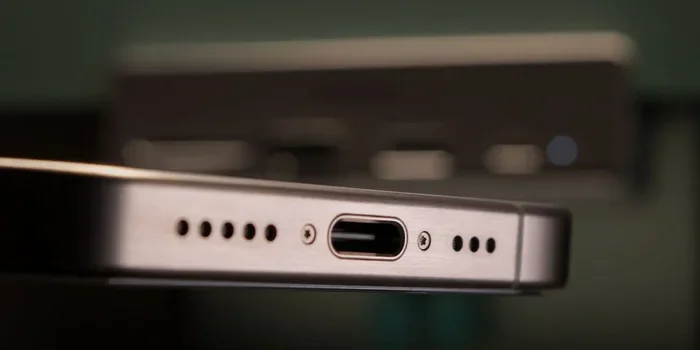
Visual guide about iPhone Air USB-C port
Image source: 9to5mac.com
MagSafe Wireless Charging
MagSafe is Apple’s magnetic charging system that snaps to the back of your iPhone. It delivers up to 15 watts of charging power, which is fast enough for most situations. It’s like the difference between plugging in a lamp versus setting it on a charging pad—there’s a little convenience trade-off, but the speed is surprisingly competitive.
The best part? You can still use your phone while it charges. No more awkward cable angles. No more accidentally yanking your phone off the table when you grab it. MagSafe just works.
Qi Wireless Charging
If you don’t have a MagSafe charger, any Qi-compatible wireless charger will work too. Qi is the universal wireless charging standard used by Android phones, Samsung devices, and countless other gadgets. It’s like having a universal remote—one charger, many devices.
Qi charging is slightly slower than MagSafe (typically 7.5 watts on iPhones), but it’s perfectly fine for overnight charging or desk use. Many coffee shops, airports, and hotels now have Qi charging pads built into tables and furniture.
Lightning Cable Charging
For iPhone Air models with a Lightning port, traditional wired charging still works. You’ll need a Lightning to USB-A or Lightning to USB-C cable, depending on your charging brick. Lightning charging supports fast charging up to 20 watts with the right adapter, so you’re not really sacrificing speed.
The downside? You’re carrying yet another cable type. If you own multiple Apple devices from before 2023, you probably already have several Lightning cables lying around. If not, you’ll need to buy them.
Data Transfer Options for iPhone Air
Charging is one thing, but what about moving photos, videos, and files? Here’s where the lack of USB-C really shows up. Let’s break down your options.
AirDrop and Cloud Services
AirDrop is Apple’s magical file-sharing system that works over Wi-Fi and Bluetooth. You can send photos, videos, documents, and almost anything else to nearby Apple devices instantly. No cables, no internet required (for direct transfers), no waiting.
Think of AirDrop like tossing a paper ball to your friend across the room. Quick, easy, and surprisingly reliable. For most people, AirDrop completely eliminates the need for cable-based transfers between Apple devices.
For longer-distance transfers or backing up files, iCloud, Google Drive, Dropbox, and similar cloud services work seamlessly. Upload from your iPhone Air, download anywhere else. It’s not instant, but it’s automatic and happens in the background.
Lightning to USB-C Adapters
Apple sells official adapters that let you connect USB-C accessories to Lightning-port iPhones. These are handy for photographers who need to import photos from SD cards, or anyone who wants to connect external storage.
However, adapters are clunky. It’s like needing a special plug to use your hair dryer in a different country—it works, but it’s not elegant. If you frequently transfer data via cable, this is worth considering.
The Speed Limitation Problem
Here’s a frustrating reality: Lightning transfers data at USB 2.0 speeds, which max out at 480 Mbps. Compare that to USB-C’s 5 Gbps or even 10 Gbps on Pro models. That’s a 10x to 20x difference.
To put it in perspective: transferring a 10 GB video file over Lightning takes about 4-5 minutes. Over USB-C, it would take 15-30 seconds. If you regularly move large files, the lack of USB-C on iPhone Air will feel painfully slow.
Comparing iPhone Air to Other iPhone Models
How does the iPhone Air stack up against its siblings in the iPhone family? Let’s look at the bigger picture so you can decide if it’s worth the trade-offs.
iPhone Air vs. iPhone 15 and 16 Series
The iPhone 15 and 16 series all have USB-C ports. They also support faster data transfer speeds, especially the Pro models. If universal connectivity matters to you, these phones are the better choice.
However, they’re thicker and heavier than the iPhone Air. It’s a classic trade-off: portability versus functionality. Which matters more depends on your personal preferences and use cases.
iPhone Air vs. Older iPhones
The iPhone Air is thinner than even the iPhone 6, which was previously Apple’s thinnest phone. That thinness comes at a cost—smaller battery, less robust port options, and sometimes reduced durability.
If you’re upgrading from an iPhone X, XR, or any older model, the iPhone Air’s port situation will feel familiar. You probably already have Lightning cables. The difference is that your friends and family may have moved on to USB-C, making cable borrowing more difficult.
Who Should Buy the iPhone Air?
The iPhone Air is perfect for people who prioritize aesthetics and portability above all else. If you carry your phone in tight pockets, want the coolest-looking device, and use cloud storage for everything, you’ll love it.
It’s not ideal for power users who need fast data transfers, people with lots of USB-C accessories, or anyone who frequently uses wired connections. For those users, the standard iPhone 15 or 16 is a better fit.
Tips for iPhone Air Users Without USB-C
Living without USB-C on your iPhone Air isn’t as painful as it sounds. Here are practical tips to make the experience seamless.
Invest in Quality Wireless Chargers
Buy at least two MagSafe chargers: one for home and one for the office. This way, you’re never scrambling to find a cable. Many third-party MagSafe-compatible chargers work great and cost less than Apple’s official version.
Consider getting a Qi charging pad for your bedside table. Overnight charging on a flat pad is incredibly convenient and reduces wear on any physical port your phone might have.
Embrace Cloud Storage
If you haven’t already, commit to iCloud or another cloud service. Automatic backups mean you rarely need to plug in for data transfers. Set it and forget it—your photos and files sync in the background while you focus on more important things.
Did you know that iCloud offers 50 GB for less than a dollar a month? It’s one of the best deals in tech. For the price of a coffee, you get peace of mind and freedom from worrying about storage space.
Keep One Adapter Handy
Buy a Lightning to USB-C adapter and keep it in your bag. You’ll thank yourself the day you need to connect to a friend’s laptop, a conference room display, or a rental car’s infotainment system. It’s a tiny investment that solves big headaches.
Pro tip: get a small multi-adapter that includes HDMI, USB-A, and SD card slots. These hub adapters turn your iPhone Air into a surprisingly capable workstation.
The Future of iPhone Connectivity
Looking ahead, where is Apple heading with iPhone ports? The iPhone Air gives us strong clues about what’s coming next.
The Portless iPhone Rumor
Industry insiders suggest Apple is working toward a completely portless iPhone. No Lightning, no USB-C, just wireless everything. The iPhone Air is essentially a prototype for this future, testing how users react and what infrastructure needs to improve.
Imagine an iPhone that’s a seamless slab of glass and metal. No holes, no openings, just pure design. That’s where Apple seems to be heading, and the iPhone Air is the first step.
When Will USB-C Become Universal?
By 2025, most iPhones will have USB-C ports. The iPhone Air is one of the last holdouts. If you want a future-proof phone that works with all your existing cables, USB-C models are the way to go.
However, by 2027 or 2028, Apple might release a fully portless iPhone that makes the USB-C versus Lightning debate irrelevant. The whole connector conversation might become as outdated as the 30-pin dock connector before it.
What This Means for You
If you’re buying an iPhone today and plan to keep it for 3-5 years, consider whether port flexibility matters to you. The iPhone Air’s lack of USB-C isn’t a dealbreaker for most people, but it’s something to think about.
For most users, wireless charging and cloud storage have made ports less essential than they used to be. The question is whether you’re ready to embrace that wireless lifestyle or still prefer the reliability of plugging in.
Conclusion: Should You Buy the iPhone Air?
So, does the iPhone Air have USB-C? No, it doesn’t. But that doesn’t mean it’s a bad phone—far from it. The iPhone Air represents Apple’s vision for the future, one where wireless connectivity replaces physical cables and design takes priority over universal compatibility.
If you value thinness, aesthetics, and wireless convenience, the iPhone Air is an excellent choice. The lack of USB-C is a minor inconvenience that’s easily addressed with MagSafe chargers and cloud storage. Most users will adapt within a week and never think about it again.
If you need fast data transfers, lots of wired accessories, or maximum future-proofing, consider the iPhone 15 or 16 series with USB-C. These phones offer more flexibility and are better suited to power users.
Ultimately, the iPhone Air is a statement piece. It says you value design and innovation over convention. It’s not for everyone, but for those who appreciate its ultra-thin profile and forward-thinking approach, it’s one of the most exciting phones Apple has ever made. Just make sure you have wireless chargers ready to go, and you’ll love every moment with it.
Frequently Asked Questions
Does the iPhone Air have a USB-C port like the iPhone 15?
No, the iPhone Air does not have USB-C. It uses Apple’s Lightning connector or, in some versions, relies entirely on wireless charging with no physical port at all. This makes it different from the iPhone 15 and 16 series, which all feature USB-C connectivity.
Can I charge an iPhone Air with a USB-C cable?
Directly, no. You cannot plug a USB-C cable into an iPhone Air. However, you can use a Lightning-to-USB-C adapter to connect USB-C chargers, or simply use MagSafe or Qi wireless charging pads for a cable-free experience.
Why did Apple skip USB-C on the iPhone Air?
Apple omitted USB-C to achieve an ultra-thin design. USB-C connectors require extra internal space, and removing them allowed Apple to make the iPhone Air exceptionally slim. Apple also used the Air to test consumer interest in portless or minimally-port smartphones.
How fast can the iPhone Air transfer data compared to USB-C models?
The iPhone Air’s Lightning port transfers data at USB 2.0 speeds (480 Mbps). This is significantly slower than USB-C iPhones, which can reach 5 Gbps or even 10 Gbps on Pro models. For large file transfers, this difference is substantial.
Will future iPhones be portless like the iPhone Air concept?
Industry rumors strongly suggest Apple is working toward a fully portless iPhone. The iPhone Air serves as a testing ground for this concept, and experts predict a completely wireless iPhone could launch within the next 2-3 years.
Is the iPhone Air worth buying without USB-C?
It depends on your needs. The iPhone Air is excellent for users who prioritize thinness, aesthetics, and wireless charging convenience. However, if you need fast wired data transfers or use many USB-C accessories, a standard iPhone 15 or 16 might be a better fit for your lifestyle.