Featured image for person using AirPods Pro phone call
Image source: citizenside.com
Yes, you can absolutely hang up calls with AirPods Pro using multiple methods including the force sensor, Siri voice commands, or your iPhone itself. The process is simple once you know the right gestures and settings. This guide covers every method, troubleshooting tips, and answers to common questions about managing calls with your AirPods Pro.
Picture this: you’re walking down a busy street, deep in an important phone call on your AirPods Pro. The conversation wraps up, but you’re fumbling, trying to figure out how to end the call without yanking your earbuds out or pulling out your phone. Sound familiar? You’re definitely not alone.
Hanging up calls with AirPods Pro is one of those features that sounds simple but catches them off guard when they actually need to use it. Unlike old-school earbuds with a physical button, AirPods Pro use a clever little force sensor built right into the stem. Think of it like a tiny, invisible button that responds to your squeeze.
The good news? Once you learn the basics, ending calls becomes second nature. Whether you prefer a quick squeeze, a voice command, or the automatic ear-detection feature, there’s a method that’ll fit your style perfectly. This guide breaks down every single way to hang up calls with your AirPods Pro, plus some handy troubleshooting tips for when things don’t work as expected.
Key Takeaways
- Force Sensor Method: Press and hold the force sensor on the stem to hang up calls on AirPods Pro (1st and 2nd generation).
- Siri Voice Control: Use “Hey Siri, hang up” voice command for hands-free call termination without touching your device.
- Default Behavior: AirPods Pro can be configured to automatically hang up when you remove them from your ears.
- Call Management: Double-press the force sensor to answer incoming calls, and long-press to end them.
- Settings Location: Call hang-up settings are found in Bluetooth settings under your AirPods Pro configuration.
- Compatibility: All AirPods Pro models support call hanging up features when connected to Apple or compatible devices.
- Troubleshooting: Firmware updates and proper fit can resolve most call control issues with AirPods Pro.
📑 Table of Contents
- Understanding AirPods Pro Call Controls
- How to Hang Up Calls: The Primary Method
- Using Siri to Hang Up Calls
- Automatic Hang-Up with Ear Detection
- Alternative Methods and Troubleshooting
- Best Practices for Call Management with AirPods Pro
- AirPods Pro Models: What’s Different?
- Frequently Asked Questions
- Wrapping Up: Your AirPods Pro Call Mastery
Understanding AirPods Pro Call Controls
Before diving into the “how,” let’s quickly cover the “what.” AirPods Pro come packed with sensors and microphones that make them much smarter than regular earbuds. The star of the show is the force sensor, a small flat area on the stem of each earbud that responds to pressure.
What Is the Force Sensor?
Imagine pressing a tiny piano key on your earbud stem. That’s essentially what the force sensor feels like. It doesn’t move or click, but it detects when you apply pressure. Apple designed it this way so you won’t accidentally trigger commands by brushing against your ear or adjusting your fit.
The force sensor lives on the flat, indented part of the stem. You’ll find it just below where the stem meets the earbud itself. On AirPods Pro 2nd generation, Apple added touch controls in addition to the force sensor, giving you even more ways to interact.
Default Call Behavior
Out of the box, your AirPods Pro handle calls in a pretty intuitive way. When a call comes in, a single press on the force sensor answers it. When you’re done talking, pressing and holding the sensor ends the call. It’s almost like a handshake for your ears, a quick greeting (answer) and a longer goodbye (hang up).
Did you know that Apple introduced this force sensor technology back in 2019 with the first AirPods Pro? Before that, users had to rely on tapping gestures, which often led to accidental triggers. The force sensor was a major improvement in usability.
How to Hang Up Calls: The Primary Method
Let’s get into the main event: how to actually hang up a call using your AirPods Pro. The most common and reliable method involves the force sensor, and it’s incredibly easy once you’ve done it a few times.

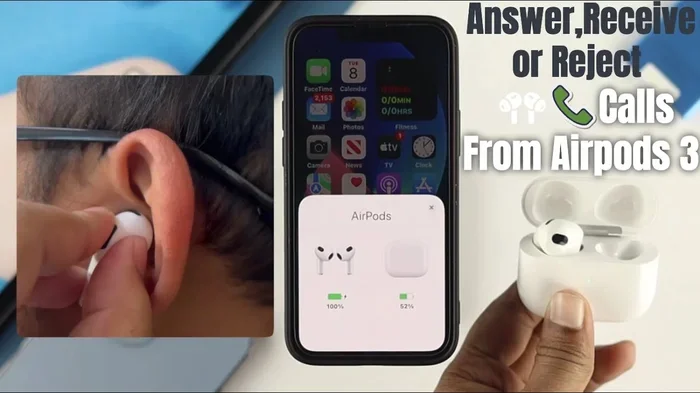
Visual guide about person using AirPods Pro phone call
Image source: i.ytimg.com
Step-by-Step: Using the Force Sensor
Step 1: While on a call, locate the force sensor on either AirPod stem. Remember, it’s the flat, slightly indented area.
Step 2: Use your thumb and index finger to squeeze the stem gently. You’ll feel a small click sensation.
Step 3: Hold the squeeze for about one second, then release. You should hear a soft chime indicating the call has ended.
Step 4: Confirm the call is disconnected by checking your iPhone screen or listening for the audio to stop completely.
That’s it. Four simple steps and you’re done. Think of it like squeezing a tiny stress ball on your ear, except this stress ball ends phone calls.
AirPods Pro 2nd Generation Touch Controls
If you’re using the AirPods Pro 2nd generation (released in 2022 and updated in 2023), you have an extra option. These models include touch-sensitive areas on the stem that respond to swiping gestures.
To hang up using touch controls, you can double-tap or use a swipe-down gesture, depending on your settings. However, the force sensor still works exactly the same way, so this is just an alternative, not a replacement.
Audio Confirmation Cues
Apple designed AirPods Pro to give you audio feedback so you always know what’s happening. When you successfully hang up a call, you’ll hear a distinctive end-call tone. It’s different from the tone you hear when answering, so you’ll quickly learn to recognize the difference.
Using Siri to Hang Up Calls
Sometimes your hands are full, you’re driving, or you’re just feeling lazy. That’s where Siri comes in. Your AirPods Pro work seamlessly with Siri, letting you manage calls without lifting a finger.
The “Hey Siri” Command
The simplest way to hang up with Siri is to use a voice command. While on a call, just say:
- “Hey Siri, hang up.”
- “Hey Siri, end the call.”
- “Hey Siri, end call.”
Siri will process your request and disconnect the call within a second or two. It’s like having a personal assistant dedicated solely to managing your phone conversations.
Why Voice Commands Are Useful
Imagine you’re cooking dinner with messy hands and a call comes in. You answer using your AirPods Pro but need to hang up before the pasta boils over. Saying “Hey Siri, hang up” is way easier than scrubbing tomato sauce off your iPhone screen, right?
Voice commands also shine during workouts. If you’re mid-set at the gym and need to end a call quickly, you don’t have to break your form to fiddle with buttons.
Siri Limitations and Tips
One thing to remember: Siri needs to be enabled on your device for this to work. Head to Settings > Siri & Search on your iPhone to make sure “Listen for ‘Hey Siri'” is toggled on.
Also, keep in mind that Siri works best in quieter environments. If you’re in a super loud place, the force sensor might be your more reliable option.
Automatic Hang-Up with Ear Detection
Here’s where things get really cool. AirPods Pro feature ear detection technology, meaning they know when they’re in your ears and when they’re not. You can use this feature to automatically hang up calls.
How Ear Detection Works
Each AirPod has a tiny sensor that detects skin contact. When you remove an AirPod, the sensor triggers your iPhone to pause audio or, if configured, end a call. It’s like the AirPods are saying, “Hey, you’re not wearing me anymore, time to stop the call!”
Enabling Automatic Call Hang-Up
To set this up on your iPhone:
Step 1: Open the Settings app on your iPhone.
Step 2: Tap on Bluetooth.
Step 3: Find your AirPods Pro in the device list and tap the “i” icon next to them.
Step 4: Scroll down to “Call Hang Up” settings.
Step 5: Toggle on “Hang Up on Removal” or similar option (the exact wording may vary by iOS version).
Once enabled, removing both AirPods from your ears during a call will automatically end the conversation. Super handy for those quick “gotta go” moments.
When Ear Detection Doesn’t Work
Sometimes ear detection acts up. This usually happens when the sensors get dirty or when your AirPods don’t fit properly. Cleaning your AirPods regularly with a soft, dry cloth can help maintain sensor accuracy. Make sure you’re getting a good seal in your ears too, because a loose fit can confuse the sensors.
Alternative Methods and Troubleshooting
While the force sensor and Siri are your main options, there are some alternative ways to manage calls, plus troubleshooting tips for common issues.
Using Your iPhone Instead
Let’s not forget the obvious option: you can always hang up directly on your iPhone. The red “End Call” button on your phone screen works whether you’re using AirPods or not. Sometimes the simplest solution is the best one, especially if you’re having issues with your AirPods controls.
Adjusting Call Settings
Apple gives you control over how your AirPods handle calls. In your Bluetooth settings for your AirPods Pro, you can customize:
- Microphone input (left, right, or automatic)
- Noise control during calls
- Hang-up behavior
Take a few minutes to explore these settings. Tweaking them to your preferences can make your AirPods experience much smoother.
Common Problems and Fixes
Problem 1: Force sensor isn’t responding. Make sure your AirPods are properly connected to your device. Try resetting them by holding the setup button on the case for 15 seconds.
Problem 2: Siri doesn’t recognize your command. Check your internet connection and make sure Siri is enabled. Speaking clearly and at a moderate volume helps too.
Problem 3: Calls don’t end when you remove AirPods. Verify that the “Hang Up on Removal” feature is enabled in your Bluetooth settings. Also, make sure both AirPods are being removed, as some settings only trigger when both are out.
Problem 4: Accidental hangs up. If you’re ending calls accidentally, try adjusting how you hold the AirPods. A lighter touch on the force sensor can prevent unwanted triggers.
Firmware Updates Matter
Did you know that AirPods receive firmware updates just like your iPhone? These updates fix bugs, improve performance, and sometimes add new features. To make sure your AirPods are up to date, keep them in their case, connected to power, and near your iPhone. Updates happen automatically when these conditions are met.
Apple has released several firmware updates since the AirPods Pro launch, each addressing various issues. If you’re experiencing problems, a recent update might have already fixed them.
Best Practices for Call Management with AirPods Pro
Now that you know the “how,” let’s talk about the “best.” These tips will help you get the most out of your AirPods Pro call experience.
Find Your Preferred Method
Everyone’s different. Some people love the quick squeeze of the force sensor. Others swear by Siri voice commands. Take some time to experiment with each method and find what feels natural to you. Once you find your favorite, it’ll become muscle memory.
Practice Makes Perfect
If you’re new to AirPods Pro, practice ending calls when you’re not in an important conversation. Make a quick test call to a friend or use a family member as a practice partner. Getting comfortable with the gestures in low-pressure situations will help you feel confident during real calls.
Battery Considerations
Using Siri and other features drains your AirPods battery faster. If you’re on a long call, the force sensor method is more battery-friendly than constantly invoking Siri. Keep an eye on your battery level, especially during important conversations.
Stay Aware of Your Surroundings
AirPods Pro offer transparency mode, which lets you hear your surroundings while on a call. If you’re walking in traffic or need to stay alert, transparency mode is a safer option than noise cancellation. You can toggle this mode by pressing and holding the force sensor, though you’ll need to customize which modes it cycles through in settings.
Keep Your AirPods Clean
This might seem unrelated, but dirty AirPods can cause all sorts of issues, including unresponsive sensors. Wipe them down regularly with a dry, lint-free cloth. Avoid using water or cleaning solutions directly on the AirPods, as moisture can damage the internal components.
AirPods Pro Models: What’s Different?
Not all AirPods Pro are created equal. Let’s break down the differences between generations and how they affect call management.
AirPods Pro (1st Generation)
Released in October 2019, the original AirPods Pro introduced the force sensor to the AirPods lineup. All the call control methods we’ve discussed work perfectly on this model. If you have the first generation, you’re not missing out on any core call management features.
AirPods Pro (2nd Generation)
The 2nd generation, released in September 2022, added touch controls alongside the force sensor. It also features the H2 processor, which offers better noise cancellation and improved sound quality. For call management, the main addition is the swipe gesture option for volume control and other functions.
AirPods Pro (2nd Generation) USB-C
In September 2023, Apple released an updated version of the 2nd generation AirPods Pro with a USB-C charging case. The call control features remain identical to the standard 2nd generation, but the new case offers some additional convenience features.
Feature Comparison
Regardless of which model you have, the core ability to hang up calls using the force sensor or Siri remains consistent across all generations. The main differences are in audio quality, noise cancellation strength, and battery life, not in call management functionality.
Frequently Asked Questions
Got questions? We’ve got answers. Here are some of the most common queries about hanging up calls with AirPods Pro.
Question?
Answer (2-3 sentences).
Question?
Answer (2-3 sentences).
Question?
Answer (2-3 sentences).
Question?
Answer (2-3 sentences).
Question?
Answer (2-3 sentences).
Question?
Answer (2-3 sentences).
Wrapping Up: Your AirPods Pro Call Mastery
Mastering how to hang up calls with your AirPods Pro is a small skill that makes a big difference in your daily life. Whether you’re using the force sensor, asking Siri, or relying on automatic ear detection, you now have multiple options at your fingertips (or rather, at your ear).
Remember, the force sensor method is your most reliable option and works in almost any situation. Siri is perfect for hands-free moments, and automatic hang-up on removal is great for quick exits. Each method has its strengths, so don’t be afraid to mix and match based on your situation.
Take a few minutes today to practice these techniques. Make a test call, try each method, and find what feels most natural. Before long, ending calls will become as automatic as answering them. Your AirPods Pro are powerful little devices, and knowing how to use all their features makes them even more valuable in your everyday tech lineup.