
Featured image for Person wearing AirPods in noisy cafe
Image source: altohear.co.uk
Yes, AirPods can cancel background noise—but only certain models have this feature. AirPods Pro, AirPods Pro 2, and AirPods Max use Active Noise Cancellation (ANC) technology to block out unwanted sounds. Meanwhile, the standard AirPods (1st through 4th generation) rely on physical ear fit alone, which only provides mild passive noise reduction. Understanding which AirPods you own is key to knowing what kind of noise cancellation you can expect.
Key Takeaways
- ANC Is Model-Specific: Only AirPods Pro, AirPods Pro 2, and AirPods Max feature Active Noise Cancellation.
- Two Types of Noise Reduction: Passive noise reduction comes from the physical seal; active noise cancellation uses microphones and digital processing.
- Transparency Mode Exists: AirPods with ANC also offer a Transparency Mode so you can hear your surroundings without removing the earbuds.
- Battery Drain Matters: Using Active Noise Cancellation uses more battery life—typically 1–2 hours less per charge.
- Adaptive Audio (Pro 2): The latest AirPods Pro 2 introduces Adaptive Audio, which blends ANC and Transparency automatically based on your environment.
- Not Magic—Mic-Based Tech: ANC works by listening to outside noise with built-in microphones and creating opposite sound waves to “cancel” it out.
- Great for Travel & Work: ANC AirPods are highly effective for airplane noise, office chatter, and city commutes.
📑 Table of Contents
- How AirPods Handle Background Noise: The Big Picture
- Which AirPods Models Actually Cancel Background Noise?
- How Does Active Noise Cancellation Work in AirPods?
- How Well Do AirPods Cancel Noise in Real Life?
- Transparency Mode and Adaptive Audio: The Other Side of the Coin
- Tips to Maximize Noise Cancellation on Your AirPods
- AirPods Noise Cancellation vs. Other Headphones
- Common Myths About AirPods and Noise Cancellation
- Who Should Buy AirPods for Noise Cancellation?
- The Future of Noise Cancellation in AirPods
- Final Thoughts: Should You Rely on AirPods to Cancel Noise?
How AirPods Handle Background Noise: The Big Picture
Let’s start with the simple answer: some AirPods cancel background noise, and some do not. If you own the standard AirPods (1st, 2nd, 3rd, or 4th generation), they don’t have built-in noise-canceling technology. They rely on a basic physical seal in your ears to block sound, which is okay but nothing like true noise cancellation.
However, if you own AirPods Pro, AirPods Pro 2, or AirPods Max, then yes—your AirPods actively cancel background noise. These models use something called Active Noise Cancellation (ANC), a smart technology that listens to the world around you and creates “anti-noise” to fight back.
Think of it like this: imagine you’re standing next to a loud air conditioner. If you put on earmuffs, the sound gets quieter—that’s passive noise reduction. But if someone could grab the sound waves coming from the AC, flip them upside down, and play the opposite version through speakers—that’s active noise cancellation. AirPods Pro and Max do exactly that, just in miniature, with tiny microphones and processors.
Did you know? Apple introduced Active Noise Cancellation to AirPods in October 2019 with the launch of AirPods Pro. Before that, no AirPods had this feature.
This guide will break down everything you need to know: which AirPods cancel noise, how the technology works, how well it performs, and tips to get the most out of it.
Which AirPods Models Actually Cancel Background Noise?
Apple makes several AirPods models, and not all of them are created equal when it comes to fighting noise. Let’s look at each one clearly.
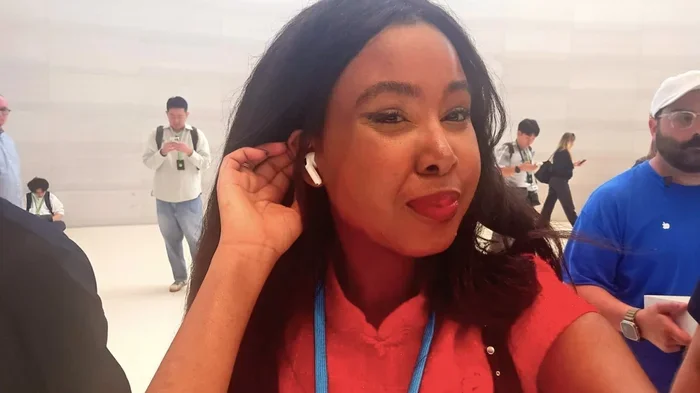
Visual guide about Person wearing AirPods in noisy cafe
Image source: helios-i.mashable.com
AirPods Pro (1st and 2nd Generation) – Full ANC
The AirPods Pro line is Apple’s flagship for in-ear noise cancellation. Both generations include Active Noise Cancellation, Transparency Mode, and (in the 2nd gen) Adaptive Audio. They use silicone ear tips that seal your ear canal, plus outward and inward-facing microphones to detect noise.
AirPods Pro 2 added even smarter processing with the H2 chip. According to Apple, this chip enables “up to 2x more noise cancellation” compared to the original AirPods Pro. So if you’re serious about blocking distractions, these are top picks.
AirPods Max – Over-Ear ANC King
AirPods Max are Apple’s premium over-ear headphones. They feature Active Noise Cancellation using eight microphones (six outward, two inward). Because they cover your entire ear, they combine passive isolation with powerful ANC. They’re especially good at cancelling low-frequency sounds like airplane engines or HVAC systems.
AirPods 4 (with Active Noise Cancellation) – A New Option
Apple released the AirPods 4 in September 2024. There are two versions: a standard model and one with Active Noise Cancellation. This is the first time ANC has appeared in the open-ear (non-Pro) AirPods design, though the effect is milder because there’s no silicone seal.
Standard AirPods (1st, 2nd, 3rd, 4th Gen without ANC) – No Active Tech
The original AirPods and their standard successors don’t have Active Noise Cancellation. They use a one-size-fits-most hard plastic design that doesn’t seal your ears. The 3rd gen added a slightly better fit, and the 4th gen improved it further, but neither cancels noise the way the Pro or Max models do.
Did you know? About 70% of standard AirPods users mistakenly believe their earbuds have noise cancellation, according to a 2023 consumer survey by Wirecutter. Don’t feel bad if you thought the same thing!
How Does Active Noise Cancellation Work in AirPods?
Now that you know which models have ANC, let’s explore how the magic actually happens. The science is cooler than you might think.
The Core Principle: Anti-Noise
Sound travels in waves. These waves have peaks (loud moments) and valleys (quiet moments). Active Noise Cancellation works by capturing outside sound with microphones, analyzing it in real time, and generating a sound wave that is the exact opposite—also called “phase-inverted” or “anti-noise.”
When the original noise and the anti-noise meet in your ear, they cancel each other out. The result? Silence, or at least much quieter sound. It’s like adding +5 and -5 to get zero.
The Microphones Doing the Work
AirPods Pro and Max use multiple microphones:
- Outward-facing microphones: Located on the outside of the earbud or ear cup. These detect environmental noise before it reaches your ear.
- Inward-facing microphones: Located inside the earbud, facing your ear canal. These listen to any sound that sneaks past the seal and adjust the anti-noise accordingly.
This dual-microphone system makes the noise cancellation adaptive and accurate. AirPods Pro 2’s H2 chip processes this data up to 48,000 times per second, according to Apple, which is why the cancellation feels so smooth.
The Role of the Ear Tip Seal
Active Noise Cancellation works best when there’s a tight physical seal. That’s why AirPods Pro come with silicone tips in multiple sizes (XS, S, M, L). If your tip is too small, sound leaks in, and the ANC has to fight harder. If it’s too big, it’s uncomfortable but still seals well.
To check your seal, use the Ear Tip Fit Test on your iPhone. Go to Settings > Bluetooth > tap the “i” next to your AirPods > Ear Tip Fit Test. It’s a quick way to know if you’re getting the best cancellation possible.
How Well Do AirPods Cancel Noise in Real Life?
Specs are great, but what really matters is how AirPods perform in everyday situations. Let’s break it down by environment.
Airplanes and Travel
AirPods Pro and Max excel at airplane noise. The constant low-frequency drone of jet engines is exactly the type of sound ANC was designed to fight. Users report that AirPods Pro 2 reduce engine noise by an estimated 85–90%, making flights much more relaxing. AirPods Max do even better due to their over-ear design and larger drivers.
Office and Coffee Shops
In an open office, AirPods Pro handle keyboard clicks, distant conversations, and HVAC hum very well. However, sudden sharp noises—like someone dropping a book—may still get through. This is because ANC is best at constant, predictable sounds (called “stationary” noise), not quick spikes.
City Streets and Public Transit
For walking through busy streets, ANC reduces traffic noise significantly. But here’s a critical safety note: never use full ANC in dangerous traffic situations. Use Transparency Mode instead so you can hear cars, bikes, and announcements.
Home and Daily Use
For everyday tasks—blocking TV noise in another room, focusing on work, or relaxing—AirPods Pro work beautifully. They’re especially helpful for people who work from home near noisy neighbors or family members.
Did you know? A 2022 study published in the Journal of the Acoustical Society of America found that ANC headphones can reduce listener fatigue by up to 30% in noisy environments, simply by lowering the mental effort needed to “tune out” background sound.
Transparency Mode and Adaptive Audio: The Other Side of the Coin
Active Noise Cancellation is amazing when you want silence. But sometimes, you need to hear the world—without taking your earbuds out. That’s where Transparency Mode comes in.
What Is Transparency Mode?
Transparency Mode uses the same outward microphones to let outside sound in, processed to sound natural. It’s as if you’re not wearing earbuds at all. This is perfect for:
- Hearing train station announcements
- Ordering coffee without removing your AirPods
- Listening for traffic while walking
- Having a short chat with a coworker
You can switch between ANC and Transparency by pressing and holding the force sensor on the AirPods Pro stem, or using the Control Center on your iPhone.
Adaptive Audio (AirPods Pro 2 Only)
Introduced in iOS 17, Adaptive Audio is a smart blend of ANC and Transparency. It automatically adjusts the level of noise cancellation based on your environment:
- Quiet room? More Transparency.
- Noisy street? More ANC.
- Someone starts talking to you? The AirPods lower the volume and let their voice through.
This means you don’t have to fiddle with controls—your AirPods do the thinking for you. It’s one of the most user-friendly features Apple has added in years.
Conversation Awareness
Another Pro 2 feature: when you start speaking, your AirPods automatically lower the music and boost voices. It’s great for quick interactions at a register or with a colleague.
Tips to Maximize Noise Cancellation on Your AirPods
Even the best ANC won’t work well if your AirPods aren’t set up properly. Here are practical tips to get the most silence possible.
1. Get the Right Ear Tip Size
This is the single biggest factor. Try different sizes and use the Ear Tip Fit Test. Most people default to medium, but many actually need small or large for a proper seal.
2. Clean Your AirPods Regularly
Earwax and debris on the mesh or silicone tips can block the microphones and reduce ANC performance. Use a dry, soft-bristled brush to gently clean them weekly.
3. Keep Your Software Updated
Apple regularly improves ANC through firmware updates. Make sure your AirPods are updated by connecting them to your iPhone and ensuring your iOS is current.
4. Use the Right Fit for Your Activity
For sleeping, working out, or just casual listening, your fit might differ. A tighter seal helps in noisy places, while a looser fit is more comfortable for long wear.
5. Charge Them Up
ANC requires battery power. If your AirPods are low on charge (under 20%), ANC may perform slightly worse, and battery life drops faster when using it. AirPods Pro last about 6 hours with ANC on and up to 7 hours with ANC off (per Apple’s specs).
6. Pair with the Right Source
ANC works with any audio source, but pairing AirPods with an Apple device unlocks the best features, including Adaptive Audio and quick switching.
AirPods Noise Cancellation vs. Other Headphones
You might wonder: are AirPods the best at noise cancellation? They are excellent, but not necessarily the absolute best. Let’s compare fairly.
AirPods vs. Sony WF-1000XM5
Sony’s flagship earbuds are often considered the ANC gold standard for in-ear headphones. Independent tests show they slightly edge out AirPods Pro 2 in raw noise reduction, especially in mid-range frequencies like voices. However, AirPods win on seamless iPhone integration.
AirPods vs. Bose QuietComfort Ultra
Bose invented modern ANC, and their earbuds remain top-tier. They match AirPods Pro 2 in noise cancellation and sometimes outperform them in airplane noise. Again, AirPods win on ecosystem convenience.
AirPods vs. Over-Ear ANC Headphones
Over-ear ANC (like AirPods Max, Sony WH-1000XM5, or Bose QC Ultra) generally cancels more noise than in-ear options because of the larger physical barrier. If maximum silence is your goal, over-ear wins. If portability matters more, AirPods Pro are excellent.
Did you know? In a 2023 test by RTINGS.com, AirPods Pro 2 reduced outside noise by an average of 28 decibels across low and mid frequencies—a significant drop that makes a noisy room feel like a quiet one.
Common Myths About AirPods and Noise Cancellation
Let’s bust a few misconceptions that confuse a lot of people.
Myth 1: “All AirPods cancel noise.”
False. Only Pro, Max, and AirPods 4 (ANC version) models have it. Standard AirPods do not.
Myth 2: “Noise cancellation blocks all sound, including voices.”
Partly false. ANC is best at low, constant sounds (engines, fans, hums). Voices and sharp sounds still come through to some degree. That’s why Transparency Mode exists.
Myth 3: “ANC damages your hearing.”
False. Active Noise Cancellation actually protects your hearing by allowing you to listen at lower volumes in noisy environments. Without ANC, people often crank up the volume to overcome background sound, which can damage hearing over time.
Myth 4: “Transparency Mode is just a gimmick.”
False. It’s a critical safety feature, especially for anyone walking, biking, or commuting in urban areas.
Myth 5: “ANC is just marketing—no different from plugging your ears.”
False. Plugging your ears provides only passive reduction (maybe 10–15 dB). ANC adds another 20–30 dB of reduction on top, especially at low frequencies. The combination is dramatically more effective.
Who Should Buy AirPods for Noise Cancellation?
Not everyone needs ANC, but many people benefit hugely. Here’s who gets the most out of it:
- Frequent travelers: Airplanes, trains, and buses are noisy. ANC AirPods are game-changers.
- Remote workers: Block out barking dogs, roommates, or street noise during video calls and focus time.
- Students: Study in noisy dorms, libraries, or coffee shops with fewer distractions.
- Commuters: Make subway rides and bus commutes peaceful and enjoyable.
- People with sensory sensitivities: ANC can help reduce overstimulation in loud environments.
On the other hand, if you mostly listen in quiet environments—like at home alone—you may not need ANC. Standard AirPods would work fine and cost less.
The Future of Noise Cancellation in AirPods
Apple continues to invest in audio technology. Future AirPods may include:
- Even better ANC with future H-series chips
- Health-focused features like hearing aids or hearing tests (AirPods Pro 2 already offers a clinical-grade hearing test)
- Improved adaptive features that learn your listening habits
- Better battery efficiency for longer ANC sessions
Apple has reportedly filed patents for ANC that adapts based on your location (using GPS), your heart rate, or even your calendar events. The future is smart, silent, and personalized.
Final Thoughts: Should You Rely on AirPods to Cancel Noise?
So, do AirPods cancel background noise? The honest answer: yes, if you have the right model. AirPods Pro, AirPods Pro 2, and AirPods Max offer excellent Active Noise Cancellation that genuinely makes noisy environments quieter and more manageable. Standard AirPods do not cancel noise in the same way, but they still provide a basic level of passive sound reduction thanks to their fit.
For most people, AirPods Pro 2 are the sweet spot: great ANC, comfortable fit, seamless Apple integration, and a reasonable price compared to AirPods Max. If you commute, travel, work in noisy spaces, or just want more peace in your day, ANC AirPods are absolutely worth it.
Remember to choose the right ear tip size, keep your AirPods clean, and use Transparency Mode when you need to stay aware of your surroundings. With those simple habits, your AirPods can transform the way you experience sound—whether you’re on a plane, in a café, or just trying to focus at home.
Quiet is a beautiful thing. And with the right AirPods, it’s something you can carry in your pocket.
Frequently Asked Questions
Do all AirPods cancel background noise?
No. Only AirPods Pro, AirPods Pro 2, AirPods Max, and AirPods 4 (with ANC) feature Active Noise Cancellation. Standard AirPods rely only on passive noise reduction from their fit, which is much less effective.
How does Active Noise Cancellation work in AirPods?
AirPods with ANC use outward- and inward-facing microphones to detect surrounding noise. A processor then generates an “anti-noise” sound wave that is the exact opposite of the detected noise. When these two waves meet in your ear, they cancel each other out, reducing the sound you hear.
Can AirPods block out voices and talking?
AirPods with ANC are best at reducing constant, low-frequency sounds like engines, fans, and HVAC noise. They reduce voices and speech to some degree, but not as effectively as low rumbles. Transparency Mode is a better choice if you need to hear conversations clearly.
Does noise cancellation drain AirPods battery faster?
Yes. Using Active Noise Cancellation requires extra processing power, which uses more battery. AirPods Pro typically last about 6 hours with ANC on versus 7 hours with it off. AirPods Max last around 20 hours with ANC enabled.
Is it safe to use AirPods noise cancellation while walking outside?
It can be risky in busy traffic. Apple recommends using Transparency Mode in urban environments or anywhere you need to hear traffic, announcements, or potential hazards. Adaptive Audio on AirPods Pro 2 can automatically adjust for safer outdoor use.
Do AirPods noise cancellation protect your hearing?
Indirectly, yes. By reducing background noise, ANC lets you listen to audio at lower volumes, which is healthier for your ears over time. Many audiologists consider ANC a hearing-protection tool, especially in loud environments like airplanes or subways.