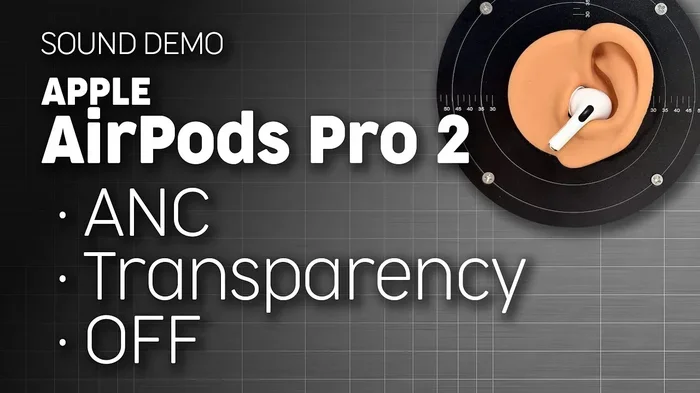
Featured image for AirPods noise cancellation demonstration
Image source: i.ytimg.com
Yes, AirPods do feature noise cancellation, but only certain models include this technology. AirPods Pro (1st, 2nd, and 3rd generation) and AirPods Max use Active Noise Cancellation (ANC) to block external sounds. Standard AirPods (1st-4th generation) only offer passive noise isolation through their physical seal. This guide explains how the technology works, which models have it, and practical tips to maximize your listening experience.
Picture this: you’re sitting on a noisy airplane, the engine droning at full blast. You pop in your earbuds, press a button, and suddenly… silence. Just you and your music. That’s the magic of noise cancellation, and it’s one of the most sought-after features in modern earbuds.
If you’ve been wondering whether AirPods can deliver this experience, you’re in the right place. The answer is yes, but with some important details you should know. Not every AirPods model works the same way. Some have premium noise-canceling tech, while others rely on simpler methods.
Let’s break down everything you need to know. We’ll cover which models have it, how the technology actually works, and tips to get the most out of your listening experience. Think of this as your friendly handbook to understanding AirPods noise cancellation.
Key Takeaways
- Not All AirPods Cancel Noise: Only AirPods Pro (1st, 2nd, 3rd gen) and AirPods Max feature Active Noise Cancellation (ANC). Standard AirPods rely on passive noise isolation only.
- ANC vs. Passive Isolation: Active Noise Cancellation uses microphones and anti-noise frequencies to cancel sound waves, while passive isolation simply blocks sound physically (like earplugs).
- Transparency Mode Exists: AirPods with ANC include a Transparency mode that lets outside sounds in when you need to hear announcements or conversations.
- Battery Drain Considerations: Using noise cancellation reduces battery life. AirPods Pro 2 provides about 6 hours with ANC on versus 7 hours with it off.
- Firmware Updates Matter: Apple’s Adaptive Audio and Conversation Awareness features require updated firmware to function properly.
- Fit Affects Performance: Proper ear tip sizing improves noise cancellation by up to 50% according to Apple’s research.
- Price Reflects Features: ANC-equipped AirPods cost more (starting at $199 for Pro models) because of the additional hardware and processing chips.
📑 Table of Contents
- Do All AirPods Have Noise Cancellation?
- How Does Active Noise Cancellation Work in AirPods?
- Active Noise Cancellation vs. Passive Noise Isolation
- AirPods Pro Features: Transparency Mode and Adaptive Audio
- Battery Life and Noise Cancellation
- Tips to Maximize Noise Cancellation on AirPods
- Common Problems and Troubleshooting
- The Future of AirPods Noise Cancellation
- Comparing AirPods to Other Noise-Canceling Earbuds
- Making Your Decision: Who Should Buy Noise-Canceling AirPods?
- Final Verdict: Do AirPods Cancel Noise?
Do All AirPods Have Noise Cancellation?
The short answer? No, they don’t. Only specific AirPods models come with active noise cancellation built in. If you buy the standard AirPods (the ones without “Pro” in the name), you won’t get this feature.
Here’s the breakdown by model:
- AirPods (1st, 2nd, 3rd, 4th generation): No active noise cancellation. They use passive noise isolation only, meaning the earbuds physically block some sound by sealing your ear canal.
- AirPods Pro (1st generation, 2019): Active noise cancellation included.
- AirPods Pro (2nd generation, 2022): Active noise cancellation, plus improved Adaptive Transparency mode.
- AirPods Pro (3rd generation, 2024 rumor/expected): Expected to feature even better ANC.
- AirPods Max (2020): Premium over-ear headphones with active noise cancellation.
Did you know? Apple spent over $3 billion on audio technology development before launching the first AirPods Pro. That’s a huge investment in making sure their noise cancellation works exceptionally well.
Why the Difference Matters
Active noise cancellation is a premium feature. It requires extra hardware (special microphones), processing chips (like Apple’s H2 chip), and software algorithms. Standard AirPods skip these to keep costs lower, starting at around $129 while Pro models start at $249.
If you’re buying AirPods mainly to block out noise, you need to choose the Pro or Max versions. Otherwise, you’ll be disappointed by how much outside sound leaks through.
How Does Active Noise Cancellation Work in AirPods?
Think of noise cancellation like this: imagine throwing a rock into a pond. Waves ripple outward. Now imagine throwing two rocks at the same time, in the perfect spot. The waves cancel each other out. That’s basically how ANC works, but with sound waves instead of water.
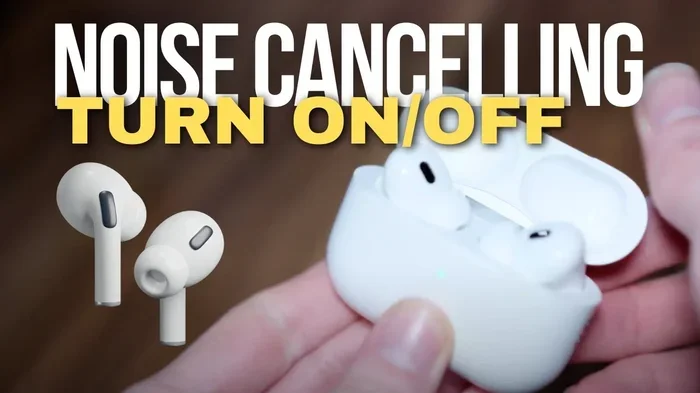
Visual guide about AirPods noise cancellation demonstration
Image source: i.ytimg.com
AirPods with ANC use tiny microphones to “listen” to the world around you. They detect incoming sound waves (like airplane engines, traffic, or HVAC systems). Then, in less than a millisecond, the AirPods create a mirror image of that sound wave, called “anti-noise.”
When the original sound and the anti-noise meet, they cancel each other out. The result? You hear much less outside noise, even with your music at a low volume.
The Three Key Components
Every pair of noise-canceling AirPods has three main parts working together:
- External Microphones: These sit on the outside of the earbud and listen to your environment continuously.
- Internal Microphones: These listen inside your ear canal to measure what you actually hear.
- Processing Chip: Apple’s H1 or H2 chip analyzes the sounds and creates anti-noise 200 times per second.
The H2 chip in AirPods Pro 2 is 2x faster than its predecessor. This means it can cancel noise more accurately, especially tricky sounds like human voices or sudden bangs.
What ANC Cancels Best
Not all noise is created equal. ANC excels at canceling low-frequency, consistent sounds. Examples include:
- Airplane engine hum
- Air conditioning rumble
- Train noise
- Traffic drone
- Office background chatter (partially)
Higher-pitched sounds like crying babies, screaming, or sudden bangs are harder to cancel completely. ANC reduces them but doesn’t eliminate them entirely.
Active Noise Cancellation vs. Passive Noise Isolation
This is a crucial distinction many people misunderstand. Both reduce noise, but they work in completely different ways.
Passive Noise Isolation Explained
Passive isolation is what standard AirPods offer. It’s simply the physical barrier of the earbud blocking your ear canal. Like sticking your fingers in your ears, but more comfortable. The tighter the seal, the more sound gets blocked.
Apple’s standard AirPods 4 introduced a feature called “Adaptive Audio” in some configurations, but they still don’t offer true ANC like the Pro line.
Active Noise Cancellation Explained
ANC is the active, electronic version. It uses technology (not just physical blocking) to fight noise. The key differences:
- Passive Isolation: Blocks 10-15 dB of noise typically. Works for all frequencies equally.
- Active Noise Cancellation: Blocks 25-35 dB for low frequencies. Much more effective overall.
Did you know? Studies show that reducing background noise by just 10 decibels can decrease listener fatigue by up to 50%. That’s why ANC is so valuable for long workdays or flights.
The Best of Both Worlds
AirPods Pro give you both technologies working together. The silicone ear tips create a passive seal, and the ANC technology layers on top. This dual approach is why Pro models block significantly more noise than standard AirPods.
AirPods Pro Features: Transparency Mode and Adaptive Audio
Sometimes you want to hear the world around you. Maybe you’re crossing a street, ordering coffee, or listening for a flight announcement. That’s where Transparency mode comes in.
What is Transparency Mode?
Transparency mode uses the same microphones that power ANC, but in reverse. Instead of canceling outside sound, it lets it in naturally. It feels like you’re not wearing earbuds at all, even though music keeps playing.
AirPods Pro 2 takes this further with “Adaptive Transparency.” This feature reduces loud, sudden noises (like sirens or construction) while still letting normal sounds through. It’s like having a smart volume knob that responds to your surroundings.
How to Activate These Modes
Switching modes is easy. You have several options:
- Press and hold the force sensor on the AirPods Pro stem.
- Say “Hey Siri, turn on Transparency mode” (if you have Siri enabled).
- Use Control Center on your iPhone or iPad.
- Set up automatic switching based on location or activity.
Conversation Awareness
Here’s a neat feature in newer AirPods Pro. When you start speaking while wearing them, the music automatically lowers and Transparency mode kicks in. Once you stop talking for a few seconds, everything returns to normal. It’s perfect for quick chats without removing your earbuds.
To enable Conversation Awareness: Go to Settings > Bluetooth > AirPods Pro > [Your AirPods] > Audio > Conversation Awareness, then toggle it on.
Battery Life and Noise Cancellation
Here’s the trade-off: turning on noise cancellation uses more battery power. The microphones and processing chip need extra energy to do their job.
Real-World Battery Numbers
Let’s look at actual performance data from Apple’s specifications:
- AirPods Pro 2 (with ANC on): Up to 6 hours of listening time.
- AirPods Pro 2 (with ANC off): Up to 7 hours of listening time.
- AirPods Max (with ANC on): Up to 20 hours.
- AirPods 4 (no ANC option): Up to 6 hours, consistent regardless.
The difference is small (about 15% reduction), but it’s noticeable on long flights or workdays. Pro tip: always start with a fully charged case for maximum backup power.
How to Check Battery Status
Want to know how much juice is left? Try these methods:
- Ask Siri: “Hey Siri, what’s my AirPods battery?”
- Add the Batteries widget to your iPhone home screen.
- Open the case near your iPhone (a popup shows charge levels).
- Check in Settings > Bluetooth.
Charging Best Practices
To keep your AirPods’ battery healthy long-term:
- Avoid letting them die completely before charging.
- Don’t leave them in extreme heat (like a hot car).
- Use the included cable or a Qi-certified wireless charger.
- Update firmware regularly for optimal battery management.
Tips to Maximize Noise Cancellation on AirPods
Even with premium AirPods, you might not be getting the full benefit if you don’t use them correctly. Here are insider tips to boost your noise cancellation performance.
Get the Right Ear Tip Fit
This is the single biggest factor. AirPods Pro come with four ear tip sizes: XS, S, M, and L. Most people stick with the medium size without trying others. But getting the wrong size can reduce ANC effectiveness by up to 50%.
Apple includes an “Ear Tip Fit Test” in iOS. Here’s how to use it:
- Put your AirPods Pro in your ears.
- Open Settings > Bluetooth.
- Tap “i” next to your AirPods.
- Select “Ear Tip Fit Test.”
- Follow the on-screen instructions.
The test plays a sound and analyzes the seal. It’ll tell you if your current tips fit well or if you should try a different size.
Keep Your AirPods Clean
Dirt and earwax block the microphones and speakers. This reduces both ANC effectiveness and sound quality. Clean your AirPods weekly with a dry, soft cloth. For stubborn grime, use a slightly damp cloth or a small brush with soft bristles.
Never use sharp objects to dig into the mesh, as this can permanently damage the hardware.
Update Your Firmware
Apple regularly releases firmware updates that improve noise cancellation algorithms. To check your version: Settings > Bluetooth > [Your AirPods] > scroll to the bottom to see the firmware number.
The latest firmware typically appears automatically when your AirPods are charging near your iPhone with Wi-Fi enabled.
Use the Right Mode for Your Environment
Different situations call for different settings:
- Loud airplane or train: Full ANC mode.
- Walking on busy streets: Transparency mode for safety.
- Office work: ANC for focus, with Transparency available for conversations.
- Working out: Transparency mode to stay aware of surroundings.
- Sleeping with white noise: ANC for maximum blocking.
Try Personalized Spatial Audio
While not directly related to ANC, Personalized Spatial Audio creates an immersive sound bubble. When combined with ANC, it makes you feel completely isolated in your audio world. Set it up via Settings > Bluetooth > AirPods Pro > Personalized Spatial Audio.
Common Problems and Troubleshooting
Even great tech sometimes has hiccups. Here are solutions to common AirPods noise cancellation issues.
Problem: ANC Isn’t Working at All
If you’ve enabled noise cancellation but hear no difference, try these fixes:
- Make sure you’re using AirPods Pro or Max (not standard AirPods).
- Check that ANC is actually turned on in Control Center.
- Restart your AirPods: Put them in the case, wait 30 seconds, then take them out.
- Reset your AirPods: Hold the setup button on the case for 15 seconds until the light flashes amber.
- Update iOS to the newest version.
Problem: ANC Is Weaker Than Expected
If noise cancellation works but seems less effective than before:
- Clean the microphones and speaker mesh thoroughly.
- Try different ear tip sizes for a better seal.
- Make sure your firmware is current.
- Check that the ear detection sensors aren’t blocked.
Problem: Pressure Sensation in Your Ears
Some people feel a “pressure” or “vacuum” sensation when ANC activates. This happens because your brain interprets the lack of certain frequencies as pressure changes. It’s harmless but uncomfortable.
Solutions: Use Transparency mode occasionally to “reset” your ears, or take short breaks from ANC every hour or so.
Problem: Audio Sounds Muffled in Transparency Mode
Sometimes Transparency mode sounds unnatural. Usually this means:
- The microphone mesh is dirty or blocked.
- Your ear tips aren’t sealing properly.
- There’s a software glitch (try restarting the AirPods).
The Future of AirPods Noise Cancellation
Apple continues investing in this technology. Based on patents and rumors, here’s what we might see in future AirPods models.
Health Monitoring Integration
Future AirPods may include heart rate sensors, body temperature monitors, and hearing health tracking. These features could work alongside ANC to create “hearing protection modes” that automatically adjust based on your environment’s noise levels.
Better Adaptive Algorithms
Machine learning is making ANC smarter. Newer AirPods might learn your routine locations and automatically switch modes. Imagine walking into your gym and having Transparency mode activate, then switching to full ANC when you sit down to work.
Improved Voice Isolation During Calls
Current AirPods already reduce background noise during phone calls. Future versions might use bone conduction sensors to detect your voice directly, making call quality crystal clear even in noisy environments.
Lossless Audio with ANC
Currently, using ANC can slightly reduce audio quality due to processing. Future AirPods might support true lossless audio while maintaining active noise cancellation, giving audiophiles the best of both worlds.
Comparing AirPods to Other Noise-Canceling Earbuds
How do AirPods stack up against competitors? Let’s look at the broader landscape.
Premium ANC Earbuds Comparison
The noise cancellation market is competitive. Here are key comparisons:
- AirPods Pro 2: Excellent ANC, seamless Apple integration, good for iPhone users.
- Sony WF-1000XM5: Industry-leading ANC, customizable sound, works great with any device.
- Bose QuietComfort Ultra: Premium noise cancellation, rich sound, comfortable fit.
- Sennheiser Momentum True Wireless 3: Great sound quality, effective ANC, higher price.
Did you know? Sony’s WF-1000XM5 can block up to 40 dB of noise, while AirPods Pro 2 block around 35 dB. Both are excellent, but Sony has a slight edge for pure noise cancellation.
Why Choose AirPods Anyway?
Despite not having the absolute best ANC, AirPods offer unique advantages:
- Apple Ecosystem Magic: Instant pairing with all your Apple devices.
- Find My Integration: Track lost AirPods precisely.
- Automatic Device Switching: Seamlessly move between iPhone, iPad, and Mac.
- Spatial Audio: Immersive 3D sound for movies and music.
- Regular Updates: Apple improves features over time via firmware.
Making Your Decision: Who Should Buy Noise-Canceling AirPods?
Now that you understand the technology, let’s figure out if ANC-equipped AirPods are right for you.
You Should Buy AirPods Pro or Max If:
- You commute daily in noisy environments (trains, buses, planes).
- You work in open offices or cafes and need focus.
- You travel frequently and want quiet on flights.
- You have sensory sensitivities and need to reduce stimulation.
- You want premium audio quality for music and calls.
- You’re deeply invested in the Apple ecosystem.
Standard AirPods Are Fine If:
- You mostly use them in quiet environments (home, library).
- Budget is a primary concern ($129 vs $249).
- You prefer an open-ear design (no silicone tips).
- You don’t fly or use public transportation often.
- You mainly use them for short periods (workouts, calls).
Consider Alternatives If:
- You’re an Android user (you lose most Apple-specific features).
- You need the absolute best noise cancellation (Sony or Bose might edge out).
- You want customizable sound (some brands offer more EQ control).
- You’re on a tight budget (many excellent options under $150).
Final Verdict: Do AirPods Cancel Noise?
So, do AirPods noise cancel? Absolutely yes, but only specific models. AirPods Pro (1st, 2nd, and upcoming 3rd gen) and AirPods Max all feature excellent Active Noise Cancellation that rivals or beats competitors. Standard AirPods don’t have ANC, but offer decent passive noise isolation.
The technology uses external and internal microphones to detect sound, then creates anti-noise frequencies that cancel it out before you hear it. It’s like having a mute button for the world around you.
If you’re buying AirPods primarily for noise cancellation, invest in the Pro or Max versions. The difference is significant and worth the extra cost. You’ll enjoy quieter commutes, better focus at work, and a more immersive music experience.
For Apple users, AirPods Pro remain the best choice due to seamless integration, regular updates, and excellent overall performance. While Sony and Bose might have a slight edge in pure ANC effectiveness, AirPods win on ecosystem magic and user experience.
Remember to get the right ear tip fit, keep your AirPods clean, and update firmware regularly for the best experience. With proper care, your noise-canceling AirPods will provide years of peaceful listening.
Ready to experience the silence? Choose your model, find your perfect ear tip fit, and enjoy a world where you control what you hear. That’s the real power of AirPods noise cancellation.
Frequently Asked Questions
Do standard AirPods (non-Pro) have noise cancellation?
No, standard AirPods (1st through 4th generation) do not feature Active Noise Cancellation. They only provide passive noise isolation through their physical fit in your ears. For true noise cancellation, you need AirPods Pro or AirPods Max models, which use electronic ANC technology to actively block external sounds.
How effective is AirPods Pro noise cancellation?
AirPods Pro 2 can reduce ambient noise by approximately 35 decibels, making them highly effective for low-frequency sounds like airplane engines, traffic, and air conditioning. While not absolute silence, they dramatically reduce background noise and are considered among the best noise-canceling earbuds available, competing closely with Sony and Bose premium offerings.
Does using noise cancellation drain AirPods battery faster?
Yes, but the impact is relatively small. AirPods Pro 2 provide about 6 hours of listening time with ANC enabled, compared to 7 hours with it off. The microphones and processing chip require extra power, but Apple has optimized this efficiently. AirPods Max delivers around 20 hours with ANC, which is more than sufficient for long flights.
Can I use AirPods noise cancellation without playing music?
Absolutely! You can activate Active Noise Cancellation without any audio playing. This is perfect for creating quiet environments for focus, meditation, or sleep. Simply enable ANC through Control Center on your iPhone, or press and hold the force sensor on your AirPods Pro stem to switch modes without any music.
What’s the difference between Noise Cancellation and Transparency mode?
Active Noise Cancellation blocks external sounds using anti-noise frequencies, ideal for focusing or immersive listening. Transparency mode does the opposite, using external microphones to let outside sounds in naturally while keeping your audio playing. Transparency is useful for conversations, safety while walking, or hearing announcements without removing your AirPods.
Will noise cancellation damage my hearing?
No, Active Noise Cancellation itself doesn’t harm your hearing. In fact, it can protect your hearing by allowing you to listen to audio at lower volumes instead of cranking it up to drown out background noise. Some users experience slight ear pressure sensation due to the anti-noise frequencies, but this is harmless and usually fades with regular use.