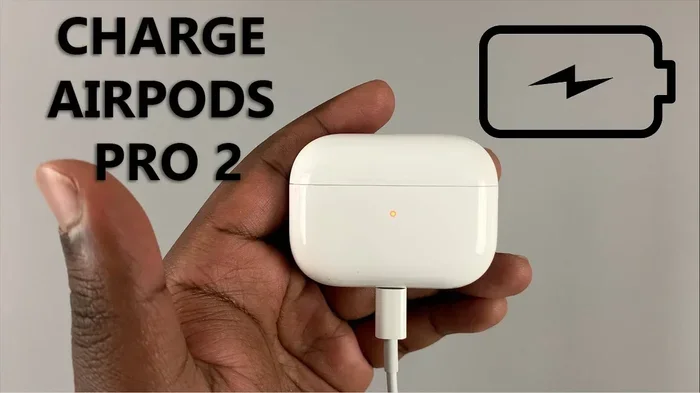
Featured image for AirPods Pro 2 with Lightning cable
Image source: i.ytimg.com
Yes, earlier AirPods Pro 2 models shipped with a Lightning charging cable, but Apple released a USB-C version in September 2023. The original AirPods Pro 2 (released September 2022) included a Lightning to USB-C cable in the box, while the updated version (released September 2023) features a USB-C charging case and includes a USB-C to USB-C cable. Your purchase depends entirely on when and where you buy them, as Apple now sells only the USB-C version through official channels.
Picture this: you just unboxed a shiny new pair of AirPods Pro 2, and you’re rummaging through the packaging looking for a charging cable. You spot a cable with a small, rectangular connector and think, “Wait, is this Lightning?” You’re not alone in this confusion. Thousands of buyers ask this exact question every day.
The answer isn’t as straightforward as a simple yes or no. It depends on which version of the AirPods Pro 2 you have. Think of it like buying a car, the same model year might come with different features depending on when it was manufactured. Apple released the AirPods Pro 2 in two distinct versions, and the connector situation changed between them.
In this comprehensive guide, we’ll break down everything you need to know about AirPods Pro 2 connectors. You’ll learn about the original Lightning version, the newer USB-C version, what’s included in the box, regional differences, and how to identify which version you own. By the end, you’ll be an expert on this topic and never have to wonder again.
Key Takeaways
- Original AirPods Pro 2 (2022): Came with a Lightning to USB-C cable in the box, not a Lightning to USB-A cable.
- Updated AirPods Pro 2 (2023): Feature a USB-C charging case and include a USB-C to USB-C cable.
- No Power Adapter Included: Apple does not include a wall power adapter with either version of AirPods Pro 2.
- Regional Differences Exist: In some regions, Apple has transitioned inventory exclusively to USB-C versions.
- Charging Case Matters Most: The case connector (Lightning or USB-C) determines how you charge your AirPods, not the cable included.
- Backward Compatibility: The Lightning case AirPods Pro 2 can still charge via any Qi wireless charger or Lightning cable.
- Future-Proofing: Buying the USB-C version is recommended due to industry-wide adoption of USB-C standards.
📑 Table of Contents
- Understanding AirPods Pro 2 Connector Versions
- What’s Actually in the AirPods Pro 2 Box
- How to Identify Which AirPods Pro 2 Version You Have
- Regional Differences and Availability
- Charging Your AirPods Pro 2: Practical Considerations
- Making the Right Choice for Your Needs
- Common Questions and Misconceptions
- The Future of AirPods Charging
- Final Thoughts: Making an Informed Decision
Understanding AirPods Pro 2 Connector Versions
Let’s start with the basics. The AirPods Pro 2 has had two distinct releases, and each one comes with a different connector situation. Understanding this difference is crucial because it affects how you charge your device, what cables you need, and even how future-proof your purchase is.
The Original AirPods Pro 2 (September 2022)
When Apple launched the AirPods Pro 2 in September 2022, the charging case featured a Lightning port. This was consistent with most Apple products at the time. The Lightning connector is Apple’s proprietary port that had been used across iPhones, iPads, and AirPods since the previous decade.
However, here’s where things get interesting: even though the case had a Lightning port, the cable included in the box was a Lightning to USB-C cable, not the older Lightning to USB-A cable that many users expected. This was a significant shift, as Apple had traditionally included Lightning to USB-A cables with its devices.
Did You Know? Apple began transitioning its included cables from USB-A to USB-C as part of its environmental initiative. The company claimed this change helped reduce electronic waste, as USB-C is becoming the universal standard. According to Apple’s 2022 Environmental Report, this shift helped eliminate millions of USB-A cables from circulation.
The Updated AirPods Pro 2 (September 2023)
One year after the original release, Apple unveiled a refreshed version of the AirPods Pro 2. The biggest change? A USB-C charging case replaced the Lightning case. This move aligned the AirPods Pro 2 with the iPhone 15 series, which also transitioned to USB-C that same year.
The USB-C version includes several upgrades beyond just the port change. It features improved dust resistance (IP54 rating versus IPX4), and the case itself is slightly different in design. Most importantly, the included cable is now a USB-C to USB-C cable, which works with modern chargers, laptops, and many other devices.
This transition wasn’t just about AirPods. It was part of a broader industry move toward USB-C, partly driven by European Union regulations requiring common charging standards. The EU’s directive mandated USB-C as the standard charging port for electronic devices by the end of 2024.
What’s Actually in the AirPods Pro 2 Box
Knowing what’s included in the box is just as important as knowing what connector your AirPods use. Apple has been criticized for what’s missing from their packaging, but what’s present is still important to understand.
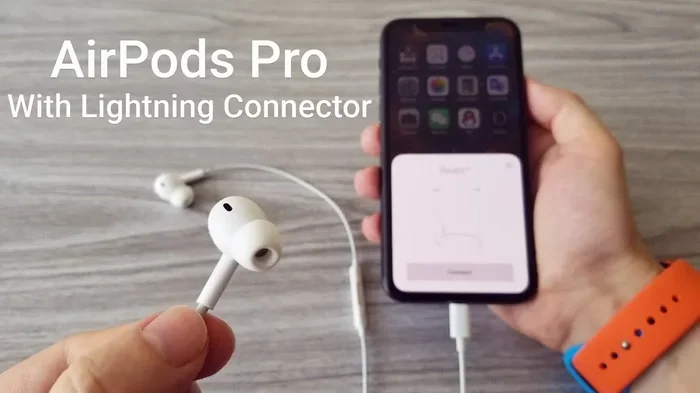
Visual guide about AirPods Pro 2 with Lightning cable
Image source: i.ytimg.com
The Complete Unboxing Experience
When you open an AirPods Pro 2 box, here’s what you’ll find inside:
- The AirPods Pro 2 themselves (left and right earbuds)
- The charging case (Lightning or USB-C version)
- A charging cable (varies by version)
- Silicone ear tips (four sizes: XS, S, M, L)
- Documentation (quick start guide, warranty information)
- Apple sticker (the classic white Apple logo sticker)
What you won’t find is a wall power adapter. Apple stopped including power adapters with most products starting in 2020, citing environmental reasons. This means you’ll need to use an existing USB power adapter or purchase one separately.
The Charging Cable: A Closer Look
For the original AirPods Pro 2 (2022), the included cable is approximately 1 meter (3.3 feet) long and features a Lightning connector on one end and a USB-C connector on the other. The Lightning end plugs into the AirPods case, while the USB-C end plugs into a compatible power adapter or computer.
For the updated AirPods Pro 2 (2023), the cable is similar in length but features USB-C connectors on both ends. This makes it compatible with a wider range of modern devices, including MacBooks, iPads, Android phones, and many laptops.
Practical Tip: If you’re buying the original Lightning version, make sure you have a USB-C power adapter. Many older iPhone owners might only have USB-A adapters, which won’t work with the included cable. Conversely, USB-C version buyers need a USB-C power source.
Why No Power Adapter?
Apple’s decision to exclude the power adapter sparked controversy when it was first announced. The company argued that there were already billions of power adapters in the world, and including another one with every device was unnecessary. They claimed this reduced packaging size by 70% and allowed 70% more products per shipping pallet.
While this decision frustrated some consumers, it did push the industry toward more sustainable practices. Other manufacturers followed suit, and today, many electronics ship without power adapters.
How to Identify Which AirPods Pro 2 Version You Have
Maybe you’ve already purchased your AirPods Pro 2, and you’re not sure which version you own. Or perhaps you’re buying secondhand and want to verify. Here are several ways to determine whether you have the Lightning or USB-C version.
Physical Inspection Method
The most obvious way is to look at the charging case itself. Examine the port on the bottom of the case. If it’s a small, rectangular port with rounded corners, it’s a Lightning connector. If it’s a smaller, oval-shaped port, it’s a USB-C connector.
Think of it this way: Lightning ports look like a thin rectangle, while USB-C ports look like a rounded oval. It’s like comparing a flathead screwdriver to a Phillips head, the shape is distinctive once you know what to look for.
Model Number Check
Each AirPods Pro 2 version has a different model number. You can find this on the underside of the charging case lid or in your iPhone’s settings.
- Original AirPods Pro 2 (Lightning): Model number A2700
- Updated AirPods Pro 2 (USB-C): Model number A2701
To check via your iPhone, go to Settings, then Bluetooth, find your AirPods in the list, tap the “i” icon next to them, and scroll down to see the model number.
Settings App Method
Another way to check is through your iPhone or iPad. When you connect your AirPods Pro 2 to your iPhone, open the Settings app, then tap on the AirPods name. Look for the version information or check the “About” section. The firmware version can also give you clues, as newer versions are typically associated with the USB-C model.
Did You Know? The AirPods Pro 2 with USB-C also support lossless audio when paired with the Apple Vision Pro headset. This is a feature that the Lightning version does not support, giving the USB-C version another advantage beyond just the charging port.
The Packaging Clues
If you still have the original packaging, there are visual cues that can help. The USB-C version’s box typically shows a USB-C cable illustration, whereas the Lightning version’s box shows a Lightning to USB-C cable. The text on the box may also specify “USB-C” in the product description.
Regional Differences and Availability
Where you buy your AirPods Pro 2 can affect which version you receive. Apple has been gradually transitioning its inventory worldwide, and some regions have moved faster than others.
Current Apple Store Availability
As of 2024, Apple’s official online store and physical retail locations primarily sell the USB-C version of the AirPods Pro 2. The Lightning version has been discontinued in most markets, though you might still find limited stock at third-party retailers like Amazon, Best Buy, or Walmart.
If you’re shopping in the United States, Canada, United Kingdom, Australia, or most European countries, you’ll almost certainly get the USB-C version when buying from Apple directly. However, authorized resellers may still have older Lightning stock, especially if they’re clearing inventory.
European Union Influence
The European Union’s Common Charger Directive played a significant role in Apple’s transition. The directive, passed in 2022, required all mobile electronic devices to use USB-C as the standard charging port by December 28, 2024. While AirPods weren’t immediately covered, Apple anticipated the regulations and made the switch early.
This regulation affects not just where products are sold but also how they’re manufactured. Since Apple produces its products for global distribution, it makes more sense to standardize on USB-C rather than maintain separate production lines for different regions.
Buying in Other Markets
If you’re traveling or purchasing from international markets, be cautious. Some countries may still have Lightning versions in stock, especially if they’re being sold at discounted prices. While these are genuine Apple products, they represent the older model and may have different compatibility considerations.
Practical Tip: If you’re buying from a third-party seller, especially online marketplaces, always check the model number before purchasing. This ensures you know exactly which version you’re getting and can make an informed decision based on your needs.
Charging Your AirPods Pro 2: Practical Considerations
Beyond just knowing which connector you have, it’s important to understand how to charge your AirPods Pro 2 effectively. Both versions support multiple charging methods, giving you flexibility in how you power your device.
Wired Charging Options
For the Lightning version, you’ll need a Lightning cable to charge via the port. The included Lightning to USB-C cable works with any USB-C power adapter. You can also use a Lightning to USB-A cable if you have one, though Apple no longer includes this type.
For the USB-C version, any USB-C cable will work. This is more convenient because USB-C cables are increasingly common across devices. You can use the same cable to charge your AirPods, iPhone 15 or later, iPad, MacBook, and many Android phones.
The charging case supports fast charging, giving you approximately 1 hour of listening time with just 5 minutes of charging. A full charge takes about an hour, and the case provides multiple full charges for the earbuds before needing to be recharged itself.
Wireless Charging: The Universal Option
Both versions of the AirPods Pro 2 support Qi wireless charging and MagSafe charging. This means you can charge them on any Qi-compatible wireless charging pad, regardless of whether you have the Lightning or USB-C case.
MagSafe charging is particularly convenient for iPhone users. You can use the same MagSafe charger for your iPhone and your AirPods case. The magnetic alignment ensures proper positioning, and charging speeds are comparable to wired charging for short sessions.
Did You Know? The AirPods Pro 2 charging case also features a small speaker that emits sounds during charging. This is helpful for finding the case if you misplace it, and it also chimes when charging begins. The USB-C version’s speaker is slightly improved compared to the Lightning version.
Battery Life Expectations
Both versions offer similar battery life: up to 6 hours of listening time on a single charge (with Active Noise Cancellation enabled), and up to 30 hours total with the charging case. The USB-C version maintains these same battery statistics, so there’s no advantage or disadvantage in this regard.
However, real-world battery life depends on several factors, including volume levels, feature usage (like transparency mode or spatial audio), and environmental conditions. Users typically report getting between 4-5 hours of use with ANC enabled, which aligns with Apple’s claims.
Making the Right Choice for Your Needs
Now that you understand the differences between the two versions, how do you decide which one is right for you? Here are some scenarios to help you make the best decision.
When to Choose the USB-C Version
The USB-C version is the better choice for most people, especially if you’re buying new. Here are the key reasons:
- Future-proofing: USB-C is becoming the universal standard. Buying USB-C now means you won’t need adapters or different cables in the future.
- iPhone 15 and later compatibility: If you have an iPhone 15 or newer, both your phone and AirPods will use the same cable.
- Lossless audio support: The USB-C version supports lossless audio with Apple Vision Pro, a feature the Lightning version lacks.
- Better dust resistance: The IP54 rating provides improved protection against dust and debris.
- Wider compatibility: USB-C cables work with more devices, reducing cable clutter.
When the Lightning Version Makes Sense
There are some situations where the Lightning version might be a reasonable choice:
- Budget considerations: The Lightning version is often available at discounted prices as retailers clear inventory.
- Existing Lightning ecosystem: If you have many Lightning cables and accessories, sticking with Lightning might be more convenient.
- Older iPhone owners: If you have an iPhone 14 or earlier and don’t plan to upgrade soon, the Lightning version works perfectly fine.
Practical Tip: Consider your entire Apple ecosystem when making this decision. If you have an iPhone 14, an older iPad with Lightning, and Lightning accessories, adding a Lightning AirPods case maintains consistency. But if you’re upgrading to newer devices, USB-C is the way to go.
The Environmental Angle
From an environmental perspective, choosing the version that you’ll use longer makes more sense. If you’re planning to keep your AirPods for 3-4 years (which is typical for wireless earbuds), buying the USB-C version means you’ll have a device that’s compatible with future technology standards.
Apple’s environmental initiatives emphasize longevity and compatibility. The company has committed to making its products work seamlessly across its ecosystem, and USB-C is central to that vision going forward.
Common Questions and Misconceptions
Let’s address some frequently asked questions and clear up misconceptions about AirPods Pro 2 connectors.
“Does the AirPods Pro 2 case have a Lightning port?”
This depends on which version you have. The original 2022 release has a Lightning port, while the 2023 release has a USB-C port. Apple’s current product lineup only includes the USB-C version.
“Can I use any Lightning cable to charge the original AirPods Pro 2?”
Yes, any Lightning cable will work to charge the original AirPods Pro 2 case. However, Apple only includes a Lightning to USB-C cable in the box. If you have older Lightning to USB-A cables, those will also work with appropriate power adapters.
“Is the USB-C version worth the extra cost?”
The USB-C version typically costs the same as the original Lightning version did at launch ($249). Since Apple has discontinued the Lightning version, you’re essentially only getting the USB-C version now, so there’s no premium to consider.
“Will the Lightning version become obsolete?”
While the Lightning port won’t disappear from your device overnight, Apple has clearly moved toward USB-C. Your Lightning AirPods Pro 2 will continue to work as long as you have cables and chargers for them. The obsolescence is more about future convenience than current functionality.
“Does the connector type affect audio quality?”
The connector type doesn’t directly affect audio quality for standard listening. However, the USB-C version supports lossless audio when paired with Apple Vision Pro, which provides 20-bit, 48 kHz lossless audio. This is a significant upgrade for users with the Vision Pro headset.
“Can I charge my iPhone with the AirPods Pro 2 cable?”
If you have the original AirPods Pro 2 with Lightning to USB-C cable, you can use it to charge any device with a Lightning port by connecting it to a USB-C power source. With the USB-C version’s cable, you can charge any USB-C device, including iPhone 15 and later models, iPads, and Android phones.
The Future of AirPods Charging
Looking ahead, the industry trend is clearly moving toward wireless charging and USB-C as the standard. Apple has invested heavily in MagSafe technology, and future AirPods models may eventually eliminate the port altogether in favor of purely wireless charging.
Industry-Wide USB-C Adoption
Major tech companies, including Apple, Samsung, Google, and Microsoft, have embraced USB-C as the universal standard. This shift reduces e-waste, simplifies cable management, and improves compatibility across devices. The European Union’s regulations have accelerated this transition globally.
According to a 2023 report by the Consumer Technology Association, USB-C ports will be present in over 80% of electronic devices by 2026. This statistic highlights how quickly the standard is being adopted across the industry.
What This Means for AirPods Users
For current AirPods Pro 2 owners, this means your investment will remain relevant for years to come. Both versions of the AirPods Pro 2 will continue to work with their respective charging standards, but the USB-C version offers better longevity and compatibility.
Future AirPods models will likely continue the USB-C trend, and Apple may eventually introduce models with no charging port at all, relying entirely on wireless charging. However, that’s still a few years away, and current users don’t need to worry about immediate obsolescence.
Sustainability Considerations
Apple has emphasized its commitment to carbon neutrality by 2030. Standardizing on USB-C across its product lineup supports this goal by reducing the variety of cables and chargers needed. The company has also committed to using recycled materials in its products, with the AirPods Pro 2 featuring recycled tin, rare earth elements, and aluminum.
For consumers, choosing products with longer lifespans and better compatibility helps reduce electronic waste. The USB-C version of AirPods Pro 2 aligns with this philosophy, offering a product that will remain useful and compatible as technology continues to evolve.
Final Thoughts: Making an Informed Decision
So, do AirPods Pro 2 come with a Lightning connector? The complete answer depends on timing and availability. The original AirPods Pro 2 (2022) featured a Lightning charging case and included a Lightning to USB-C cable. The updated AirPods Pro 2 (2023) features a USB-C charging case and includes a USB-C to USB-C cable.
For most buyers today, the question is somewhat moot since Apple primarily sells the USB-C version. However, if you’re shopping secondhand or looking for deals on older inventory, understanding the difference is crucial.
The USB-C version represents the future of Apple’s ecosystem and offers several advantages: better future-proofing, lossless audio support with Vision Pro, improved dust resistance, and broader device compatibility. While the Lightning version isn’t a bad product, it’s clearly the previous generation.
Ultimately, both versions deliver the excellent audio quality, active noise cancellation, and seamless Apple integration that AirPods Pro 2 is known for. The connector is just one detail in the broader experience, but it’s an important one for everyday convenience and long-term usability.
Whether you’re buying your first pair of AirPods Pro 2 or upgrading from an older version, you now have all the information you need to make an informed decision. Consider your current devices, your plans for future upgrades, and your budget, and you’ll choose the version that best fits your needs.