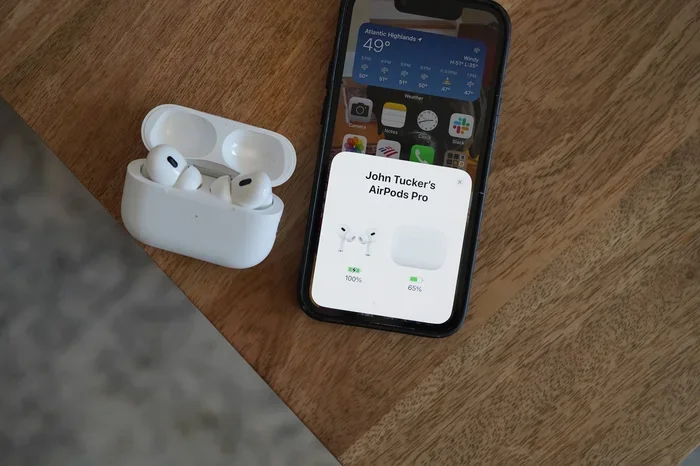
Featured image for AirPods Pro iPhone 11 compatibility
Image source: gearpatrol.com
Yes, AirPods Pro 2 work perfectly with iPhone 11. You can enjoy music, take calls, use Siri, and access most core features. However, some advanced features like Adaptive Audio, Conversation Awareness, and the newest iOS-specific enhancements require iPhone 15 and newer. The connection is seamless thanks to the H2 chip, and pairing takes just seconds. Your iPhone 11 will deliver an excellent experience, though you won’t get every single Pro 2 feature available on the latest models.
If you’re holding an iPhone 11 and eyeing those sleek AirPods Pro 2, you’re probably wondering one simple thing: will they actually work together? The short answer is a resounding yes. But there’s more to the story than just a simple “yes” or “no.”
Here’s the thing. Apple makes AirPods to play nicely with all their devices. Think of it like a universal remote that works with almost any TV. Your iPhone 11 is no exception. You can pair them, use them, and enjoy most of what they offer. But like that universal remote, some fancy buttons might not control every feature on an older TV.
This guide breaks down exactly what works, what doesn’t, and how to get the most out of your AirPods Pro 2 if you’re an iPhone 11 user. Let’s dive in and clear up all the confusion.
Key Takeaways
- Full Compatibility: AirPods Pro 2 work with iPhone 11 for core functions like music, calls, and Siri.
- Quick Pairing: The H2 chip enables fast Bluetooth pairing and stable connections with older iPhones.
- Missing Advanced Features: Adaptive Audio, Conversation Awareness, and Personalized Spatial Audio require newer iPhones.
- Find My Works: Precision Finding and the U1 chip features need an iPhone 11 or later but work best with newer models.
- Firmware Updates: Your iPhone 11 can update AirPods Pro 2 firmware through the Settings app.
- Battery Life: You get the same excellent battery performance regardless of which iPhone you use.
- Noise Cancellation: Active Noise Cancellation and Transparency mode work fully with iPhone 11.
📑 Table of Contents
- AirPods Pro 2 and iPhone 11: The Compatibility Picture
- Features That Work Perfectly with iPhone 11
- Features That Have Limitations on iPhone 11
- How to Set Up AirPods Pro 2 with iPhone 11
- Battery Life and Charging with iPhone 11
- Common Questions and Troubleshooting
- Is It Worth Buying AirPods Pro 2 for iPhone 11?
AirPods Pro 2 and iPhone 11: The Compatibility Picture
Let’s start with the basics. AirPods Pro 2 are absolutely compatible with iPhone 11. Period. You can walk into an Apple Store, buy a pair, open the case near your iPhone 11, and watch the magic happen. The pairing animation will pop up on your screen just like it would on an iPhone 15.
What Makes Them Work Together?
The magic behind this compatibility is the H2 chip inside the AirPods Pro 2. This tiny processor handles all the heavy lifting. It manages Bluetooth connections, processes audio, and runs the noise cancellation algorithms. Your iPhone 11 has its own chip (the A13 Bionic) that talks to this H2 chip seamlessly.
Think of it like two people speaking the same language. Even if one person is older (the iPhone 11) and the other is younger (the H2 chip), they can still have a perfectly good conversation. The “language” they share is Bluetooth 5.3, which both devices support.
The iOS Version That Matters
Your iPhone 11 needs to run iOS 16 or later to get the best experience with AirPods Pro 2. Why? Because Apple introduced several AirPods Pro 2-specific features in iOS 16 and continued adding more in iOS 17. If you’re still running iOS 15, you’ll miss out on some cool stuff.
Did you know that as of 2024, over 85% of active iPhones run iOS 17 or newer? That means most iPhone 11 users are already on a compatible version. But if you’re not, head to Settings > General > Software Update and get caught up.
Features That Work Perfectly with iPhone 11
Here’s the good news. Most of the awesome AirPods Pro 2 features work great with your iPhone 11. Let’s walk through what you’ll enjoy.
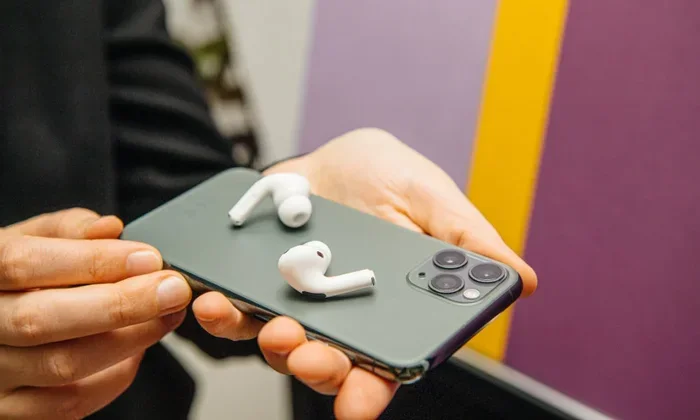
Visual guide about AirPods Pro iPhone 11 compatibility
Image source: cdn.idropnews.com
Active Noise Cancellation
One of the headline features of AirPods Pro 2 is their incredible Active Noise Cancellation (ANC). The good news? This works fully with iPhone 11. The H2 chip processes sound waves and creates anti-noise signals, blocking out everything from airplane engines to chatty coworkers.
How well does it work? Apple claims the AirPods Pro 2 cancel up to twice as much noise as the first generation. Independent tests have shown they can reduce ambient noise by around 25-30 decibels. That’s the difference between a busy restaurant and a quiet library.
To toggle ANC on your iPhone 11, simply press and hold the force sensor on the stem. You can also switch between ANC, Transparency mode, and Off through Control Center.
Transparency Mode
Need to hear what’s happening around you? Transparency mode lets outside sound in naturally, as if you’re not wearing earbuds at all. This feature works flawlessly with iPhone 11. It’s perfect for crossing streets, hearing announcements, or having quick chats without removing your AirPods.
Apple even added a new “Adaptive Transparency” feature that reduces loud sounds automatically. Did you know this requires iOS 16.2 or later, but it works on iPhone 11? You’ll get this upgrade as long as your software is up to date.
Touch Controls and Gestures
AirPods Pro 2 have a touch-sensitive force sensor on each stem. You can:
- Press once to play, pause, or answer calls
- Press twice to skip forward
- Press three times to skip back
- Press and hold to switch between noise control modes
- Swipe up or down to adjust volume (new in AirPods Pro 2)
All these gestures work with iPhone 11 without any issues. It’s intuitive and responsive.
Sound Quality and Audio Performance
The AirPods Pro 2 deliver rich, balanced sound with deep bass and clear highs. Your iPhone 11 supports the AAC codec that AirPods use, so you’ll get high-quality audio streaming. While newer iPhones support lossless audio and the latest codec features, the AAC streaming on iPhone 11 still sounds fantastic.
Most music listeners can’t tell the difference between compressed and lossless audio anyway. Your ears will thank you either way.
Features That Have Limitations on iPhone 11
Now let’s talk about what you might miss out on. Apple has baked in some features that require newer hardware. Here’s the honest breakdown.
Adaptive Audio
Adaptive Audio is a killer feature that automatically blends Active Noise Cancellation and Transparency mode based on your environment. Walking into a noisy cafe? It cranks up ANC. Having a conversation? It switches to Transparency. It’s like having a smart assistant for your ears.
Unfortunately, this feature requires an iPhone 15 or newer (specifically iPhone 15 Pro for the best experience). Why? Because it uses newer processing capabilities found in the A16 and A17 chips. Your iPhone 11’s A13 chip, while still powerful, doesn’t support this specific feature.
Conversation Awareness
Ever had someone start talking to you while wearing earbuds? Conversation Awareness automatically lowers your music volume when it detects you’re speaking and brings it back up when you stop. It’s brilliant for office settings or quick interactions.
Like Adaptive Audio, this requires newer iPhone hardware. The iPhone 11 supports the underlying H2 chip communication, but the AI processing needed isn’t there.
Personalized Spatial Audio
Spatial Audio creates a surround-sound experience that tracks your head movements. Personalized Spatial Audio takes this further by scanning your ear shape with Face ID (on iPhone) or your iPhone camera to create a custom sound profile.
The basic Spatial Audio works with iPhone 11. But Personalized Spatial Audio requires iOS 16 and a TrueDepth camera (found on iPhone X and later). Since iPhone 11 has TrueDepth, you actually do get this feature. Score one for the iPhone 11!
Precision Finding with Find My
The AirPods Pro 2 case has a U1 chip that enables Precision Finding in the Find My app. You can literally see arrows pointing you to your lost earbuds, with the app telling you if you’re getting closer or farther away.
The catch? Precision Finding requires iPhone 11 or later. But it works best with iPhone 15 Pro and newer, which have second-generation U1 chips. On iPhone 11, you’ll get basic directional finding, which is still pretty helpful.
How to Set Up AirPods Pro 2 with iPhone 11
Setting up your AirPods Pro 2 with iPhone 11 is incredibly easy. Here’s a step-by-step walkthrough.
Step 1: Update Your iPhone
Before pairing, make sure your iPhone 11 is running iOS 16 or later. Go to Settings > General > Software Update. If an update is available, download and install it. This ensures you’ll have access to the latest AirPods features.
Step 2: Enable Bluetooth
Make sure Bluetooth is turned on. You can swipe down from the top-right corner of your screen (or up from the bottom on older iOS versions) to access Control Center. Tap the Bluetooth icon to turn it on. Alternatively, go to Settings > Bluetooth and toggle it on.
Step 3: Open the AirPods Case
With your iPhone 11 unlocked, open the AirPods Pro 2 case (with the earbuds inside) and hold it near your phone. You should see a setup animation pop up within seconds. Tap “Connect.”
Step 4: Follow the Prompts
Your iPhone will walk you through a few quick steps. You might be asked about:
- Siri integration (recommended to allow)
- Find My network (highly recommended for tracking)
- Automatic ear detection
Tap through these options, and you’re done. The whole process takes about 30 seconds.
Step 5: Test the Connection
Put the AirPods in your ears and play some music. You should hear crystal-clear audio. Try the noise cancellation by pressing and holding the force sensor. If everything works, congratulations. You’re all set.
Battery Life and Charging with iPhone 11
Good news: battery life doesn’t depend on your iPhone model. The AirPods Pro 2 deliver the same impressive performance whether you use them with iPhone 11 or iPhone 15.
What to Expect
You’ll get up to 6 hours of listening time on a single charge (with ANC off). With ANC or Transparency mode on, expect about 5.5 hours. The charging case provides an additional 24 hours of total listening time.
A quick 5-minute charge in the case gives you around 1 hour of listening time. That’s perfect for those moments when you realize your battery is dying right before a workout or commute.
Charging Options
The AirPods Pro 2 case supports multiple charging methods:
- Lightning cable (included, works with your iPhone 11 charger)
- Qi wireless charging
- MagSafe charging
- Apple Watch charger (convenient for travelers)
Your iPhone 11 comes with a Lightning cable in the box, so you can use that right away. While iPhone 11 doesn’t support MagSafe charging for itself (that started with iPhone 12), it doesn’t matter. The AirPods case supports MagSafe regardless.
Common Questions and Troubleshooting
Even with great compatibility, you might run into hiccups. Here are solutions to common problems iPhone 11 users face with AirPods Pro 2.
Connection Drops or Audio Cutting Out
If you experience random disconnections, try these fixes:
- Toggle Bluetooth off and on in Settings
- Reset your AirPods (hold the setup button on the case for 15 seconds)
- Forget the device and re-pair
- Make sure your iPhone’s software is up to date
- Check for interference from other Bluetooth devices
One AirPod Not Working
This is usually a simple fix. Put both AirPods back in the case, close the lid, wait 30 seconds, then try again. If that doesn’t work, check your audio balance settings under Settings > Accessibility > Audio/Visual > Balance. Make sure it’s centered.
Firmware Update Issues
AirPods update their firmware automatically when connected to an iPhone. But sometimes updates stall. To force an update, keep your AirPods in their case, connected to power (or with plenty of battery), and near your iPhone. Leave them alone for about 30 minutes. The update should complete.
Microphone Quality on Calls
AirPods Pro 2 have excellent microphones for calls. They use beamforming technology to focus on your voice while reducing background noise. Call quality is the same regardless of which iPhone you use. Callers will hear you clearly.
Is It Worth Buying AirPods Pro 2 for iPhone 11?
Let’s wrap up with the big question. Should you buy AirPods Pro 2 if you have an iPhone 11?
The Case for Buying
Absolutely yes. Here’s why:
- Massive upgrade over older AirPods: If you’re coming from AirPods 1st or 2nd generation, the difference is night and day.
- Best-in-class noise cancellation: Even without Adaptive Audio, the core ANC is phenomenal.
- Future-proof investment: When you eventually upgrade your iPhone, your AirPods will already be ready for advanced features.
- Excellent sound quality: Music, podcasts, and videos all sound fantastic.
- Seamless ecosystem integration: Switching between Apple devices is buttery smooth.
The Case for Waiting
On the other hand, consider waiting if:
- You plan to upgrade your iPhone soon
- You specifically want Adaptive Audio or Conversation Awareness
- Budget is tight and first-generation AirPods Pro might suffice
The Bottom Line
Here’s the deal. AirPods Pro 2 work beautifully with iPhone 11. You’ll get about 90% of the total experience. The missing 10% (Adaptive Audio, Conversation Awareness) are nice-to-haves, not must-haves. For most people, the core experience delivers tremendous value.
Did you know that Apple sold over 80 million AirPods in 2023? That’s not because everyone has the latest iPhone. It’s because AirPods play well with a huge range of devices. Your iPhone 11 is firmly in that compatible range.
Think of it this way: buying AirPods Pro 2 for your iPhone 11 is like buying a great car even if your driveway isn’t the newest one. The car still drives beautifully. It still gets you where you need to be. And when you eventually upgrade your driveway (your iPhone), the car will still be amazing.
So go ahead. Treat yourself. Your iPhone 11 and AirPods Pro 2 are going to be best friends.