
Featured image for AirPods USB-C charging case
Image source: i.ebayimg.com
Yes, several AirPods models now use USB-C charging. Apple introduced USB-C on AirPods Pro (2nd generation) in 2023, followed by AirPods 4 in 2024. The standard AirPods 4, AirPods 4 with Active Noise Cancellation, and updated AirPods Pro 2 all feature USB-C charging cases. Older AirPods models still rely on the proprietary Lightning connector, but the shift to USB-C reflects Apple’s broader move toward universal charging standards.
Apple’s AirPods have been around since 2016, but for years, they all charged using a small connector called Lightning. That changed in 2023. Now, several AirPods models charge using USB-C—the same port found on most modern phones, laptops, and tablets.
If you’ve been wondering whether any AirPods use USB-C, the short answer is yes. Apple now makes multiple AirPods with USB-C charging cases. This shift happened because of new rules in Europe that say all small electronics must use the same charger. It also makes life easier for people who already own USB-C cables.
Let’s explore every AirPods model that uses USB-C, which ones still use older connectors, and what it all means for your daily use.
Key Takeaways
- USB-C Arrived in 2023: Apple introduced USB-C charging to AirPods Pro 2 in September 2023, marking the first USB-C AirPods ever made.
- Three Current Models: AirPods Pro 2 (USB-C version), AirPods 4, and AirPods 4 with Active Noise Cancellation all feature USB-C cases.
- Older Models Use Lightning: AirPods 1, 2, 3, original AirPods Pro, and AirPods Max still use the older Lightning connector or USB-A cables.
- EU Regulations Drove Change: The European Union’s Common Charger Directive required Apple to switch to USB-C by December 2024.
- Same Audio Quality: USB-C charging cases don’t change sound quality—they only affect how you charge the case.
- Cables Not Included: Apple doesn’t include a charging cable in most AirPods boxes anymore, so you may need to buy one.
- More Durable Rating: USB-C AirPods Pro 2 have an IP54 rating for dust and sweat resistance, making them tougher than before.
📑 Table of Contents
- Which AirPods Have USB-C Charging?
- Why Did Apple Switch AirPods to USB-C?
- Which AirPods Still Use Lightning?
- Does USB-C Change Sound Quality or Performance?
- Practical Tips for Using USB-C AirPods
- What About AirPods and Android Devices?
- Future of AirPods and Charging
- Final Thoughts: Do Any AirPods Use USB-C?
Which AirPods Have USB-C Charging?
As of early 2025, three AirPods models come with USB-C charging cases. Here’s the complete list:
- AirPods Pro (2nd generation) with USB-C — released September 2023
- AirPods 4 — released September 2024
- AirPods 4 with Active Noise Cancellation — released September 2024
All three models use a USB-C port on the bottom of the charging case. You charge them with any standard USB-C cable. Think of it like the charger you might already use for your Android phone, iPad, or MacBook. One cable, many devices.
AirPods Pro 2 with USB-C
The AirPods Pro 2 with USB-C look almost identical to the original AirPods Pro 2 released a year before. The main difference sits at the bottom of the case. Instead of a Lightning port, you’ll find a USB-C port.
But Apple added more than just a new port. The USB-C version also gained an IP54 rating. That means it’s officially protected against dust and splashing water. Did you know that the original AirPods Pro 2 only had an IPX4 rating, which doesn’t protect against dust at all? The new rating makes these AirPods tougher for workouts and outdoor use.
You also get lossless audio when paired with Apple Vision Pro. This is the first time AirPods can deliver true lossless sound. The case supports wireless charging too, so you can drop it on any Qi or MagSafe charger.
AirPods 4 (Both Versions)
In September 2024, Apple launched two versions of AirPods 4. Both use USB-C charging. The standard AirPods 4 has the basic charging case with USB-C only. The pricier AirPods 4 with Active Noise Cancellation comes with a wireless charging case, which works with Qi and Apple Watch chargers.
These are Apple’s first “regular” AirPods to ever feature USB-C. Previous generations of AirPods (1, 2, and 3) all used Lightning. The AirPods 4 represent a fresh design that’s lighter and fits more ear shapes than older models.
Why Did Apple Switch AirPods to USB-C?
Two big reasons pushed Apple toward USB-C: legal rules and customer convenience.
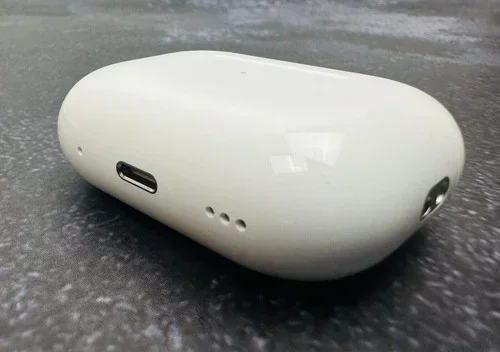
Visual guide about AirPods USB-C charging case
Image source: i.ebayimg.com
The European Union Common Charger Directive
In October 2022, the European Union passed a law called the Common Charger Directive. It required all new phones, tablets, headphones, and many other devices to use USB-C by December 28, 2024. The goal? Reduce electronic waste. Did you know the EU estimates this rule will save consumers around €250 million per year on unnecessary chargers?
Apple didn’t want to make different versions of AirPods for Europe. Instead, they switched the entire product line to USB-C worldwide. This is why even customers in the United States, where the law doesn’t apply, now get USB-C AirPods.
One Cable for Everything
Before USB-C, iPhone users needed Lightning cables, while Android users used USB-C. That meant carrying two types when you had mixed gadgets. Now, most new laptops, phones, tablets, and headphones all accept the same USB-C cable.
Think of USB-C like a universal power outlet adapter. Instead of needing different plugs for every country, you have one plug that works everywhere. That’s what USB-C brings to your everyday tech.
Which AirPods Still Use Lightning?
Apple still sells some older AirPods models with Lightning, but the list is shrinking. As of 2025, these models still use the older Lightning connector:
- AirPods (1st generation) — Lightning case, discontinued but still owned by many
- AirPods (2nd generation) — Lightning case, sold by some retailers
- AirPods (3rd generation) — Lightning case, still sold in some markets
- AirPods Pro (1st generation) — Lightning case, discontinued in 2022
- AirPods Max — Uses Lightning for wired charging (USB-C version released in 2024)
The Lightning Era Is Ending
Apple has been quietly retiring Lightning across its product line. The iPhone switched to USB-C in 2023 with the iPhone 15. The AirPods followed in 2023 with the Pro 2 update. By 2024, AirPods 4 and AirPods Max both gained USB-C versions. Soon, Lightning will be a memory of the past.
Did you know Lightning first appeared in 2012? It replaced the old 30-pin connector that older iPhones used. After 12 years, even Apple decided it was time to move on.
AirPods Max USB-C Update
The AirPods Max over-ear headphones got a USB-C version in September 2024. The original AirPods Max (released in 2020) used Lightning. The new version keeps the same audio quality but adds USB-C charging and several new colors. If you already own Lightning AirPods Max, they continue to work fine—you just need a Lightning cable to charge them.
Does USB-C Change Sound Quality or Performance?
Here’s something important to understand: the USB-C port only charges the case. It doesn’t affect how the AirPods sound at all.
What’s the Same
The audio drivers, chips, microphones, and features all stay the same between Lightning and USB-C versions of the same AirPods model. If you compared AirPods Pro 2 with Lightning to AirPods Pro 2 with USB-C, they would sound identical. The Bluetooth connection from your AirPods to your phone has nothing to do with the charging port on the case.
What’s Different (Just for Pro 2)
The USB-C AirPods Pro 2 do have a couple of small upgrades beyond just the port:
- IP54 dust and water resistance (vs. IPX4 on the Lightning version)
- Lossless audio support with Apple Vision Pro
But these aren’t because of USB-C. They’re just features Apple added when they redesigned the case.
Practical Tips for Using USB-C AirPods
Now that you know which AirPods use USB-C, here are some helpful tips for getting the most out of them.
Buying the Right Cable
Apple stopped including a charging cable in AirPods boxes starting in 2022. So if you don’t already own a USB-C cable, you’ll need to buy one separately. Any USB-C cable will work, but here are a few things to consider:
- Cable length: A 1-meter (3-foot) cable works for most situations
- Durability: Braided cables last longer than rubber ones
- Charging speed: AirPods cases don’t need fast charging, so any basic cable works fine
- Brand: Apple’s own USB-C cables are reliable, but third-party options from Anker, Belkin, and others work just as well
A single USB-C cable can now charge your iPhone 15 or newer, your iPad, your MacBook, and your AirPods. That’s the magic of universal charging.
Wireless Charging Still Works
Every USB-C AirPods case except the basic AirPods 4 supports wireless charging. You can charge them on:
- MagSafe chargers (Apple’s magnetic puck)
- Qi-certified wireless chargers (any standard wireless pad)
- Apple Watch chargers (only on AirPods Pro 2 USB-C and AirPods 4 with ANC)
This gives you flexibility. Forgot your cable? Just drop the case on a wireless pad at a coffee shop or airport.
Check Your Charging Port for Damage
USB-C ports are tougher than Lightning ports, but they can still collect dust and lint. Check the port every few months. If your AirPods aren’t charging well, use a soft brush or compressed air to remove debris. Think of it like cleaning crumbs out of a keyboard—just gentle and careful.
Charging Speed Differences
USB-C doesn’t charge AirPods cases any faster than Lightning. Both take about the same time to fully charge the case. The AirPods Pro 2 case takes roughly an hour to fully charge. Quick five-minute charges give you about an hour of listening time.
What About AirPods and Android Devices?
Here’s a fun fact: AirPods work with Android phones and any Bluetooth device, but the USB-C charging case works even better across platforms. You don’t need special software to plug a USB-C cable into the case. It’s just a basic charging port.
Pairing AirPods with Android
The pairing process differs slightly from iPhone, but it works:
- Open the AirPods case lid
- Press and hold the button on the back until the light flashes white
- Find the AirPods in your Android phone’s Bluetooth settings
- Tap to connect
You’ll get music, podcasts, and calls. But you won’t get features like automatic ear detection or Siri on Android. Those features need Apple’s ecosystem.
Future of AirPods and Charging
Apple keeps improving AirPods with each generation. Looking ahead, we can expect more features in future USB-C models.
What to Expect Next
Apple launched the AirPods Pro 3 in late 2025 with the H3 chip and health features like heart rate monitoring. Future AirPods might include:
- Built-in health sensors (temperature, heart rate)
- Better noise cancellation with AI processing
- Even longer battery life
- Camera features for spatial video
All future AirPods will almost certainly use USB-C. Apple has committed to USB-C across its mobile devices, and there’s no going back to Lightning.
Why USB-C Is Here to Stay
USB-C offers faster data speeds and more power than Lightning. It’s the global standard for charging. Countries from the United States to China are moving toward USB-C requirements. Did you know that more than 1 billion USB-C devices shipped in 2023 alone? The connector is now everywhere.
Final Thoughts: Do Any AirPods Use USB-C?
To wrap things up: yes, several AirPods models use USB-C. As of 2025, the following models have USB-C charging cases:
- AirPods Pro 2 (USB-C version, released 2023)
- AirPods 4 (released 2024)
- AirPods 4 with Active Noise Cancellation (released 2024)
- AirPods Max (USB-C version, released 2024)
If you’re buying new AirPods today, you’ll likely get a USB-C model. Older AirPods with Lightning still work perfectly fine. They just need a Lightning cable to charge, which Apple still sells. The switch to USB-C is good news for everyone. Fewer cables to carry, less e-waste in landfills, and more universal compatibility across all your devices.
Whether you’re team iPhone or team Android, USB-C AirPods make charging simple. One cable, one standard, and a smooth experience for all.
Frequently Asked Questions
Do all AirPods have USB-C now?
No, not all AirPods have USB-C. Only models released from late 2023 onward feature USB-C. Older models like AirPods 1, 2, 3, and the original AirPods Pro still use the Lightning connector. If you’re buying new AirPods today, most current models come with USB-C.
When did AirPods start using USB-C?
Apple introduced the first USB-C AirPods in September 2023 with the updated AirPods Pro 2. This was followed by AirPods 4 and AirPods 4 with Active Noise Cancellation in September 2024, plus the AirPods Max USB-C version. The change was driven by EU regulations requiring a universal charger.
Can I charge USB-C AirPods with any USB-C cable?
Yes, any standard USB-C cable will charge your AirPods case. You don’t need a special cable or high-speed charger. AirPods cases charge slowly, so even basic USB-C cables work perfectly fine. Apple doesn’t include a charging cable in the AirPods box anymore.
Is the USB-C AirPods Pro 2 different from the Lightning version?
The audio quality is identical between both versions. However, the USB-C AirPods Pro 2 have an IP54 rating for dust resistance (better than the Lightning version’s IPX4) and support lossless audio when used with Apple Vision Pro. The charging port is the main visible difference.
Do AirPods with USB-C work with older iPhones?
Yes, AirPods with USB-C work with any iPhone that supports Bluetooth, including older models with Lightning ports. The USB-C port is only on the charging case. The connection between your AirPods and iPhone uses Bluetooth, so it doesn’t matter what charging port your phone has.
Will Apple ever go back to Lightning for AirPods?
No, Apple will not return to Lightning for AirPods. The company has fully committed to USB-C across its product line, including iPhones, iPads, and MacBooks. USB-C is now the industry standard worldwide, and Apple is unlikely to switch away from it in the foreseeable future.