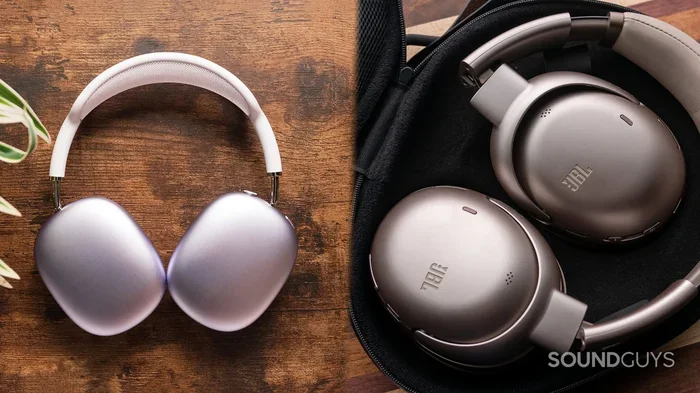
Featured image for Apple AirPods Max JBL speakers
Image source: soundguys.com
Yes, Apple AirPod Max can technically work with JBL speakers, but not in the way most people expect. AirPod Max are headphones designed to receive audio, while JBL speakers typically output audio. They can only interact indirectly, such as when both devices connect to the same iPhone or when you daisy-chain speakers. This guide explains the real possibilities, limitations, and workarounds for using these two popular audio devices together.
If you’ve been wondering whether your shiny Apple AirPod Max can team up with your favorite JBL speaker, you’re not alone. This is one of the most common questions in audio forums and Reddit threads. The confusion makes total sense because both brands dominate the audio world, and it seems like they should just play nicely together.
Here’s the honest truth: AirPod Max and JBL speakers serve fundamentally different purposes in your audio setup. Think of it like asking if your TV remote can control your microwave. Both use batteries and buttons, but they speak completely different languages. That said, there are some clever workarounds and specific scenarios where these two devices can coexist in your audio ecosystem.
By the end of this guide, you’ll understand exactly what works, what doesn’t, and the best ways to enjoy both devices in your daily life. Whether you’re a music lover, podcast addict, or someone who just bought both products and wants them to play together, we’ve got you covered.
Key Takeaways
- AirPod Max are output devices: They receive audio from a source; they don’t broadcast audio to other speakers like JBL models do.
- Direct pairing won’t happen: You cannot pair AirPod Max directly to a JBL speaker because both are designed as endpoints, not transmitters.
- Shared source connection works: Both can play audio from the same iPhone, Mac, or iPad simultaneously using features like Audio Sharing.
- Bluetooth multipoint is limited: AirPod Max only support seamless switching between Apple devices, not simultaneous output to non-Apple speakers.
- JBL PartyBox and Auracast change things: Newer JBL speakers with Auracast technology could theoretically receive audio from future Apple devices.
- Wired connections differ: AirPod Max use a Lightning cable for wired audio, which doesn’t natively work with most JBL speaker inputs.
- The real question is usually different: Most people asking this want to know about connecting AirPod Max to a JBL source device, not the other way around.
📑 Table of Contents
- The Fundamental Difference Between AirPod Max and JBL Speakers
- Can You Directly Pair AirPod Max to a JBL Speaker?
- How AirPod Max and JBL Speakers Can Work Together
- Bluetooth Multipoint and Device Limitations
- The Auracast Revolution: What the Future Might Hold
- Wired Connection Options and Limitations
- Practical Scenarios: When You Might Want Both Devices
- Troubleshooting Common Misconceptions
- Final Thoughts: Making Peace with the Limitations
The Fundamental Difference Between AirPod Max and JBL Speakers
Before diving into the technical details, let’s clear up the biggest misconception. AirPod Max are headphones. JBL speakers are speakers. These are two completely different categories of audio equipment, even though they share the word “audio” in their job descriptions.
Think of it like this: Your AirPod Max are like a private mailbox. They receive messages (audio) and deliver them directly to you. A JBL speaker is like a public announcement system. They broadcast audio to everyone in the room. Mailboxes don’t broadcast, and speakers don’t receive personal audio streams the same way headphones do.
What AirPod Max Are Designed to Do
Apple AirPod Max are premium over-ear headphones released in December 2020. They feature:
- Active Noise Cancellation
- Spatial Audio with dynamic head tracking
- Apple’s H1 chip for seamless device switching
- 20-hour battery life
- Bluetooth 5.0 connectivity
- Lightning connector for wired audio
Every single feature on AirPod Max is designed for one purpose: delivering high-quality audio directly to your ears in a personal listening experience. They are the终点 (endpoint) of an audio signal, not a starting point.
What JBL Speakers Are Designed to Do
JBL makes a massive range of speakers, from portable Bluetooth options like the Flip and Charge series to massive PartyBox systems. Most JBL speakers are designed to:
- Receive audio via Bluetooth, AUX, or Wi-Fi
- Output sound to a room or outdoor space
- Sometimes daisy-chain with other JBL speakers
- Provide loud, room-filling sound
JBL speakers are also endpoints. They receive audio and play it out loud. This shared “endpoint” status is exactly why you can’t simply pair them together like you might pair two AirPod Max to one iPhone.
Can You Directly Pair AirPod Max to a JBL Speaker?
The short and definitive answer is no. You cannot pair AirPod Max directly to a JBL speaker using Bluetooth or any other standard method. Let me explain exactly why this is technically impossible with current technology.
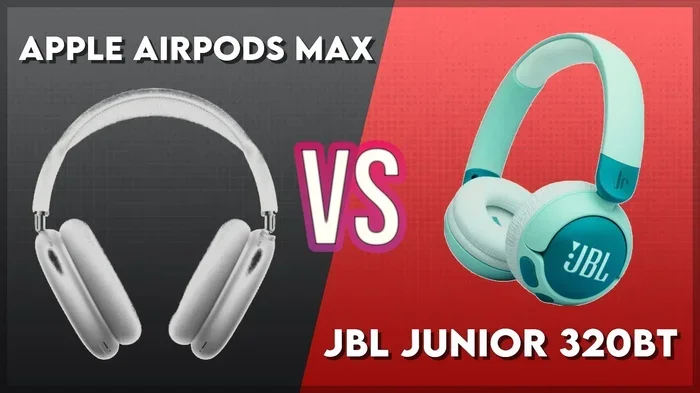
Visual guide about Apple AirPods Max JBL speakers
Image source: i.ytimg.com
Understanding Bluetooth Roles
Bluetooth devices operate in two main roles. Think of them as the talker and the listener:
- Source devices (transmitters): Phones, computers, tablets, and TVs. These send out audio signals.
- Sink devices (receivers): Headphones and speakers. These receive the audio signals.
AirPod Max are strictly a sink device. They have a Bluetooth receiver chip that picks up signals from your iPhone, but they don’t have the transmitter technology needed to send audio to a JBL speaker. JBL speakers are also sink devices. When you try to pair them, it’s like putting two walkie-talkies on the same frequency and expecting them to chat. They’re both listening, so nobody talks.
Even if you put both devices in pairing mode simultaneously, nothing will happen. They’ll simply time out and return to their normal states. There’s no hidden menu, no secret button combination, and no firmware update that will make this work. Apple designed AirPod Max this way intentionally.
The “Broadcast” Myth
You might have seen videos or posts claiming you can broadcast audio from AirPod Max to other speakers. This is a persistent myth that confuses two different technologies:
- Audio Sharing on Apple devices: This lets one iPhone send sound to two pairs of AirPod Max or AirPod Pro, but it doesn’t make the AirPod Max a broadcaster.
- Live Listen feature: This turns your iPhone into a microphone that sends audio to your AirPod Max, but again, the iPhone is doing the broadcasting, not the headphones.
Neither feature turns your AirPod Max into a transmitter that can send audio to a JBL speaker. The iPhone, iPad, or Mac remains the source in every scenario.
How AirPod Max and JBL Speakers Can Work Together
While direct pairing is impossible, there are several legitimate ways to use AirPod Max and JBL speakers in the same audio setup. These methods involve a middleman device that handles the audio distribution.
Method 1: Shared Source Device Connection
The most common scenario is using both devices with the same iPhone or iPad. You can switch between them depending on your activity. Here’s a typical day for a user with both devices:
- Morning commute: AirPod Max for personal music and podcast listening with noise cancellation.
- Afternoon at home: JBL Flip or Charge speaker for room-filling sound while cooking or cleaning.
- Evening relaxation: Back to AirPod Max for a movie with Spatial Audio.
This isn’t really “working together,” but it is the most practical setup for someone who owns both. Your iPhone remembers both devices and switches between them seamlessly when you manually change the audio output in Control Center.
Method 2: Apple Audio Sharing Feature
Did you know that Apple introduced Audio Sharing in iOS 13? This feature lets you share audio between two sets of compatible Apple headphones. Here’s the thing to understand clearly: Audio Sharing only works between two sets of Apple headphones or hearing aids. It doesn’t extend to JBL speakers or any third-party audio equipment.
So while you can share audio from one iPhone to two pairs of AirPod Max, you cannot share audio to one pair of AirPod Max and one JBL speaker. The technology simply isn’t built to handle this combination.
Method 3: Using a Mac with Multiple Outputs
Mac computers offer more flexibility with audio routing. Using third-party software like Loopback or Audio MIDI Setup, you can route audio from your Mac to multiple outputs simultaneously. In theory, you could send audio to:
- Your AirPod Max via Bluetooth
- A JBL speaker connected via Bluetooth or USB
This setup is popular with podcasters and content creators who need to monitor audio on headphones while recording to speakers. However, it requires technical know-how and isn’t a simple plug-and-play solution. The average user probably won’t bother with this complexity.
Method 4: Apple TV and Home Theater Setups
If you have an Apple TV 4, you can pair two sets of AirPod Max for private listening. But you still can’t pair a JBL speaker in this configuration. However, you can use your JBL speaker as the default TV audio output while using AirPod Max for personal late-night listening. Again, not simultaneous use, but complementary use.
Bluetooth Multipoint and Device Limitations
One common point of confusion involves Bluetooth multipoint technology. Let me clarify what your AirPod Max can and cannot do in this area.
AirPod Max Multipoint Capabilities
AirPod Max support what’s called “automatic switching” between Apple devices signed into the same iCloud account. This means:
- You can be listening to music on your iPhone
- Start playing a video on your Mac
- Your AirPod Max automatically switch to the Mac
However, this is device switching, not simultaneous connection. You cannot be connected to both your iPhone and a JBL speaker at the same time. Apple doesn’t include the multipoint technology needed for that scenario.
JBL Speaker Multipoint Capabilities
Many modern JBL speakers do support multipoint Bluetooth. For example, the JBL Flip 6, Charge 5, and Xtreme 3 can connect to two source devices simultaneously. This means you and a friend can both queue up music without disconnecting and reconnecting. But this is about the JBL receiving from two sources, not broadcasting to other speakers or headphones.
The technical asymmetry here is important. JBL speakers can receive from multiple sources, but AirPod Max can only receive (they’re not sources at all). This is a one-to-many setup, not a many-to-many network.
The Auracast Revolution: What the Future Might Hold
Here’s where things get interesting for future-proofing your audio setup. Bluetooth Auracast is a new broadcast audio feature that’s starting to appear in premium audio products. This could fundamentally change how devices like AirPod Max and JBL speakers interact.
What is Bluetooth Auracast?
Auracast is part of the Bluetooth LE Audio specification. It allows a source device to broadcast audio to an unlimited number of receiving devices. Think of it like a radio station for Bluetooth audio.
The Bluetooth Special Interest Group (the organization that maintains Bluetooth standards) expects Auracast to transform audio sharing in public spaces. Airports, gyms, and conference centers could broadcast audio that anyone with compatible headphones can tune into.
JBL’s Adoption of Auracast
JBL has been an early adopter of Auracast technology. Several newer JBL models, including the PartyBox series and some Xtreme models, support Auracast broadcasting. This means these JBL speakers can broadcast their sound to an unlimited number of Auracast-compatible receivers.
Apple’s Cautious Approach
As of early 2026, Apple has not announced AirPod Max support for Auracast. The original AirPod Max launched in 2020 and has not received a hardware refresh that would include the necessary chips. However, Apple has been gradually adding LE Audio support across its product line, so there’s hope for future compatibility.
If Apple does add Auracast support to a future AirPod Max model (let’s call it AirPod Max 2), you could theoretically tune into audio being broadcast by a JBL Auracast speaker. This would open up new possibilities for shared listening experiences. But as of today, this remains a future possibility, not a current capability.
Wired Connection Options and Limitations
Many users assume that wired connections solve compatibility problems. With AirPod Max and JBL speakers, the wired story is complicated but ultimately doesn’t help with direct connections.
AirPod Max Wired Connection
AirPod Max include a Lightning to 3.5mm audio cable in the box (with newer purchases, this might be sold separately). This cable allows you to:
- Connect to a 3.5mm headphone jack on airplanes
- Connect to traditional audio sources without Bluetooth
- Bypass the internal DAC for purer analog audio (in theory)
However, this cable only works in one direction: it brings audio INTO the AirPod Max. There’s no Lightning port on AirPod Max that outputs audio to another device.
JBL Speaker Wired Connections
Most JBL speakers include a 3.5mm AUX input. This allows them to receive audio from devices with headphone jacks. The connection looks like this:
- Source device (phone, laptop) connects to JBL speaker via 3.5mm cable
- Audio flows from source to speaker
- Speaker plays audio out loud
There’s no scenario where you plug your AirPod Max into a JBL speaker and get sound out. The ports simply don’t align for this purpose. AirPod Max have an audio input (via Lightning cable), while JBL speakers have an audio input (via AUX). Two inputs can’t talk to each other without a source device between them.
The Adapter Matrix Problem
You might wonder if various adapters could solve this. After all, with enough dongles, you can connect almost anything. Let’s think through the possibilities:
- Lightning to 3.5mm adapter: This would let AirPod Max connect to a source’s headphone jack. Doesn’t help with JBL speakers.
- 3.5mm splitter: This could split one audio output to two sets of headphones, but you still need a source.
- Bluetooth transmitters: These can add Bluetooth to devices that don’t have it, but they don’t make headphones into transmitters.
No combination of consumer-grade adapters will turn AirPod Max into a transmitter that can send audio to a JBL speaker. The fundamental hardware limitation cannot be overcome with cables alone.
Practical Scenarios: When You Might Want Both Devices
Despite the limitations, there are real-world scenarios where owning both AirPod Max and a JBL speaker makes perfect sense. Understanding these use cases helps clarify what you’re really trying to accomplish.
The Mobile Professional Scenario
Imagine you’re a business professional who travels frequently. You might use AirPod Max during flights for noise cancellation and personal entertainment. When you arrive at your hotel, you might use a JBL Flip or Go speaker for better sound in your room. Both devices serve different purposes in your travel kit.
The key insight here is that “working together” doesn’t necessarily mean simultaneous connection. It means having the right tool for each situation. Sometimes that’s private listening with AirPod Max, and sometimes that’s room-filling sound with a JBL speaker.
The Home Audio Ecosystem Scenario
Many people are creating whole-home audio setups with multiple brands. You might have:
- AirPod Max for personal listening at your desk
- A JBL PartyBox for backyard gatherings
- HomePod for kitchen smart speaker duties
- Sonos speakers for living room music
These devices don’t all need to talk to each other. Your iPhone can output to any of them individually based on what you’re doing. The ecosystem works because of the source device (your phone), not because the speakers communicate with each other.
The Content Creator Scenario
If you’re a podcaster or musician, you might use AirPod Max for monitoring your own voice during recording. Simultaneously, you might want audio to play through a JBL speaker for others in the room to hear. This requires a computer with audio routing software, as mentioned earlier. It’s a more advanced setup but entirely possible.
The Family Sharing Scenario
Families often share audio content. Mom might use AirPod Max for her work calls while the kids use a JBL speaker for music in another room. Both devices work independently from the same family iPad or iPhone, serving different family members in different spaces. This isn’t about the devices working together, but about coexisting in the same household.
Troubleshooting Common Misconceptions
Before we wrap up, let’s address some specific scenarios that often confuse users. These are real questions from audio forums and tech support communities.
“My AirPod Max Show Up in My JBL Speaker’s Bluetooth List”
Some users report seeing AirPod Max appear in their JBL speaker’s available Bluetooth devices. This is actually impossible with normal operation. What might be happening is:
- You’re seeing a different product with a similar name
- The JBL speaker is showing previously connected devices from other sources
- There’s a glitch in the Bluetooth menu that resolves on its own
If you actually select AirPod Max from a JBL speaker’s Bluetooth menu, nothing will happen. The connection will fail silently. This is expected behavior, not a bug.
“Can I Use AirPod Max as a Microphone for My JBL Speaker?”
No, AirPod Max cannot function as a microphone input for a JBL speaker. Even though AirPod Max have microphones for calls and Siri, these microphone signals cannot be routed to another audio device as an input source. The microphone audio is processed by the H1 chip and sent back through Bluetooth to the phone, not to another Bluetooth speaker.
“Will a Software Update Enable Direct Connection?”
Apple could theoretically release a software update that enables AirPod Max to broadcast audio via Bluetooth. However, this would require:
- Hardware support for Bluetooth broadcasting (which current AirPod Max may not have)
- Software support on receiving devices
- A valid use case that Apple wants to support
Apple has not hinted at any such feature. Given Apple’s focus on personal audio experiences, it’s unlikely they’ll add broadcasting capabilities to AirPod Max in a future update. They’re more likely to add Auracast receiver capabilities, not transmitter capabilities.
Final Thoughts: Making Peace with the Limitations
So, do Apple AirPod Max work with JBL speakers? The answer is a nuanced “yes and no.” They don’t work together in the way you might hope, with direct pairing or simultaneous audio streaming. But they absolutely can coexist in your audio life, serving different purposes at different times.
The key takeaway is that these are both premium audio devices designed for specific use cases. AirPod Max excel at personal, immersive listening with industry-leading noise cancellation. JBL speakers excel at room-filling sound for gatherings, outdoor activities, and casual listening. Trying to force them into a relationship that wasn’t designed to exist will only lead to frustration.
Instead, embrace each device for what it does best. Use AirPod Max when you want to disappear into your own audio world. Use your JBL speaker when you want to share music or fill a space with sound. Your iPhone, iPad, or Mac is the conductor that orchestrates which device plays at any given moment.
Looking ahead, Bluetooth LE Audio and Auracast technology promise to make audio devices more interoperable than ever. While AirPod Max don’t currently support these standards, future versions likely will. JBL is already on board with Auracast in many of their newer speakers. The future of personal and shared audio is bright, even if the present requires a bit of compromise.
For now, enjoy your AirPod Max for what they do exceptionally well. Enjoy your JBL speakers for what they do exceptionally well. And let your source device be the bridge between them when needed. That’s the reality of modern multi-device audio ecosystems, and honestly, it works pretty well once you understand the boundaries.
Frequently Asked Questions
Can I pair AirPod Max directly to a JBL Bluetooth speaker?
No, you cannot pair AirPod Max directly to a JBL speaker. Both devices are designed as audio receivers, not transmitters. They cannot establish a direct Bluetooth connection because neither one sends out audio signals that the other can pick up. You’ll always need a source device like an iPhone or Mac in between them.
Will AirPod Max work with JBL PartyBox speakers for events?
AirPod Max cannot connect directly to JBL PartyBox speakers. However, if you’re using a mixer or DJ controller with the PartyBox, your audio source (like an iPhone) can output to the PartyBox via Bluetooth or cable while you monitor the sound privately on your AirPod Max. This requires third-party audio routing software on a computer.
Can I use Audio Sharing to connect AirPod Max and a JBL speaker?
Apple’s Audio Sharing feature only works between two pairs of compatible Apple headphones or hearing aids. It does not support connecting to JBL speakers or any third-party audio devices. Both devices need to be in the Apple ecosystem for Audio Sharing to function.
Do AirPod Max support Auracast to work with newer JBL models?
As of early 2026, AirPod Max do not support Bluetooth Auracast. The original AirPod Max launched in 2020 and use an older Bluetooth chip that may not support LE Audio features. Future AirPod Max models might include Auracast support, which would allow them to receive broadcasts from Auracast-compatible JBL speakers.
Can I use a wired connection between AirPod Max and a JBL speaker?
No wired connection exists that lets AirPod Max output audio to a JBL speaker. AirPod Max use a Lightning cable for audio input only, meaning they receive audio rather than send it. JBL speakers typically have 3.5mm AUX inputs for receiving audio. Two inputs cannot connect directly without a source device providing the signal.
What’s the best way to use AirPod Max and JBL speakers together?
The best approach is to use both devices with the same source device (iPhone, iPad, or Mac) for different purposes. Use AirPod Max for personal listening with noise cancellation when you want privacy, and switch to your JBL speaker when you want room-filling sound for activities or gatherings. Your source device handles the switching seamlessly within the Apple ecosystem.