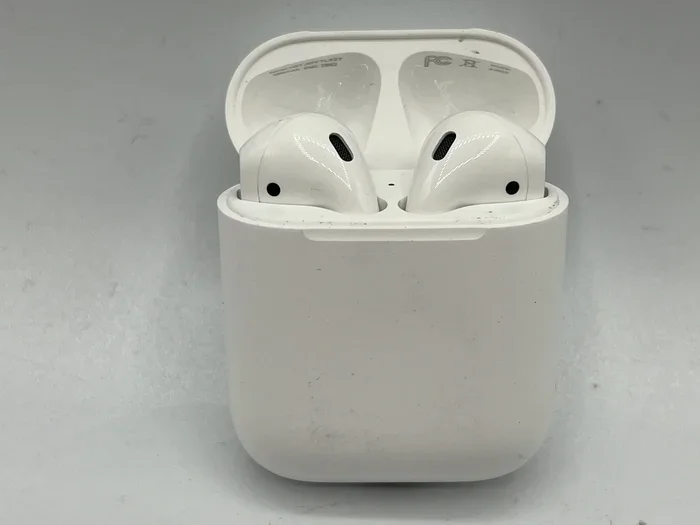
Featured image for first generation AirPods product photo
Image source: i.ebayimg.com
The first-generation AirPods, released in December 2016, do NOT have noise cancellation of any kind. They rely solely on a standard earbud design that lets outside sound in. Active Noise Cancellation (ANC) was first introduced with the AirPods Pro in October 2019, while the standard AirPods lineup didn’t gain ANC until the AirPods 4 in September 2024.
Picture this: you’re on a crowded subway, the train screeching along the tracks, and all you want is a little peace and quiet with your favorite podcast. You pop in your AirPods, hit play, and… nothing changes. The rumble of the train still pounds through your ears like a drum solo. If this sounds familiar, you might be wondering whether the AirPods you’re using are actually supposed to block out noise.
Here’s the short answer that might surprise you: the very first AirPods that Apple ever released have zero noise cancellation. None. Zilch. Nada. Released way back in December 2016, the original AirPods were designed as simple wireless earbuds meant to make your iPhone experience cable-free, not to silence the world around you.
But don’t feel bad if you didn’t know this. Millions of people bought AirPods assuming they had noise-canceling magic built in, only to discover that the sounds of crying babies, chatty coworkers, and honking horns still came through loud and clear. In this guide, we’ll break down exactly what the original AirPods can (and can’t) do, when Apple finally added noise cancellation, and which AirPods you should buy if blocking out the world is your top priority.
Key Takeaways
- Original AirPods Have No Noise Cancellation: The first-generation AirPods (2016) and second-generation AirPods (2019) offer zero noise cancellation features, not even passive isolation.
- ANC Debuted with AirPods Pro: Active Noise Cancellation first appeared in the AirPods Pro lineup in October 2019, not in the standard AirPods line.
- Standard AirPods 4 Added ANC: It took Apple eight years to bring Active Noise Cancellation to the standard (non-Pro) AirPods with the AirPods 4 in September 2024.
- Three Types of Noise Control Exist: Apple offers Active Noise Cancellation, Transparency Mode, and Adaptive Audio across various generations.
- Passive Isolation Is Different: Even without ANC, some AirPods block sound physically, but original AirPods don’t even do this well due to their hard plastic design.
- Upgrade Path Matters: If noise cancellation is your priority, you’ll need AirPods Pro, AirPods Pro 2, AirPods 4 (ANC version), or AirPods Max.
- Price Reflects Features: ANC-capable AirPods cost significantly more than the basic models, reflecting the advanced microphone and processing technology required.
📑 Table of Contents
- The Honest Answer: Original AirPods Have Zero Noise Cancellation
- Understanding the Three Types of Noise Control in AirPods
- The Complete AirPods Timeline: When Each Model Got Noise Cancellation
- Why Apple Waited So Long to Add Noise Cancellation
- How to Tell Which AirPods You Have (And What They Can Do)
- What to Do If Your Original AirPods Don’t Have Noise Cancellation
- The Future of Noise Cancellation in AirPods
- Frequently Asked Questions About Original AirPods and Noise Cancellation
The Honest Answer: Original AirPods Have Zero Noise Cancellation
Let’s get straight to the point because this is the question you came here to answer. The first-generation AirPods, which Apple launched on December 13, 2016, do not have any form of noise cancellation. Not active. Not passive. Not even the “kind of” noise reduction you might get from sticking your fingers in your ears.
Why Original AirPods Don’t Block Sound
Here’s the deal in plain English. The original AirPods are designed with a hard plastic shape that doesn’t seal against your ear canal. Think of it like trying to block rain by holding a small piece of cardboard over your head. There are gaps everywhere, so sound just slips right through. Unlike earbuds with silicone or foam tips (like the AirPods Pro), the original AirPods sit loosely in your ear, leaving plenty of room for outside noise to creep in.
This design choice was intentional on Apple’s part. They wanted the original AirPods to feel comfortable and let you hear your surroundings for safety reasons. While this is great for joggers who need to hear traffic, it’s terrible for anyone trying to focus in a noisy coffee shop or catch every word of a movie on a plane.
What “No Noise Cancellation” Actually Means in Practice
When we say the original AirPods have no noise cancellation, we mean they cannot:
- Cancel out airplane engine hum
- Block office chatter or keyboard clicking
- Reduce the roar of public transportation
- Mute street sounds while walking
- Improve audio clarity in loud environments
Basically, the original AirPods just play music into your ears while everything else keeps happening around you. The only “noise reduction” you get is whatever happens naturally when you have something physically in your ears, which for these earbuds, is barely anything.
Understanding the Three Types of Noise Control in AirPods
Before we dive deeper into which AirPods have what features, let’s clear up some confusing terminology. Apple uses several different terms for noise-related features, and they all mean very different things.
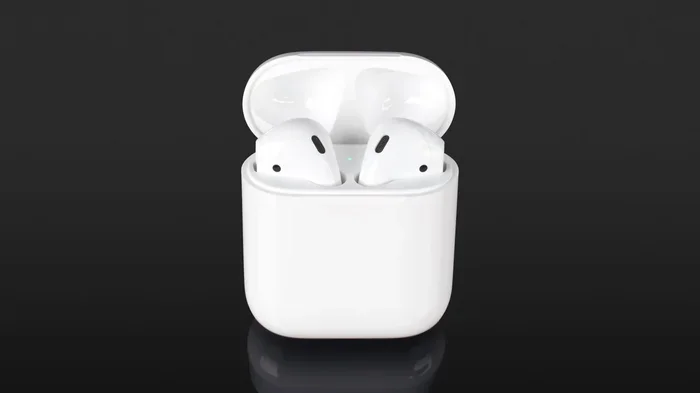
Visual guide about first generation AirPods product photo
Image source: headphonecheck.com
Active Noise Cancellation (ANC)
Active Noise Cancellation is the fancy, high-tech version of noise blocking. It works by using tiny microphones on the earbuds to listen to the sounds around you. Then, in less than a millisecond, the earbuds create an opposite sound wave (called “anti-noise”) that cancels out the original sound before it reaches your eardrum. It’s like adding a number to its negative version on a calculator. Two plus negative two equals zero. Same concept, but with sound waves.
This is the gold standard for noise cancellation, and it’s what most people mean when they say they want “noise-canceling earbuds.” According to Apple’s testing, AirPods Pro models can reduce unwanted background noise by up to twice as much as previous generations.
Transparency Mode
Transparency Mode is basically the opposite of noise cancellation. Instead of blocking outside sounds, it deliberately lets them in. Using those same external microphones, Transparency Mode pipes outside audio into your ears along with your music. It’s like having superhuman hearing, where you can listen to your podcast while still hearing your barista call out your name.
Adaptive Audio
Adaptive Audio is the newest feature, introduced with iOS 17 and the AirPods Pro 2. It’s like having a smart assistant that automatically switches between ANC and Transparency Mode based on your environment. Walking into a noisy cafe? It turns on noise cancellation. Starting a conversation with someone? It switches to Transparency Mode automatically. You don’t have to think about it.
The Complete AirPods Timeline: When Each Model Got Noise Cancellation
Now that you understand the different noise-canceling technologies, let’s look at exactly when each AirPods model got these features. This timeline will help you figure out which version you have and what it can do.
December 2016: AirPods (1st Generation)
- Noise Cancellation: None
- Transparency Mode: No
- Design: Hard plastic, no seal
- Notable Features: First truly wireless Apple earbuds, W1 chip, 5 hours battery life
These were the earbuds that started it all. Revolutionary for their time in terms of wireless convenience, but completely lacking in noise-blocking technology. They retailed at $159 and sold like hotcakes despite (or maybe because of) their simple feature set.
March 2019: AirPods (2nd Generation)
- Noise Cancellation: None
- Transparency Mode: No
- Design: Same hard plastic, no seal
- Notable Features: H1 chip, “Hey Siri” support, optional wireless charging case
The second-generation AirPods were essentially a speed upgrade. They had a faster chip for quicker connections and the ability to summon Siri with your voice. But here’s the disappointing part: still no noise cancellation. Apple gave us faster pairing but not quieter listening.
October 2019: AirPods Pro (1st Generation)
- Noise Cancellation: YES (Active)
- Transparency Mode: Yes
- Design: Silicone tips, in-ear design
- Notable Features: First AirPods with ANC, customizable ear tips, IPX4 water resistance
This was the moment Apple fans had been waiting for! The AirPods Pro finally brought Active Noise Cancellation to the AirPods family. The silicone tips created a seal in your ear, and tiny microphones detected outside noise to cancel it out. Apple priced these at $249, a significant jump from the standard AirPods.
December 2020: AirPods Max
- Noise Cancellation: YES (Active)
- Transparency Mode: Yes
- Design: Over-ear headphones
- Notable Features: Premium build, high-fidelity audio, $549 price tag
The AirPods Max were Apple’s first over-ear headphones, and yes, they had noise cancellation. However, at $549, they were significantly more expensive than most competitors. They used eight microphones for ANC and offered what many reviewers called the best noise cancellation in any Apple product.
March 2022: AirPods (3rd Generation)
- Noise Cancellation: None
- Transparency Mode: No
- Design: Contoured shape, shorter stems (still no seal)
- Notable Features: Spatial Audio, MagSafe charging, better battery life
The third-generation AirPods got a major design refresh that made them look more like the AirPods Pro. They featured Spatial Audio and better sound quality, but Apple still left out noise cancellation from the standard line. At this point, it was clear that ANC was a “Pro” feature that required paying a premium.
September 2022: AirPods Pro (2nd Generation)
- Noise Cancellation: YES (Active, improved)
- Transparency Mode: Yes (Adaptive)
- Design: Same silicone tips, new H2 chip
- Notable Features: 2x more ANC than previous gen, Adaptive Transparency, touch controls
The AirPods Pro 2 took noise cancellation to the next level. Apple claimed these could cancel twice as much noise as the first-generation AirPods Pro. They also introduced Adaptive Transparency Mode, which reduces loud sounds while still letting you hear what’s happening around you.
September 2024: AirPods 4 (Two Variants)
- AirPods 4 (Standard): No noise cancellation
- AirPods 4 (ANC): YES, finally!
- Transparency Mode: Yes (on ANC version)
- Notable Features: First standard AirPods with ANC, H2 chip, USB-C charging
This was a historic moment. For the first time ever, Apple brought Active Noise Cancellation to the standard AirPods lineup (not the Pro line). However, there’s a catch. Apple offered the AirPods 4 in two versions: a cheaper $129 model without ANC and a $179 model with ANC. So even in 2024, you still have to pay extra for noise cancellation on standard AirPods.
Why Apple Waited So Long to Add Noise Cancellation
You might be wondering: why did it take Apple eight years to put noise cancellation in their standard AirPods? The answer involves a mix of technology, pricing, and marketing strategy.
The Technical Challenges
Active Noise Cancellation isn’t simple to implement. You need:
- External microphones that can detect ambient noise
- A processor fast enough to create anti-noise waves in real-time
- A good seal in the ear to maximize the effect
- Battery power to run all this technology
The original AirPods lacked all of these. They had no seal, limited processing power, and battery life that was already stretched thin. Adding ANC to the original design would have made them bulky, expensive, or short-lived on a charge.
The Marketing Strategy
Apple is a master at tiered product pricing. By keeping noise cancellation exclusive to the Pro line for years, they gave customers a reason to pay $100 more for AirPods Pro. If the basic $129 AirPods had ANC, fewer people would splurge on the $249 Pro version. It was good business sense, even if it frustrated budget-conscious shoppers.
The Battery Life Factor
ANC is power-hungry. The microphones and processing chips needed for noise cancellation drain battery faster. Apple waited until battery technology and chip efficiency improved enough to add ANC without sacrificing the all-day battery life that AirPods are famous for.
How to Tell Which AirPods You Have (And What They Can Do)
Not sure which generation of AirPods you own? Here’s a simple guide to identifying your model and its noise-canceling capabilities.
Check Your iPhone Settings
The easiest way is to check your iPhone. Go to Settings, then Bluetooth, then tap the “i” next to your AirPods. This will show you the model number, which you can match against Apple’s support page. It takes about 30 seconds and requires no guesswork.
Look at the Physical Design
You can also identify your AirPods by looking at them:
- AirPods 1 & 2: Long stems, one-size-fits-all hard plastic design
- AirPods 3: Shorter stems, contoured shape, but still hard plastic
- AirPods 4 (Standard): Even shorter stems, redesigned contoured shape
- AirPods 4 (ANC): Looks similar to standard AirPods 4 but has ANC hardware
- AirPods Pro 1 & 2: Silicone ear tips, shorter stems, wider design
- AirPods Max: Over-ear headphones (obviously different)
Look for the Silicone Tips
Here’s a dead giveaway: if your AirPods have silicone ear tips that create a seal in your ear canal, you have either AirPods Pro 1, AirPods Pro 2, or AirPods Pro 3. Only these models (plus AirPods 4 ANC and AirPods Max) have Active Noise Cancellation.
What to Do If Your Original AirPods Don’t Have Noise Cancellation
If you’ve just discovered that your original AirPods lack noise cancellation, you have several options depending on your needs and budget.
Option 1: Upgrade to AirPods Pro 2
If noise cancellation is your top priority, the AirPods Pro 2 are your best bet. They offer the best ANC in the AirPods lineup, great sound quality, and all the latest features like Adaptive Audio. At around $200-$250, they’re an investment but worth it for frequent travelers and commuters.
Option 2: Try AirPods 4 with ANC
If you prefer the non-silicone, open-ear design of standard AirPods, the AirPods 4 with ANC are a solid choice. They offer many of the same features as the Pro line without the in-ear seal. At $179, they’re more affordable than the Pro models.
Option 3: Use Software Tricks
If upgrading isn’t in your budget right now, you can maximize what you have. Crank up the volume to mask background noise (though this isn’t great for your hearing). Use the equalizer settings in your music app to emphasize certain frequencies. Or try noise-masking apps that play white noise or nature sounds.
Option 4: Consider Third-Party Alternatives
Brands like Anker, Sony, and Bose offer excellent noise-canceling earbuds at various price points. Some models under $100 now offer ANC that rivals or beats the original AirPods Pro. If noise cancellation is your main concern, you might find better value outside the Apple ecosystem.
The Future of Noise Cancellation in AirPods
Looking ahead, it’s clear that noise cancellation will become standard in more AirPods models. Apple’s release of the AirPods 4 with ANC showed they’re willing to bring this technology to cheaper models. Industry experts predict that within the next few years, even the base-model AirPods will include some form of noise cancellation as standard.
Upcoming Features to Watch
Apple is reportedly developing even more advanced noise control features, including:
- Better adaptive algorithms that learn your environment
- Hearing health features that monitor sound exposure
- Conversation enhancement tools
- Personalized noise profiles based on your hearing
These features will likely appear in future AirPods Pro models and eventually trickle down to the standard line.
Frequently Asked Questions About Original AirPods and Noise Cancellation
Question 1: Can I add noise cancellation to my original AirPods?
No, there’s no way to add Active Noise Cancellation to existing AirPods. The hardware required (microphones, processors, sealed design) must be built into the earbuds from the start. Software updates cannot add ANC to hardware that lacks the necessary components.
Question 2: Are original AirPods still worth buying in 2025?
Honestly, no. The original AirPods are quite old now, and you can find better options for similar money. The AirPods 4 (even the non-ANC version) offers improved sound, better battery life, and modern features. Used original AirPods can be found for under $50, which might be worth it for light users who don’t care about noise cancellation.
Question 3: Do AirPods 2 have noise cancellation?
No, the second-generation AirPods (released in 2019) also lack noise cancellation. Apple didn’t add ANC to the standard AirPods line until the AirPods 4 in September 2024. If you need noise cancellation and want the standard (non-Pro) design, you’ll need the AirPods 4 with ANC.
Question 4: What’s the cheapest AirPods with noise cancellation?
As of late 2024, the cheapest AirPods with Active Noise Cancellation are the AirPods 4 with ANC, priced at $179. The AirPods Pro 2 are typically around $200-$250, while the AirPods Max cost $549. None of the older standard AirPods (1st, 2nd, or 3rd generation) have noise cancellation.
Question 5: Is Transparency Mode the same as noise cancellation?
No, they’re opposites. Noise cancellation blocks outside sounds, while Transparency Mode deliberately lets outside sounds in. Many modern AirPods (Pro 1, Pro 2, AirPods 4 ANC) offer both modes, allowing you to switch between them based on your situation.
Question 6: Can noise cancellation damage my hearing?
No, Active Noise Cancellation is safe for your hearing. In fact, it can protect your hearing by allowing you to listen to music at lower volumes in noisy environments. However, using high volumes for extended periods can damage your hearing, regardless of whether you’re using ANC or not. The CDC estimates that 12.5% of children and adolescents aged 6-19 years have noise-induced hearing loss, making this an important consideration.