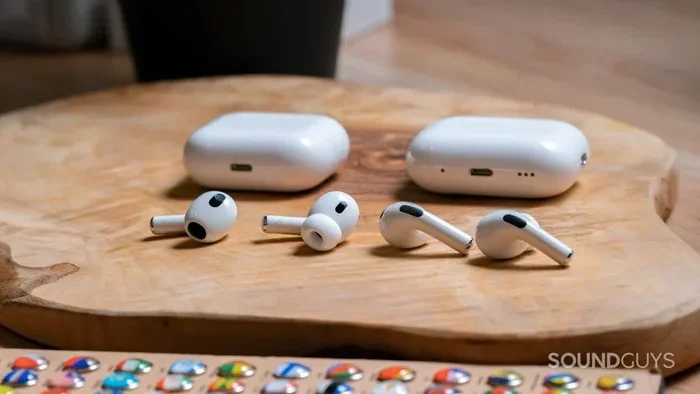
Featured image for AirPods Pro 2 multiple devices
Image source: soundguys.com
Yes, AirPods Pro 2 have multipoint connectivity, allowing them to connect to two devices simultaneously. This feature lets you seamlessly switch between your iPhone, iPad, Mac, or Apple Watch without manually disconnecting and pairing. Available through a software update, multipoint works automatically within the Apple ecosystem, making it a game-changer for users juggling multiple devices daily.
Picture this: you’re watching a movie on your iPad, and suddenly your iPhone rings. Instead of fumbling through settings or manually swapping connections, your earbuds smoothly transfer the call to your ears. That’s the magic of multipoint connectivity. And yes, AirPods Pro 2 have it. This small but mighty feature has transformed how millions of people use their wireless earbuds daily. Let’s dive deep into everything you need to know about this capability, how it works, and why it matters.
Apple announced multipoint support for AirPods Pro 2 back in January 2023 through a free firmware update. Since then, this feature has become one of the most requested and celebrated additions to the AirPods lineup. Whether you’re a remote worker, a fitness enthusiast, or someone who simply loves tech, understanding multipoint can seriously upgrade your listening experience.
In this guide, we’ll explore the who, what, where, when, and why of AirPods Pro 2 multipoint. You’ll learn how to set it up, which devices work best, common troubleshooting tips, and how this feature compares to competitors. By the end, you’ll be a multipoint expert ready to make the most of your AirPods.
Key Takeaways
- Yes, AirPods Pro 2 support multipoint: They can connect to two Apple devices at once for automatic switching.
- iOS 16.3 update was essential: Apple enabled multipoint via a free software update released in early 2023.
- Seamless Apple ecosystem integration: Works best across iPhone, iPad, Mac, and Apple Watch with the same Apple ID.
- Bluetooth 5.3 support: AirPods Pro 2 use advanced Bluetooth for stable dual connections.
- Android compatibility is limited: Multipoint only functions within Apple’s ecosystem, not with Android or Windows devices.
- Audio quality remains consistent: Switching happens instantly without dropping calls or interrupting playback.
- Battery impact is minimal: The dual connection feature uses little extra power thanks to efficient chip design.
📑 Table of Contents
- What Is Multipoint and How Does It Work on AirPods Pro 2?
- Who Can Use AirPods Pro 2 Multipoint?
- When Did AirPods Pro 2 Get Multipoint Support?
- Where Can You Use AirPods Pro 2 Multipoint Most Effectively?
- Why Is Multipoint Such a Big Deal?
- How to Set Up and Optimize AirPods Pro 2 Multipoint
- Comparing AirPods Pro 2 Multipoint to the Competition
- The Future of AirPods Multipoint Technology
- Final Thoughts: Is Multipoint a Reason to Buy AirPods Pro 2?
What Is Multipoint and How Does It Work on AirPods Pro 2?
Multipoint is a Bluetooth technology that allows your earbuds to maintain active connections with two devices at the same time. Think of it like having two phone lines open simultaneously. Instead of your earbuds being “married” to one device, they can flirt with two. When audio plays on either device, your AirPods automatically switch to deliver that sound.
The Simple Analogy
Imagine you’re a waiter at a restaurant with two tables. You don’t ignore one table completely while serving the other. Instead, you keep an eye on both, responding whenever someone needs attention. That’s exactly what multipoint does with your devices. Your AirPods stay connected to both, ready to jump in whenever audio needs playing.
The Technical Magic Behind It
AirPods Pro 2 use Apple’s H2 chip, which is a tiny powerhouse of computing. This chip manages Bluetooth 5.3 connections with extreme efficiency. When you pair your AirPods with two Apple devices, the H2 chip creates two simultaneous connection pathways. It monitors audio signals from both devices and intelligently decides which one to prioritize based on what’s happening.
For example, if you’re listening to music on your Mac and a call comes in on your iPhone, the chip recognizes the higher-priority event (the phone call) and switches instantly. Once the call ends, your AirPods can automatically return to the Mac audio, or stay on the iPhone depending on your settings.
What Makes Apple’s Implementation Special
Apple’s multipoint isn’t just standard Bluetooth multipoint. It’s deeply integrated with iCloud and your Apple ID, creating what Apple calls “automatic switching.” This means the system knows it’s you using both devices, not someone else borrowing your iPad. The experience feels magical because Apple’s ecosystem is designed to work as one unified system rather than separate gadgets.
Who Can Use AirPods Pro 2 Multipoint?
The short answer: anyone with AirPods Pro 2 and the right software. But let’s get specific about compatibility.
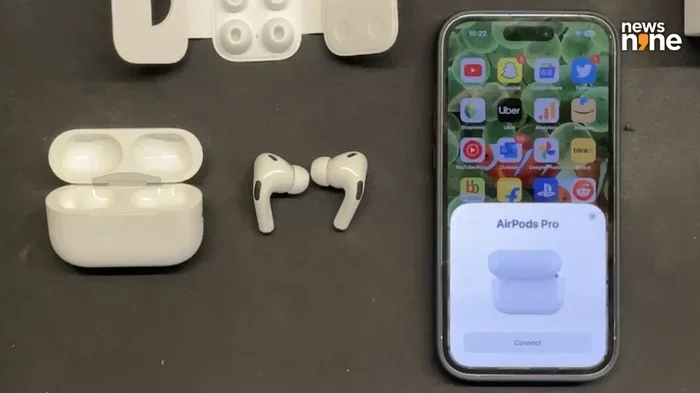
Visual guide about AirPods Pro 2 multiple devices
Image source: images.news9live.com
Device Requirements
- iPhone: iPhone XS5 and newer with iOS 16.3 or later
- iPad: iPad Pro, iPad Air (3rd generation and newer), iPad (8th generation and newer), iPad mini (5th generation and newer) with iPadOS 16.3 or later
- Mac: MacBook Pro (2018 and newer), MacBook Air (2018 and newer), iMac (2019 and newer), Mac Pro (2019 and newer), Mac mini (2018 and newer) with macOS Ventura 13.2 or later
- Apple TV: Apple TV 4K (1st generation and newer) with tvOS 16.3 or later
- Apple Watch: Not directly supported for multipoint, but works seamlessly within the ecosystem
Apple ID Requirement
Here’s a crucial detail: all devices must be signed into the same Apple ID. This is how Apple’s automatic switching feature works its magic. Your AirPods recognize that the same person owns both devices and allow seamless transitions. If you sign into different Apple IDs, the multipoint experience becomes limited or non-existent.
What About Android or Windows Users?
Unfortunately, multipoint on AirPods Pro 2 only works within the Apple ecosystem. If you try to connect to an Android phone and a Windows laptop, you won’t get the seamless switching experience. You can manually pair with non Apple gadgets, but the automatic intelligence won’t function the same way. This is a significant limitation for users in mixed-device households.
When Did AirPods Pro 2 Get Multipoint Support?
Multipoint didn’t launch with the original AirPods Pro 2 release in September 2022. Apple introduced it through a firmware update in January 2023, alongside iOS 16.3. This was a strategic move, as Apple had been quietly developing the feature and testing it with developers for months before the public release.
The Timeline of Events
- September 2022: AirPods Pro 2 launch with the H2 chip and improved audio quality
- January 2023: iOS 16.3 release enables multipoint via firmware update 6B34
- March 2023: macOS Ventura 13.2 expands support to Mac computers
- Ongoing: Apple continues refining the switching algorithm through smaller updates
Why the Delay?
Apple is famous for taking its time with features. The company wanted to ensure the multipoint experience was smooth before releasing it. Early beta testers reported occasional glitches, including random switches between devices. Apple spent months fine-tuning the AI that decides when to switch, making sure it only happens when the user actually wants it.
Did You Know?
Apple’s implementation of multipoint is actually a form of “intelligent switching” rather than true simultaneous audio streaming. Only one device actively sends audio at a time. The H2 chip manages which device has priority, creating the illusion of simultaneous connection while actually being very smart about resource management.
Where Can You Use AirPods Pro 2 Multipoint Most Effectively?
Multipoint shines brightest in scenarios where you frequently move between devices. Let’s explore the most common use cases where this feature becomes a lifesaver.
The Remote Worker’s Dream
Imagine you’re working from home with your MacBook open for video calls and your iPhone nearby for personal messages. When a Zoom meeting starts on your Mac, your AirPods automatically connect. When your phone rings with an important call, the meeting audio pauses and the call comes through clearly. Once you hang up, the meeting resumes. No manual reconnection needed.
The Entertainment Lover’s Setup
You’re streaming a show on your iPad while scrolling through social media on your iPhone. A video autoplays on your iPhone with sound. Your AirPods switch to the iPhone audio instantly. Pause the video, and the iPad audio resumes. It’s like having a personal audio assistant managing your listening experience.
The Fitness Enthusiast’s Workout
You’re at the gym with your Apple Watch playing music through your AirPods. Suddenly, you receive a call on your iPhone. The AirPods switch to the call so you can answer without missing a beat. After the call, the music returns. No sweaty fumbling with your phone required.
The Creative Professional’s Workflow
Graphic designers and video editors often work across multiple Apple devices. A designer might edit a video on their Mac while referencing inspiration on their iPad. With multipoint, AirPods can stay connected to both, making it easier to preview audio without constantly reconnecting.
Limitations in Specific Environments
Multipoint can be less reliable in certain situations. For example, if you’re in a crowded coffee shop with lots of Bluetooth interference, the switching might be slightly delayed. Also, if you’re using your AirPods with an Apple TV and another device simultaneously, the Apple TV tends to “hog” the connection due to its high bandwidth requirements.
Why Is Multipoint Such a Big Deal?
You might be wondering why this feature gets so much attention. After all, you could just manually disconnect and reconnect your AirPods, right? Well, manual switching is annoying, time-consuming, and often results in missed calls or interrupted audio. Multipoint eliminates this friction.
The Productivity Boost
Studies show that context switching costs the average worker up to 40% of their productive time. While most of this research focuses on mental task-switching, the principle applies to device-switching too. Every time you fumble with Bluetooth settings is a micro-interruption that breaks your flow. Multipoint eliminates these interruptions, keeping you in your productive zone.
The Audio Quality Factor
Did You Know? Apple’s multipoint implementation maintains consistent audio quality across both devices. Unlike some competitors that reduce audio fidelity when connecting to multiple devices, AirPods Pro 2 preserve their full sound profile regardless of which device is active. This is thanks to the H2 chip’s efficient processing power.
The Battery Efficiency Question
You might worry that maintaining two connections drains battery faster. While there’s a slight increase in power consumption, it’s minimal, typically less than 5% additional battery drain. The H2 chip is designed for efficiency, and the dual-connection state uses advanced power management to keep your AirPods running for their full 6-hour listening time.
The Competitive Landscape
Before AirPods Pro 2 got multipoint, brands like Samsung, Jabra, and Sony had the feature. Apple’s late entry worried some fans, but the company’s implementation has been praised as one of the smoothest on the market. Samsung’s Galaxy Buds, for instance, require manual app configuration, while Apple’s multipoint works out of the box.
The User Experience Difference
What truly sets Apple’s multipoint apart is the “it just works” philosophy. You don’t need to configure anything beyond having your devices signed into the same Apple ID. There’s no special app to download, no settings to toggle. The feature operates invisibly in the background, which is exactly how technology should work.
How to Set Up and Optimize AirPods Pro 2 Multipoint
Getting started with multipoint is refreshingly simple, but there are some tips and tricks to maximize the experience.
Step-by-Step Setup
- Update Your Software: Ensure all your Apple devices run the latest operating system. Check Settings > General > Software Update on iOS devices, and System Settings > Software Update on Mac.
- Update AirPods Firmware: Place your AirPods in their charging case, connect them to power, and keep them near your iPhone. The firmware should update automatically, but you can force it by resetting the AirPods.
- Pair Your AirPods: Open the AirPods case near your iPhone and follow the on-screen prompts. Once paired with your iPhone, the connection automatically syncs to other devices on your Apple ID via iCloud.
- Verify Multipoint: Play audio on your iPad or Mac while wearing your AirPods. The audio should come through automatically. Then play audio on your iPhone, and the AirPods should switch.
Tips for Optimal Performance
- Keep Devices Updated: Apple frequently improves multipoint through software updates. Always install the latest iOS, iPadOS, and macOS versions.
- Manage Your Apple ID: Ensure all devices use the same Apple ID for seamless switching.
- Disable Unused Devices: If you have multiple iPads or Macs, turn off Bluetooth on devices you’re not using to prevent confusion.
- Customize Switching Behavior: In Settings > Bluetooth > AirPods Pro, you can adjust microphone settings and other preferences that affect switching behavior.
Common Troubleshooting Scenarios
Sometimes multipoint doesn’t work as expected. Here are solutions to common issues:
Problem: AirPods won’t switch between devices.
Solution: Toggle Bluetooth off and on on both devices. If that doesn’t work, reset your AirPods by holding the setup button on the case for 15 seconds.
Problem: Audio quality drops when switching.
Solution: Check for interference from other Bluetooth devices. Move away from crowded Wi-Fi routers or microwaves.
Problem: One device keeps disconnecting.
Solution: “Forget” the AirPods on that device and re-pair them. Also, ensure the device’s Bluetooth software is current.
Advanced Settings to Tweak
Dive into your AirPods settings to customize the experience:
- Automatic Ear Detection: When enabled, audio pauses when you remove an AirPod and resumes when you put it back.
- Automatic Device Switching: Found in Settings > Bluetooth > AirPods Pro > Connect to This iPhone. You can set it to “Automatically” or “When Last Connected to This iPhone.”
- Personalized Spatial Audio: Enhances the audio experience when switching between devices.
When Multipoint Doesn’t Work Well
Despite Apple’s polish, multipoint occasionally stumbles. You might experience issues when:
- One device is in low-power mode
- You’re using older Apple devices not on the compatibility list
- Bluetooth interference is high (crowded areas, many connected devices)
- Your AirPods battery is very low (below 10%)
In these cases, manual connection through the Bluetooth menu is your best bet.
Comparing AirPods Pro 2 Multipoint to the Competition
How does Apple’s multipoint stack up against other premium earbuds? Let’s take a comparative look.
AirPods Pro 2 vs. Sony WF-1000XM5
Sony’s flagship earbuds offer multipoint with manual switching through their app. While the audio quality is exceptional, users report that switching isn’t as seamless as AirPods. You often need to pause audio on one device before the earbuds switch. AirPods win on automation but Sony wins on raw audio fidelity.
AirPods Pro 2 vs. Samsung Galaxy Buds2 Pro
Samsung’s multipoint works well within the Samsung ecosystem but struggles with non-Samsung devices. If you own a Samsung phone and tablet, the experience rivals AirPods. However, cross-platform users will find AirPods more versatile. Samsung’s advantage is its slightly better battery life during multipoint use.
AirPods Pro 2 vs. Jabra Elite 7 Pro
Jabra was an early multipoint pioneer, and their implementation is solid. You can connect to two devices simultaneously with manual switching through the Jabra Sound+ app. Jabra offers more granular control, but AirPods provide a more “magical” automated experience. For business users who want control, Jabra wins; for casual users who want simplicity, AirPods win.
The Unique Apple Advantage
What makes AirPods Pro 2 multipoint special is the ecosystem integration. Your AirPods don’t just connect to two devices; they become aware of your entire Apple ecosystem. If you’re on a FaceTime call on your Mac and your iPhone rings, the AirPods know it’s the same person and can intelligently route audio based on priority and your actions.
The Future of AirPods Multipoint Technology
Apple continues to refine multipoint, and future updates promise even better functionality.
What’s Coming Next
- Three-Device Support: Rumors suggest Apple is working on allowing three simultaneous connections, perfect for users with multiple Apple devices.
- Smarter Switching AI: Machine learning improvements will make switching even more intuitive, predicting which device you’ll want to use based on context.
- Better Battery Management: Future H-series chips will reduce the power overhead of dual connections.
- Cross-Platform Expansion: Apple may eventually support multipoint with non-Apple devices, though this remains speculative.
The Bigger Picture
Multipoint represents Apple’s vision of seamless technology. As our lives become increasingly multi-device, features like this will move from luxury to necessity. AirPods Pro 2 multipoint is a glimpse into a future where our gadgets work together so smoothly that we forget they’re separate devices.
Final Thoughts: Is Multipoint a Reason to Buy AirPods Pro 2?
If you’re deeply embedded in the Apple ecosystem, multipoint alone might justify the AirPods Pro 2 purchase. The convenience of seamless switching across your iPhone, iPad, and Mac is transformative for daily productivity and entertainment. Combined with the excellent audio quality, active noise cancellation, and comfortable fit, AirPods Pro 2 represent one of the most complete wireless earbud experiences available.
However, if you primarily use Android or Windows devices, you’ll miss out on the multipoint magic. In that case, consider alternatives like Sony or Jabra that offer better cross-platform multipoint support.
For Apple users, the answer is clear: AirPods Pro 2 multipoint is a feature you’ll wonder how you ever lived without. It’s the kind of technology that fades into the background, working so well you only notice it when it’s gone.
So yes, AirPods Pro 2 have multipoint, and it’s excellent. Now go enjoy the seamless audio experience you’ve been waiting for.
Frequently Asked Questions
Do AirPods Pro 2 have multipoint Bluetooth?
Yes, AirPods Pro 2 support multipoint connectivity through a firmware update released in January 2023. This allows them to connect to two Apple devices simultaneously and automatically switch between them based on audio activity.
Which Apple devices support AirPods Pro 2 multipoint?
Multipoint works with iPhone XS and newer, supported iPad models, Mac computers from 2018 onward, and Apple TV 4K. All devices must be signed into the same Apple ID and running the latest operating system for the feature to function properly.
Does AirPods Pro 2 multipoint work with Android phones?
No, multipoint on AirPods Pro 2 only works within the Apple ecosystem. You can pair them with Android devices, but you won’t get the automatic switching feature. Standard Bluetooth multipoint doesn’t function the same way across different operating systems.
Do I need to manually enable multipoint on AirPods Pro 2?
No, multipoint is enabled automatically once your AirPods firmware is updated and your devices are signed into the same Apple ID. You don’t need to toggle any specific settings, though you can customize switching behavior in your Bluetooth settings.
Does using multipoint drain AirPods Pro 2 battery faster?
There’s a minimal battery impact, typically less than 5% additional drain. The H2 chip manages dual connections efficiently, so you can still expect around 6 hours of listening time per charge even with multipoint active.
Can AirPods Pro 2 connect to more than two devices at once?
Currently, AirPods Pro 2 multipoint is limited to two simultaneous connections. While rumors suggest Apple may add three-device support in future updates, the current implementation strictly supports two active connections at a time.