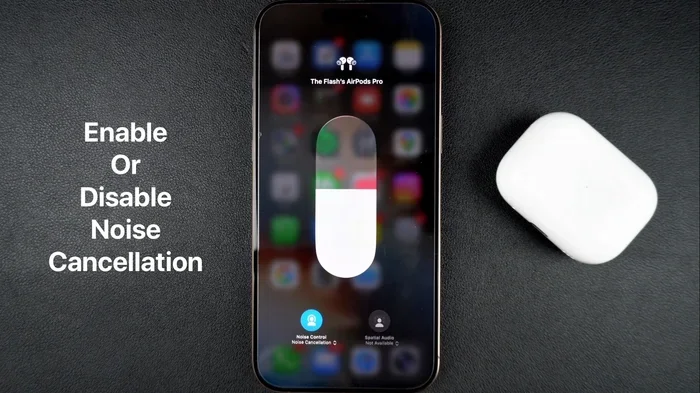
Featured image for AirPods noise cancellation feature
Image source: ioshacker.com
Standard AirPods (1st, 2nd, and 3rd generation) do NOT have active noise cancellation (ANC). Only AirPods Pro and AirPods Max offer this premium feature. However, standard AirPods do provide basic noise isolation through their physical design, which can block some ambient sound. If you need true noise cancellation, you’ll need to upgrade to a Pro or Max model.
Imagine you’re sitting on a noisy airplane, desperately trying to enjoy your favorite podcast. The engine roars, babies cry, and the person next to you won’t stop talking. You pop in your AirPods, hit play, and… the distractions still bleed through. If this sounds familiar, you’ve probably wondered: do normal AirPods have noise cancellation?
Here’s the quick answer: no, standard AirPods do not have active noise cancellation (ANC). But don’t close this tab just yet. The full story is more interesting. Your regular AirPods do offer some sound-blocking abilities. They’re just not the same as true noise cancellation. Understanding the difference could save you money. Or it might convince you to upgrade.
In this guide, we’ll break down everything you need to know. We’ll compare regular AirPods to AirPods Pro. We’ll explain the science behind noise cancellation in simple terms. And we’ll help you decide whether you need to spend extra money on the Pro version. Let’s dive in.
Key Takeaways
- Standard AirPods lack ANC: The regular AirPods (1st, 2nd, and 3rd gen) do not include active noise cancellation technology, only physical noise isolation.
- Only Pro and Max models offer ANC: AirPods Pro (1st and 2nd gen) and AirPods Max feature active noise cancellation with Transparency Mode.
- Noise isolation vs. noise cancellation: These are two different concepts. Standard AirPods offer isolation, while Pro models offer true cancellation.
- Price difference is significant: AirPods Pro typically cost $80-$150 more than standard AirPods, largely due to the ANC feature.
- Alternative options exist: Budget-friendly true wireless earbuds from brands like Anker, Jabra, and Sony offer ANC at lower prices.
- Software features help somewhat: iOS features like “Conversation Boost” and adaptive audio can enhance your listening experience on regular AirPods.
- Battery life trade-offs: ANC consumes additional battery power, which is why Pro models sometimes have slightly shorter per-charge listening times with ANC on.
📑 Table of Contents
- The Short Answer: Standard AirPods Don’t Have Active Noise Cancellation
- Noise Isolation vs. Active Noise Cancellation: What’s the Difference?
- How Well Do Standard AirPods Block Noise Without ANC?
- What AirPods Pro and Max Offer That Standard AirPods Don’t
- Do You Really Need Noise Cancellation? How to Decide
- Budget-Friendly Alternatives to AirPods Pro
- The Future of AirPods: What to Expect
- Frequently Asked Questions
- The Final Verdict on Normal AirPods and Noise Cancellation
The Short Answer: Standard AirPods Don’t Have Active Noise Cancellation
Let’s get straight to the point. If you’re holding a pair of standard AirPods (also called “regular AirPods”), they do not have active noise cancellation. This has been true since the first generation launched in 2016. It remains true for the 2nd generation (2019) and 3rd generation (2021).
Apple has reserved this premium feature for two product lines:
- AirPods Pro (1st generation released 2019, 2nd generation released 2022)
- AirPods Max (released in 2020)
According to Apple’s official specifications, the standard AirPods lineup includes features like spatial audio, adaptive EQ, and skin-detect sensors. However, active noise cancellation is notably absent from the spec sheet. This is a deliberate product differentiation strategy. Apple uses ANC as a key selling feature for their higher-end earbuds.
What Apple Includes in Standard AirPods
While standard AirPods lack ANC, they aren’t completely bare-bones. The 3rd generation AirPods include some impressive audio features:
- Spatial Audio with dynamic head tracking
- Adaptive EQ that tunes music in real-time
- Dolby Atmos support for immersive sound
- Dual beamforming microphones for clear calls
These features make standard AirPods sound great. But none of them actively cancel external noise. They’re designed to enhance what you hear, not block what you don’t want to hear.
Why Apple Excludes ANC from Standard AirPods
This is a common question. The answer comes down to several factors:
1. Price segmentation. Apple wants to give customers a reason to pay more for Pro models. ANC is one of the most noticeable premium features in the earbud world. Removing it from standard models creates a clear value gap.
2. Hardware requirements. ANC requires additional components. These are extra microphones, special audio processors, and acoustic chambers. These components increase manufacturing costs.
3. Battery consumption. ANC uses more power. Apple likely wanted standard AirPods to maintain their impressive battery life without compromise. The 3rd generation AirPods offer up to 6 hours of listening time. Adding ANC would reduce this number.
According to a 2023 report by Counterpoint Research, Apple’s AirPods Pro accounted for nearly 60% of AirPods revenue despite being more expensive. This shows the ANC feature is a major driver of upgrades.
Noise Isolation vs. Active Noise Cancellation: What’s the Difference?
This is where many people get confused. You might think your AirPods block some noise. That’s because they do, just not in the way you might expect. Let’s break down two very different concepts.
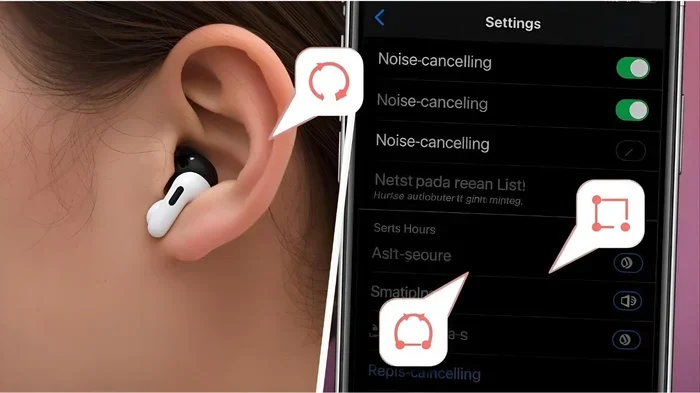
Visual guide about AirPods noise cancellation feature
Image source: aelftech.com
What Is Noise Isolation?
Noise isolation is the physical blocking of sound. Think of it like putting your hands over your ears. When you insert earbuds, they create a physical barrier. This barrier prevents some sound waves from reaching your eardrum. Standard AirPods use this principle.
The hard plastic design of standard AirPods sits in your outer ear (the concha). This blocks a moderate amount of ambient noise. It’s not perfect, but it helps. You’ll notice this most in quieter environments. Background hums, light conversations, and office chatter become slightly muted.
However, noise isolation has significant limitations:
- It doesn’t work well for low-frequency sounds (like airplane engines)
- It depends heavily on getting a good fit
- It can’t adapt to changing noise environments
- High-frequency sounds often leak through
What Is Active Noise Cancellation?
Active noise cancellation is technological magic. It uses microphones to listen to surrounding noise. Then it creates an “anti-noise” signal. This anti-noise is the exact opposite sound wave of the unwanted noise. When the two meet, they cancel each other out.
Think of it like this: if someone pushes you, and someone else pushes you with equal force from the opposite direction, you don’t move. ANC works on the same physics principle, but with sound waves.
AirPods Pro use multiple microphones (both inside and outside the ear) to capture ambient noise. A custom Apple-designed H2 chip processes this audio 48,000 times per second. It generates anti-noise in real-time. The result is near-silence, even in loud environments.
Side-by-Side Comparison
Let’s put these two technologies head-to-head:
Noise Isolation (Standard AirPods):
- Blocks 10-15 dB of ambient noise (passive)
- No battery drain
- Works immediately when inserted
- Best for quiet to moderate noise
- Costs nothing extra
Active Noise Cancellation (AirPods Pro):
- Blocks 20-30+ dB of ambient noise (active + passive)
- Reduces battery life by about 20-30%
- Requires processing time (though imperceptible)
- Best for loud environments (planes, gyms, offices)
- Adds $80-$150 to the price
Did you know? The concept of active noise cancellation dates back to the 1930s. It was first developed for airplane cockpit communications. Lawrence Fogel patented the technology in 1957. Bose later refined it for commercial headphones in the 1980s. Now it fits in tiny earbuds!
How Well Do Standard AirPods Block Noise Without ANC?
You might be wondering how effective standard AirPods actually are at blocking noise. The honest answer: it depends. Several factors influence how much noise your regular AirPods block.
The Fit Factor
Standard AirPods have a one-size-fits-most design. This is convenient but problematic for noise isolation. If your ear canals are smaller than average, AirPods may not seal well. Sound will leak in. If your ears are larger, you might get a better seal, but the earbuds might also fall out.
According to user surveys, about 15-20% of people report that standard AirPods fit poorly. For these users, noise isolation is minimal. For those with a good fit, noise isolation is moderate.
The Environment Matters
Standard AirPods perform differently depending on where you use them:
Coffee shops and offices: Moderate performance. The low hum of conversation gets reduced by maybe 30%. Loud sudden noises (like a slammed door) still come through clearly.
Public transportation: Limited performance. The rumble of a bus or train mostly passes through. You’ll need to turn your volume up to compensate.
Airplanes: Poor performance. Airplane engine noise is mostly low-frequency. Standard AirPods struggle to block this. Most users report needing high volume to hear their content.
Home or quiet spaces: Good performance. In a quiet room, standard AirPods provide an immersive experience. The physical seal blocks most minor distractions.
The Volume Compromise
Here’s a concerning trend. When standard AirPods don’t block enough noise, users turn up the volume. A 2020 study published in the journal Trends in Hearing found that people using earbuds without ANC listened at significantly higher volumes in noisy environments. Higher volumes (above 85 dB for extended periods) can cause permanent hearing damage.
This is one strong argument for choosing ANC earbuds. They allow you to listen at lower volumes even in loud settings. Your ears will thank you in the long run.
What AirPods Pro and Max Offer That Standard AirPods Don’t
Now let’s explore what makes the Pro and Max models different. If you decide you need noise cancellation, you’ll want to understand these features.
Active Noise Cancellation Technology
Both AirPods Pro generations and AirPods Max feature advanced ANC. The 2nd generation AirPods Pro use Apple’s H2 chip. This chip is significantly more powerful than the H1 chip in standard AirPods. It processes audio faster and more efficiently.
The H2 chip in AirPods Pro 2 claims to cancel up to twice as much noise as the previous generation. Apple says it processes audio 48,000 times per second. This creates an incredibly effective noise-canceling bubble around your ears.
In practical terms, this means:
- Airplane engine noise becomes nearly inaudible
- Office chatter fades into the background
- Gym music and clanking weights disappear
- Traffic noise becomes a distant hum
Transparency Mode
This is arguably as important as ANC itself. Transparency Mode uses the same microphones as ANC. But instead of canceling noise, it amplifies it. You can hear your surroundings as if you weren’t wearing earbuds at all.
Why is this useful? Imagine you’re walking across a busy street. You need to hear traffic. Or you’re at an airport listening for gate announcements. Or you’re having a quick conversation with a coworker.
With standard AirPods, you’d have to remove them entirely. With Transparency Mode, you can keep them in and still hear everything. The 2nd generation AirPods Pro added an “Adaptive Transparency” feature. This reduces loud sudden noises (like sirens) while still letting you hear normal sounds.
Adaptive Audio
Newer AirPods Pro (2nd generation with iOS 17) introduced Adaptive Audio. This smart feature blends ANC and Transparency Mode automatically. It detects your environment and adjusts in real-time.
Walking into a noisy cafe? Adaptive Audio increases noise cancellation. Step outside into a quiet park? It switches to Transparency Mode. You don’t have to fiddle with settings. Your AirPods just work intelligently.
Conversation Awareness
This feature detects when you begin speaking. It automatically lowers your music volume and reduces ANC. When you stop talking, your audio returns to normal. It’s perfect for quick interactions without removing your earbuds.
The Silicone Tip Difference
AirPods Pro include silicone ear tips in four sizes (XS, S, M, L). This is a major departure from the hard plastic of standard AirPods. The silicone tips create a much better seal in your ear canal. This improves both noise isolation and the effectiveness of ANC.
Standard AirPods sit in your outer ear. AirPods Pro seal inside your ear canal. The difference in passive noise blocking is substantial. Many users report that AirPods Pro block more noise even with ANC turned OFF, simply because of the better fit.
Do You Really Need Noise Cancellation? How to Decide
Here’s a question to ask yourself: where do you use your earbuds most? Your answer will determine whether ANC is worth the extra cost.
You Probably Don’t Need ANC If…
Standard AirPods might be perfect for you if:
- You mostly listen in quiet environments (home, quiet office)
- You’re a casual listener who doesn’t notice background noise
- You’re on a tight budget
- You prioritize comfort over features
- You don’t fly or commute in noisy conditions
Many people fall into this category. Standard AirPods offer excellent sound quality for music, podcasts, and calls. If your world is relatively quiet, you’ll be perfectly happy with them.
You Probably Do Need ANC If…
AirPods Pro might be worth the investment if:
- You travel frequently (planes, trains, buses)
- You work in open offices or noisy cafes
- You’re a student trying to focus in loud dorms or libraries
- You commute in cities with heavy traffic noise
- You have sensory sensitivities or need quiet to concentrate
- You want to protect your hearing by listening at lower volumes
If any of these sound familiar, the upgrade is probably worth it. The ability to create your own bubble of silence is genuinely life-changing for some people.
A Middle Ground: Software Features
If you’re not ready to upgrade your hardware, you can maximize what you have. iOS offers several features that improve your standard AirPods experience:
Conversation Boost: Available on AirPods Pro, this feature amplifies voices in front of you. Standard AirPods don’t support this fully.
Background Sounds: This iOS feature plays white noise, rain, or ocean sounds. It can mask ambient noise without music. Works with any headphones, including standard AirPods.
Headphone Accommodations: Boosts soft sounds and certain frequencies. Helpful for people with mild hearing loss.
Live Listen: Uses your iPhone as a microphone and streams audio to your AirPods. Helpful in conversations across noisy rooms.
None of these replicate true ANC. But they can enhance your experience without buying new hardware.
Budget-Friendly Alternatives to AirPods Pro
Let’s say you decide you need ANC. But AirPods Pro are out of your budget. What are your options?
Premium Alternatives Under $150
Several brands offer excellent noise cancellation at lower prices:
Sony WF-C700N ($119): These earbuds offer solid ANC and great sound quality. Sony is known for excellent noise cancellation. They’re a strong competitor to AirPods Pro.
Anker Soundcore Liberty 4 NC ($99): Anker has made huge strides in audio quality. These earbuds include adaptive ANC and LDAC support. Battery life is impressive at up to 10 hours with ANC on.
Jabra Elite 4 ($79): Jabra offers reliable ANC at a budget price. Build quality is excellent. Sound profile is balanced and clear.
Google Pixel Buds Pro ($149): Often on sale for less. Effective ANC and seamless Android integration. Also works fine with iPhones.
Why These Alternatives Are Worth Considering
These budget options have improved dramatically. According to a 2023 review by RTINGS.com, several sub-$100 earbuds now match the ANC performance of AirPods Pro 1st generation. That’s impressive considering AirPods Pro launched at $249.
You might sacrifice some features:
- Seamless iOS integration (these work fine with iPhones but lack deep Apple ecosystem features)
- Premium build materials
- Apple-specific features like spatial audio with head tracking
But for pure noise cancellation, many alternatives deliver excellent value.
The Future of AirPods: What to Expect
Will standard AirPods ever get ANC? This is a common question. Let’s look at the trends.
Apple’s Product Strategy
Apple currently uses ANC as a Pro-exclusive feature. This creates clear product differentiation. However, the industry is changing. Many competitors now offer ANC in their base-model earbuds.
Samsung’s Galaxy Buds FE ($99) include ANC. Google’s Pixel Buds A-Series (now discontinued) didn’t have ANC, but newer models do. Even budget Chinese brands offer ANC for under $50.
As competition increases, Apple may feel pressure to add ANC to standard AirPods. This could happen as early as the next refresh cycle. However, Apple has historically been slow to democratize premium features.
The Cost Barrier
Adding ANC requires additional hardware. These are microphones, processors, and design changes. As technology improves, costs decrease. Industry analysts predict ANC components will drop 30-40% in cost by 2026. This makes it more feasible for budget models.
Potential AirPods 4 Features
Rumors suggest the next standard AirPods might include some Pro features. These could include:
- USB-C charging (replacing Lightning)
- Improved water resistance
- Better battery life
- Maybe even basic ANC at a higher price point
Until Apple makes an official announcement, this remains speculation. But the trend is clear: premium features eventually trickle down.
Software Improvements Help
Even without hardware changes, Apple continues to improve the AirPods experience through software. Features introduced in recent iOS updates include:
- Adaptive Audio (Pro models)
- Personalized Volume (Pro models)
- Improved automatic switching between devices
- Better Find My integration
These software improvements benefit all AirPods models. They enhance the user experience regardless of hardware capabilities.
Frequently Asked Questions
Do AirPods 3 have noise cancellation?
No, AirPods 3rd generation do not have active noise cancellation. They only provide passive noise isolation through their physical design. For ANC, you need AirPods Pro or AirPods Max.
Can I add noise cancellation to regular AirPods?
No, you cannot add ANC to standard AirPods through software or accessories. ANC requires specific hardware components (additional microphones, processors) that aren’t built into regular AirPods.
Are AirPods Pro worth the extra money for noise cancellation?
If you frequently use earbuds in noisy environments (planes, trains, gyms, busy offices), yes. The ANC feature is highly effective and significantly improves the listening experience. For quiet environments, standard AirPods are sufficient.
Do AirPods block out noise on planes?
Standard AirPods only block minimal noise on planes. The engine’s low-frequency rumble mostly passes through. AirPods Pro are much better for flights, blocking up to 2-3 times more noise according to user reports.
What’s the difference between noise isolation and noise cancellation?
Noise isolation is passive. It physically blocks sound waves through the earbud’s design and fit. Noise cancellation is active. It uses microphones and processors to create anti-noise signals that cancel out unwanted sound electronically.
Should I buy AirPods Pro or just regular AirPods?
Choose AirPods Pro if you need silence in noisy places, travel frequently, or want the best audio experience Apple offers. Choose regular AirPods if you mainly listen in quiet environments, want to save money, or prefer the open-ear design of standard AirPods.
The Final Verdict on Normal AirPods and Noise Cancellation
Let’s bring everything together. Standard AirPods do not have active noise cancellation. This has been consistent across all three generations. If you want true ANC, you’ll need to buy AirPods Pro or AirPods Max.
That said, standard AirPods aren’t useless in noisy environments. They provide decent noise isolation. For casual listeners in relatively quiet settings, this might be enough.
The decision comes down to your lifestyle and budget. Ask yourself: where do you use your earbuds? How important is silence to you? How much are you willing to spend?
For many people, the answer is clear: standard AirPods are perfect. For frequent travelers, commuters, and office workers, AirPods Pro are worth every penny. The noise cancellation technology is genuinely impressive. It can transform your listening experience.
Remember, there’s no wrong choice. Both standard AirPods and AirPods Pro are excellent products. The best one for you depends on your specific needs. Hopefully, this guide has helped you figure that out.
If you’re still unsure, visit an Apple Store. Try both models. Your ears will tell you which is right for you.