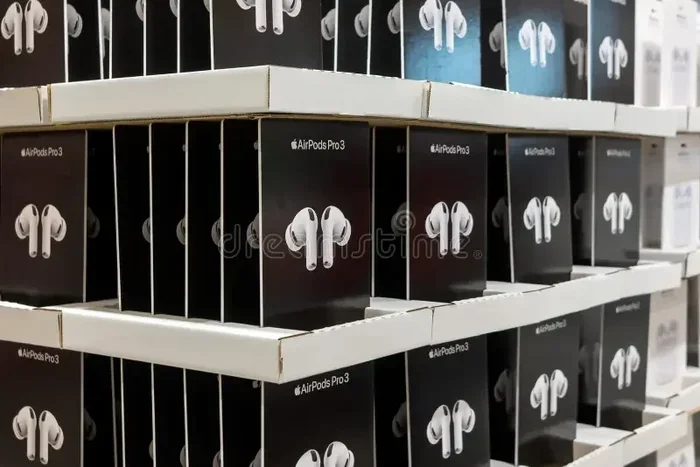
Featured image for authentic AirPods retail packaging
Image source: thumbs.dreamstime.com
Yes, real AirPods absolutely come in different versions, sizes, and feature sets. Apple currently offers four main AirPods models: AirPods (2nd generation), AirPods 3, AirPods Pro 2, and AirPods Max. Each model targets different users, budgets, and listening preferences. Understanding these differences helps you choose authentic Apple products while avoiding costly counterfeits that flood the market.
Have you ever wondered whether those white earbuds everyone seems to own actually come in more than one flavor? You’re not alone. Millions of people shop for AirPods every year, but many don’t realize Apple makes several distinct versions. Think of it like buying a car. You can get a compact sedan, a family SUV, or a luxury truck. They’re all “cars,” but each serves a totally different purpose. AirPods work the same way.
The confusion grows even bigger when you factor in fakes. Knockoff AirPods have exploded in popularity, especially on online marketplaces. Some counterfeits look so real that even tech-savvy buyers get tricked. In fact, U.S. Customs and Border Protection reported seizing over 360,000 counterfeit wireless earbuds in a single year, with a retail value of more than $151 million. That’s a mind-blowing amount of fake tech floating around.
This guide breaks down the real differences between authentic AirPods models. You’ll learn what makes each version unique, how to spot fakes, and which one might fit your life best. Let’s dive in and clear up the confusion once and for all.
Key Takeaways
- Four Current Models: Apple sells AirPods (2nd gen), AirPods 3, AirPods Pro 2, and AirPods Max as of 2024
- Two Form Factors: In-ear (regular and Pro) versus over-ear (Max) designs serve different use cases
- Chip Generations Vary: H1, H2, and older W1 chips affect performance, battery life, and features
- Price Range is Wide: Genuine AirPods cost between $129 and $549 depending on model and features
- Counterfeits are Common: Fake AirPods account for nearly 50% of wireless earbud seizures according to customs data
- Case Charging Options: Lightning, USB-C, MagSafe, and wireless charging cases differ across generations
- Features Scale Up: Noise cancellation, spatial audio, and water resistance appear only on newer/pricier models
📑 Table of Contents
- What Are the Different Types of Real AirPods?
- Why Do AirPods Come in So Many Versions?
- How Can You Tell If AirPods Are Real or Fake?
- What’s Inside Real AirPods? Chip Generations Explained
- Where Can You Buy Authentic AirPods?
- How Do AirPods Compare Across Generations?
- Which Real AirPods Should You Buy?
- What’s Next for Real AirPods?
- Final Thoughts: Real AirPods Come in Many Flavors
What Are the Different Types of Real AirPods?
Apple currently offers four main AirPods models on its official store. Each one looks different, sounds different, and costs different amounts. Think of them as siblings in the same family. They share DNA, but each has their own personality.
AirPods (2nd Generation)
The AirPods 2 launched in March 2019 and remain Apple’s most affordable option. They feature the older design with longer stems sticking down from your ears. These are the classic “white earbuds with tails” that most people picture when they hear the word AirPods.
Key features include:
- H1 chip for fast pairing
- 5 hours of listening time per charge
- Hey Siri voice activation
- Optional wireless charging case
At around $129, these are the budget-friendly entry point. They’re perfect for casual listeners who want the Apple experience without premium features.
AirPods (3rd Generation)
Released in 2021 and updated in 2022 with MagSafe charging, the AirPods 3 bridge the gap between basic and premium. They sport a shorter stem design and better sound quality than the 2nd gen.
Major upgrades include:
- Spatial audio with dynamic head tracking
- 6 hours of listening time
- IPX4 water resistance
- Shorter, more comfortable stem design
- Force sensor controls
Did you know the AirPods 3 use a custom driver and high-dynamic-range amplifier that the 2nd generation doesn’t have? This means richer bass and clearer vocals. Priced around $169, they hit the sweet spot for many buyers.
AirPods Pro (2nd Generation)
The AirPods Pro 2 arrived in September 2022 and represent Apple’s premium in-ear option. The big difference? Silicone ear tips that seal your ear canal. Think of regular AirPods as earbuds sitting in your ear, while Pros are like little plugs creating a seal.
Standout features include:
- Active Noise Cancellation (ANC)
- Transparency mode for hearing surroundings
- Adaptive Transparency (newer version)
- Touch controls on the stem
- H2 chip for smarter features
- Up to 6 hours with ANC on
The Pro 2 starts at $249 and offers the most advanced tech in a small package. A USB-C version launched in 2023 replaced the Lightning model.
AirPods Max
AirPods Max are Apple’s over-ear headphones released in December 2020. They look nothing like other AirPods. Picture big, cushy headphones that cover your entire ear. They’re built with premium materials like aluminum and memory foam.
Premium features include:
- High-fidelity sound
- Active Noise Cancellation
- Spatial Audio
- 20 hours of listening time
- Digital Crown for precise controls
At $549, they’re the most expensive AirPods by far. They’re aimed at audiophiles and professionals who want studio-quality sound in a wireless package.
Why Do AirPods Come in So Many Versions?
You might wonder why Apple makes so many models. The answer comes down to different people having different needs. Not everyone wants the same thing from earbuds.
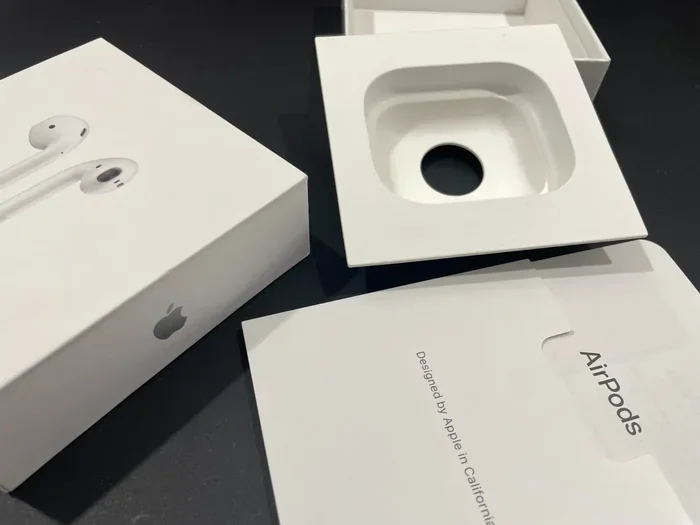
Visual guide about authentic AirPods retail packaging
Image source: i.ebayimg.com
Different Budgets Matter
Not everyone can drop $549 on headphones. Apple’s range starts at $129 and goes up to $549. That wide price spread lets more people enter the Apple ecosystem. A college student might grab AirPods 2, while a music producer opts for AirPods Max.
Different Use Cases
Some people need earbuds for running. Others want headphones for long flights. Still others just need something for phone calls. Apple’s lineup covers all these scenarios:
- Casual listening: AirPods 2 or 3
- Working out: AirPods Pro 2 (sweat-resistant with secure fit)
- Travel and focus: AirPods Pro 2 or AirPods Max (noise cancellation)
- Critical listening: AirPods Max (superior sound quality)
Different Feature Priorities
Some buyers care most about battery life. Others want noise cancellation. Still others prioritize call quality. By making multiple models, Apple lets you pick what matters most to you rather than paying for features you’ll never use.
How Can You Tell If AirPods Are Real or Fake?
Here’s where things get tricky. Counterfeit AirPods have become incredibly sophisticated. Some fakes even show up in your iPhone as “AirPods” with realistic pop-ups. So how do you separate genuine from fake?
Check the Serial Number
Every real Apple product has a unique serial number. You can find it:
- On the inside of the charging case lid
- On the original packaging
- In your iPhone’s Settings (if connected)
Once you have it, head to checkcoverage.apple.com and enter the number. If Apple recognizes it, it’s real. If the site says the serial is invalid, you’ve got a fake.
Examine the Build Quality
Real AirPods have incredibly precise construction. Look for:
- Seamless plastic with no gaps
- Perfectly aligned seams
- Smooth hinge action on the case
- Sharp, clear printing on text and logos
Fakes often have visible glue marks, misaligned parts, or text that looks blurry. If the case feels cheap or rattles when you shake it, that’s a red flag.
Test the Features
Real AirPods work seamlessly with iPhones. Try these tests:
- Pop-up animation: Open the case near your iPhone. Real AirPods show an animated setup screen.
- Find My integration: Go to Find My app. Genuine AirPods appear with location tracking.
- Spatial Audio: Supported models offer this feature. Fakes typically don’t.
- Noise cancellation: Only Pro and Max models have this. Fakes often claim it but deliver nothing.
Price Red Flags
If someone sells “brand new AirPods Pro” for $50, they’re fake. Period. Authentic AirPods Pro 2 retail for $249. Even refurbished units from Apple start at around $189. Suspiciously low prices are the biggest warning sign of counterfeits.
What’s Inside Real AirPods? Chip Generations Explained
Here’s a fun fact most people don’t know. The tiny chip inside AirPods controls almost everything. Different generations use different chips, which dramatically affect performance.
The W1 Chip (Original AirPods)
The very first AirPods from 2016 used the W1 chip. It handled basic Bluetooth connections and pairing. If you have these originals, they’re now considered vintage by Apple.
The H1 Chip
Starting with AirPods 2 in 2019, Apple switched to the H1 chip. This upgrade brought:
- 2x faster connection to phones
- 50% more talk time
- “Hey Siri” always-listening capability
- Lower gaming latency
AirPods 3 and the original AirPods Pro use the H1 chip too.
The H2 Chip
The H2 chip debuted in AirPods Pro 2 in 2022. It’s a major leap forward with:
- 2x more noise cancellation power
- Better battery efficiency
- Adaptive Audio features
- Improved call quality
Think of chips like processors in computers. Newer chips mean better everything. The H2 enables features that simply can’t run on older chips.
Where Can You Buy Authentic AirPods?
Buying location matters just as much as what you buy. Some sources are trustworthy. Others are basically fake factories.
Most Reliable Sources
Apple Store (online and physical): The gold standard. You’ll get genuine products with full warranty. Prices are MSRP, but you know they’re real.
Authorized Resellers: Stores like Best Buy, Target, Walmart, and B&H Photo are authorized Apple sellers. They receive products directly from Apple, so authenticity is guaranteed.
Carrier Stores: Verizon, AT&T, and T-Mobile stores sell genuine AirPods, often with payment plans.
Refurbished Options
Apple sells certified refurbished AirPods at a discount. These come with new batteries, fresh cases, and the same warranty as new products. They’re a smart way to save money while staying safe.
Sources to Avoid
Be very careful with these sellers:
- Random Amazon marketplace sellers with few sales
- Instagram and TikTok shops with no track record
- eBay listings with stock photos
- Pop-up electronics shops in tourist areas
- “Too good to be true” deals anywhere
A study by the International Trademark Association estimated that counterfeit electronics cost legitimate brands over $100 billion annually. The people selling fakes make huge profits while buyers receive junk products.
How Do AirPods Compare Across Generations?
Let’s put it all side by side so you can see the differences clearly. Think of this as a quick cheat sheet.
Sound Quality
Sound quality improves as you move up the lineup:
- AirPods 2: Decent, basic sound
- AirPods 3: Better bass, spatial audio support
- AirPods Pro 2: Excellent with noise cancellation
- AirPods Max: Premium audiophile-quality sound
If you care deeply about music, the Max or Pro 2 deliver noticeably better audio.
Battery Life
Battery life varies across models:
- AirPods 2: 5 hours listening, 24 hours with case
- AirPods 3: 6 hours listening, 30 hours with case
- AirPods Pro 2: 6 hours with ANC, 30 hours with case
- AirPods Max: 20 hours with ANC on
The Max has the longest single-charge listening time but weighs much more.
Water and Sweat Resistance
This is a big deal for gym-goers. Here’s the breakdown:
- AirPods 2: No official rating
- AirPods 3: IPX4 (splash resistant)
- AirPods Pro 2: IPX4 (splash resistant) for buds and case
- AirPods Max: Not water resistant
For workouts, stick with AirPods 3 or Pro 2.
Charging Options
Charging cases have evolved over the years. Modern options include:
- Lightning cable: Older standard, still on some models
- USB-C: Newer standard, matches iPhone 15 and newer
- MagSafe: Magnetic wireless charging
- Qi wireless: Standard wireless charging pads
The AirPods Pro 2 with USB-C launched in 2023 to align with the EU’s common charger rules. Expect future models to follow this trend.
Which Real AirPods Should You Buy?
Now for the big question: which ones deserve a spot in your pocket? Here’s how to decide based on your situation.
For the Budget-Conscious Buyer
Go with AirPods (2nd generation). At $129, they’re the cheapest way into the Apple ecosystem. You get reliable sound, seamless iPhone pairing, and decent battery life. Just don’t expect premium features.
For the Everyday Listener
The AirPods (3rd generation) hit the sweet spot. Better sound than the 2nd gen, water resistance, and spatial audio. At $169, they offer tremendous value for most people.
For the Commuter or Traveler
Choose AirPods Pro (2nd generation). Active noise cancellation makes buses, planes, and noisy offices much more bearable. The silicone tips also block outside noise passively. At $249, they’re an investment but worth it for frequent travelers.
For the Audiophile
The AirPods Max deliver unmatched sound quality in Apple’s lineup. They shine for critical listening at home or in quiet environments. However, they’re heavy and expensive at $549.
For the Fitness Fanatic
Stick with AirPods Pro 2. The secure seal keeps them in your ears during runs. IPX4 rating handles sweat. Transparency mode lets you hear traffic during outdoor workouts.
What’s Next for Real AirPods?
Apple doesn’t rest on its laurels. The company constantly updates its products. Here’s what might be coming based on industry rumors and Apple’s patent filings.
Health Features
Apple has filed patents showing earbuds that could monitor:
- Body temperature
- Heart rate
- Posture
- Blood oxygen levels
The next AirPods Pro might function like tiny health trackers in your ears.
Better Noise Cancellation
The H2 chip already offers impressive ANC. Future versions might use AI to adapt cancellation in real-time based on your environment. Imagine earbuds that automatically adjust as you move from a quiet office to a busy street.
Camera Integration
Apple reportedly explored adding cameras to AirPods for spatial video recording. This would work with the Vision Pro headset. Whether this becomes reality remains uncertain.
Improved Hearing Aids
Apple has been pushing AirPods Pro as potential hearing aids. The FDA even cleared certain features for hearing assistance. Future versions might get even better amplification and testing tools.
The market for hearing aids is massive. About 1.5 billion people globally live with some hearing loss. Apple sees AirPods as a way to serve this audience while making hearing help more accessible.
Final Thoughts: Real AirPods Come in Many Flavors
So yes, real AirPods absolutely come in different versions. Apple currently sells four distinct models, each targeting different needs, budgets, and preferences. Whether you want basic earbuds, premium in-ear options, or full-size headphones, there’s a genuine AirPods product for you.
The key is buying authentic products from trusted sources. Stick with Apple directly, authorized retailers, or certified refurbished options. Avoid deals that seem impossibly cheap. Verify serial numbers before completing purchases. And remember that fakes flood every online marketplace.
Take time to think about how you’ll actually use your AirPods. A gym rat needs different earbuds than a home listener. A frequent flyer has different priorities than a casual podcast fan. Match the model to your lifestyle rather than chasing the newest or most expensive option.
Real AirPods represent a significant investment. But when you buy genuine products, you get the seamless Apple experience, reliable firmware updates, and the peace of mind that comes with warranty coverage. Counterfeits might save money upfront, but they typically fail quickly and offer none of these benefits.
Now that you know the differences, you’re equipped to make a smart choice. Pick the AirPods that fit your needs, buy from a trusted source, and enjoy authentic Apple audio for years to come.
Frequently Asked Questions
How many different real AirPods models does Apple make?
Apple currently sells four main AirPods models: AirPods (2nd generation), AirPods (3rd generation), AirPods Pro (2nd generation), and AirPods Max. Apple also previously offered AirPods Pro (1st generation) and original AirPods, but these have been discontinued from the main lineup.
What’s the cheapest real AirPods model?
The AirPods (2nd generation) are the most affordable genuine AirPods, starting at $129. They include the H1 chip, “Hey Siri” support, and basic features without premium extras like noise cancellation or spatial audio.
Are there real AirPods without stems?
Currently, all genuine AirPods models except AirPods Max have visible stems. The Max is over-ear headphones with no stems at all. Apple has not released stemless earbuds in the traditional in-ear style as of 2024.
What’s the main difference between AirPods and AirPods Pro?
The biggest differences are the design and noise cancellation. AirPods Pro have silicone ear tips that seal your ear canal and active noise cancellation. Regular AirPods have a hard plastic design that rests in your ear without sealing it. Pros also feature Transparency mode for hearing your surroundings.
Can real AirPods come in different colors?
Only AirPods Max come in different colors. They’re available in Space Gray, Silver, Sky Blue, Pink, and Green. All in-ear AirPods models only come in white. This is actually a quick authenticity check, since white is the only legitimate option for AirPods 2, 3, and Pro.
How do I verify my AirPods are genuine?
Check the serial number at checkcoverage.apple.com. Real AirPods will show valid coverage dates. You can also test features like Find My integration, automatic ear detection, and spatial audio. Counterfeit AirPods often have invalid serial numbers and missing features despite claiming to have them.