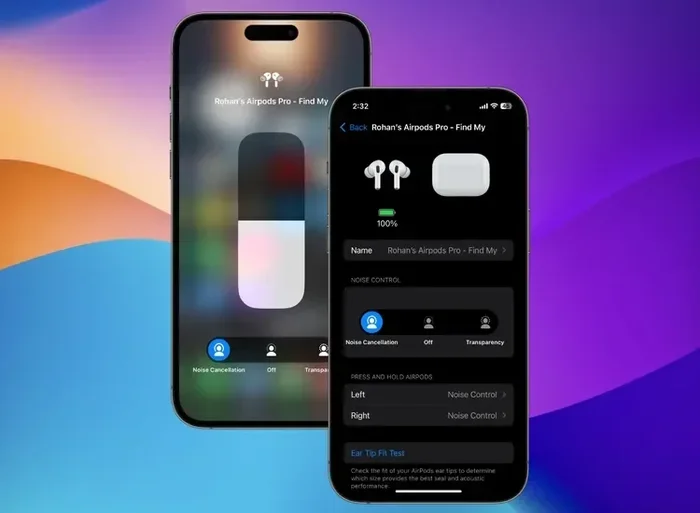
Featured image for Airpods noise cancellation feature
Image source: static.beebom.com
Second generation AirPods do not have active noise cancellation. These earbuds rely on a basic physical seal and software tuning to reduce some outside sound, but they lack the dedicated noise-cancelling technology found in AirPods Pro and AirPods Max. If true silence is your goal, you’ll need to upgrade to a Pro model or explore third-party ear tips that improve the passive seal.
Ever pulled out your AirPods on a noisy train, only to hear every screech and clatter as if you weren’t wearing anything at all? You’re not alone. Many people buy second generation AirPods expecting a bubble of silence, then feel disappointed when the world still leaks in. The truth is simple but often misunderstood: these little white earbuds aren’t built to hush the world around you.
The confusion makes sense. Apple makes so many AirPods now that it’s hard to keep track. Some models cancel noise, some don’t. Some have silicone tips, some have hard plastic shells. And the second generation AirPods sit in a tricky spot. They’re newer than the originals but older than the Pros. So do they have noise cancellation, or is that feature reserved for the pricier siblings?
In this guide, we’ll break it all down in plain English. You’ll learn exactly what noise cancellation means, how it works, and whether your second-gen AirPods can do it. We’ll also share tips to get the quietest experience possible, even without fancy tech. By the end, you’ll know if these AirPods are right for your ears, your budget, and your daily commute.
Key Takeaways
- No Active Noise Cancellation: Second generation AirPods do not include active noise cancellation (ANC) technology.
- Passive Noise Reduction Only: They rely on their physical shape and fit to block some outside noise naturally.
- ANC Requires Extra Hardware: Active noise cancellation needs microphones and processors that second-gen AirPods simply don’t have.
- Upgrade for Silence: AirPods Pro and AirPods Max are Apple’s earbuds and headphones with built-in ANC.
- Better Fit Helps: Using third-party foam ear tips can improve the passive seal and reduce more noise.
- Software Can’t Replace Hardware: No app update or iOS trick can add ANC to AirPods that lack the needed chips.
- Great for Casual Listening: Without ANC, second-gen AirPods still work well for podcasts, calls, and music in quiet places.
📑 Table of Contents
- What “Noise Cancellation” Actually Means
- Do Second Generation AirPods Have Noise Cancellation?
- How Well Do Second-Gen AirPods Block Noise Without ANC?
- Which AirPods Models Do Have Noise Cancellation?
- Tips to Get Better Noise Reduction Without Upgrading
- How to Decide If You Need ANC
- The Final Verdict on Second-Gen AirPods and Noise Cancellation
What “Noise Cancellation” Actually Means
Before we talk about your specific AirPods, let’s clear up what noise cancellation really is. The phrase gets thrown around a lot, but it covers two very different ideas.
Active Noise Cancellation (ANC)
Active noise cancellation is the high-tech kind. It uses tiny microphones to listen to the sounds around you. Then it creates a mirror-image sound wave that plays into your ears. When the two waves meet, they cancel each other out. It’s like throwing a ball at a wall and having another ball come back at the same speed. They smack into each other and stop. Your brain hears silence instead of the rumble.
This tech needs special parts. It needs outward-facing mics to catch the noise. It needs inward-facing mics to check what’s left. And it needs a processor powerful enough to create those anti-noise waves in real time. All of this drains battery, which is why ANC earbuds often have shorter listening times when the feature is on.
Did you know? The idea of active noise cancellation dates back to the 1930s. It was first created for airplane cockpit noise. Pilots used it to protect their hearing. Decades later, the same idea showed up in Bose headphones for travelers. Now it’s in almost every premium earbud you can buy.
Passive Noise Isolation
Passive noise isolation is the simple kind. It’s just about blocking sound with physical barriers. Think of putting your hands over your ears or plugging your fingers into them. Anything that fits snugly in your ear will block some noise just by being there.
Earbuds do this through their shape and the seal they create with your ear canal. The tighter the seal, the more outside noise gets blocked. This is why some earbuds come with multiple tip sizes or even foam tips that squish and expand.
The key difference: passive isolation just muffles sound, like closing a door. Active cancellation actually fights sound with sound, like having a sound ninja on your team. Both help, but they work in totally different ways.
Why the Difference Matters
If you understand these two ideas, you’ll understand your AirPods better. Most cheap earbuds only do passive isolation. Premium earbuds add active cancellation on top of that. So when you hear “noise cancellation” on a box, always check which type they mean. Some brands use the phrase for any earbud that blocks sound, which can be misleading.
Do Second Generation AirPods Have Noise Cancellation?
Here’s the clear, straight answer: no, they do not. Second generation AirPods have zero active noise cancellation. They also don’t have the fancy chips or microphones needed for ANC. What they do have is basic passive isolation from their hard plastic design.
Visual guide about Airpods noise cancellation feature
Image source: tycoonstory.com
What’s Actually Inside Second-Gen AirPods
Apple’s second generation AirPods launched in 2019. They brought some nice upgrades over the originals. You got the H1 chip for faster connections. You got “Hey Siri” voice control. You got longer talk time. But the H1 chip was built for efficiency and pairing, not for noise processing.
There’s only one microphone in each earbud, and it’s used for calls and voice commands. There are no extra mics facing outward to catch the world around you. Without those mics, there’s no way to create anti-noise waves. Apple simply didn’t put the hardware in this model.
What You Get in Return
Without ANC draining the battery, second-gen AirPods last about 5 hours on a single charge. Toss them in the case and you get more than 24 hours of total listening. That battery life is actually better than what you get with ANC turned on in the Pro models.
They also cost less. You can often find them new for around $130 or less, compared to $250 for AirPods Pro. So while you’re missing silence, you’re saving cash and getting longer play time per charge. For some people, that’s a great trade.
How Well Do Second-Gen AirPods Block Noise Without ANC?
Since they can’t actively cancel noise, how do they do against everyday sounds? Let’s be real: not amazingly. But not terribly either. It depends a lot on your ears and where you use them.
The Fit Problem
Second-gen AirPods have a one-size-fits-most hard plastic design. Unlike the Pros, they don’t have silicone tips you can swap. If your ear canals happen to match the AirPods shape, you’ll get a decent seal. If not, gaps let sound pour in.
Many users report a loose fit, especially during exercise or quick head turns. When the seal breaks, you hear everything around you. It’s like trying to whisper in a windstorm. The words just blow away.
Real-World Noise Test
In a quiet room, second-gen AirPods sound great. Music comes through clean, and podcasts are easy to follow. In a moderately noisy place, like a coffee shop with light chatter, you’ll start hearing background hum. Crank the volume up and it helps, but it’s not the same as true cancellation.
On a plane or train? Forget total silence. The deep rumble will still leak in. You’ll need to push volume high, which isn’t great for your hearing long-term. This is where ANC really shines, and where second-gen AirPods fall short.
Comparing to Silicone-Tip Earbuds
Earbuds with silicone or foam tips create a much better seal than hard plastic. Even without ANC, they block more noise. If you’ve ever used earplugs, you know what a good seal feels like. That deep, plugged-up sensation cuts noise by 20 decibels or more, just from physics.
Second-gen AirPods don’t give you that feeling. They sit in the outer ear more than inside the canal. So they block less sound than most in-ear headphones. Think of them like sitting behind a thin curtain versus a thick wall. Both block some light, but one blocks a lot more.
Which AirPods Models Do Have Noise Cancellation?
Now that you know the second-gen doesn’t have ANC, let’s look at which AirPods do. Apple’s noise-cancelling lineup is actually pretty easy to remember once you see it laid out.
AirPods Pro (All Generations)
Every version of AirPods Pro includes active noise cancellation. The first generation came out in 2019 and started at $249. The second generation launched in 2022 and added better noise cancelling, touch controls, and a smaller design. In 2023, Apple quietly updated the USB-C version with even better dust resistance.
All Pros use silicone tips in multiple sizes. They have dual microphones: one outward-facing, one inward-facing. The H2 chip in the latest model is specifically designed to handle noise cancellation. It processes sound 48,000 times per second to kill unwanted noise.
Did you know? AirPods Pro can cancel up to twice as much noise as the first generation. That includes low rumbles like bus engines and higher sounds like vacuum cleaners.
AirPods Max
AirPods Max are Apple’s over-ear headphones. They launched in 2020 and cost $549. They have the most powerful noise cancellation of any Apple audio product. Eight microphones work together to detect and cancel noise from every direction.
These are premium headphones with premium materials. They use aluminum cups, a mesh canopy, and memory foam ear cushions. If you want studio-quality sound plus silence, these are the top pick. Just be ready for the price tag and the heavier weight on your head.
AirPods 4 and AirPods 4 with ANC
In late 2024, Apple released the fourth generation of standard AirPods. Here’s where it gets interesting: the AirPods 4 with Active Noise Cancellation is the first time Apple put ANC in a non-Pro earbud. It uses a new chip and a redesigned shape to block noise. The regular AirPods 4 without ANC start at $129. The ANC version costs $179.
These are the closest option to second-gen AirPods if you want noise cancellation. The fit is similar, but the internals are totally different. They have the H2 chip and a special acoustic architecture to handle ANC. If you’re shopping today and want both an open design and silence, this is the one to look at.
Tips to Get Better Noise Reduction Without Upgrading
Maybe you’re not ready to buy new AirPods. Maybe you love your second-gen pair and want to squeeze out every bit of quiet you can. Good news: there are some tricks that help.
Try Third-Party Foam Tips
Even though second-gen AirPods don’t have removable tips, some companies make foam covers that slide on. They’re like little sleeves that wrap around the plastic. Comply and other brands sell versions specifically shaped for AirPods.
These foam covers squish when you insert them, then expand to fill your ear canal. The result is a much tighter seal. You’ll block more noise and might even get better bass response. They’re cheap (usually under $20) and totally reversible. You can take them off whenever you want.
Adjust Your EQ Settings
Apple’s equalizer settings won’t cancel noise, but they can make audio sound clearer at lower volumes. In Settings, go to Music > EQ and try the “Late Night” or “Spoken Word” options. These boost certain frequencies and reduce others. Your music or podcast will cut through background noise better without you needing to crank the volume.
Use One Earbud at a Time
This sounds weird, but hear us out. If you’re in a quiet-ish place and just need to focus, try wearing one AirPod at a time. Your other ear stays open to hear important sounds, like your name or a car horn. You won’t get stereo separation, but you’ll hear your audio clearly while staying aware.
This trick is great for working at home when someone might call your name. It’s also safer for walking near streets. You stay connected to your audio without being totally cut off from the world.
Turn Up the Volume Carefully
Turning up the volume drowns out background noise, but it can hurt your ears over time. The World Health Organization says 1.1 billion young people are at risk of hearing loss from loud audio. If you find yourself cranking past 70% in noisy places, it’s a sign your earbuds aren’t isolating well enough.
Instead of maxing out the volume, take breaks. Give your ears 5 minutes of rest every hour. And if you’re regularly in very loud places, it might be worth saving up for earbuds with real ANC.
How to Decide If You Need ANC
Noise cancellation is a feature, not a magic trick. It’s amazing for some people and overkill for others. Here’s how to figure out if you really need it.
Where Do You Listen?
Think about your daily life. Do you spend hours on planes or trains? Do you work in open offices with chatty coworkers? Do you commute on loud subways? If yes, ANC will change your life. It’ll protect your hearing and let you listen at lower, safer volumes.
But if you mostly listen at home, in your car, or during walks in quiet neighborhoods, ANC isn’t as critical. You might not even notice its absence. Save your money and enjoy the longer battery life of second-gen AirPods.
What’s Your Budget?
Active noise cancellation costs money. It requires extra hardware and engineering. That’s why ANC AirPods start at $179 (AirPods 4 with ANC) and go up to $549 (AirPods Max). Second-gen AirPods often dip below $130, especially on sale.
For someone on a tight budget, those savings matter. You could put that $100 difference toward a nice case, a charger, or just keep it in your pocket. If ANC is a “nice to have” rather than a “must have,” second-gen AirPods are a smart pick.
How Sensitive Are Your Ears?
Some people can tune out background noise easily. Others find every little sound distracting. If you’re in the second group, ANC is probably worth the upgrade. If you’re in the first, you’ll be just fine with passive isolation.
You can test this yourself. Put your fingers loosely in your ears while listening to music. If that small change makes a huge difference in clarity, you really need a better seal. That suggests ANC would help a lot.
Are You Upgrading Soon?
If you plan to buy new earbuds in the next year or two, don’t stress too much about ANC in your current pair. Use your second-gen AirPods now and save for the future. Tech moves fast, and prices drop. Today’s $250 Pro might be $180 next year during a sale.
But if you want one pair to last you 3-5 years, go for ANC. You’ll appreciate the silence every single day. It’s one of those features you can’t imagine living without once you’ve tried it.
The Final Verdict on Second-Gen AirPods and Noise Cancellation
So where do we land? Second generation AirPods do not have noise cancellation. Not active, not passive beyond their basic shape. They lack the microphones, the chips, and the design needed to block sound effectively. If you buy them hoping for silence, you’ll be disappointed.
That said, they’re not bad earbuds. They have excellent sound quality for the price. They pair instantly with Apple devices. They have great battery life. They work perfectly for calls, podcasts, and music in moderately quiet places. Many millions of people use them happily every day.
If noise cancellation matters to you, you have options. You can step up to AirPods Pro for in-ear ANC. You can go big with AirPods Max for over-ear ANC. Or you can check out the new AirPods 4 with ANC for an open design with active cancellation. Each has its own price and benefits.
If noise cancellation isn’t a deal-breaker, second-gen AirPods remain a smart buy. You’ll get a reliable, easy-to-use pair of earbuds that sound great and last long. They’re especially good for people who listen mostly in quiet environments or who prioritize battery life over silence.
The best earbuds are the ones that fit your life, your ears, and your wallet. Now you know exactly what second-gen AirPods offer and what they don’t. You can make a choice with confidence, whether that’s sticking with what you have or upgrading to something with a little more quiet built in.
Frequently Asked Questions
Do second generation AirPods cancel background noise at all?
Second generation AirPods don’t have active noise cancellation. They rely on their physical shape to block a small amount of sound. This passive isolation works in quiet rooms but doesn’t help much in loud places like planes or busy streets.
Can I add noise cancellation to my second-gen AirPods with a software update?
No. Active noise cancellation requires special hardware, including outward-facing microphones and a noise-processing chip. Software updates can’t add this hardware. Your AirPods will never get ANC through an iOS update.
What’s the cheapest AirPods with noise cancellation?
The AirPods 4 with Active Noise Cancellation is Apple’s most affordable ANC option, starting at $179. AirPods Pro are pricier but offer better noise cancellation and silicone tips for a tighter seal.
How is passive noise isolation different from active noise cancellation?
Passive isolation just uses the physical shape of the earbud to block sound, like earplugs. Active noise cancellation uses microphones and processors to generate anti-noise waves that cancel out unwanted sounds in real time.
Are second-gen AirPods good for working in noisy offices?
They’re okay for moderately noisy offices but not great for very loud ones. Without ANC or silicone tips, you’ll hear chatter and background sounds. If your office is consistently noisy, consider earbuds that offer active noise cancellation instead.
Do AirPods Pro cancel more noise than AirPods Max?
AirPods Max generally cancel more noise because they have eight microphones and over-ear cups that create a stronger seal. AirPods Pro are excellent for in-ear buds, but over-ear designs physically block more sound before ANC even kicks in.