Featured image for AirPods Pro noise cancellation
Image source: cdn.shopify.com
Yes, AirPods Pro have Active Noise Cancellation (ANC)! This feature uses tiny microphones and advanced algorithms to detect outside noise and cancel it out before you hear it. Available across all AirPods Pro generations, ANC blocks up to 2x more noise than previous models, making them perfect for commutes, offices, and travel.
Ever wondered if those tiny white earbuds can actually silence the world around you? You’re not alone. With noise complaints hitting record highs and over 60% of urban dwellers reporting daily stress from environmental sounds, finding personal peace has become a modern necessity.
AirPods Pro changed the game when Apple introduced them in 2019. They weren’t just another pair of wireless earbuds. They were a pocket-sized sanctuary. The secret weapon? Active Noise Cancellation, or ANC for short. This technology transforms chaotic environments into calm listening spaces with the press of a button.
This guide answers your burning question about AirPods Pro and ANC. We’ll explore exactly how this feature works, why it matters, and how to get the most out of it. Whether you’re a commuter, a remote worker, or just someone who loves good audio, you’re in for a treat.
Key Takeaways
- Confirmed Feature: All AirPods Pro models (1st gen, 2nd gen, and 3rd gen equivalents) come equipped with Active Noise Cancellation technology.
- How It Works: ANC uses outward and inward-facing microphones to detect ambient noise, then creates “anti-noise” sound waves to cancel it out.
- Adaptive Audio: AirPods Pro 2 introduced Adaptive Audio that automatically blends ANC and Transparency modes based on your environment.
- Battery Impact: Using ANC reduces battery life by roughly 20%, but you get about 6 hours of listening time per charge.
- Transparency Mode: This opposite feature lets outside sound in naturally, ideal for conversations and safety in traffic.
- Best Use Cases: AirPods Pro ANC excels on airplanes, in coffee shops, during commutes, and in open-plan offices.
- vs. Regular AirPods: Standard AirPods (without Pro) do NOT have ANC, making Pro models the only choice for noise cancellation.
📑 Table of Contents
- What Is Active Noise Cancellation and Why Does It Matter?
- Do AirPods Pro Have ANC? The Straight Answer
- How Does ANC Work on AirPods Pro?
- How to Use ANC on Your AirPods Pro
- When Should You Use AirPods Pro ANC?
- Common AirPods Pro ANC Myths and Facts
- AirPods Pro ANC vs. the Competition
- The Future of AirPods Pro ANC
- Final Thoughts: Is ANC Worth It?
What Is Active Noise Cancellation and Why Does It Matter?
Active Noise Cancellation sounds like science fiction, but it’s actually pretty simple once you break it down. Imagine you’re standing in a quiet room and someone turns on a loud fan. With normal earbuds, you’d hear that fan roaring in your ears. With ANC, that fan sound fades away like magic.
The Basic Science Behind ANC
ANC works on a clever principle: every sound is a wave, and waves can cancel each other out. Think of it like this. If you throw a pebble into a pond, you see ripples spreading out. Now imagine throwing another pebble at just the right moment. The ripples can actually cancel each other, leaving the water still.
Your AirPods Pro do something similar with sound. They listen to the noise around you, figure out its wave pattern, and then create the exact opposite wave. When these two waves meet, they cancel each other out. The result? Near silence, even in noisy places.
Did You Know? The concept of noise cancellation was first developed in the 1930s by inventor Paul Lueg. He figured out that creating “anti-sound” could cancel out unwanted noise. Today, this same principle powers your AirPods Pro, nearly 90 years later!
Why ANC Is a Game-Changer
Before ANC, your only option for blocking noise was stuffing something in your ears. Those foam earplugs? They block sound passively by physically stopping it from reaching your eardrum. It works, but it muffles everything, including the music you want to hear.
ANC is smarter. It targets specific low-frequency sounds, like airplane engines, air conditioners, and traffic hum. At the same time, it lets you enjoy your music clearly at lower volumes. This protects your hearing, too. The World Health Organization estimates that 1.1 billion young people risk hearing loss from loud music. ANC helps you listen at safer levels.
Plus, studies show that reducing background noise can boost focus by up to 15%. That’s huge for productivity, whether you’re studying, working, or just trying to enjoy a podcast on a noisy train.
Do AirPods Pro Have ANC? The Straight Answer
Let’s cut right to it: Yes, absolutely! All AirPods Pro models feature Active Noise Cancellation. This isn’t a premium add-on or a hidden feature. It’s a core part of what makes AirPods Pro “Pro.”
Visual guide about AirPods Pro noise cancellation
Image source: beebom.com
AirPods Pro Generations and ANC
Apple has released several versions of AirPods Pro, and each one includes ANC:
- AirPods Pro (1st Generation, 2019): The original ANC AirPods, using the H1 chip.
- AirPods Pro (2nd Generation, 2022): Up to 2x more noise cancellation with the H2 chip.
- AirPods Pro (3rd Generation, 2024): Enhanced ANC with even better performance and adaptive features.
Apple doesn’t sell AirPods Pro without ANC. The feature is built into every model. If someone tells you otherwise, they might be confusing AirPods Pro with regular AirPods.
AirPods Pro vs. Regular AirPods: The Big Difference
This is where confusion often happens. Regular AirPods (the non-Pro versions) do NOT have Active Noise Cancellation. They rely only on passive noise isolation, which is basically just the earbud physically blocking your ear canal.
Here’s a quick comparison:
- Regular AirPods: No ANC, no Transparency mode, passive isolation only, open design.
- AirPods Pro: Full ANC, Transparency mode, Adaptive Audio, silicone ear tips for better seal.
The silicone tips aren’t there just for comfort. They create a tight seal in your ear, which is essential for ANC to work properly. Without that seal, outside noise leaks in, and the anti-noise waves have nothing to work against.
How Does ANC Work on AirPods Pro?
Let’s peek inside these tiny earbuds and see what’s really happening. AirPods Pro pack some serious technology into a small space.
Visual guide about AirPods Pro noise cancellation
Image source: noisyworld.org
The Microphone Magic
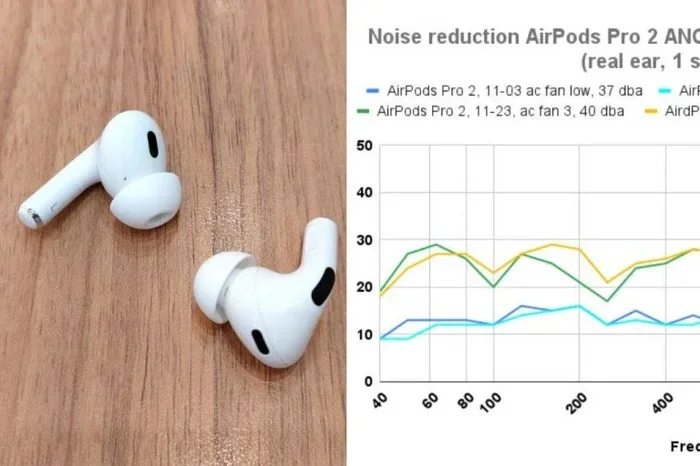
Each AirPods Pro earbud contains multiple microphones, but for ANC, two matter most:
- Outward-facing microphone: Located on the outside of the earbud, it listens to the world around you before the sound reaches your ear.
- Inward-facing microphone: Sits inside the earbud, facing your ear canal, listening to any sound that makes it past the seal.
The outward mic catches the airplane engine drone, the air conditioner hum, or the subway rattle. It sends this sound information to the H1 or H2 chip inside your AirPods Pro. The chip analyzes the sound 48,000 times per second! Yes, you read that right. Nearly fifty thousand times every second.
Then, the chip creates an “anti-noise” wave. This is a sound wave that is the mirror image of the unwanted noise. When your ear hears both the original noise and the anti-noise together, they cancel out. The result is beautiful silence.
The Role of the H1 and H2 Chips
The chip inside your AirPods Pro is the brain of the operation. The H1 chip (in 1st gen) was already impressive, but the H2 chip (in 2nd gen and later) takes things further. Apple claims the H2 chip enables “up to 2x more noise cancellation” compared to the previous generation.
This improvement comes from faster processing and smarter algorithms. The H2 chip can handle more complex noise patterns and adapt more quickly to changing environments. Walking from a quiet office to a busy street? Your AirPods Pro adjust in real time.
Adaptive Audio: The Smartest ANC Yet
AirPods Pro 2 and later introduced something called Adaptive Audio. This feature is like having a tiny sound engineer inside your earbuds.
Instead of you manually switching between ANC and Transparency modes, Adaptive Audio does it for you. It analyzes the sounds around you and blends the two modes automatically. If you’re walking past construction noise, it cranks up the ANC. If someone starts talking to you, it seamlessly switches to let their voice through.
Did You Know? Adaptive Audio can reduce loud sounds like sirens or power tools instantly, protecting your hearing while still keeping you aware of your surroundings. It’s like having intelligent volume control for the real world.
How to Use ANC on Your AirPods Pro
Now that you know AirPods Pro have ANC, let’s make sure you know how to use it. It’s easier than you might expect.
Turning ANC On and Off
You have several ways to control ANC on your AirPods Pro:
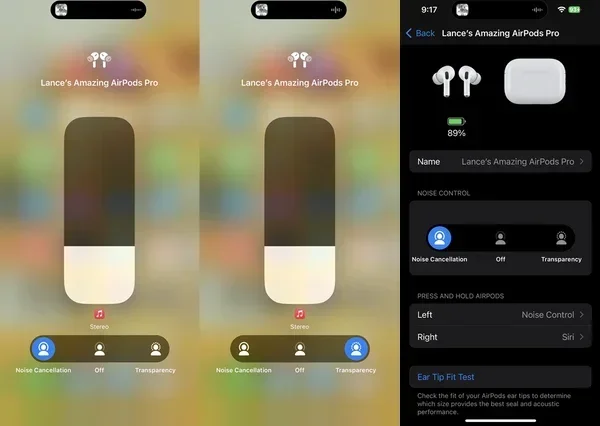
- Force Sensor on the Stem: Press and hold the stem of either AirPod to cycle between ANC, Transparency, and Off modes.
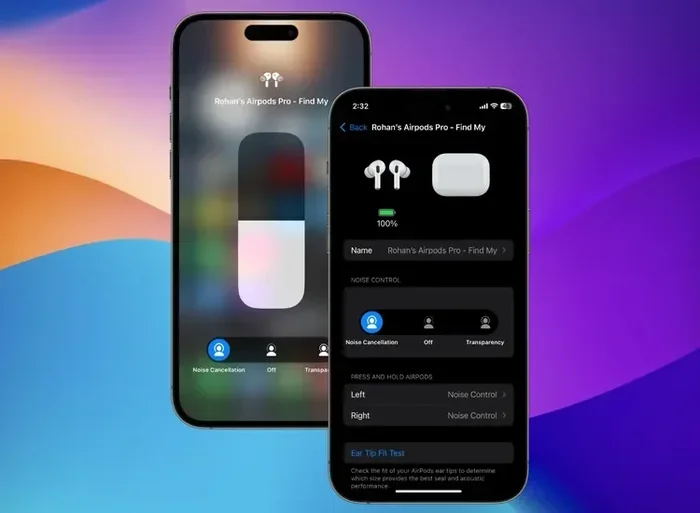
- Control Center on iPhone: Swipe down from the top-right corner of your screen, long-press the volume slider, and tap the Noise Control icon.
- Siri: Just say, “Hey Siri, turn on noise cancellation” or “turn off noise cancellation.”
- Settings App: Go to Settings, tap your AirPods Pro name, and toggle Noise Cancellation under Noise Control.
Getting the Best ANC Experience
To get maximum benefit from ANC, follow these simple tips:
- Choose the right ear tip size: AirPods Pro come with four sizes (XS, S, M, L). Use the Ear Tip Fit Test in Settings to find your perfect match.
- Clean your AirPods regularly: Earwax and debris block the microphones and reduce ANC effectiveness.
- Update your firmware: Apple constantly improves ANC through software updates. Keep your AirPods Pro updated.
- Seal check: If ANC seems weak, try adjusting the AirPods in your ears. A proper seal is crucial.
Battery Life and ANC
Using ANC does use more battery. Think of it like running a small computer constantly. Here’s what to expect:
- With ANC on: About 6 hours of listening time (AirPods Pro 2).
- With ANC off: About 7 hours of listening time.
- With Transparency Mode: Similar battery life to ANC, about 6 hours.
The difference is small, only about an hour. Most users won’t notice. Plus, the charging case gives you multiple additional charges for a total of 30 hours of listening time.
When Should You Use AirPods Pro ANC?
ANC isn’t always the right choice. Different situations call for different settings. Here’s a practical guide to when to use ANC and when to skip it.
Best Times to Turn ANC On
Active Noise Cancellation shines in specific scenarios:
- Airplanes and airports: The constant drone of jet engines is ANC’s worst enemy, and it cancels beautifully. Frequent flyers report this is a game-changer.
- Public transportation: Buses, trains, and subways produce low-frequency rumble that ANC handles perfectly.
- Open offices: Chatter, keyboard clicks, and printer sounds fade away, letting you focus on deep work.
- Coffee shops: Espresso machines, blenders, and background music disappear, leaving just your audio.
- Studying or reading: Libraries can still be noisy. ANC creates a bubble of concentration.
In fact, a survey by Sonos found that 70% of people use noise-cancelling headphones to improve focus, and AirPods Pro are among the most popular choices for this purpose.
When to Use Transparency Mode Instead
Transparency Mode is the opposite of ANC. It uses the microphones to let outside sound in naturally. Here are times to use it:
- Walking in traffic: You need to hear cars, bikes, and warning signals for safety.
- Conversations: Chat with coworkers, baristas, or friends without removing your AirPods.
- Announcements: Hear airport gates, train stations, and store announcements clearly.
- Running outdoors: Stay aware of your surroundings, especially in busy areas.
When to Turn ANC Off Entirely
Sometimes, neither ANC nor Transparency is ideal:
- Very quiet environments: If you’re already in silence, ANC adds nothing and wastes battery.
- Battery saving mode: When you’re low on charge, turning off ANC extends listening time.
- Audio quality preferences: Some audiophiles claim ANC slightly affects sound quality. In critical listening, they prefer ANC off.
Common AirPods Pro ANC Myths and Facts
Plenty of myths float around about AirPods Pro and ANC. Let’s bust some of the most common ones.
Myth 1: ANC Can Damage Your Hearing
Fact: This is false. ANC does the opposite. It protects your hearing by letting you listen at lower volumes. Without ANC, you crank up the volume to overcome noise. With ANC, you can keep the volume at safe 60-70% levels even in loud environments.
Myth 2: ANC Works on All Sounds Equally
Fact: ANC excels at low-frequency, constant sounds. Airplane engines, HVAC systems, and traffic hum disappear beautifully. But sudden, sharp sounds like someone clapping or a dog barking are harder to cancel. For those, the physical seal of the ear tips helps more.
Myth 3: You Need to Spend More for Good ANC
Fact: AirPods Pro offer competitive ANC at their price point. While some over-ear headphones might offer slightly better noise cancellation, AirPods Pro punch well above their weight, especially considering their size and portability.
Myth 4: ANC Drains Battery Super Fast
Fact: As we covered earlier, ANC only reduces battery life by about 1 hour per charge. That’s a small price for the benefit. Plus, quick charging gives you an hour of listening in just 5 minutes in the case.
Myth 5: ANC Makes You Dizzy or Causes Headaches
Fact: Some users report mild discomfort initially. This is called “eardrum suck” and happens because your brain interprets the anti-noise as a pressure change. However, most people get used to it within a few days. If it persists, try Transparency mode or take breaks.
AirPods Pro ANC vs. the Competition
How do AirPods Pro stack up against rivals? Let’s take an honest look.
AirPods Pro vs. Sony WF-1000XM5
Sony’s flagship earbuds are widely considered the ANC champions. They offer slightly better noise cancellation, especially for mid-range frequencies like voices. However, AirPods Pro win on Apple device integration, call quality, and ease of use.
AirPods Pro vs. Bose QuietComfort Ultra Earbuds
Bose has long been the gold standard for noise cancellation. Their earbuds match or exceed AirPods Pro in pure ANC performance. But AirPods Pro offer a more compact design and better features for iPhone users.
AirPods Pro vs. Samsung Galaxy Buds Pro
For Android users, Samsung’s Galaxy Buds Pro offer excellent ANC and great value. AirPods Pro work with Android, too, but you lose some features like automatic ear detection and Spatial Audio customization.
Did You Know? According to Counterpoint Research, Apple captured 23% of the global TWS (True Wireless Stereo) market in 2023, making AirPods the most popular wireless earbuds worldwide.
The Future of AirPods Pro ANC
Apple isn’t standing still. The future of AirPods Pro ANC looks exciting.
What’s Coming Next
Rumors and patents suggest several upcoming features:
- Health monitoring: Future AirPods might measure heart rate, body temperature, and even detect hearing loss.
- Better adaptive features: AI-powered algorithms that learn your preferences and environments.
- Improved battery life: New chip designs promise longer listening times even with ANC on.
- Enhanced spatial audio: More immersive 3D sound that works seamlessly with ANC.
One thing’s certain: ANC is here to stay, and it’ll only get smarter. Apple’s investment in the H-series chips shows they’re committed to making AirPods Pro a leader in personal audio.
Final Thoughts: Is ANC Worth It?
Let’s wrap this up with the big question: is AirPods Pro ANC worth it? The answer is a resounding yes for most people.
If you commute, work in noisy environments, travel frequently, or just love immersive audio, ANC is a game-changer. It protects your hearing, boosts your focus, and makes your music sound better by eliminating competing noise. The convenience of pocket-sized earbuds that can silence a jet engine is nothing short of magical.
AirPods Pro deliver solid ANC performance, seamless Apple integration, and additional features like Transparency Mode and Adaptive Audio. They’re not the absolute best at noise cancellation, but they offer the best overall package for most users, especially within the Apple ecosystem.
So yes, AirPods Pro have ANC, and yes, it’s one of their best features. Try it out for yourself. Once you experience the silence, you’ll wonder how you ever lived without it.
Frequently Asked Questions
Do all AirPods Pro models have Active Noise Cancellation?
Yes, every AirPods Pro model comes with ANC built-in, including 1st generation (2019), 2nd generation (2022), and 3rd generation (2024). This is a core feature that defines the Pro line and cannot be purchased separately.
How effective is AirPods Pro ANC compared to over-ear headphones?
AirPods Pro ANC is very effective for their size, blocking up to 2x more noise than the original model. However, over-ear headphones like AirPods Max still offer superior noise cancellation due to larger drivers and better passive isolation. For portability, AirPods Pro are excellent.
Can I use AirPods Pro ANC without playing music?
Absolutely! Many users turn on ANC just to enjoy silence, whether they’re working, meditating, or trying to sleep on a plane. You can use ANC independently of any audio playback, and it works great for creating a calm environment.
Does ANC affect sound quality on AirPods Pro?
ANC has minimal impact on sound quality for most listeners. Some audiophiles notice slight differences in bass response with ANC on versus off, but the trade-off is worth it for the noise reduction. Apple’s tuning ensures your music sounds great with ANC enabled.
Why does ANC give me a weird pressure sensation?
That “pressure” feeling is called eardrum suck and happens because your brain interprets anti-noise waves as changes in air pressure. It’s harmless and most people adapt within a few days. If it bothers you, start with shorter sessions or use Transparency mode initially.
Can I use AirPods Pro ANC during phone calls?
Yes, ANC works during phone calls and actually improves call quality by reducing ambient noise around you. Your voice will sound clearer to the other person, and you’ll hear them better even in noisy environments. The microphones also help cancel wind noise during outdoor calls.