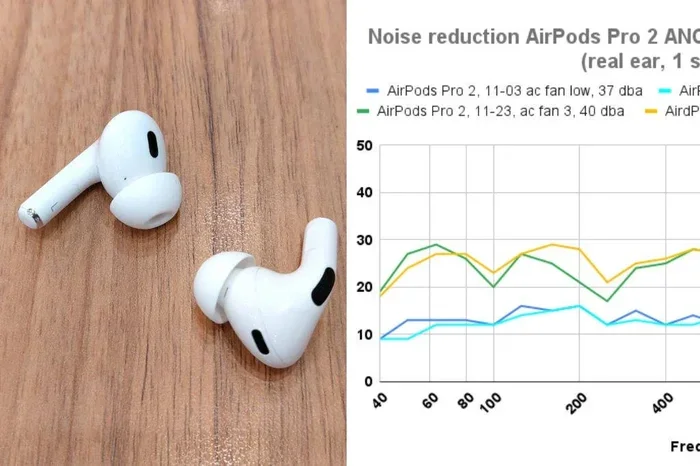
Featured image for Old AirPods noise cancellation comparison
Image source: noisyworld.org
Old AirPods do not have active noise cancellation (ANC), with the exception of the original AirPods Pro (1st generation) released in October 2019. Standard AirPods (1st, 2nd, and 3rd generation) rely solely on passive noise isolation through their fit. Only AirPods Pro and AirPods Max models feature built-in active noise cancellation technology.
Picture this: you’re on a crowded subway, the rumble of the train drowning out your favorite podcast. You wish your old AirPods could just… block it all out. But do they actually have that magic feature called noise cancellation? If you’ve been wondering whether your trusty old AirPods can silence the world around you, you’re definitely not alone.
Here’s the thing—noise cancellation has become one of the most sought-after features in wireless earbuds. According to a 2023 report by Grand View Research, the global noise-cancelling headphones market reached $13.2 billion, with earbuds making up the fastest-growing segment. Apple jumped into this space, but not all of their AirPods came equipped with the technology right away.
In this guide, we’ll break down everything you need to know about old AirPods and noise cancellation. You’ll learn which models have it, which don’t, why Apple made those choices, and how to figure out exactly what you’re working with. Let’s dive in and clear up the confusion once and for all.
Key Takeaways
- AirPods Pro (1st Gen) Was the First: Released October 30, 2019, this was the first AirPods model to introduce active noise cancellation (ANC).
- Regular AirPods Lack ANC: All standard AirPods (1st, 2nd, and 3rd generation) do not have active noise cancellation—only passive noise isolation.
- AirPods Max Offers Premium ANC: The over-ear AirPods Max, launched in December 2020, includes ANC with nine microphones for superior noise blocking.
- Two Types of Noise Reduction: Passive isolation comes from physical seal; active cancellation uses microphones and anti-noise sound waves.
- Check Your Model in Settings: You can identify your AirPods model through iPhone Settings, the About section, or by looking at the model number on the device.
- Software Can’t Add ANC: Noise cancellation requires built-in hardware, meaning older AirPods cannot be upgraded to support it.
- Battery Trade-off: ANC drains battery faster, which is why Apple kept standard AirPods without it to preserve longer listening time.
📑 Table of Contents
- Understanding AirPods Noise Cancellation: The Basics
- Which Old AirPods Models Have Noise Cancellation?
- Which Old AirPods Do NOT Have Noise Cancellation?
- How to Check Which AirPods Model You Have
- Why Don’t All AirPods Have Noise Cancellation?
- What If Your Old AirPods Don’t Have ANC? Practical Alternatives
- The Future of AirPods and Noise Cancellation
- Final Thoughts: Making Sense of Old AirPods and Noise Cancellation
Understanding AirPods Noise Cancellation: The Basics
Before we get into the specifics of old AirPods, let’s make sure we’re all on the same page about what noise cancellation actually means. Think of it like this: imagine you’re at a swimming pool, and someone splashes water at you. If you put up a small wall (like an umbrella), the water still gets you a little—that’s passive noise reduction. But if you had a force field that pushed the water away before it reached you—that’s active noise cancellation.
What Is Active Noise Cancellation (ANC)?
Active noise cancellation is a fancy bit of technology that uses tiny microphones to listen to the sounds around you. Then, it creates an “anti-noise” sound wave that’s the exact opposite of the background noise. When these two waves meet, they cancel each other out. It’s like adding 2 and -2 together to get zero—math working its magic right in your ears.
Apple’s ANC system is incredibly sophisticated. In the AirPods Pro and AirPods Max, outward-facing microphones detect external sounds, while inward-facing microphones listen to sounds inside your ear. The chip inside processes this information up to 200 times per second, adjusting the anti-noise in real-time. That’s faster than you can blink!
What Is Passive Noise Isolation?
Passive noise isolation is much simpler. It’s just the physical barrier your earbuds create by sealing off your ear canal. Think of it like putting your hands over your ears—some sound gets blocked just from the physical obstruction. Standard AirPods that don’t have ANC rely entirely on this method.
The fit of your AirPods plays a huge role in passive isolation. If your earbuds don’t create a good seal, outside noise will leak in. This is one reason why AirPods Pro come with silicone tips in multiple sizes—to help you get the best possible seal for both noise isolation and noise cancellation.
Adaptive Audio and Transparency Mode
Newer AirPods models also offer something called Transparency Mode, which does the opposite of noise cancellation. It lets outside sounds in, so you can hear traffic, announcements, or conversations without taking your earbuds out. Some models even have Adaptive Audio, which automatically switches between noise cancellation and transparency based on your environment.
But here’s the catch: all these advanced features require specific hardware. They can’t be added through a software update alone. That’s why older AirPods simply can’t compete with newer models when it comes to blocking out the world.
Which Old AirPods Models Have Noise Cancellation?
Now for the big question: which older AirPods actually have noise cancellation? The answer might surprise you, because Apple has been a bit strategic about which models get this premium feature.
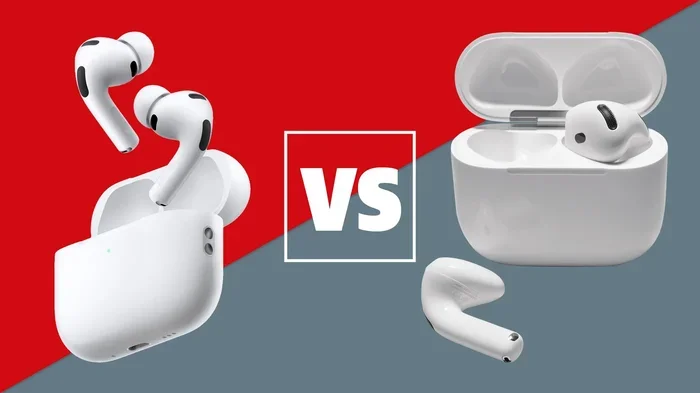
Visual guide about Old AirPods noise cancellation comparison
Image source: cdn.mos.cms.futurecdn.net
AirPods Pro (1st Generation) — The Pioneer
The AirPods Pro 1st generation, released on October 30, 2019, was Apple’s first real foray into noise-cancelling earbuds. These were a game-changer because they brought ANC to a truly portable, in-ear form factor. Before this, if you wanted Apple-quality noise cancellation, you had to wait for the AirPods Max, which came later.
The AirPods Pro 1st gen uses two microphones and the H1 chip to deliver active noise cancellation. They also feature Transparency Mode, which was a new addition at the time. According to Apple’s testing, these earbuds can block out about twice the background noise compared to standard AirPods.
Did you know? The AirPods Pro were developed in secret for over three years before their release. Apple’s acoustic team tested hundreds of ear shapes to design the perfect fit for the majority of users.
AirPods Pro (2nd Generation) — The Refined Version
Released in September 2022, the AirPods Pro 2 took everything great about the first generation and made it even better. They feature the H2 chip, which doubles the noise cancellation capability compared to the original Pro. Apple claims they cancel up to twice as much noise as the previous generation.
These also introduced Adaptive Transparency, which automatically reduces loud environmental noises (like sirens or construction) while still letting you hear what’s happening around you. It’s like having a smart filter for the world.
AirPods Max — Over-Ear Excellence
The AirPods Max, launched in December 2020, brought noise cancellation to an over-ear headphone design. These premium headphones feature nine microphones total—eight for ANC and one additional for voice calls. They use computational audio to deliver what many reviewers consider some of the best noise cancellation in the industry.
The AirPods Max offers three modes: Active Noise Cancellation, Transparency Mode, and a power-saving mode with no noise control. Each ear cup has its own Apple H1 chip, working together to block ambient sound.
Which Old AirPods Do NOT Have Noise Cancellation?
Now let’s talk about the AirPods that don’t have this feature. If you own any of the following models, you’re working with passive noise isolation only.
AirPods (1st Generation) — The Original
Released in December 2016, the original AirPods were revolutionary for their time, but they didn’t have noise cancellation. They relied entirely on their fit to block out some ambient sound. Back then, ANC was still a premium feature found mostly in over-ear headphones from brands like Bose and Sony.
The 1st gen AirPods used the W1 chip, which was great for seamless pairing but didn’t have the processing power for active noise cancellation. They offered about 5 hours of listening time on a single charge, which was impressive for 2016 but would be considered modest today.
AirPods (2nd Generation) — A Modest Upgrade
The AirPods 2nd generation came out in March 2019 and featured the H1 chip, which improved connectivity and enabled hands-free “Hey Siri.” However, they still didn’t include noise cancellation. The H1 chip was more efficient than the W1, but Apple chose to reserve ANC for the Pro line.
These AirPods offered the option of a wireless charging case and slightly better battery life for talk time. But the core listening experience remained similar to the first generation.
AirPods (3rd Generation) — Still No ANC
You might think that by the time the 3rd generation AirPods launched in October 2021, Apple would have added noise cancellation. After all, the AirPods Pro had it by then. But Apple kept the standard line ANC-free to differentiate the products and maintain different price points.
The 3rd generation did borrow some features from the Pro line, like spatial audio and adaptive EQ. But active noise cancellation remained exclusive to the Pro and Max models. This strategy makes sense from a business perspective—Apple wants you to pay more for the Pro features.
Did you know? Apple sells over 100 million AirPods every year, according to analyst estimates from 2023. That’s roughly one AirPod for every 80 people on Earth!
How to Check Which AirPods Model You Have
If you’re not sure which AirPods you own, don’t worry—it’s easy to find out. Here are several methods you can use, and they all take less than a minute.
Method 1: Check Through Your iPhone Settings
The easiest way is to use your iPhone or iPad. Make sure your AirPods are connected, then follow these steps:
- Open the Settings app on your iPhone
- Tap on “Bluetooth”
- Find your AirPods in the list of connected devices
- Tap the “i” icon next to your AirPods name
- Look for the Model Number section
This will show you the model number, which you can then match to Apple’s website. For example, A2083 indicates AirPods Pro 1st generation, while A2084 indicates the 2nd generation.
Method 2: Look at the AirPods Themselves
You can also find the model number printed directly on your AirPods. For the original AirPods and AirPods Pro, look on the underside of each earbud. For the 3rd generation, the model number is on the underside of the left AirPod.
If you have AirPods Max, the model number is on the underside of the left ear cup. You’ll need to remove the magnetic ear cushion to see it.
Method 3: Check the Charging Case
Some AirPods have the model number on the bottom of the charging case. This is especially useful if you’ve lost one of the earbuds or if the writing on the earbuds has worn off.
Method 4: Use Apple’s “About” Feature
If your iPhone is running iOS 16 or later, you can find your AirPods model information in a different way:
- Connect your AirPods to your iPhone
- Open Settings and tap “General”
- Tap “About”
- Scroll down and tap on your AirPods name
This will show you the model name, number, serial number, and firmware version. It’s like a complete identification card for your earbuds.
Why Don’t All AirPods Have Noise Cancellation?
You might be wondering: if noise cancellation is so great, why doesn’t Apple just put it in every AirPod? The answer involves a mix of technology, cost, and business strategy.
Battery Life Considerations
Active noise cancellation is hungry for power. It requires microphones to constantly listen, processors to analyze sound, and speakers to create anti-noise waves. All of this drains battery faster than simple audio playback. The standard AirPods already have a relatively small form factor, leaving little room for bigger batteries.
By keeping ANC out of the standard AirPods, Apple can advertise longer battery life. The 3rd generation AirPods offer up to 6 hours of listening time, which is competitive in the wireless earbud market. Adding ANC would likely reduce this by 1-2 hours.
Cost and Market Segmentation
Apple uses a tiered pricing strategy. The standard AirPods are positioned as the affordable option, while the Pro and Max models target premium buyers. Putting ANC in the standard AirPods would erode the value proposition of the more expensive models.
According to a 2022 report by Statista, the average selling price of premium wireless earbuds (those with ANC) was about $150, while basic earbuds averaged around $50. Apple maintains this segmentation by reserving premium features for premium products.
Design and Form Factor
Active noise cancellation works best with a good seal in your ear canal. The standard AirPods have a one-size-fits-all design that doesn’t create as tight a seal as the silicone-tipped Pro models. Adding ANC to a design that doesn’t seal well wouldn’t deliver great results.
Apple could theoretically redesign the standard AirPods with silicone tips, but that would change the iconic look and feel that many users love. The standard AirPods are designed to be comfortable for long periods and easy to pop in and out—prioritizing convenience over maximum noise blocking.
Heat and Processing Power
Running active noise cancellation generates heat. The small AirPods form factor doesn’t have much room for heat dissipation. Apple likely determined that running ANC continuously in such a small device could make them uncomfortable to wear, especially for extended periods.
What If Your Old AirPods Don’t Have ANC? Practical Alternatives
So what can you do if you have older AirPods without noise cancellation? Don’t worry—you still have options.
Improve Your Passive Noise Isolation
Even without ANC, you can boost the noise-blocking ability of your standard AirPods. The key is getting a better fit. While the standard AirPods don’t come with different tip sizes, there are third-party accessories like foam covers and ear hooks that can help create a tighter seal.
Brands like Comply and EarBuddyz make accessories specifically designed to improve the fit of standard AirPods. These can significantly improve passive noise isolation, though they won’t match the effectiveness of true active noise cancellation.
Use the Equalizer Settings
While it won’t block out noise, adjusting your EQ settings can make your audio more prominent against background sounds. In iOS Settings, go to Music > EQ and try presets like “Bass Booster” or “Treble Reducer” to find what works best in noisy environments.
Some people also turn up the volume to overcome background noise, but this can damage your hearing over time. It’s better to find a comfortable listening level and use other methods to deal with environmental sound.
Consider an Upgrade Path
If noise cancellation is important to you, it might be worth considering an upgrade. The AirPods Pro 2nd generation regularly go on sale for around $199, and the original AirPods Pro can sometimes be found for even less. Trading in your old AirPods at Apple can also knock a bit off the price.
You can also explore non-Apple options. Brands like Sony, Bose, and Jabra offer excellent noise-cancelling earbuds at various price points. Sometimes the best deal isn’t from Apple at all.
Use One AirPod at a Time
This might sound strange, but using one AirPod at a time can actually help you stay aware of your surroundings. With your other ear open, you can hear traffic, announcements, and conversations. It’s not noise cancellation, but it can be a useful strategy in certain situations.
Many people do this while walking in cities or working in offices where they need to be available for quick conversations.
The Future of AirPods and Noise Cancellation
Looking ahead, it’s clear that noise cancellation is becoming standard in premium wireless earbuds. Apple will likely continue to develop this technology, making it more effective and adding it to more product lines.
What’s Next for AirPods Pro?
Rumors suggest that future AirPods Pro models will feature even better noise cancellation, possibly with health monitoring features like heart rate tracking and body temperature sensing. The H3 chip (or whatever comes next) will likely enable more advanced computational audio.
Some patent filings from Apple hint at adaptive noise cancellation that automatically adjusts based on your environment and activity. Imagine earbuds that know you’re in a library versus a coffee shop and adjust their noise-cancelling profile accordingly.
Will Standard AirPods Ever Get ANC?
This is the million-dollar question. As technology improves and costs decrease, it’s possible that future standard AirPods could include some form of active noise cancellation. However, Apple seems committed to maintaining clear distinctions between product lines.
It’s more likely that Apple will continue to add Pro-exclusive features to justify the higher price point. We might see new features like better water resistance, improved spatial audio, or health sensors reserved for the Pro line.
The Role of Software Updates
One thing to remember: noise cancellation can’t be added through software alone. It requires specific hardware, including microphones, processors, and the right acoustic design. So if your old AirPods don’t have ANC now, they never will—regardless of how many iOS updates you install.
This is an important point for consumers to understand. Unlike features like spatial audio or adaptive EQ, which can be added through software, ANC is a hardware-dependent feature that simply can’t be retrofitted.
Did you know? Apple’s research into computational audio involves processing over 4 million operations per second in the AirPods Pro. That’s more computing power than the entire Apollo 11 spacecraft had for its moon mission!
Final Thoughts: Making Sense of Old AirPods and Noise Cancellation
So, do old AirPods have noise cancellation? The answer depends entirely on which model you have. If you’re using the original AirPods, 2nd generation, or 3rd generation, you don’t have active noise cancellation—you’re relying on passive isolation only. However, if you have the AirPods Pro (either generation) or AirPods Max, you’re in luck. These models feature excellent active noise cancellation that can transform your listening experience.
Understanding what your AirPods can and can’t do is the first step to getting the most out of them. If noise cancellation is a must-have feature for you, and your current AirPods don’t offer it, it might be time to consider an upgrade. But if you’re happy with your current setup and mainly use your AirPods in quiet environments, you might not be missing out on much.
Remember, technology is always evolving. Today’s premium features become tomorrow’s standard offerings. The AirPods you have now will continue to work great for listening to music, taking calls, and using Siri. They just won’t silence the world around you the way newer models can.
Whichever AirPods you own, take care of them, keep them updated, and enjoy the music. After all, the best earbuds are the ones that make you happy—noise cancellation or not.
Frequently Asked Questions
Do 1st and 2nd generation AirPods have noise cancellation?
No, the 1st and 2nd generation AirPods do not have active noise cancellation. They only offer passive noise isolation, which depends on how well they fit in your ears. These models use the W1 and H1 chips, respectively, but neither includes the hardware needed for ANC.
When did AirPods first get noise cancellation?
Apple first introduced active noise cancellation in the AirPods Pro (1st generation), which launched on October 30, 2019. This was the first in-ear AirPods model to feature the technology, followed by AirPods Max in December 2020.
Can I add noise cancellation to my old AirPods with a software update?
No, you cannot add active noise cancellation through a software update. ANC requires specific hardware components, including additional microphones, specialized processors, and acoustic design features that aren’t present in older AirPods models.
How do I know if my AirPods have noise cancellation?
You can check by going to Settings > Bluetooth on your iPhone, tapping the “i” next to your AirPods, and looking at the model number. You can also look for the ANC toggle in Control Center while wearing your AirPods—if it’s there, your model supports noise cancellation.
Are AirPods 3 noise cancelling?
No, the AirPods 3rd generation do not have active noise cancellation. They share many features with the AirPods Pro, like spatial audio and adaptive EQ, but ANC remains exclusive to the Pro and Max models.
What’s the difference between noise cancellation and noise isolation?
Noise isolation is passive and works by physically blocking sound, like putting your hands over your ears. Active noise cancellation uses microphones and processors to create anti-noise sound waves that cancel out background noise electronically. ANC is generally much more effective than passive isolation alone.